Artwork
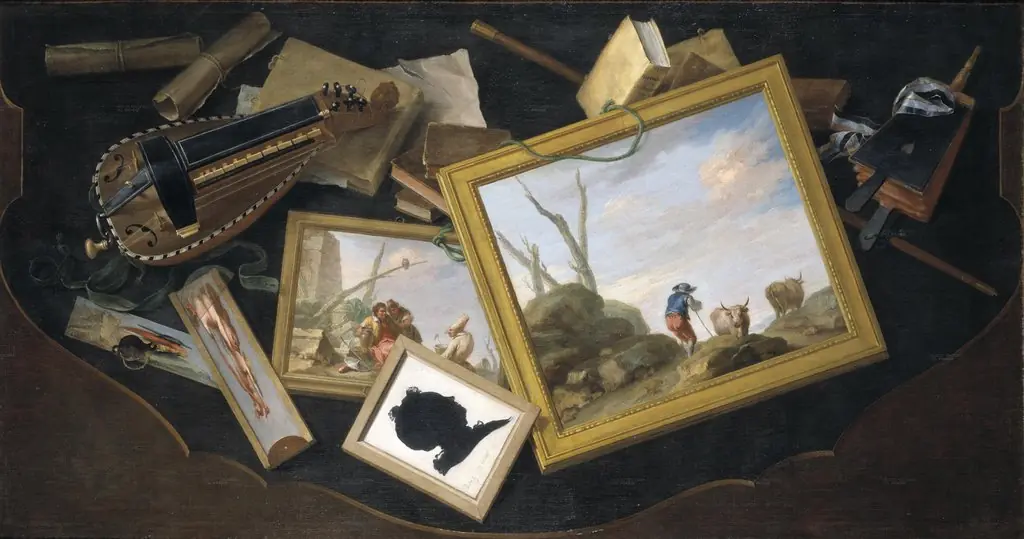
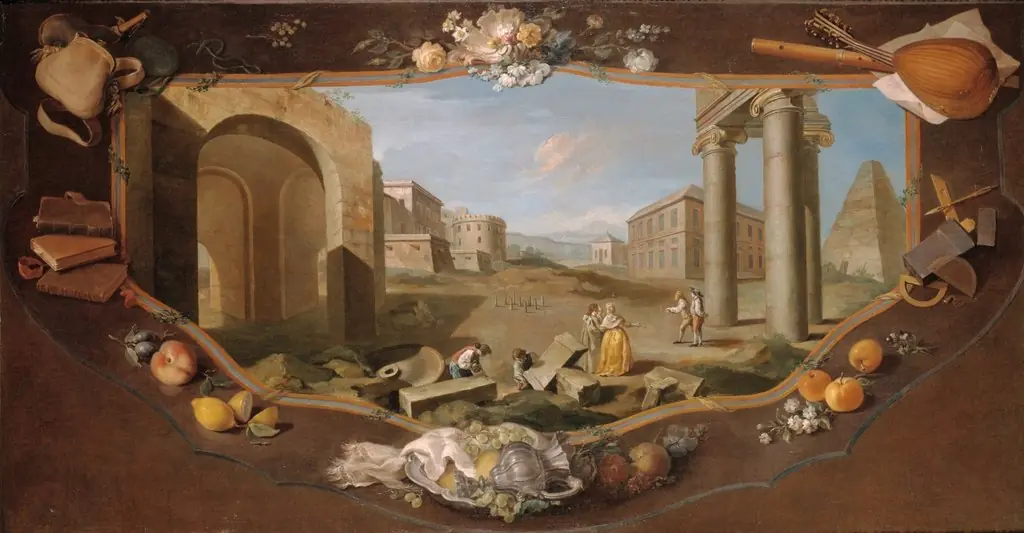
Landscape with an architectural view surrounded by trompe-l’oeil elements symbolising the Arts
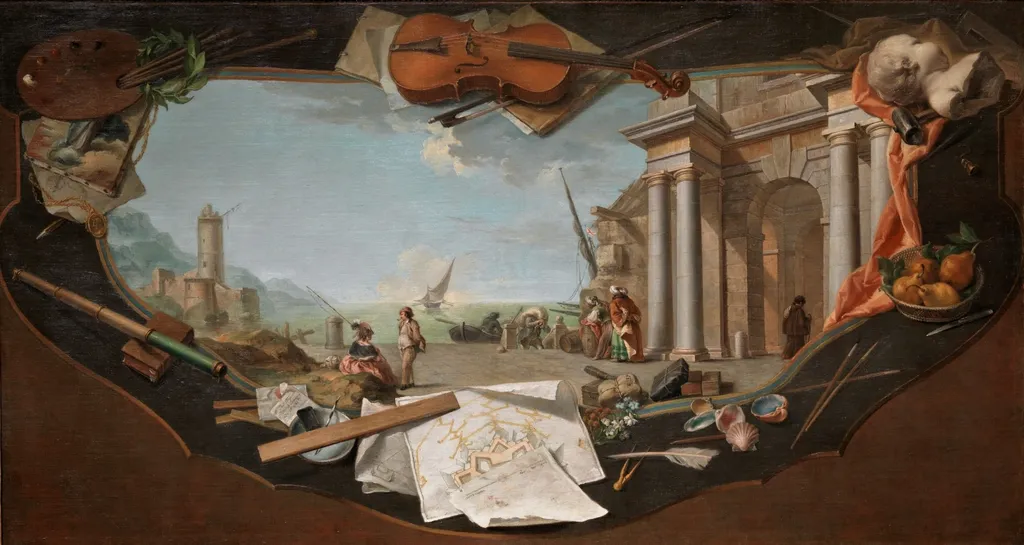
Landscape with an architectural view surrounded by trompe-l’oeil elements symbolising the Arts is an oil painting by the Rococo painting artist Charles Joseph Flipart. It dates from 1790 and is held in the collection of the Museo del Prado.
About this work
Subject & Meaning
The painting presents a broad landscape that incorporates architectural motifs rendered with trompe-l’oeil effects to embody the concept of the Arts.
The painting presents a broad landscape that incorporates architectural motifs rendered with trompe-l’oeil effects to embody the concept of the Arts. Symbolic objects such as a scientific instrument, a musical instrument, and a spotting scope are included, reinforcing the allegorical message that visual perception unites different fields of knowledge. Created in 1779, the work reflects Enlightenment ideas about the interconnectedness of art and science, using illusionistic techniques to suggest the presence of these disciplines within the depicted scenery.
The composition thus functions as a visual allegory celebrating intellectual harmony and the role of artistic imagination in revealing hidden truths.
Technique & Style
Executed in oil on canvas, the work measures 91 cm in height and 171 cm in width. The composition blends a landscape view with trompe-l’oeil framing elements that personify the Arts, integrating painted frames, ribbons, and cartouches around the central scene. Handling is precise, with sharp delineation of architectural details and smooth transitions in the sky, while the trompe-l’oeil flourishes display meticulous illusionism typical of late eighteenth-century decorative painting.
The palette is restrained yet luminous, employing earth tones and subtle gradations to unify the architectural and allegorical elements.
The condition is reported as stable, with no structural concerns noted for the canvas support; the paint layer appears intact, consistent with the painting’s date of 1779.
History & Provenance
The painting was created in 1779 by Charles Joseph Flipart, likely commissioned by an unknown patron who desired a decorative landscape integrating trompe-l’oeil motifs that personify the Arts. Its first documented ownership places it in the collection of the Museo del Prado, where it remains on public display. The work measures 91 by 171 centimeters and is executed in oil on canvas, reflecting the late 18th-century academic interest in combining realistic architectural settings with illusionistic decorative details.
The piece entered the Prado’s holdings shortly after its creation, establishing a continuous ownership chain that links the artist, an unidentified early collector, and the museum’s permanent collection.
Overview
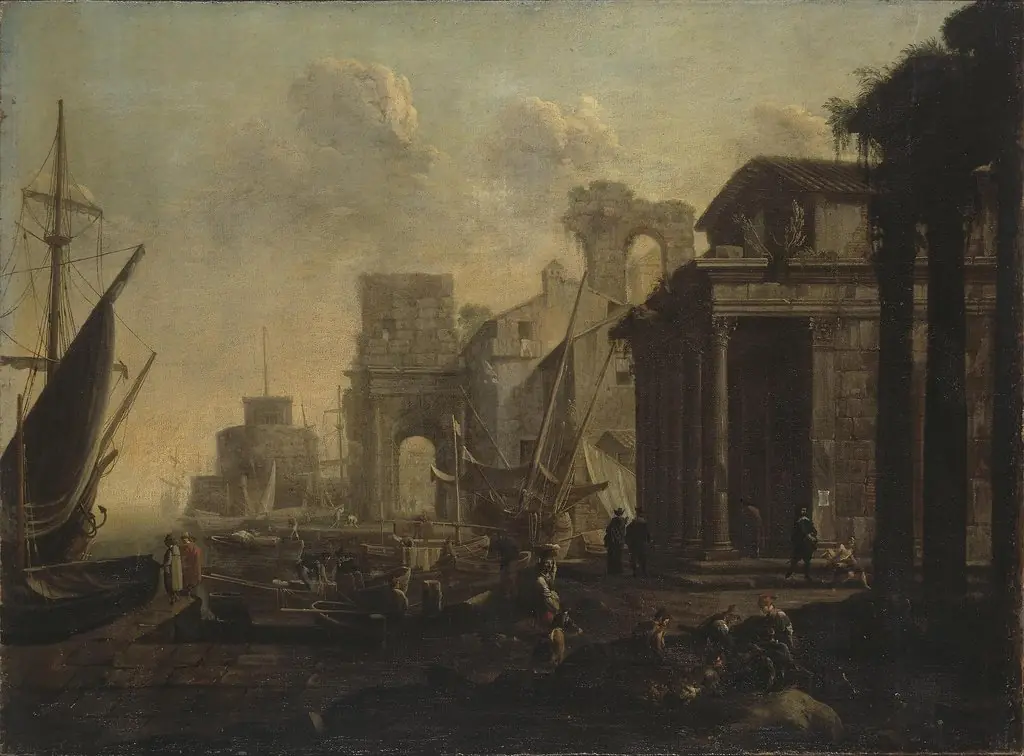
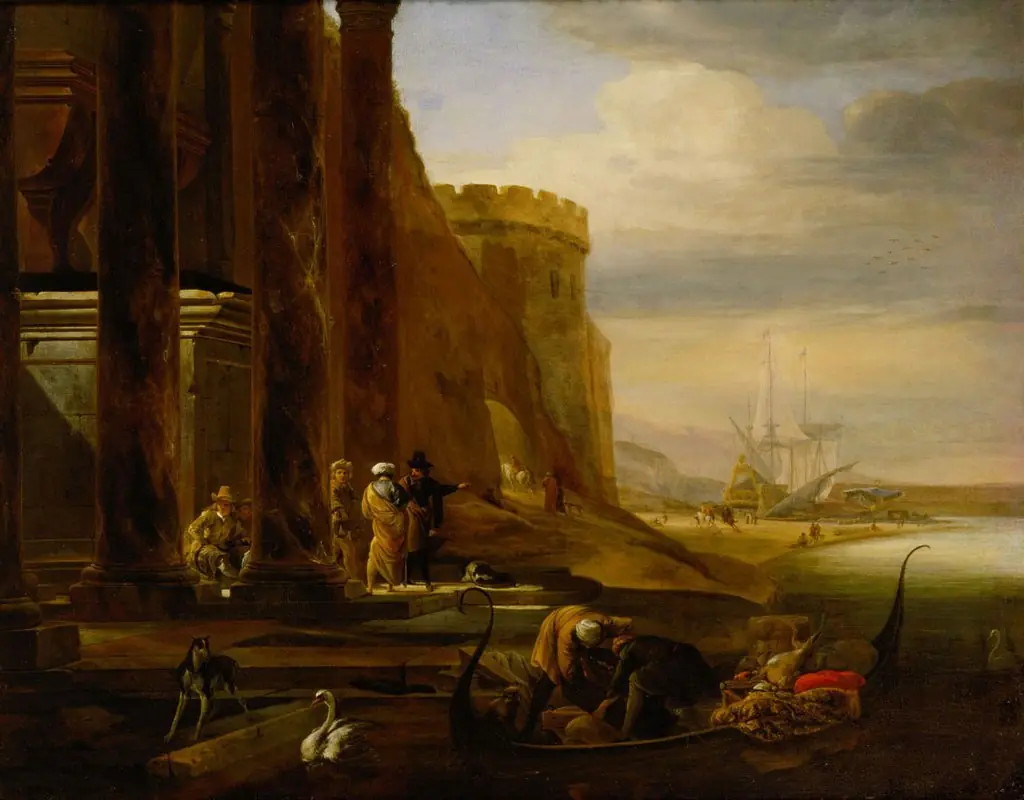
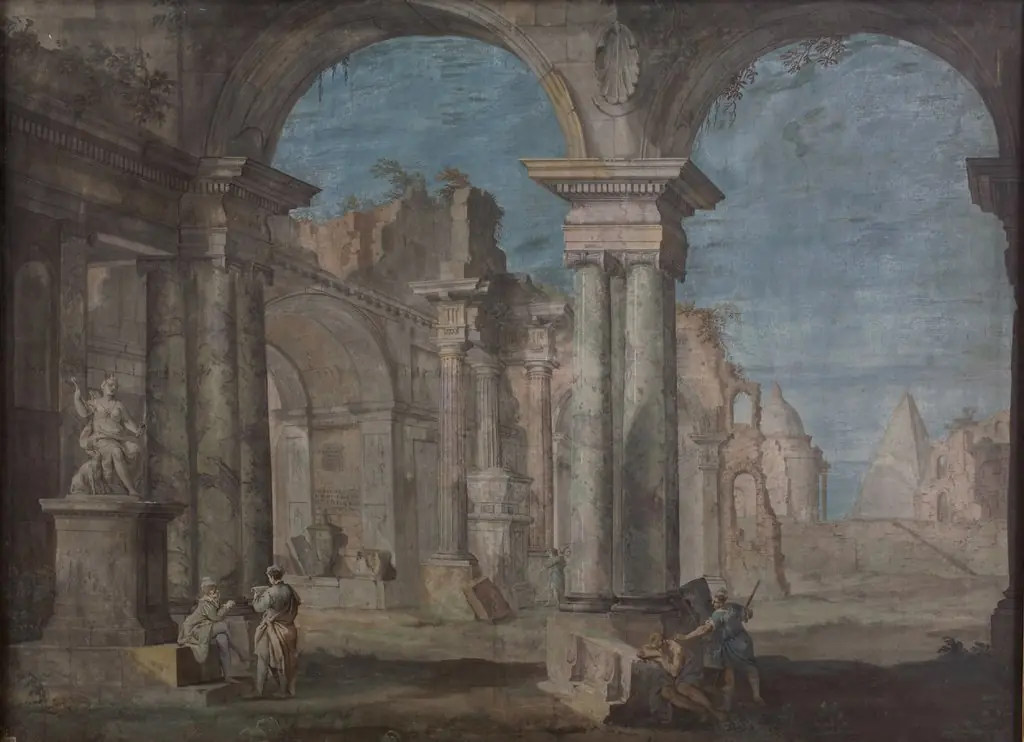
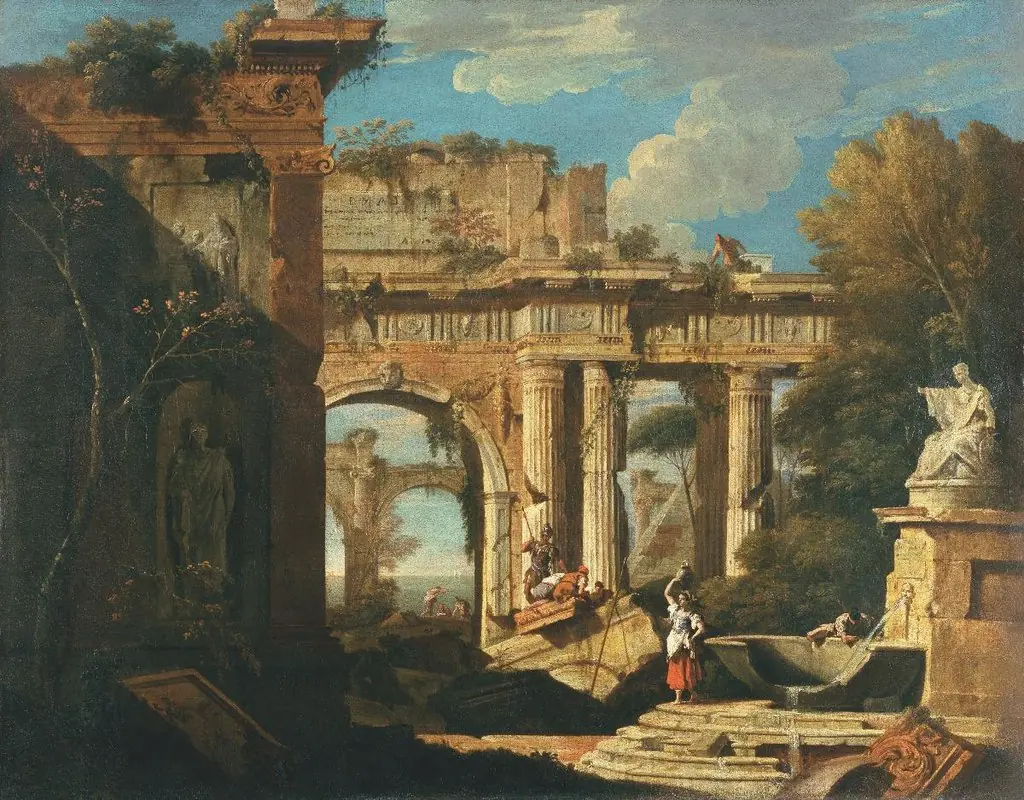
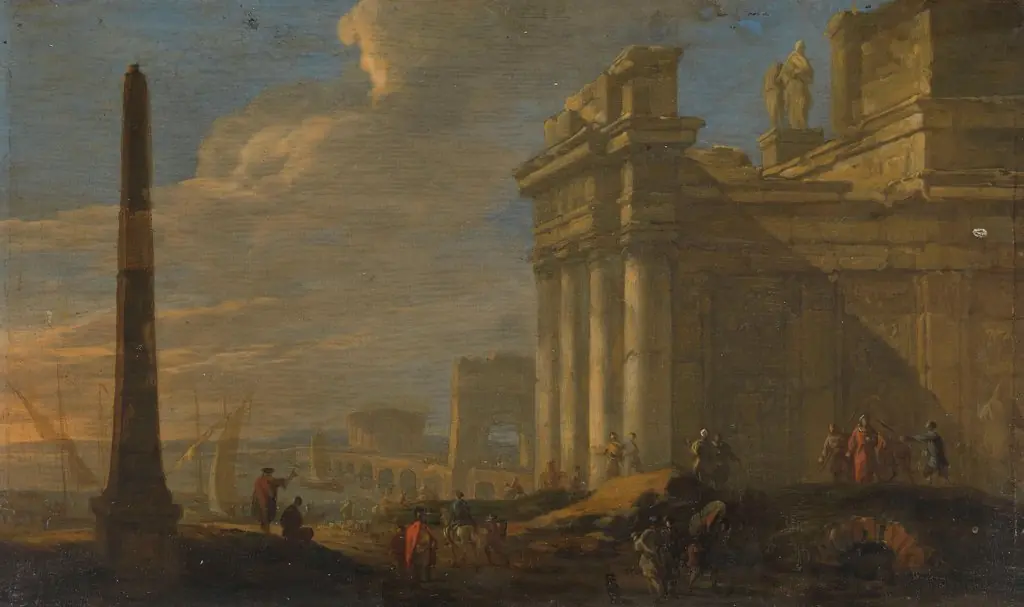
Charles Joseph Flipart’s 1790 oil painting, Landscape with an Architectural View Surrounded by Trompe‑l’oeil Elements Symbolising the Arts, presents a complex interior‑exterior scene that blends realistic and illusory objects. The composition centers on a dilapidated building with towering columns, while the surrounding border is filled with painted objects that mimic three‑dimensional items.
Artist & collection