Artwork
Landscape with an Architectural View
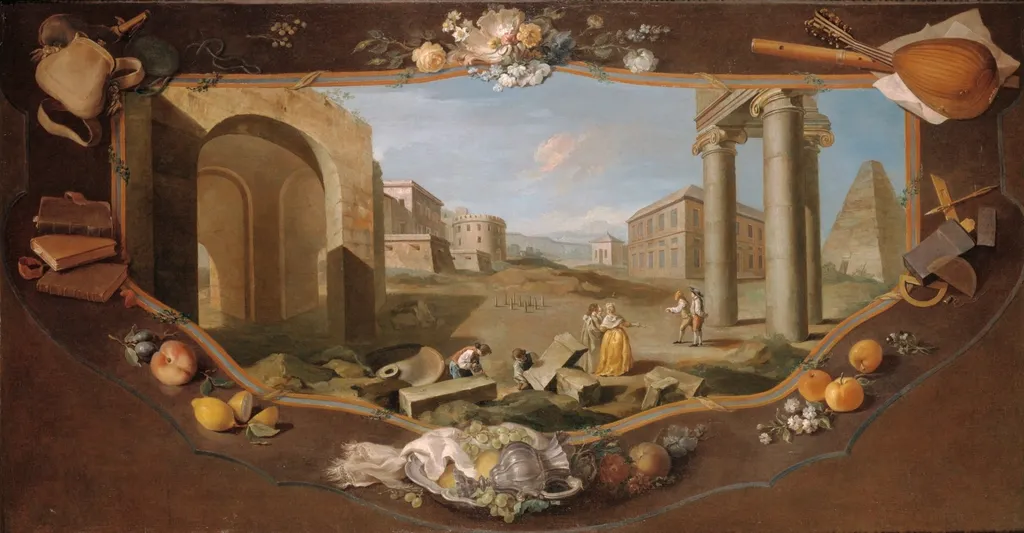
Landscape with an Architectural View is an oil painting by the Rococo painting artist Charles Joseph Flipart. It dates from 1790 and is held in the collection of the Museo del Prado.
About this work
Subject & Meaning
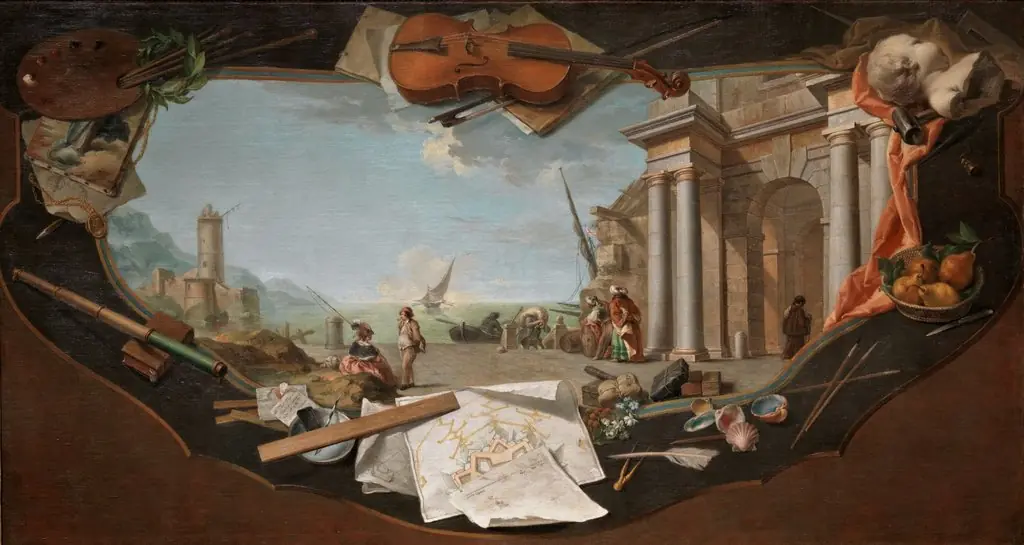
An antique telescope and a stringed musical instrument are placed in the foreground, signaling a dialogue between observation and harmony.
The painting presents a landscaped setting framed by classical architecture, with a central ruin that evokes the passage of time and the endurance of nature over human constructs.
An antique telescope and a stringed musical instrument are placed in the foreground, signaling a dialogue between observation and harmony. The telescope points to a distant horizon, suggesting empirical inquiry and the Enlightenment’s emphasis on scientific discovery, while the instrument implies the refined culture of music and leisure among educated elites of the period.
Technique & Style
Charles-Joseph Flipart's Landscape with an Architectural View is executed in oil paint on canvas. The work, dated to 1779, measures 91 cm in height and 171 cm in width. As a landscape painting, the composition incorporates specific depictions of scientific and musical instruments within the scene. The piece is currently held in the collection of the Museo del Prado.
History & Provenance
This painting was created in 1779 by Charles Joseph Flipart as an oil on canvas landscape featuring architectural elements. It entered the collection of the Museo del Prado, where it remains on display. The work was painted in the late 18th century and measures 91 cm by 171 cm. Its creation is documented in archival records from the period, confirming Flipart's authorship and the painting's classification as a landscape genre piece.
Context
Charles Joseph Flipart painted Landscape with an Architectural View in 1779, an oil on canvas measuring 91 cm by 171 cm, depicting scientific and musical instruments within a landscape genre scene.
The work is housed in the Museo del Prado collection, reflecting its significance within the Spanish institutional context.
Scholarly attention highlights the painting's integration of topographical precision with allegorical elements, situating it within the neoclassical tradition and the artist's broader output focused on architectural and landscape subjects.
Its reception has been noted for technical mastery and nuanced interpretation of Enlightenment-era scientific curiosity embedded in naturalistic settings.
Overview
Created in 1790, this oil painting by Charles Joseph Flipart presents a broad landscape framed by an architectural perspective. The central vista features crumbling ruins where figures are engaged in labor, while a decorative border encloses the scene with assorted objects.
Artist & collection



 Classical Landscape
 Landskap
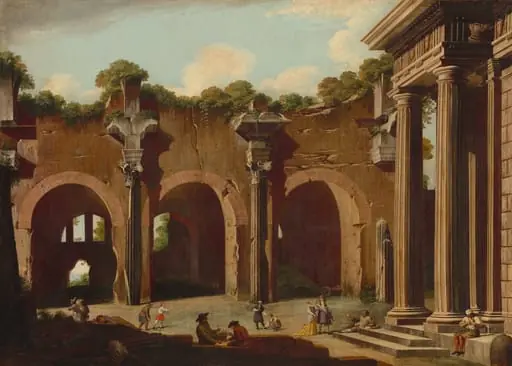 The Basilica of Constantine with a Doric Colonnade
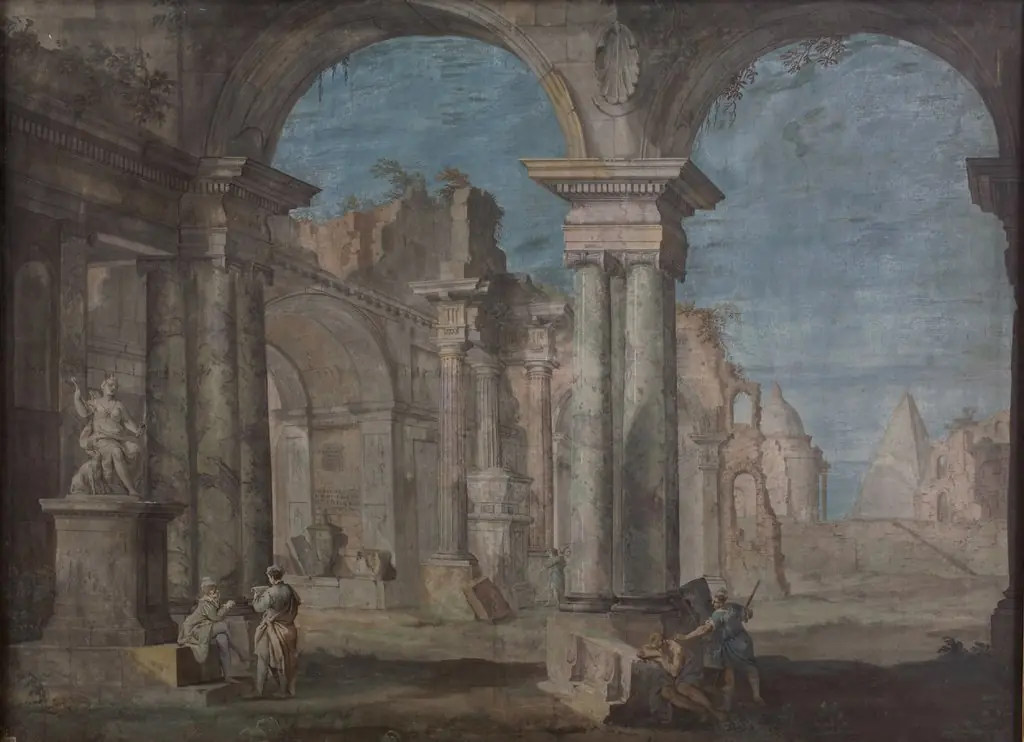 Architekturstück
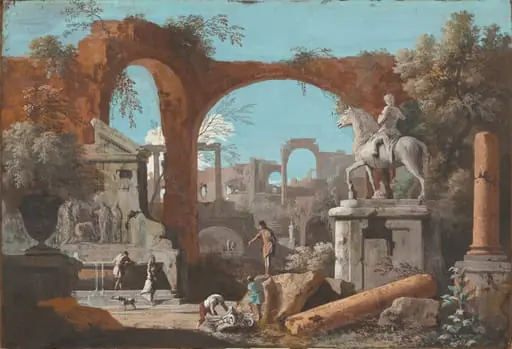 A Capriccio of Roman Ruins
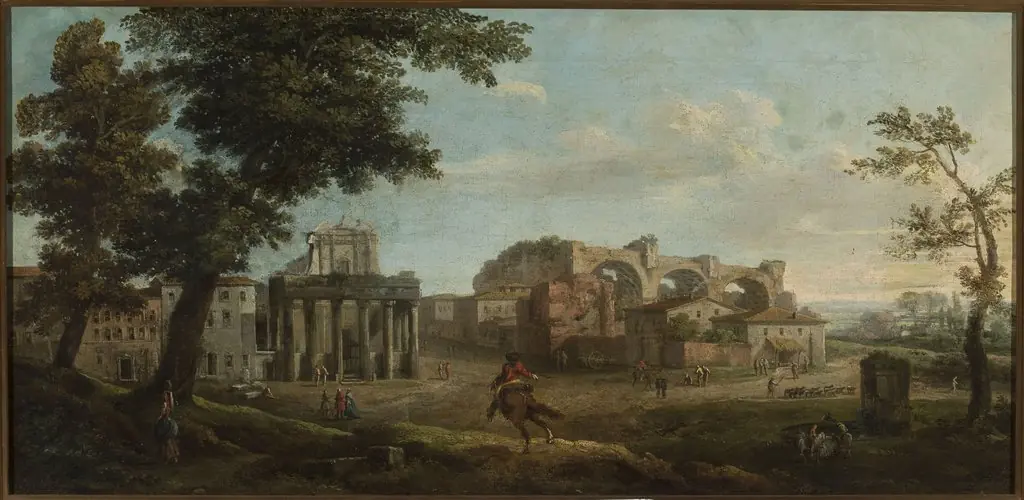 View of Rome
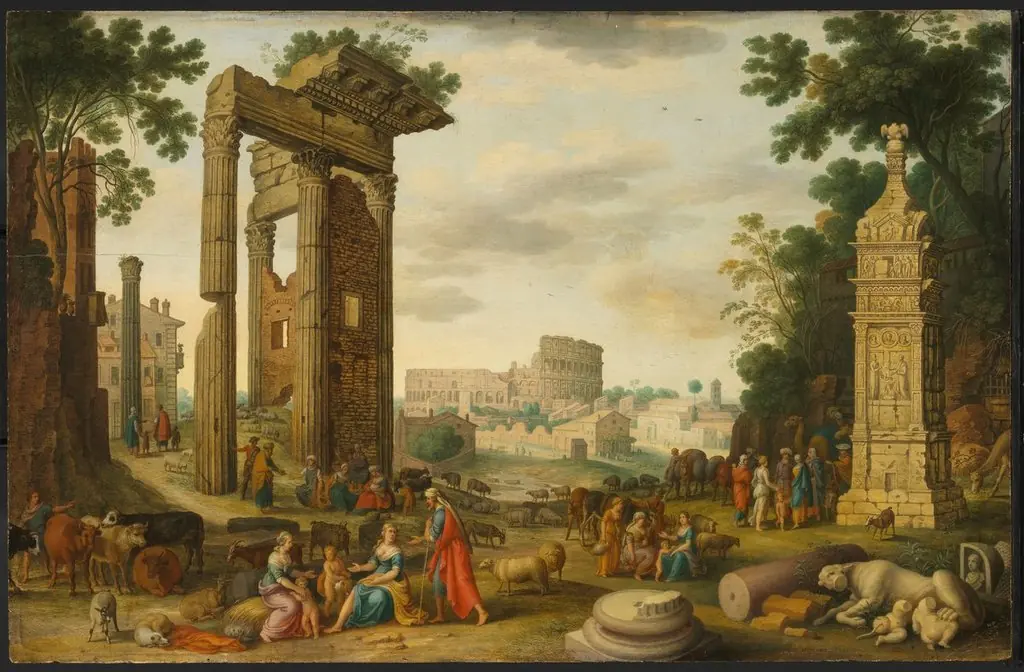 Roman Ruins and the Monument of Igel
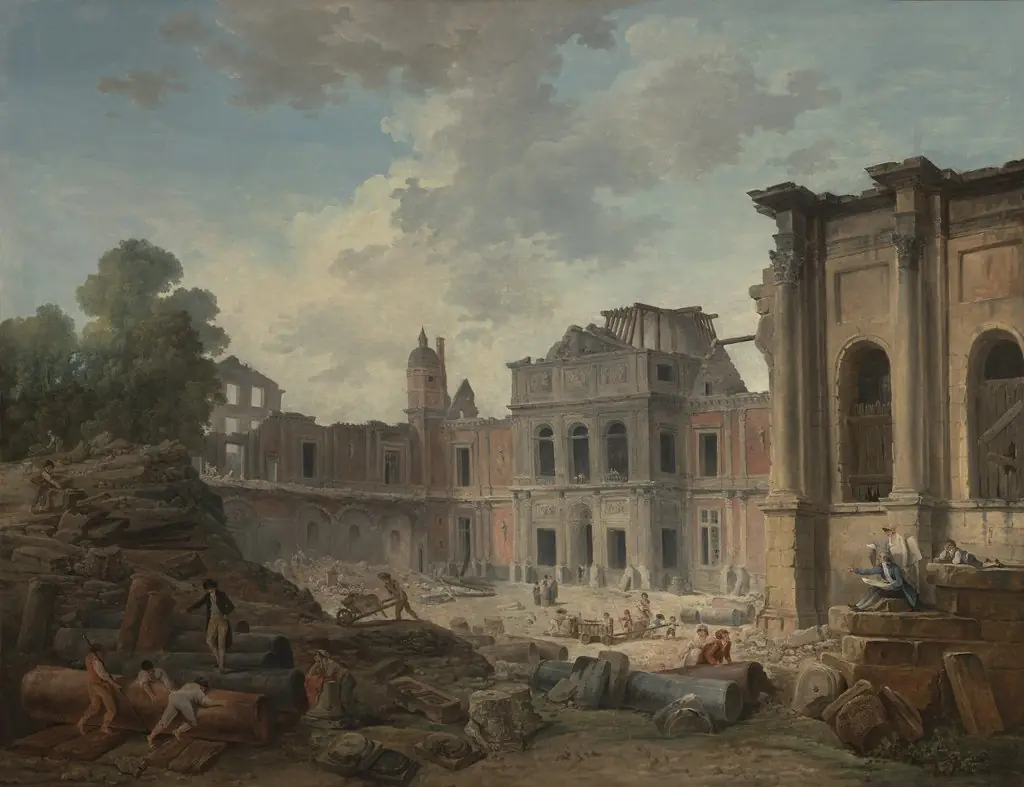 Demolition of the Château of Meudon
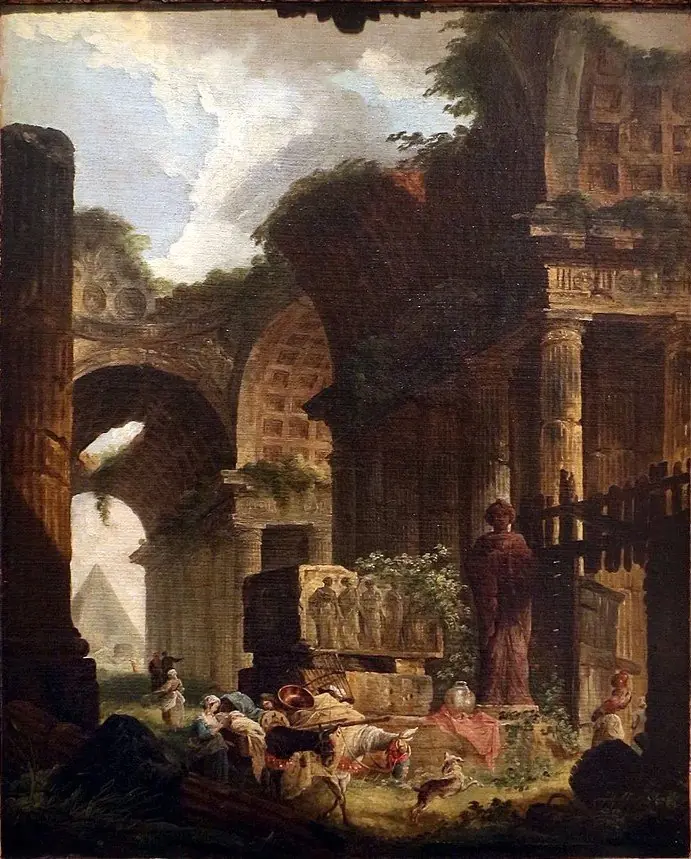 Templo em Ruínas
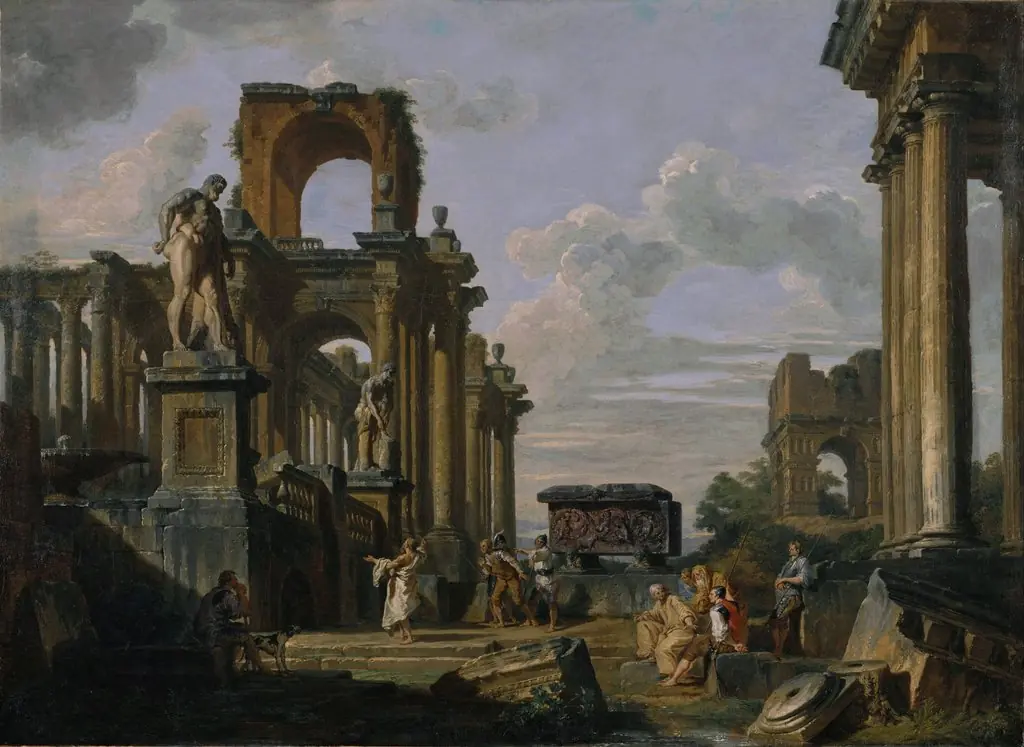 An Architectural Capriccio of the Roman Forum with Philosophers and Soldiers among Ancient Ruins, including the Arch of Janus Quadrifrons, the Sarcophagus of Santa Constanza, the Farnese Hercules and the Cincinnatus
- Architectural View