Artwork
Trompe-l'œil of a Table in a Mess with Paintings, a Hurdy-Gurdy, Books and Other Objects
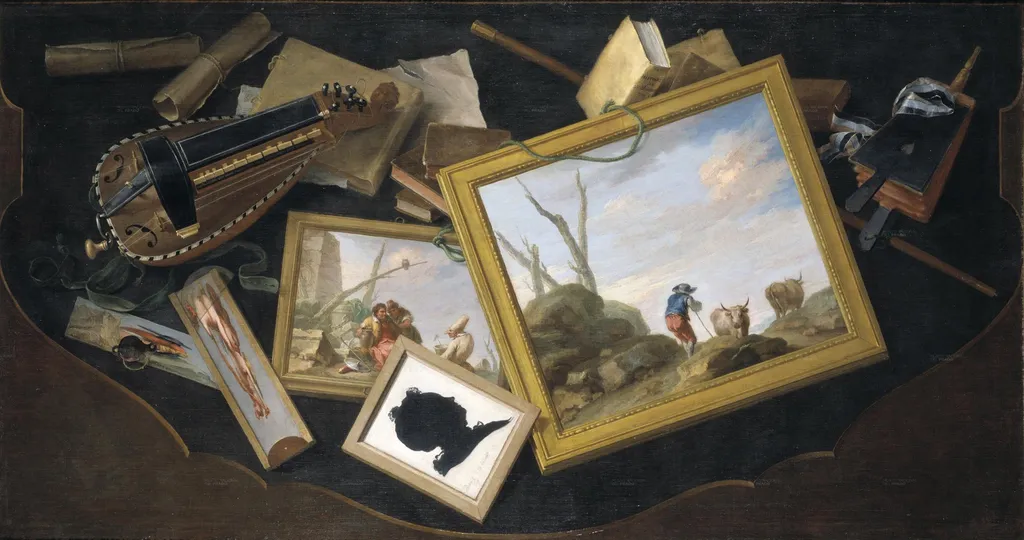
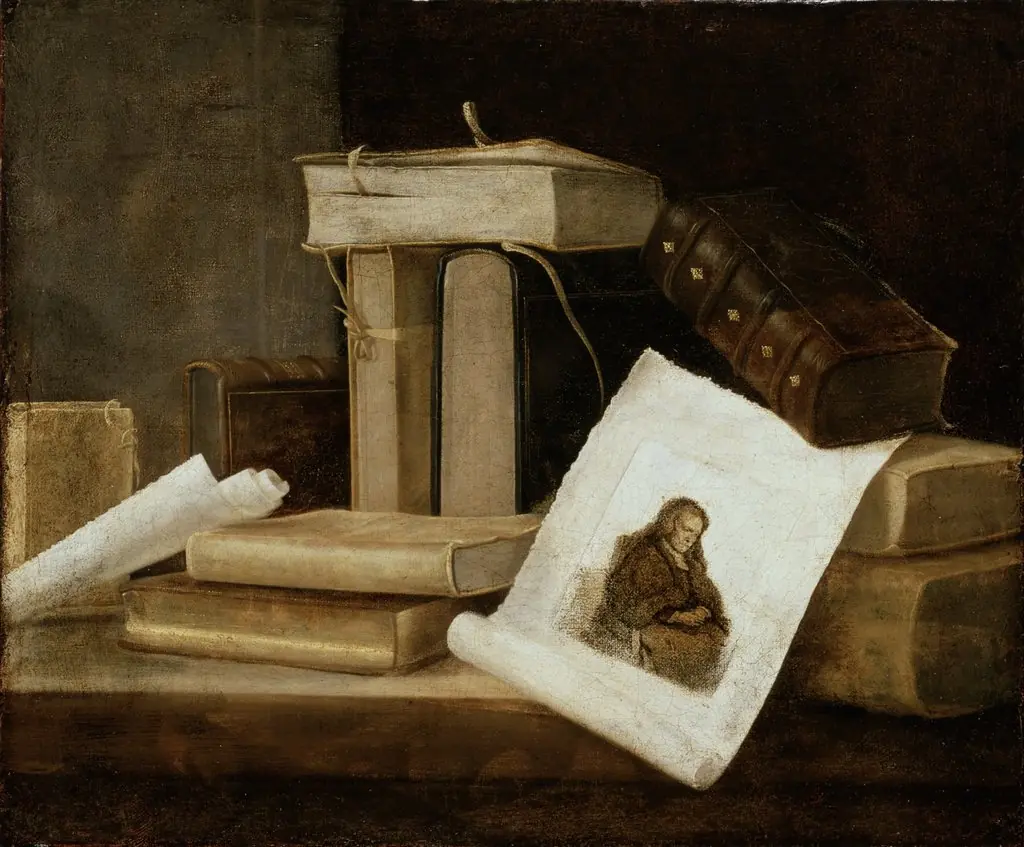
Trompe-l'œil of a Table in a Mess with Paintings, a Hurdy-Gurdy, Books and Other Objects is an oil painting by the Rococo painting artist Charles Joseph Flipart. It dates from 1790 and is held in the collection of the Museo del Prado.
About this work
Subject & Meaning
Charles Joseph Flipart's 1779 oil painting presents a complex trompe-l'œil composition depicting a disordered table laden with various cultural artifacts.
Charles Joseph Flipart's 1779 oil painting presents a complex trompe-l'œil composition depicting a disordered table laden with various cultural artifacts. The subject matter includes a hurdy-gurdy, several books, and other miscellaneous objects arranged alongside framed paintings, creating an illusion of three-dimensional depth on a flat canvas. As a work in the still-life genre, the piece focuses on the visual representation of these specific items rather than narrative action.
The arrangement of musical instruments, literature, and art within a chaotic setting suggests a study of material culture and the accumulation of knowledge or leisure items typical of the period.
Technique & Style
The work is an oil painting executed on canvas, employing the trompe‑l’œil illusion to simulate a three‑dimensional tabletop crowded with a hurdy‑gurdy, books and assorted objects. Flipart’s technique relies on precise rendering of surface textures and careful modulation of light and shadow to create depth, a hallmark of 18th‑century French still‑life practice. The composition arranges the items in a balanced, slightly asymmetrical layout that guides the viewer’s eye across the painted surface, emphasizing the illusion of spatial recession.
The canvas support provides a sturdy ground for the layered application of oil paint, contributing to the work’s durability.
History & Provenance
The still life was painted in 1779 by Charles Joseph Flipart, as indicated by the artist’s signature date on the work.
Its early history is not documented in the sources provided here. By the late nineteenth century it was in the Spanish royal collection, where it remained until transferred to the Museo del Prado, where it has been housed since the museum’s holdings were established.
The work is held by the Museo del Prado, Madrid, where it is inventoried as oil on canvas, measuring 91 cm in height and 171 cm in width.
It entered the Prado’s holdings as part of the museum’s historical collection and remains in its permanent display of still-life and trompe-l’œil paintings.
Context
Charles Joseph Flipart created Trompe‑l'œil of a Table in a Mess with Paintings, a Hurdy‑Gurdy, Books and Other Objects in 1779, an oil‑on‑canvas still life that exemplifies the trompe‑l'œil genre. The painting is listed in the Museo del Prado collection and is displayed at the museum, where it joins other works of illusionistic decoration from the same period. Its inclusion reflects the Prado’s emphasis on 18th‑century decorative illusion and highlights Flipart’s role as a French exponent of the style within Spanish institutional contexts.
Legacy
The painting is recognized as a representative example of 18th‑century trompe‑l’œil still life. Its precise rendering of a tabletop laden with books, a hurdy‑gurdy and other objects demonstrates the illusionistic technique that characterized the genre. The work entered the collection of the Museo del Prado, where it is displayed as part of the museum’s holdings of Spanish and European art.
Scholars cite the piece when discussing the development of illusionistic painting in the late 1700s, and its inclusion in the Prado’s catalogue raises its profile among studies of visual deception.
Overview
Charles Joseph Flipart's 1790 oil painting, "Trompe-l'œil of a Table in a Mess with Paintings, a Hurdy-Gurdy, Books and Other Objects," is a still life that engages the viewer with its realistic depiction. This work, executed in oil paint, presents a cluttered surface laden with various items. It is currently part of the collection at the Museo del Prado.
Artist & collection

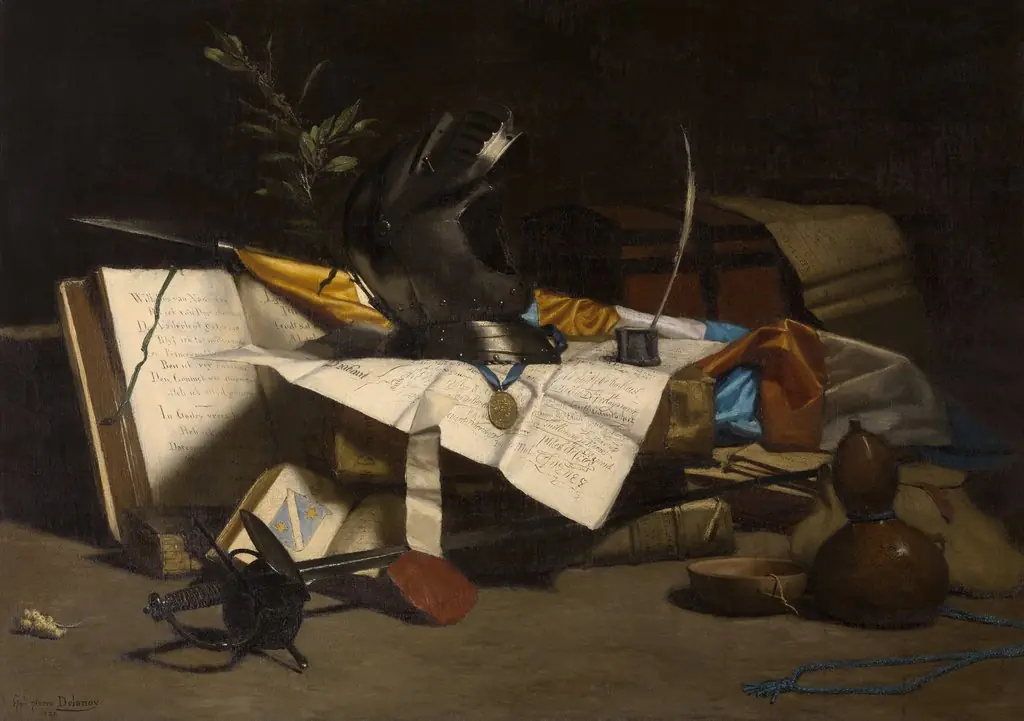 In Memory of Philips of Marnix, Lord of Sint-Aldegonde
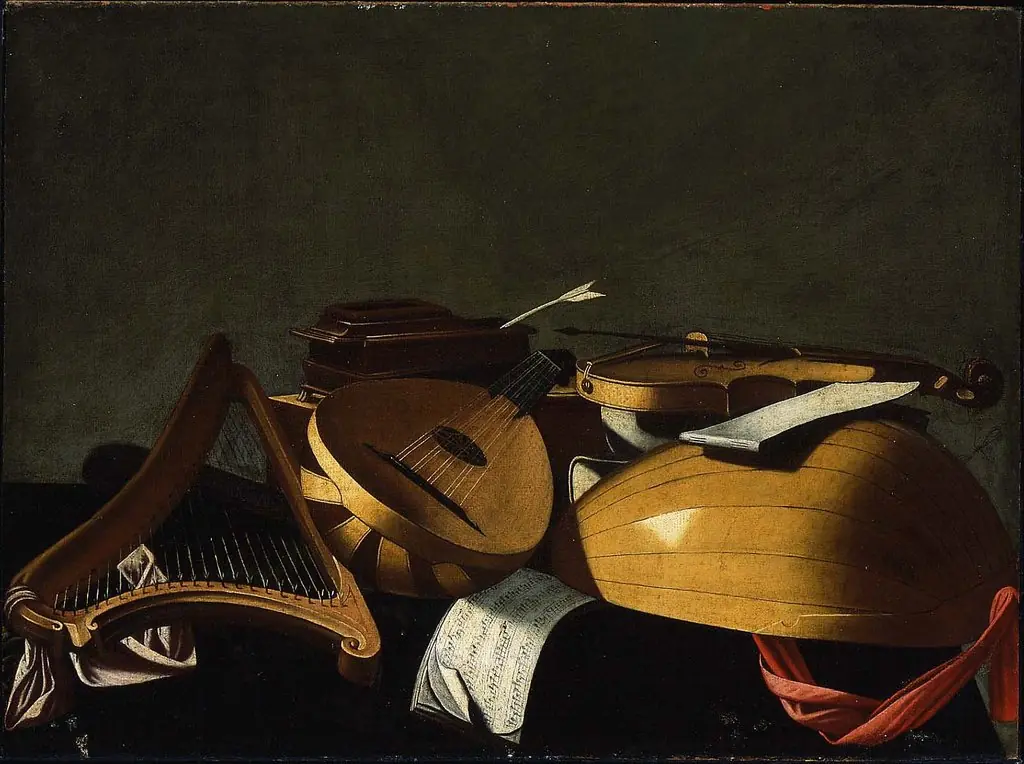 Musical Instruments
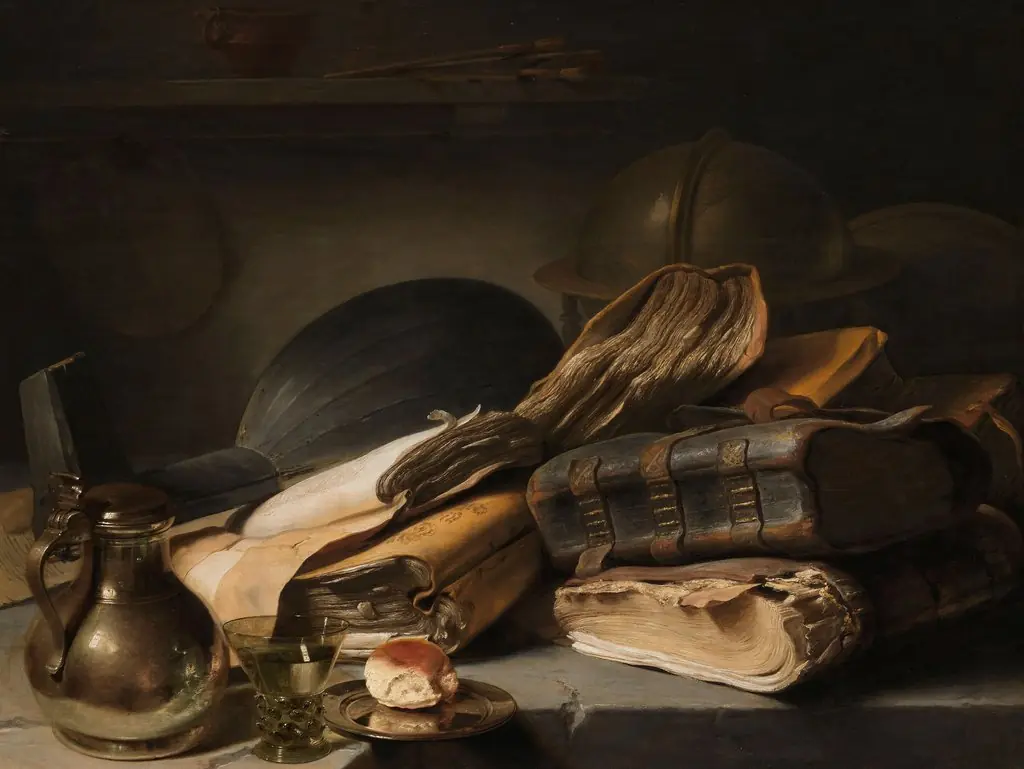 Still Life with Books
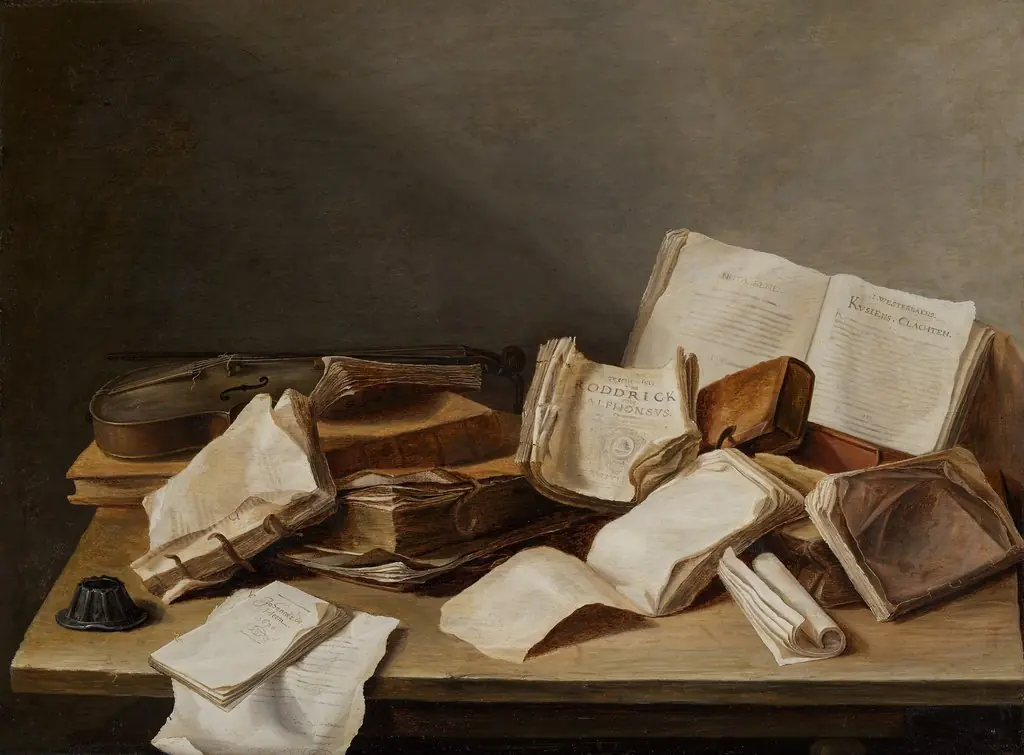 Still-Life of Books
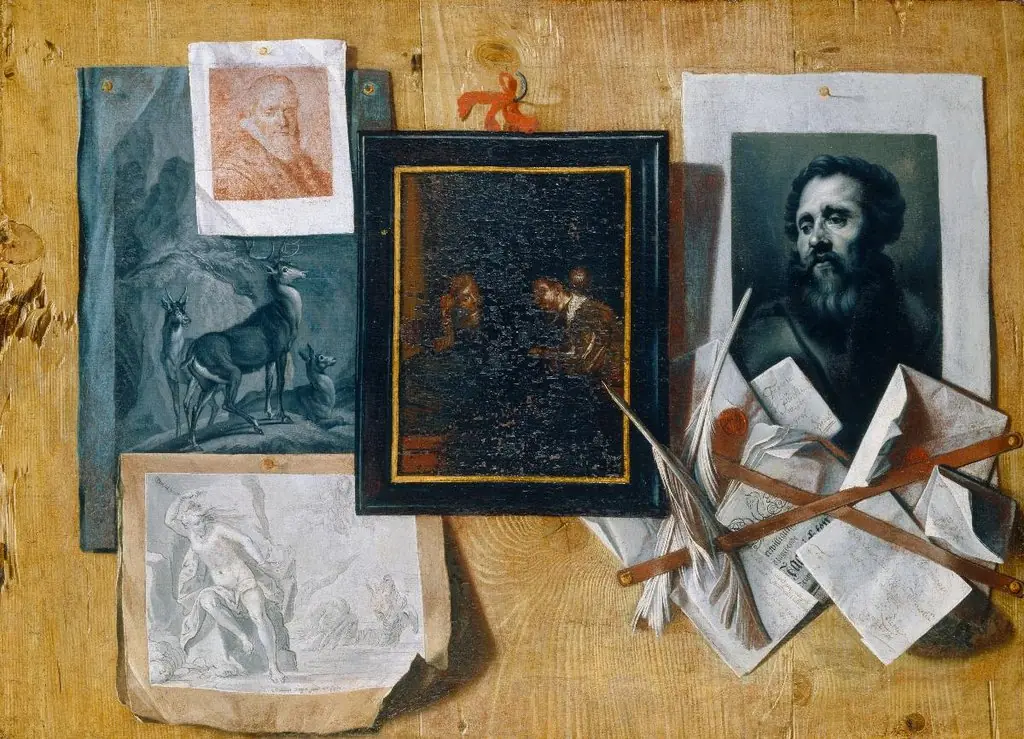 Quodlibet mit einem Gemälde, Zeichnungen, einem Schabkunstblatt und Briefen
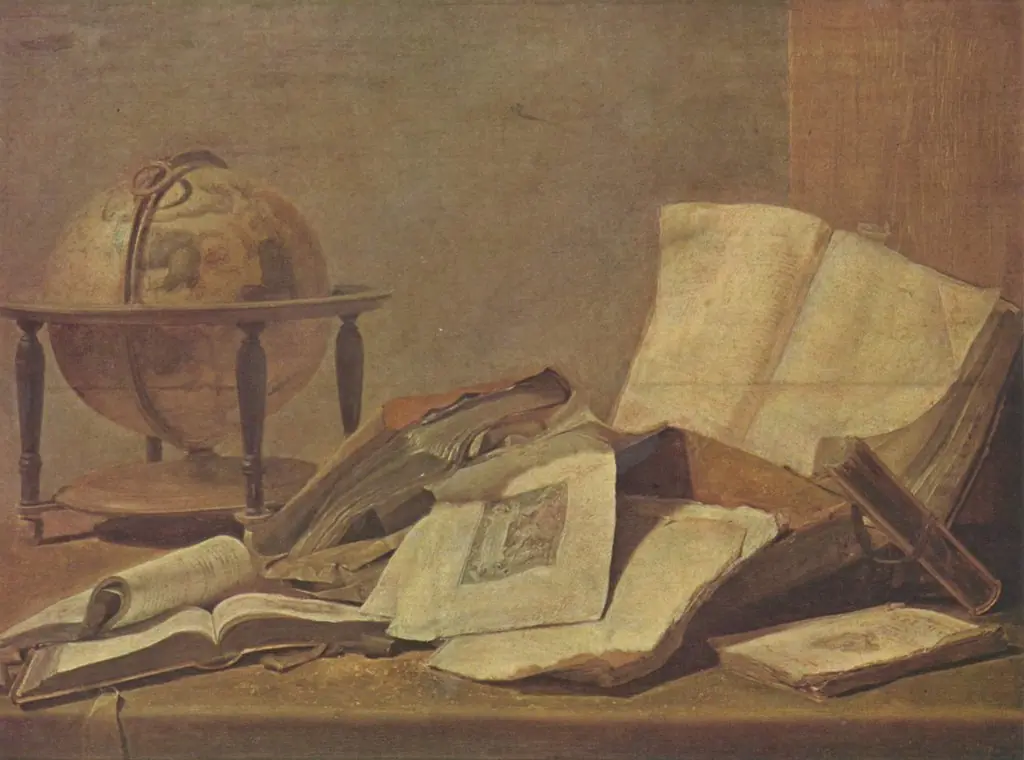 Still-life with Books and Globe
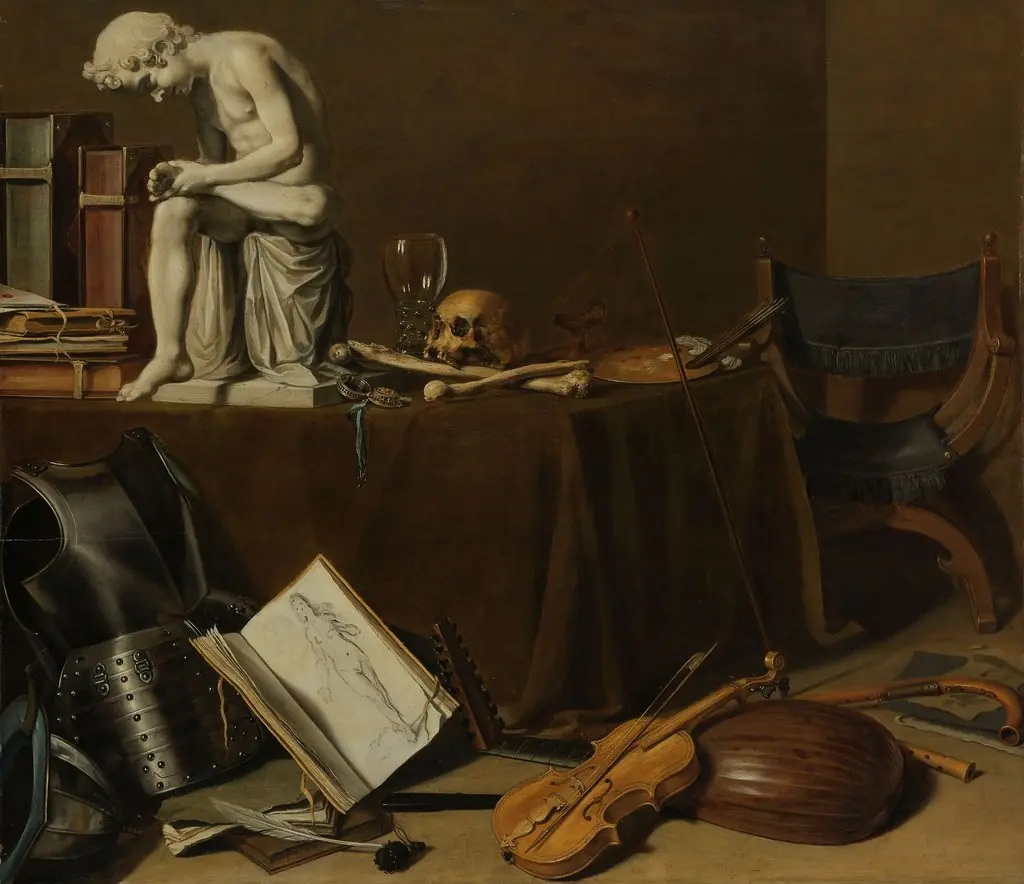 Vanitas Still Life with the Spinario
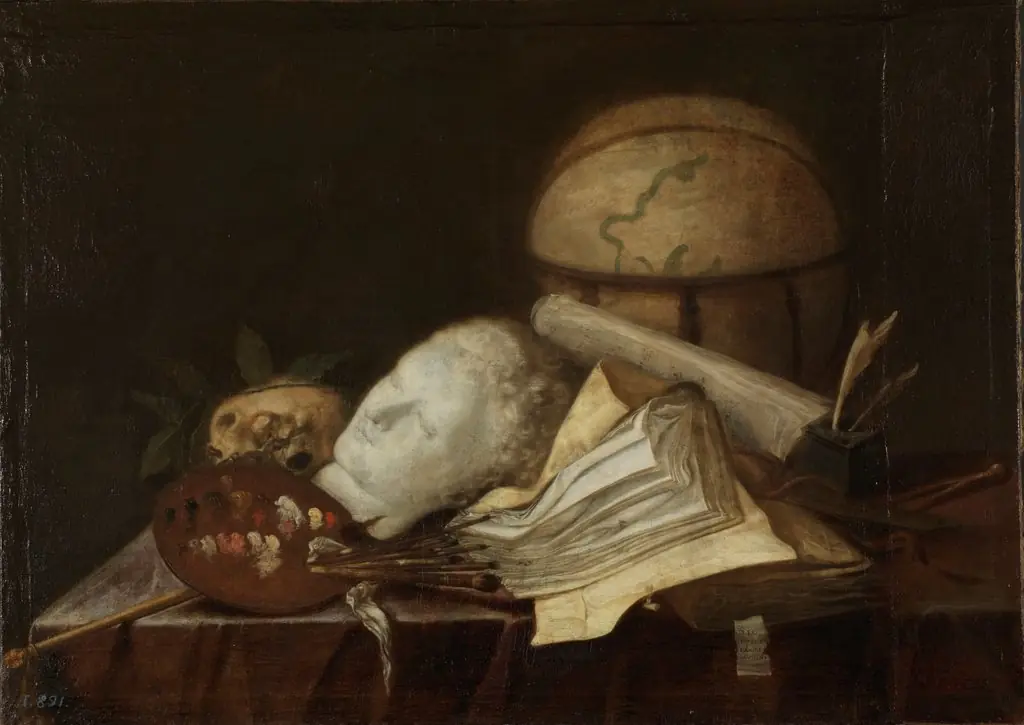 Allegory of the Arts and Sciences
 Still Life of Books and a Rembrandt Engraving