Artwork
The Arab Jeweler
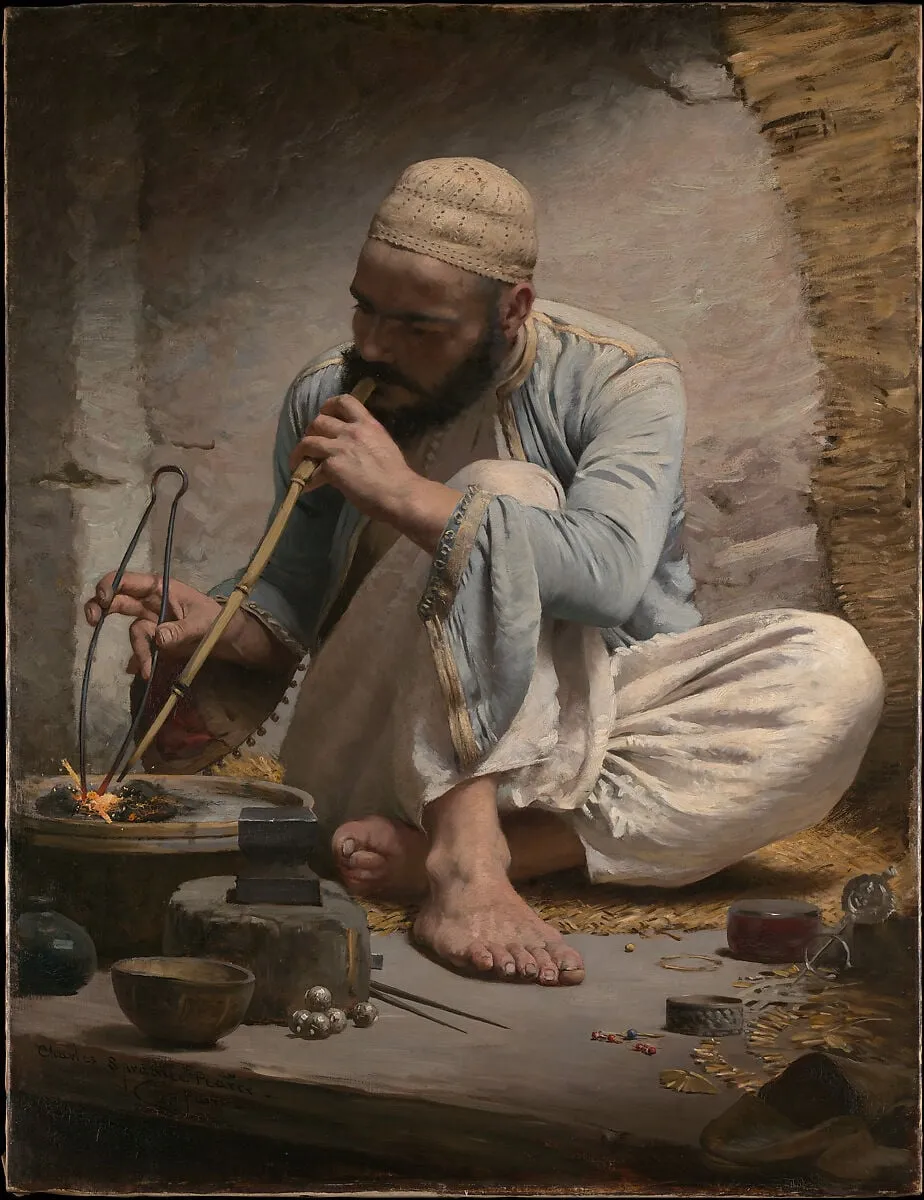
The Arab Jeweler is an oil painting by the Impressionist artist Charles Sprague Pearce. It dates from 1882 and is held in the collection of the Metropolitan Museum of Art. This oil on canvas portrays a jeweler engaged in his precise craft, intently filing a ring at his workbench.
About this work
A man bends over a small workbench, squinting at a ring he is filing. Pearce painted this in Paris in 1882, though the jeweler is meant to be American, and the tools and loose robe feel drawn from his years in North Africa. The light falls like a spotlight in a dark room, making the gold glow.
Subject & Meaning
He is shown with the tools of his trade and surrounded by pieces of jewelry, highlighting the material and labor involved in the occupation.
The painting portrays a male jeweler seated at his workbench, engaged in the craft of jewelry-making. He is shown with the tools of his trade and surrounded by pieces of jewelry, highlighting the material and labor involved in the occupation. As a genre scene, the work focuses on the everyday activity of the artisan, presenting a straightforward depiction of his profession without additional narrative embellishment.
Technique & Style
Executed in 1882, The Arab Jeweler is an oil painting on canvas by Charles Sprague Pearce. The work measures 116.8 by 89.9 centimeters. As a genre scene, the composition focuses on a male figure engaged in labor, specifically depicting the crafting of jewelry using physical tools.
The medium of oil paint allows for the detailed rendering of the subject's work environment and the specific textures associated with the trade. The piece is classified within the American Wing collection, highlighting its significance in American art of the late nineteenth century.
History & Provenance
The painting The Arab Jeweler (1882) by Charles Sprague Pearce is held in the Metropolitan Museum of Art, where it is part of the American Wing collection; it is listed in the museum’s catalogue as an oil on canvas work measuring 116.8 × 89.9 cm. The work’s accession number is not published in the available documentation, but it is classified under the genre‑scene category within the museum’s holdings. No exhibition record is cited in the sources consulted, indicating that the piece has not been featured in separate museum exhibitions beyond its permanent display in the American Wing.
Context
The Arab Jeweler (1882) is an oil‑on‑canvas genre scene by Charles Sprague Pearce, measuring about 116.8 × 89.9 cm and housed in the Metropolitan Museum of Art’s American Wing. The composition portrays a man engaged with jewelry, reflecting contemporary American interest in material culture and everyday labor. Its placement within the American Wing underscores its significance as a representative work of late‑19th‑century U.S. academic painting, while the genre classification aligns with the period’s realistic narrative emphasis.
Overview
This oil on canvas portrays a jeweler engaged in his precise craft, intently filing a ring at his workbench. Although conceived in Paris, the painting integrates an American subject with visual elements derived from North Africa, reflecting the artist's significant time spent abroad. The composition emphasizes the artisan's deep concentration and the meticulous nature of his work, dramatically highlighted by a focused and intense lighting scheme.
Artist & collection

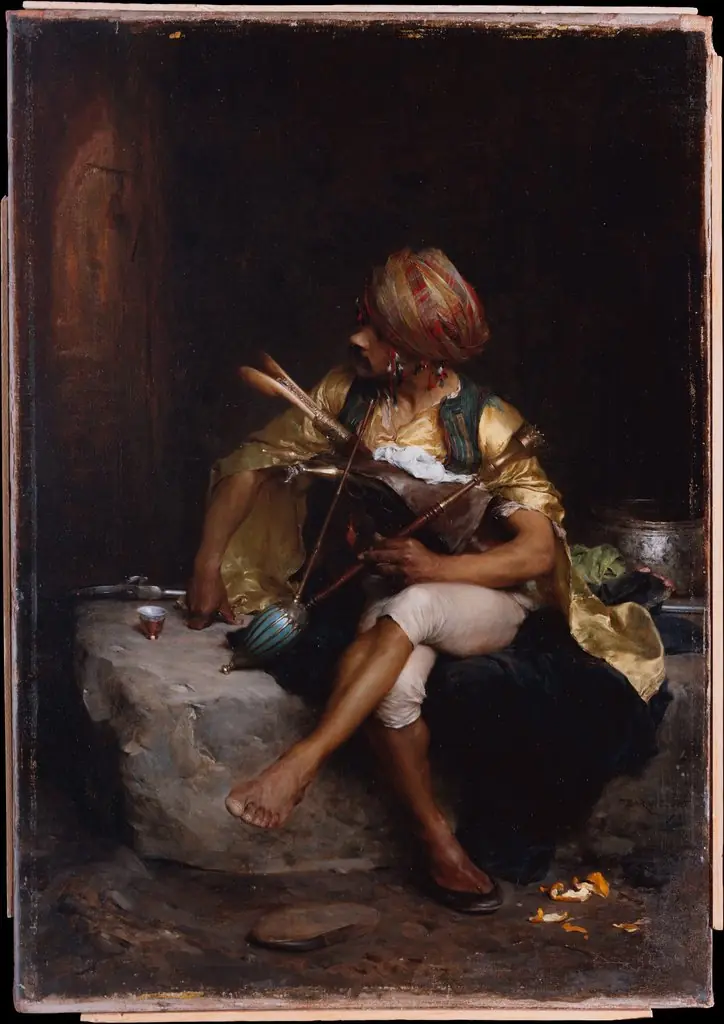 A Bashi-Bazouk
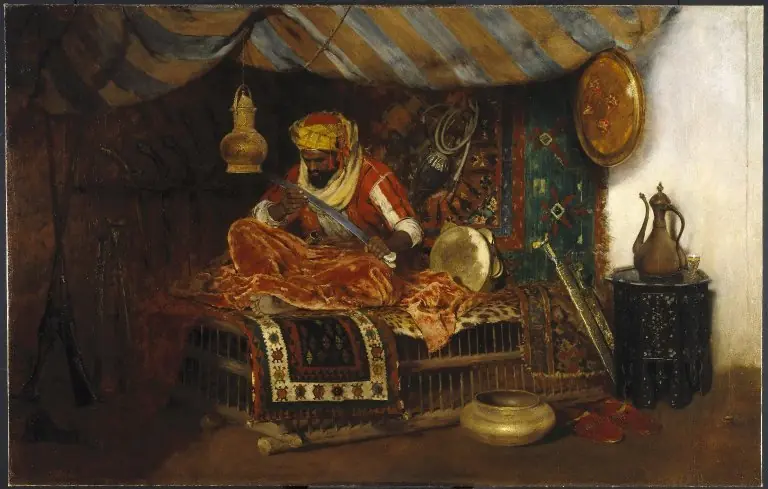 The Moorish Warrior
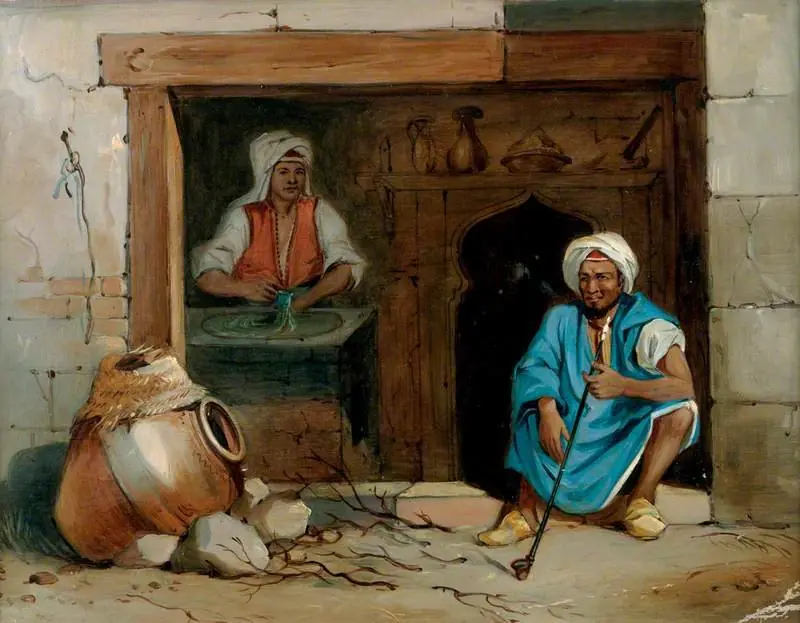 An Egyptian Baker and His Assistant at the Door of a Cake-Shop
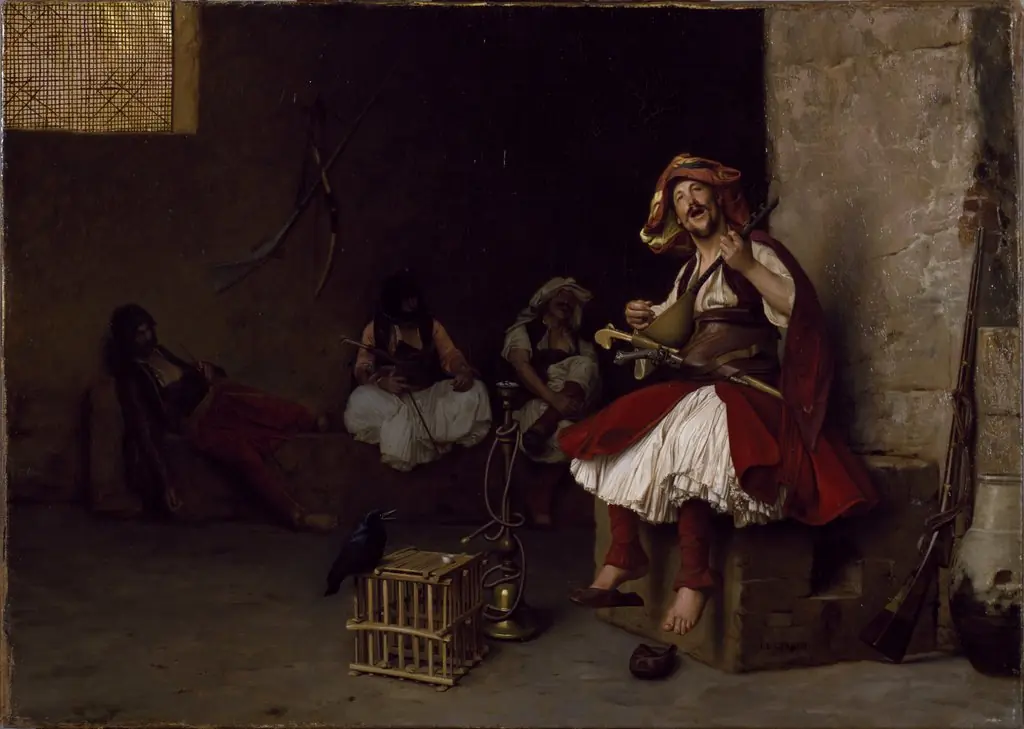 Bashi-Bazouk Singing
 A party of chess players outside a Turkish coffeehouse and barbershop
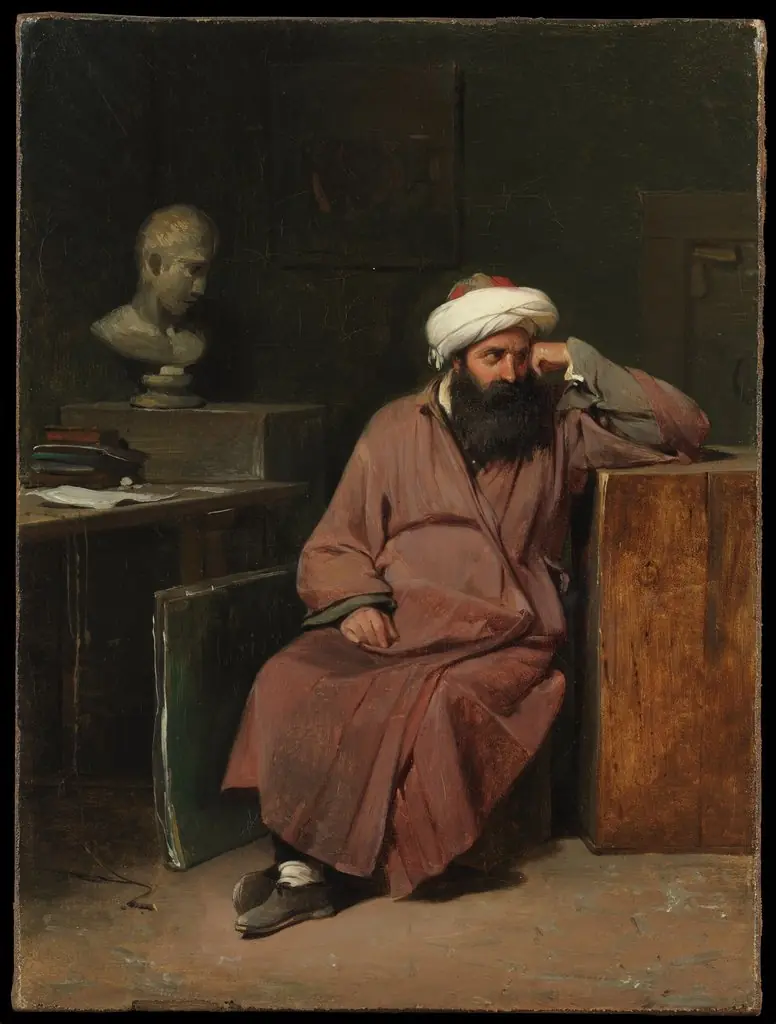 Man in Oriental Costume in the Artist’s Studio
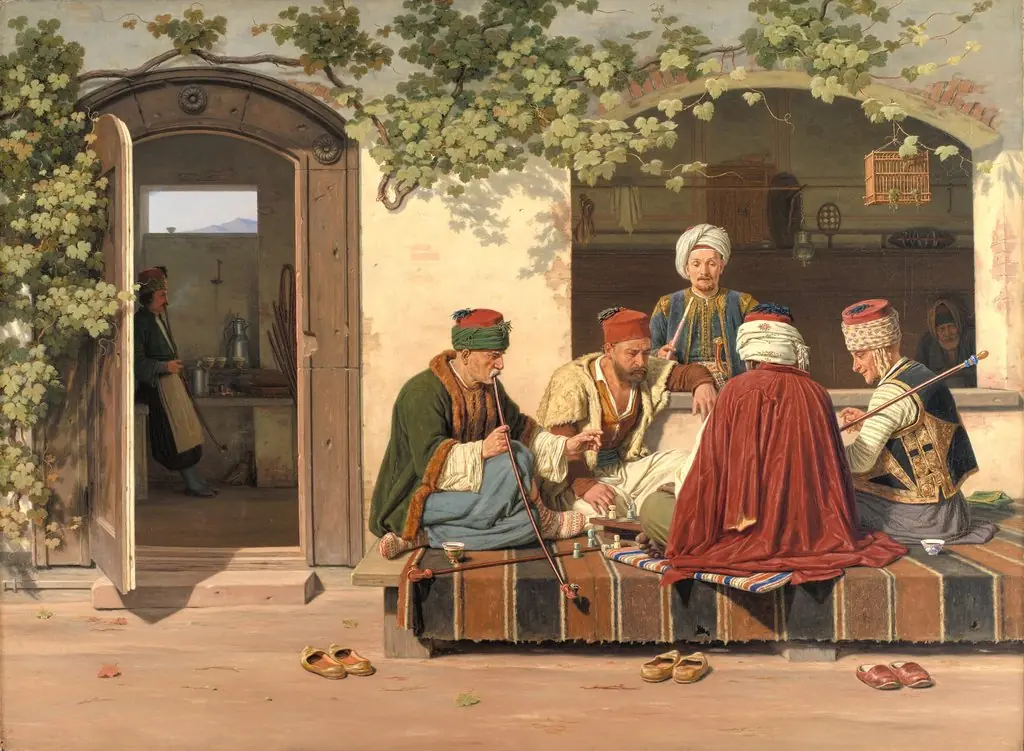 A party of chess players outside a Turkish coffeehouse and barbershop
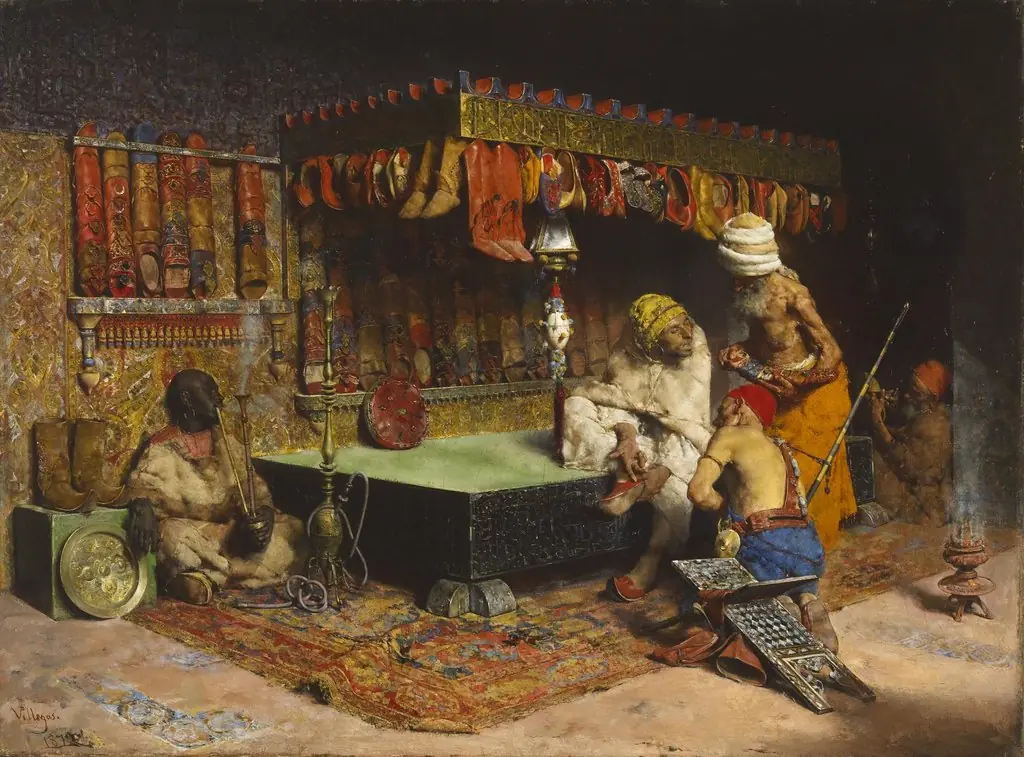 The Slipper Merchant in Morocco
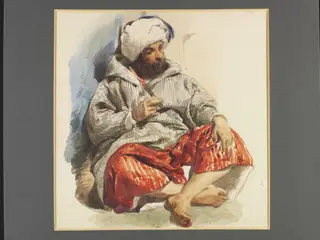 A European in Oriental dress, seated cross legged