Artwork
A Bashi-Bazouk
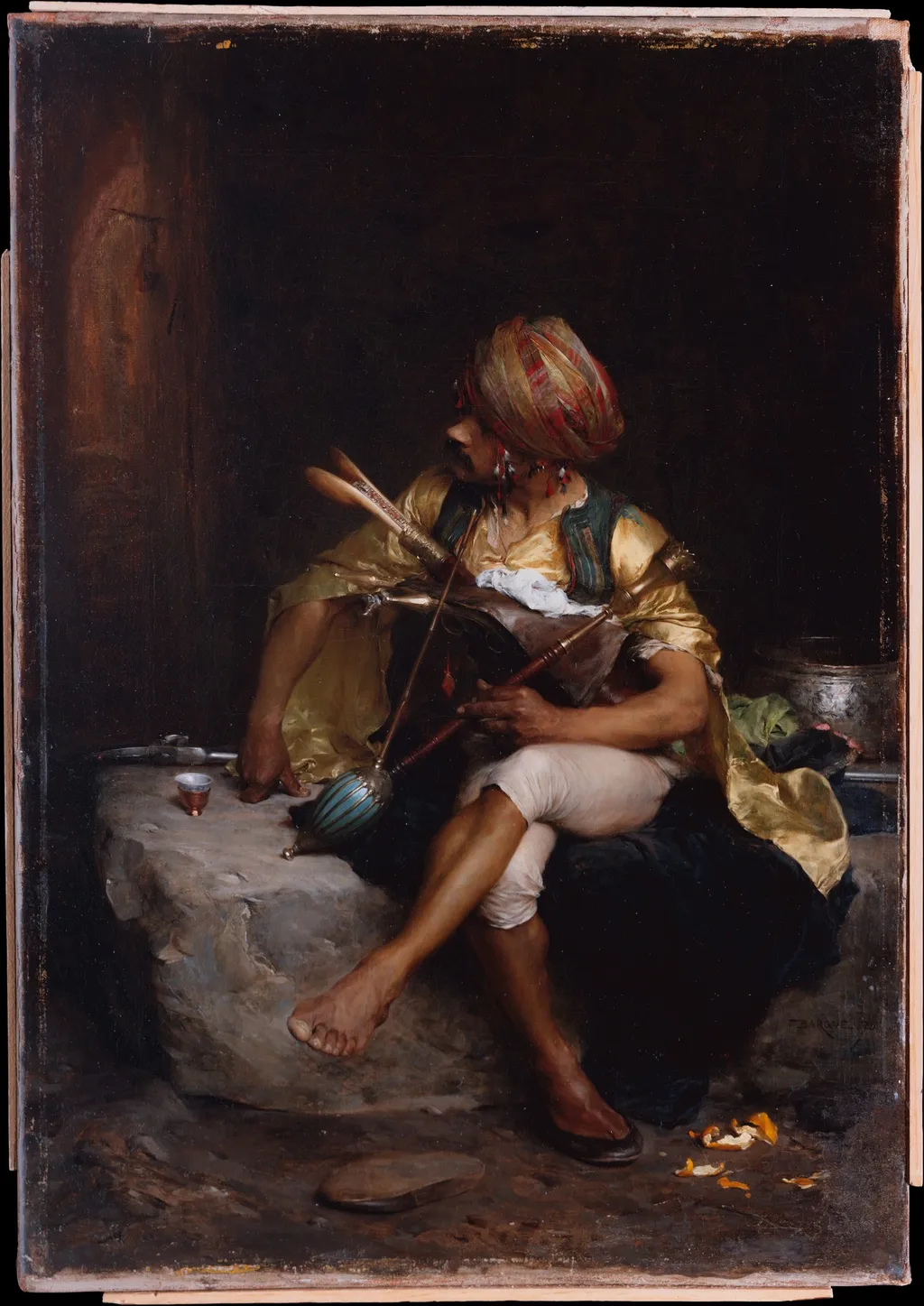
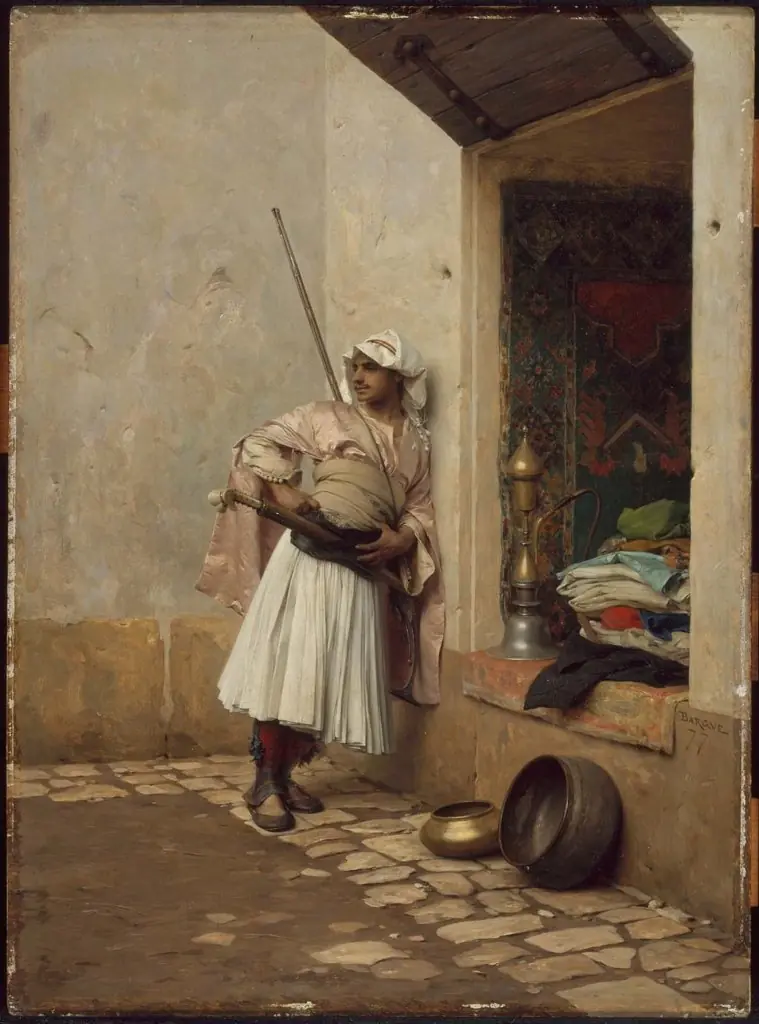
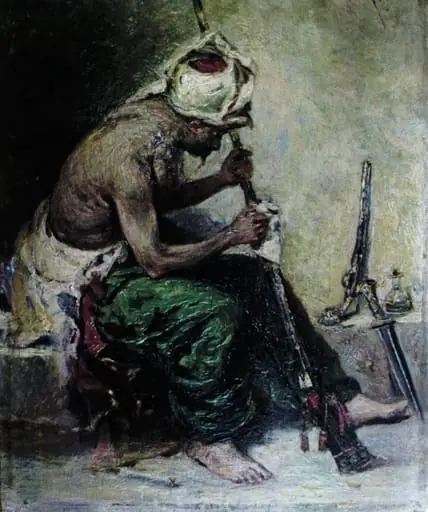
A Bashi-Bazouk is an oil painting by the Orientalist artist Charles Bargue. It dates from 1875 and is held in the collection of the Metropolitan Museum of Art.
About this work
Subject & Meaning
The work is categorized within the Orientalist movement, a 19th-century artistic style characterized by Western artists' depictions of Eastern subjects.
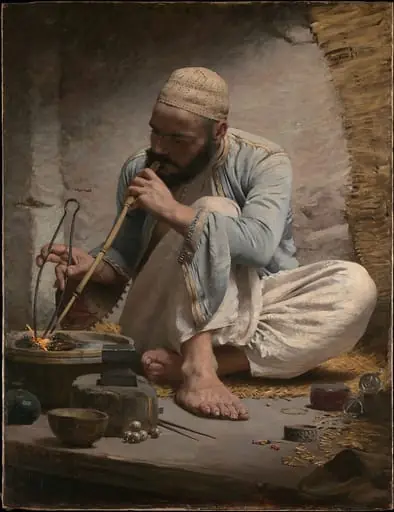
Charles Bargue's 1875 oil painting, A Bashi-Bazouk, depicts a man, identified by the title as a Bashi-Bazouk, a type of irregular Ottoman soldier. The work is categorized within the Orientalist movement, a 19th-century artistic style characterized by Western artists' depictions of Eastern subjects. In this composition, the figure is shown holding a pipe, an element that contributes to the specific iconography of the scene.
The painting represents the Orientalist fascination with the perceived exoticism and distinct cultural identity of the Ottoman Empire, focusing on the individual character of the soldier rather than a broader historical narrative.
Technique & Style
A Bashi-Bazouk is executed in oil paint on canvas, a standard medium for academic Salon-era works. The painting measures 46.4 cm in height by 33.3 cm in width, a modest vertical format suited to a single half-length figure study. Stylistically, it belongs to the Orientalist movement, a 19th-century European tradition in which artists depicted North African, Near Eastern, and Ottoman subjects with attention to costume, weaponry, and ethnographic detail.
The work is classified as a painting within the Metropolitan Museum of Art's collection, consistent with Bargue's broader practice of producing tightly rendered, sharply observed figure studies that combined academic draftsmanship with the picturesque conventions of Orientalist imagery.
History & Provenance
Charles Bargue created the oil painting A Bashi-Bazouk in 1875. The work, classified within the Orientalist movement, depicts a man holding a pipe and is executed on canvas. While specific details regarding the initial commission or the artist's direct creation process are not documented in the available records, the painting's ownership history is partially traced to Catharine Lorillard Wolfe.
Following her tenure, the work entered the collection of the Metropolitan Museum of Art, where it is currently held. The physical dimensions of the piece are recorded as 46.4 centimeters in height and 33.3 centimeters in width. The date of inception is consistently cited as January 1, 1875, marking the completion of this specific oil-on-canvas study.
A Bashi-Bazouk by Charles Bargue is held in the collection of the Metropolitan Museum of Art. According to the Wikidata record for the work, the painting entered the museum through Catharine Lorillard Wolfe, who is listed as a former owner. The oil on canvas measures 46.4 cm in height by 33.3 cm in width. No specific accession number, acquisition date, or exhibition history is documented in the available sources.
Context
Charles Bargue's A Bashi-Bazouk (1875) is situated within the broader movement of Orientalist painting, a genre characterized by European depictions of the East. The work, an oil on canvas measuring 46.4 by 33.3 centimeters, depicts a man holding a pipe, aligning with the thematic interests of the period. Currently held in the collection of the Metropolitan Museum of Art, the painting was originally owned by Catharine Lorillard Wolfe.
As a creation from 1875, the piece reflects the artistic output of Bargue during the late 19th century, contributing to the historical record of Orientalist subjects in Western art.
Legacy
A Bashi-Bazouk (1875), an oil on canvas by Charles Bargue, entered the collection of the Metropolitan Museum of Art through the bequest of Catharine Lorillard Wolfe, situating the piece within the broader Orientalist movement. Its inclusion in a major American museum and scholarly attention to Orientalist subjects have sustained its reputation as a representative example of 19th‑century European depictions of North African figures, influencing later interpretations of Bargue’s technique and the genre’s legacy.
Overview
Charles Bargue's 1875 oil painting, A Bashi-Bazouk, exemplifies the Orientalist movement prevalent in European art of the era. This work portrays a figure in distinct attire, seated with a pipe, evoking a sense of the exotic. Bargue, a Parisian artist recognized for his significant drawing instruction, created this piece, which is now part of The Metropolitan Museum of Art's collection.
Own this work as a print
Artist & collection
Artist
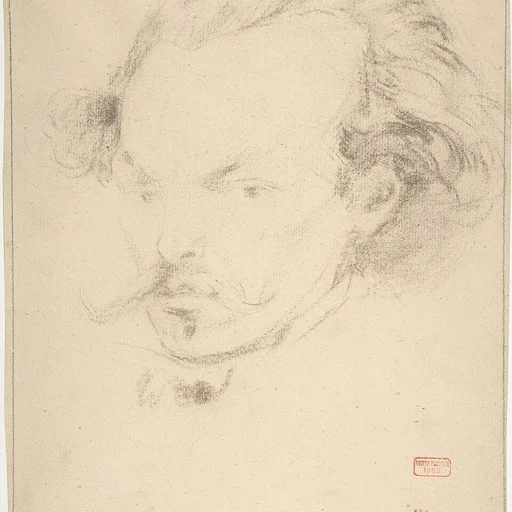
Charles Bargue (Paris, c. 1825 - Paris, 1883) was a French painter and lithographer noted for devising an influential drawing course.