Artwork
Ruined tomb with Hindu ablutions
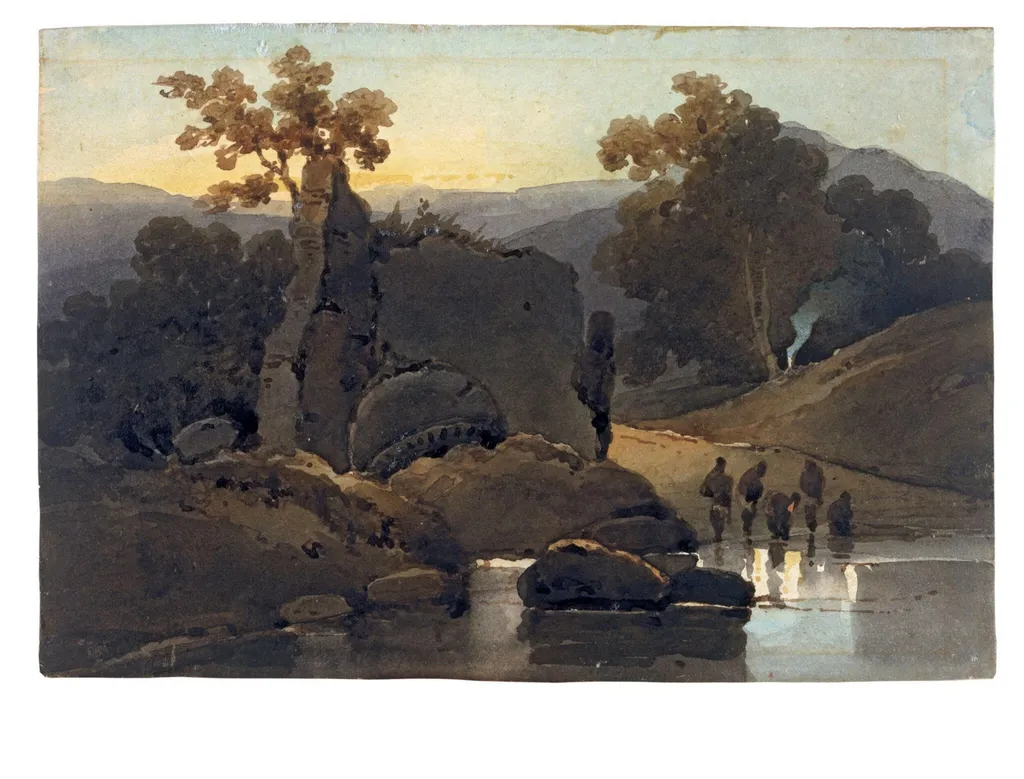
Ruined tomb with Hindu ablutions is a watercolor work on paper by the Patna School of Painting artist George Chinnery. It dates from 1802 and is held in the collection of the Victoria and Albert Museum.
About this work
Overview
Painted in 1802 by George Chinnery, this watercolour depicts a quiet riverside scene in India.
Painted in 1802 by George Chinnery, this watercolour depicts a quiet riverside scene in India. Five small figures are arranged along a rocky bank, their forms rendered with minimal detail. The landscape is dominated by muted earth tones, contrasted by a soft, glowing sunset sky.
The medium’s transparency lends the image a delicate, atmospheric quality, typical of Chinnery’s approach to Indian subjects during his early years in the region.
Subject & Meaning
The scene captures a moment of daily ritual near a crumbling structure, likely a tomb, suggesting religious or ceremonial activity. The figures, though indistinct, appear engaged in ablutions, their actions aligned with the natural setting. The ruined architecture implies the passage of time and the persistence of tradition amid decay, without overt narrative or symbolic emphasis.
Technique & Style
Chinnery employed watercolour with a light touch, allowing the paper to show through in places and creating subtle gradations of tone. Forms are suggested rather than defined, with loose brushwork for foliage and rock. The sky’s warm hues are thinly layered, producing a hazy luminosity that softens the entire composition, reflecting the artist’s preference for atmospheric effect over precision.
History & Provenance
Created during Chinnery’s early stay in India, the work reflects his transition from portraiture to landscape observation. It likely originated as a personal study, later entering private collections before being acquired by the Victoria and Albert Museum. Its modest scale and unassuming subject suggest it was not commissioned but made as part of the artist’s broader documentation of local life.
Context
In the early 19th century, British artists in India often recorded landscapes and customs as part of colonial curiosity. Chinnery’s work diverged from grand imperial imagery, focusing instead on quiet, unidealized moments. This piece aligns with a growing interest in indigenous practices and the natural environment, viewed through a European lens but with relative restraint and attention to detail.
Legacy
The painting contributes to a body of work that helped shape Western perceptions of Indian landscapes beyond the exoticized. Its understated quality distinguishes it from more dramatic colonial-era scenes. Today, it remains a quiet example of cross-cultural observation, valued for its sincerity and technical restraint rather than its scale or subject matter.
Own this work as a print
Artist & collection
Artist
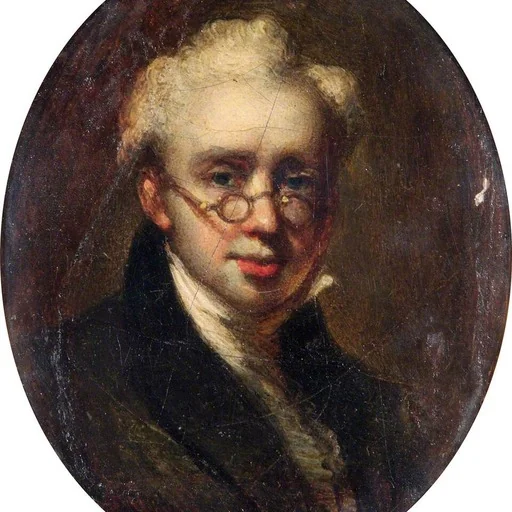
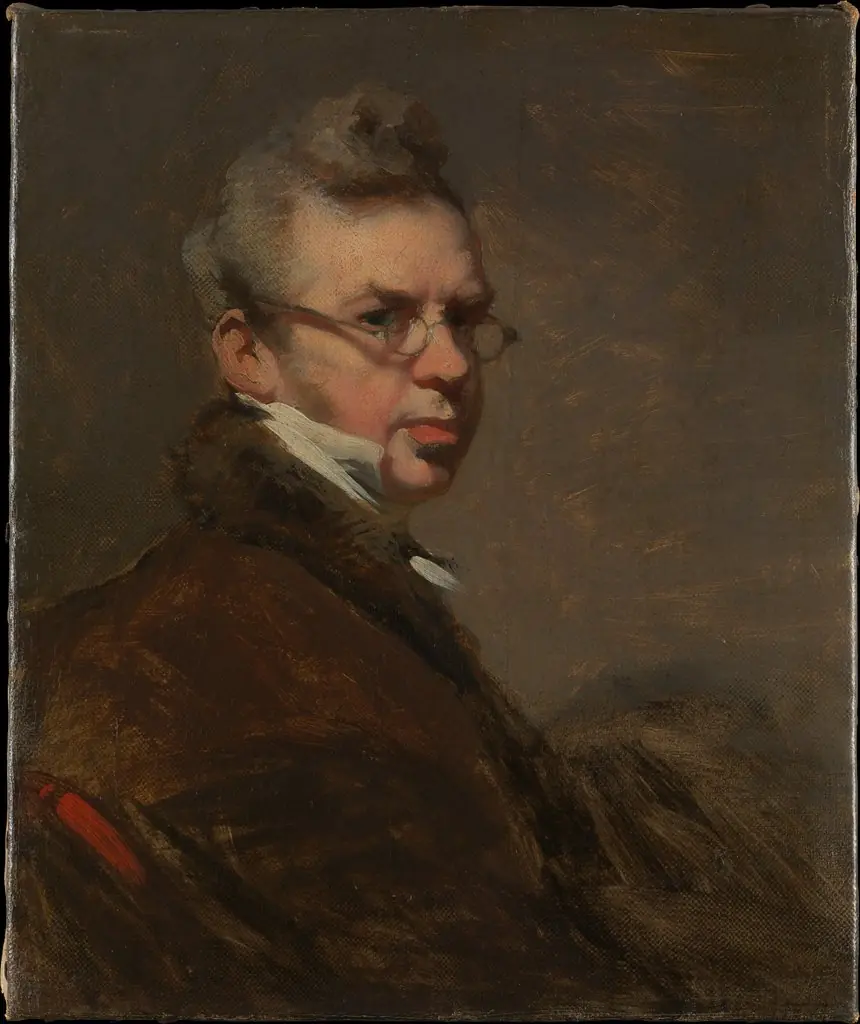
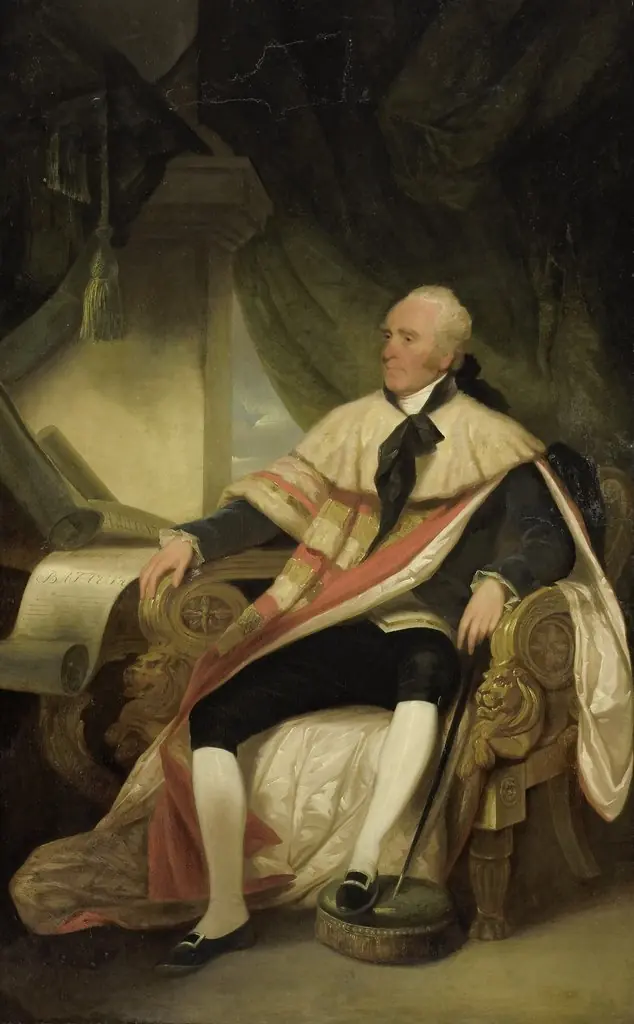
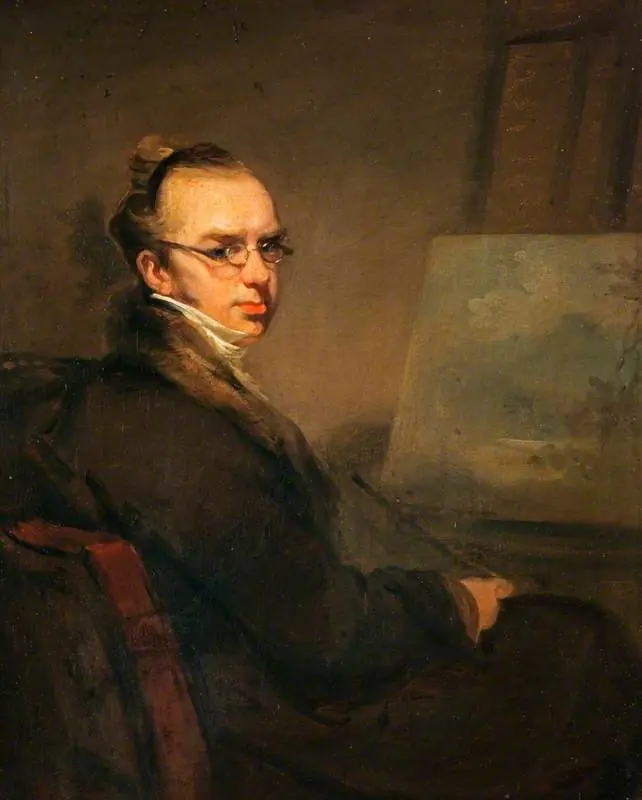
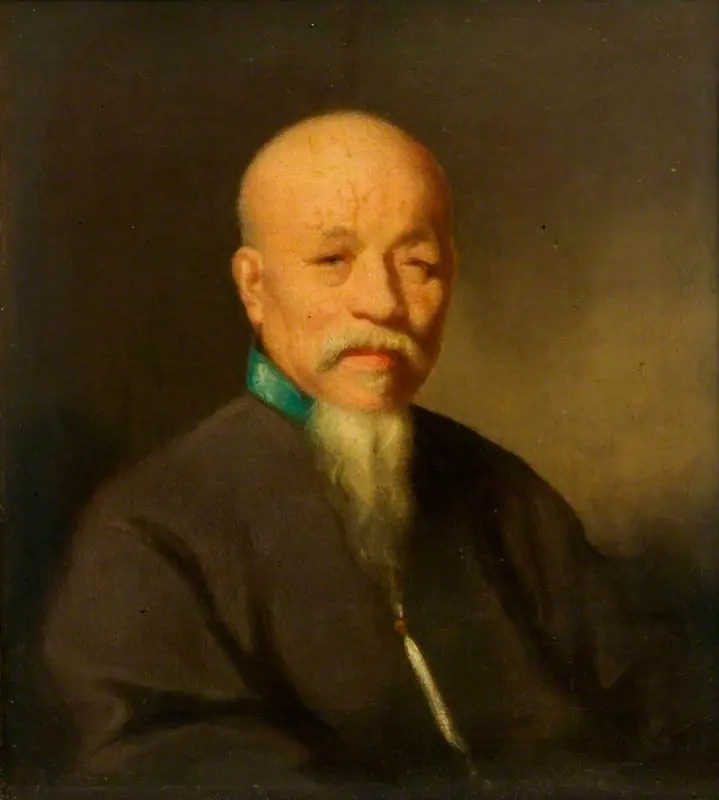
George Chinnery (Chinese: 錢納利; 5 January 1774 – 30 May 1852) was an English painter who spent most of his life in Asia, especially India and southern China.

- Rydal Head, Ambleside, Westmorland
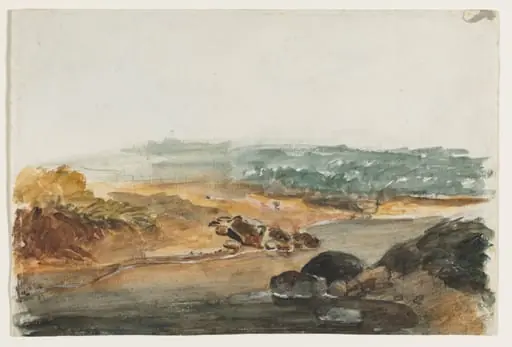 Landscape (recto)
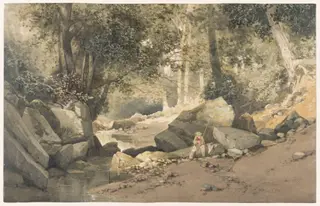 Rocky Woodland Stream with Fishermen
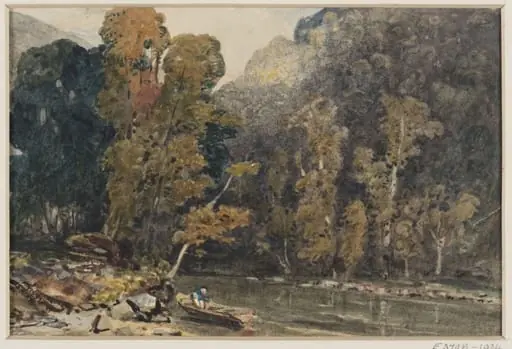 Landscape drawing
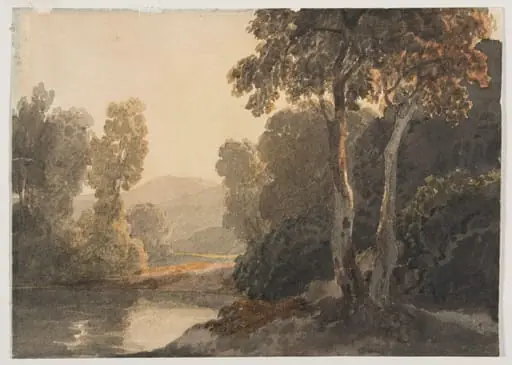 Landscape with Pond and Mountains
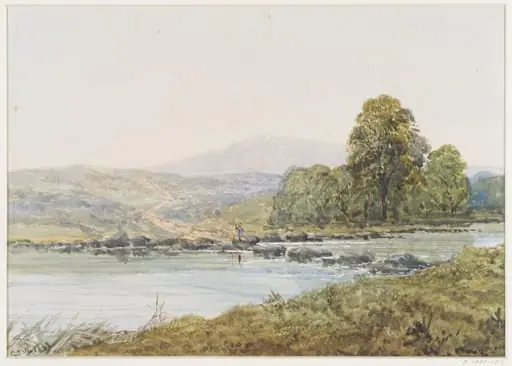 The Stepping-stones near Bettws-y-Coed, North Wales
 Landscape with cottage
 Landscape with Lake and Cliffs
 Lock on the Thames
 Landscape, with a wiinding river - evening
 View Near Tivoli (Vue prise à Tivoli)
 Near Midnapore, Bengal