Artwork
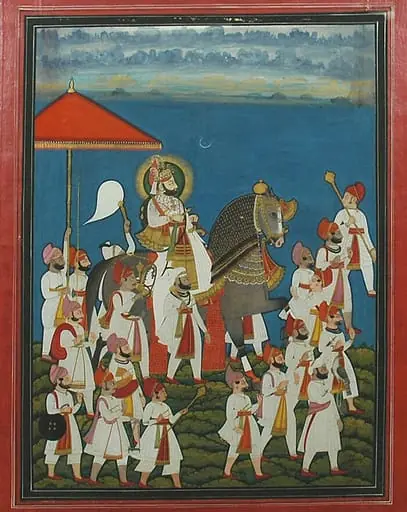
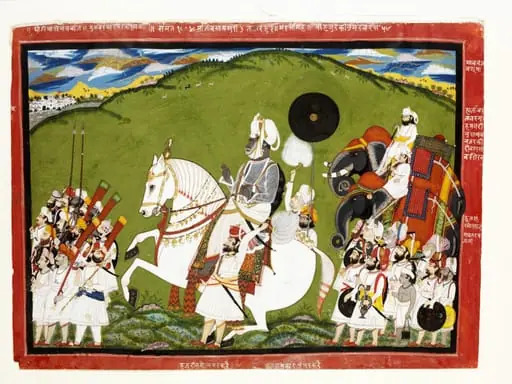
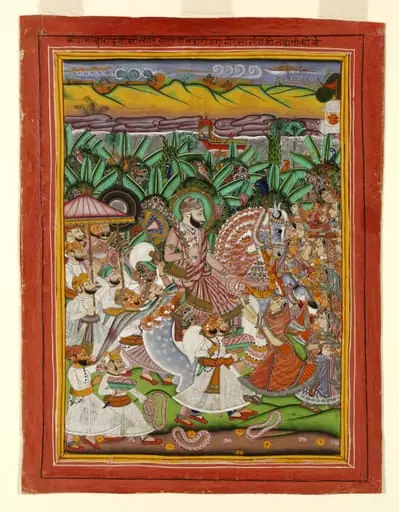
Maharana Bhim Singh in Procession
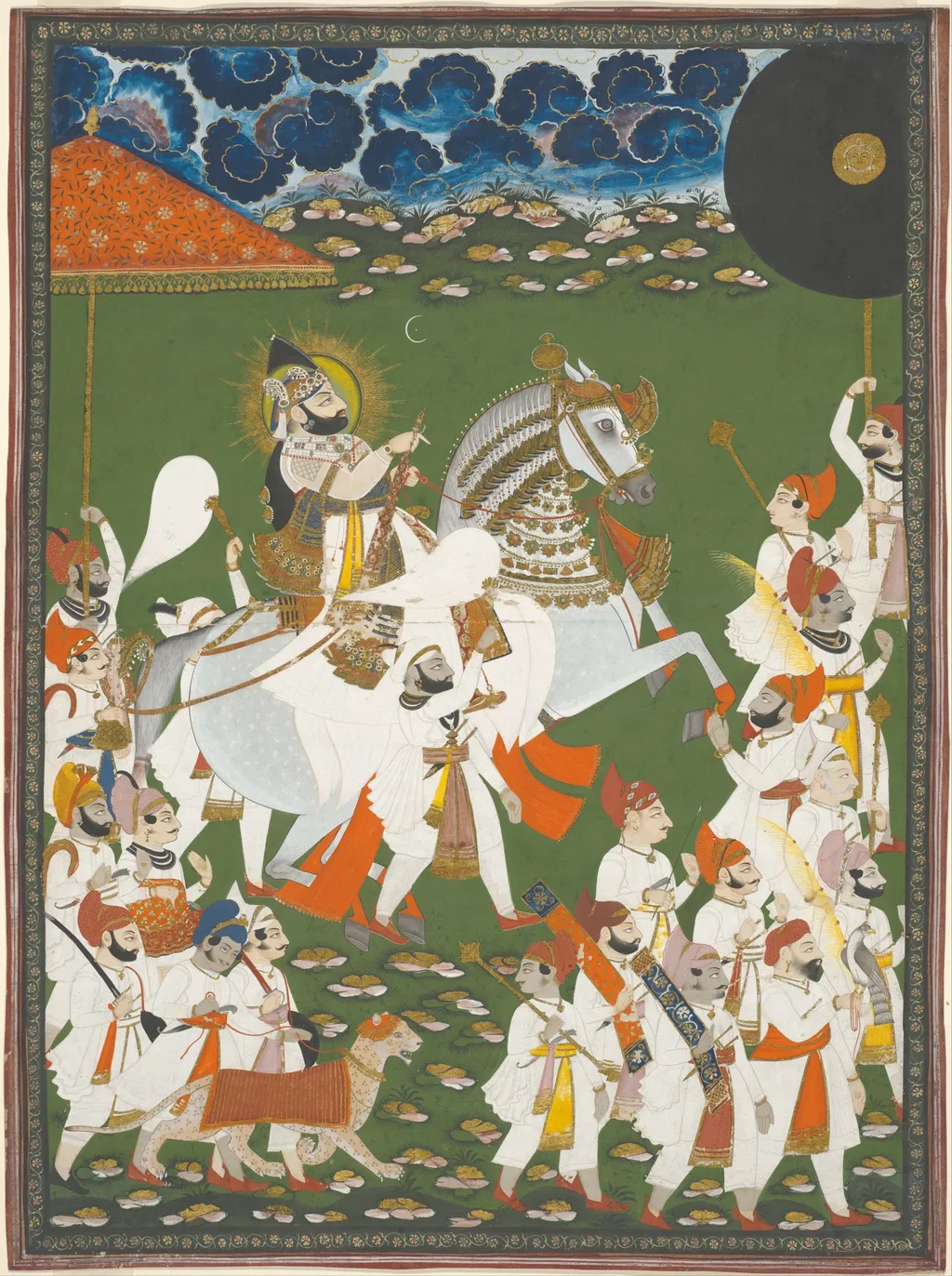
Maharana Bhim Singh in Procession is an unspecified painting by the Patna School of Painting artist Ghasi. It dates from 1820 and is held in the collection of the Art Institute of Chicago.
About this work
Overview
Executed in watercolor and gold on paper, it belongs to the Rajasthani school of painting and is part of the Art Institute of Chicago’s collection.
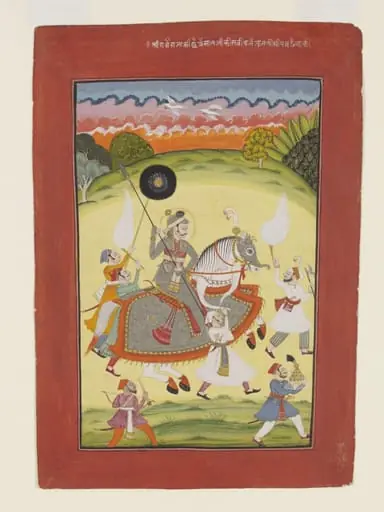
Painted in 1820 by the artist Ghasi, this work depicts Maharana Bhim Singh of Udaipur during a ceremonial procession. Executed in watercolor and gold on paper, it belongs to the Rajasthani school of painting and is part of the Art Institute of Chicago’s collection. The composition emphasizes the ruler’s prominence through scale, color, and central positioning amid a retinue of attendants and guards.
Subject & Meaning
The painting portrays Maharana Bhim Singh as a sovereign in motion, asserting authority through ritual display. His white robes and ornate turban signify purity and status, while the sword and staff denote military leadership. The surrounding figures, attendants, guards, and bearers, reinforce his role as both political and spiritual head. The procession reflects courtly tradition, where public movement was a performance of power and legitimacy.
Technique & Style
Ghasi employed fine brushwork and mineral pigments to render intricate details in textiles, horse trappings, and landscape elements. Gold leaf highlights adorn clothing and armor, adding luminosity. The background features stylized hills and clouds, rendered with loose, atmospheric strokes.
A symbolic black disc with a yellow center in the upper right may represent the sun or a celestial emblem, common in Rajput iconography to denote divine favor.
History & Provenance
Commissioned during Bhim Singh’s reign (1778–1828), the painting likely originated in the royal atelier of Udaipur. It remained within the Mewar family’s collection before entering the Art Institute of Chicago’s holdings in the 20th century. Its preservation reflects continued interest in Rajput court art, though specific documentation of its early ownership remains limited.
Context
This work emerged during a period when Rajput courts maintained distinct artistic traditions despite increasing British political influence. Processional imagery was a longstanding genre, used to affirm dynastic continuity. The inclusion of natural elements and celestial symbols aligns with regional aesthetics that blended earthly authority with cosmic order, distinguishing Rajasthani painting from Mughal realism.
Legacy
Ghasi’s painting exemplifies the enduring visual language of Rajput royalty, preserving ceremonial norms through art. It contributes to scholarly understanding of how regional courts expressed sovereignty in the early 19th century. Today, it serves as a key reference for the stylistic evolution of Indian miniature painting beyond Mughal dominance, highlighting the resilience of local traditions.
Own this work as a print
Artist & collection