Artwork
Untitled
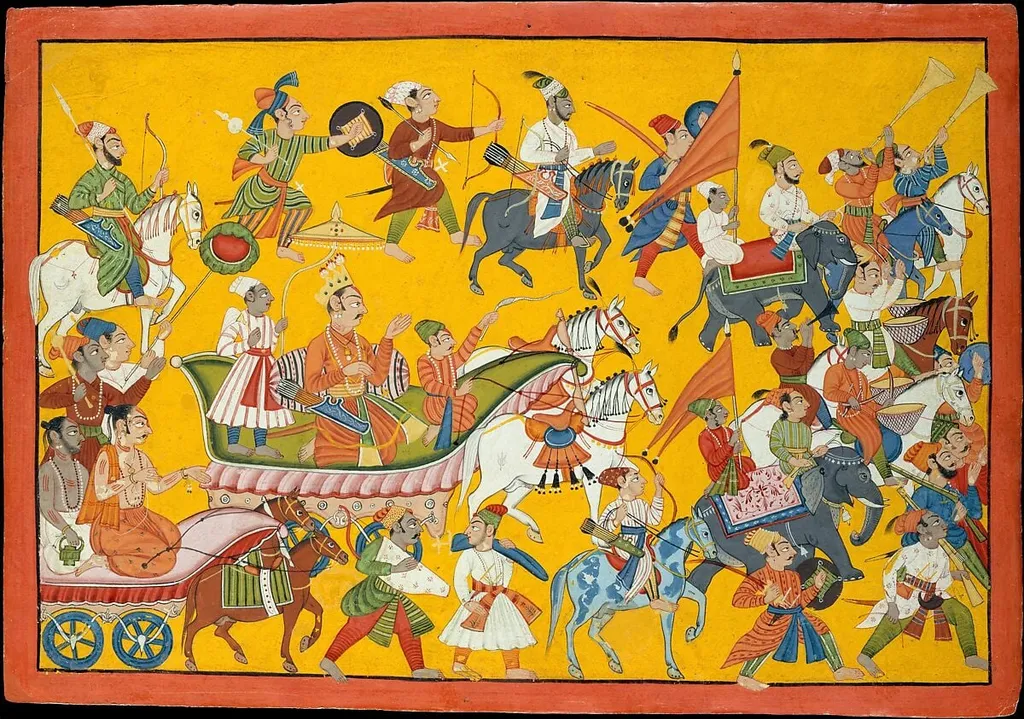
Untitled is a watercolor painting. It dates from 1700 and is held in the collection of the Metropolitan Museum of Art.
- Accession no.
- 1994.310
- Credit line
- Purchase, The Dillon Fund, Evelyn Kranes Kossak, and Anonymous Gifts, 1994
About this work
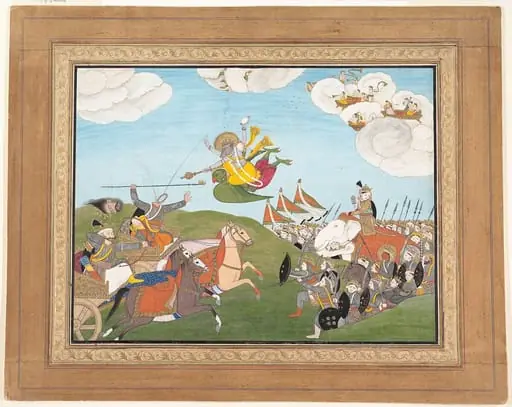
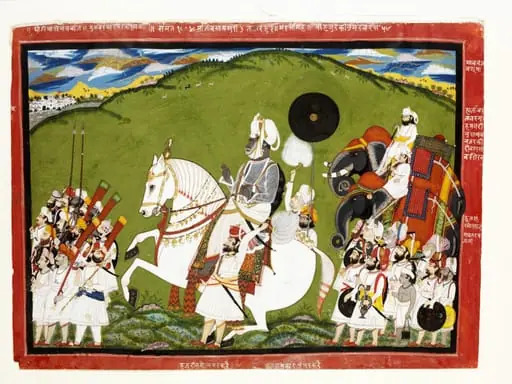
Men in bright robes ride elephants, horses pull chariots, and soldiers march across a flat landscape. Painted in India around 1700 by an unknown artist. The fine detail, down to the patterns on the elephants' blankets, reflects the work done for royal courts, recording parades and battles.
Subject & Meaning
The painting depicts a dynamic scene centered on a horse-drawn chariot, with an elephant positioned to the right and a man in equestrian attire mounted on the horse. The juxtaposition of these elements suggests a narrative of movement and power, likely reflecting themes of royal or ceremonial procession common in Indian visual traditions. The inclusion of the elephant alongside the chariot and horse may symbolize the prestige and authority associated with these animals in 18th-century Indian court culture.
The anonymous artist's focus on these figures underscores a narrative of mobility and status, where the man's equestrian role and the presence of the elephant signify social or political dominance.
Technique & Style
Classified as a history painting, the piece depicts a dynamic scene featuring equestrianism, specifically showing a man, a horse, a chariot, and an elephant.
Created in India around 1700, this anonymous work is executed in opaque watercolor and ink on paper. Classified as a history painting, the piece depicts a dynamic scene featuring equestrianism, specifically showing a man, a horse, a chariot, and an elephant. The application of opaque pigments combined with ink suggests a technique common to South Asian manuscript traditions of the period, utilizing paper as the primary support.
While specific details regarding the artist's handling or the object's current physical condition are not provided in the available records, the formal composition centers on the interaction between the human and animal figures within a narrative context.
History & Provenance
Created in India around 1700, this opaque watercolor and ink work on paper is attributed to an anonymous artist. The piece, classified as a history painting depicting equestrian scenes with chariots and elephants, currently resides in the collection of the Metropolitan Museum of Art. While the specific circumstances of its commission and the identity of its original owner remain unrecorded in available documentation, its inception is firmly dated to the turn of the eighteenth century.
The work's journey from its place of creation in India to its current institutional home constitutes its known ownership history, though intermediate private collections or transfer details are not specified in the current records.
Context
The untitled painting, dated around 1700 and executed in opaque watercolor and ink on paper, is attributed to an anonymous Indian artist and belongs to the history-painting genre. Its subject matter, a chariot accompanied by an elephant and equestrian figures, reflects contemporary Indian visual motifs. The work entered the Metropolitan Museum of Art's collection, where it is displayed as part of the museum's Indian art holdings, situating it within early 18th-century Indian artistic production.
Although documentation of critical reception is sparse, the piece is cited as an example of anonymous painting practice in India, underscoring its significance for understanding the broader context of Indian art history.
Overview
This untitled painting, created in India around 1700, depicts a vibrant and complex scene using opaque watercolor and ink on paper. It captures a dynamic procession featuring numerous figures, animals, and vehicles. The artwork serves as an example of the detailed visual narratives produced during this period, though the specific artist responsible for its creation remains unidentified.
Artist & collection

- Dasaratha and Rama
 Rama and Sita
 Untitled
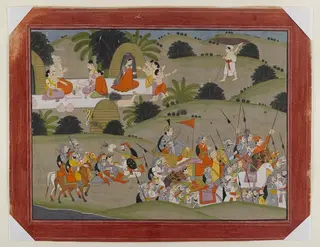 Battle between Lava and Rama's brother, Shatrughna, near the hermitage of Valmiki
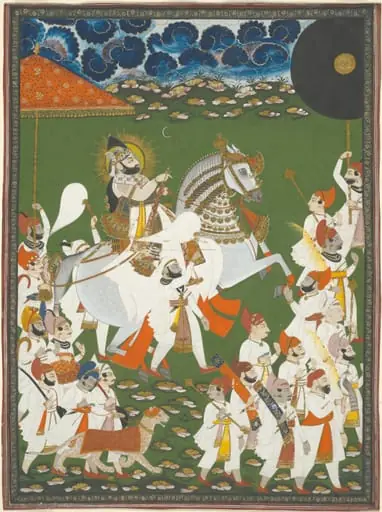 Maharana Bhim Singh in Procession
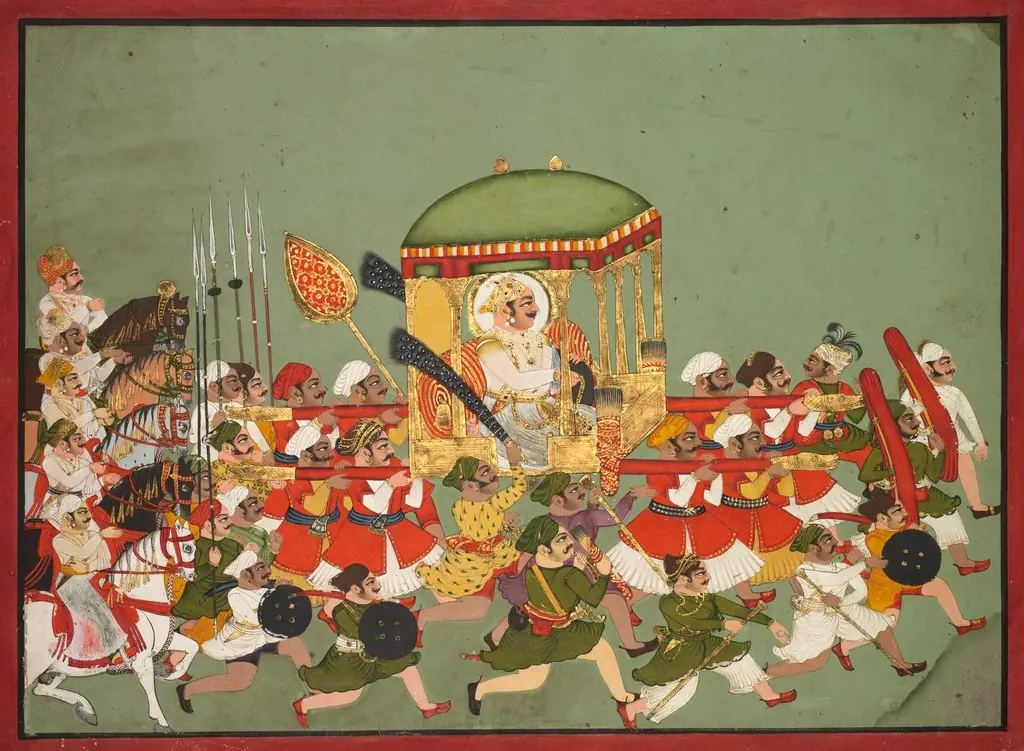 Maharao Chattar Sal (reigned 1758–64) of Kota in a Palanquin
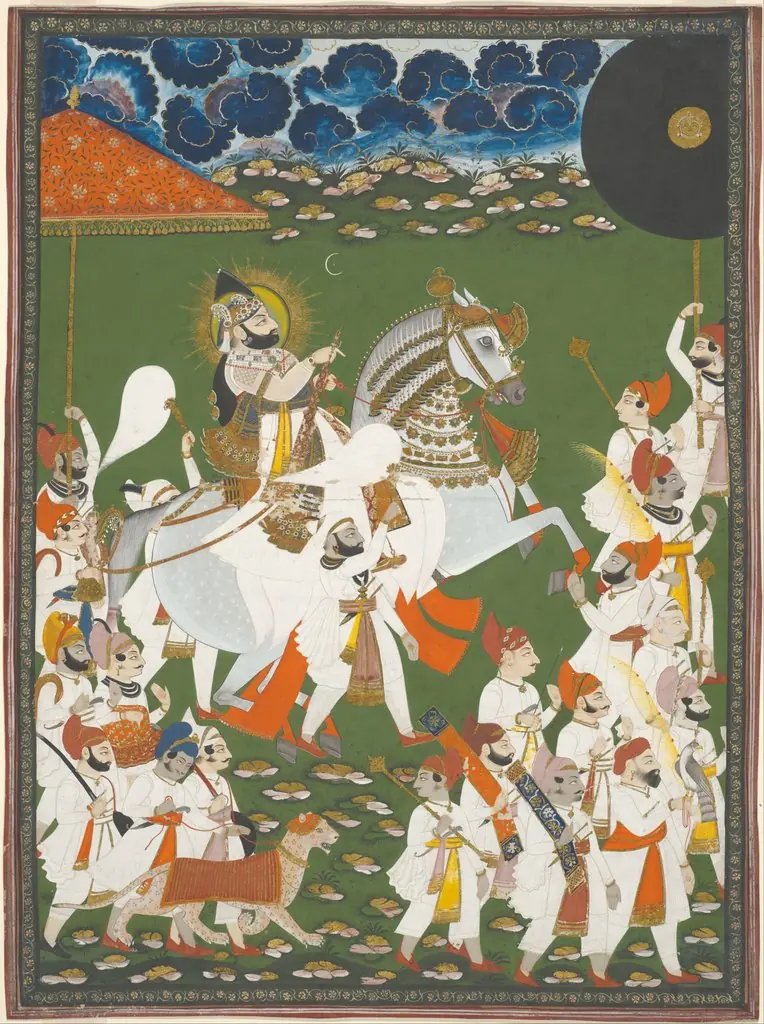 Maharana Bhim Singh in Procession
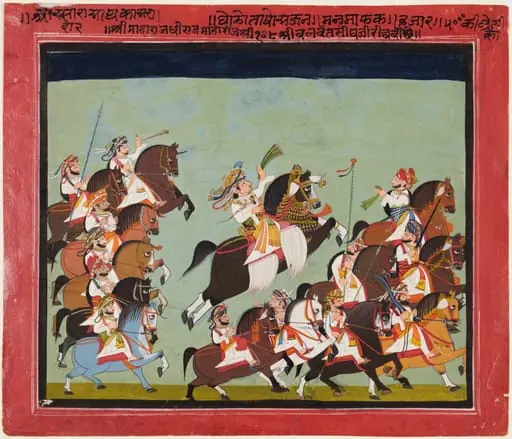 Maharaja Balwant Singh of Ratlam (r. 1825–57) in Procession with His Relatives and Courtiers
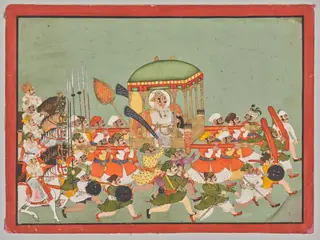 Maharao Chattar Sal (reigned 1758–64) of Kota in a Palanquin
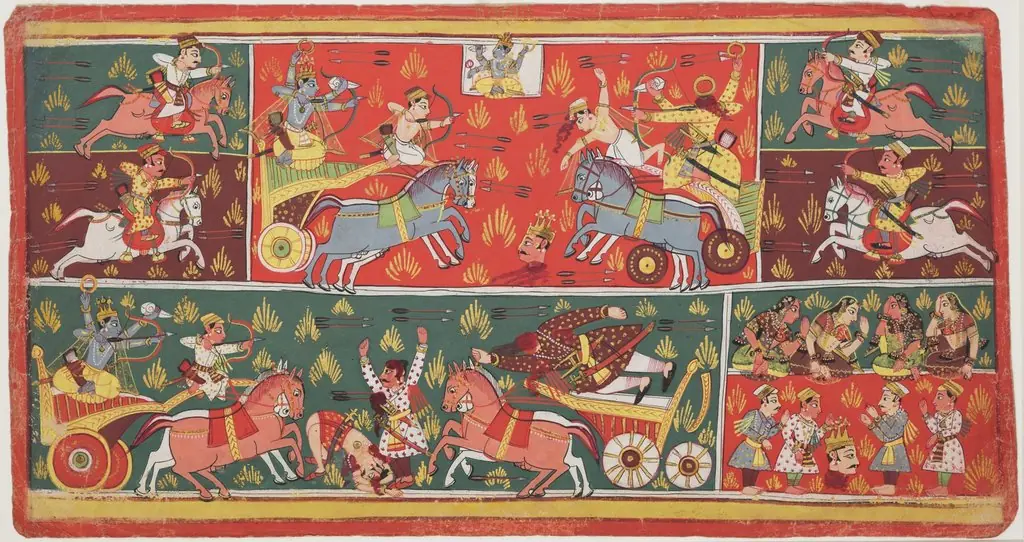 Scenes from the Mahabharata
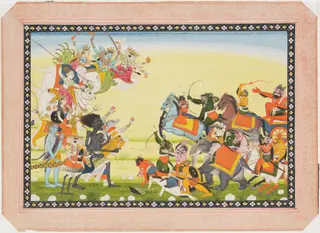 Goddesses and Demons Approaching Combat
 Padam Singh