Artwork
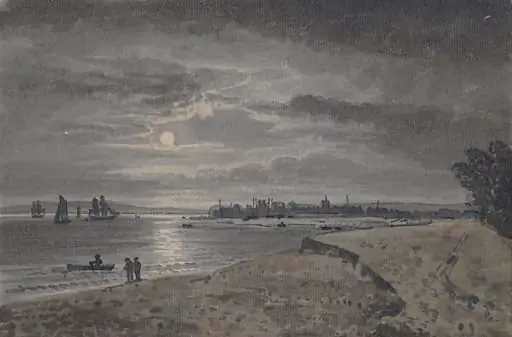
Barmouth Moonlight
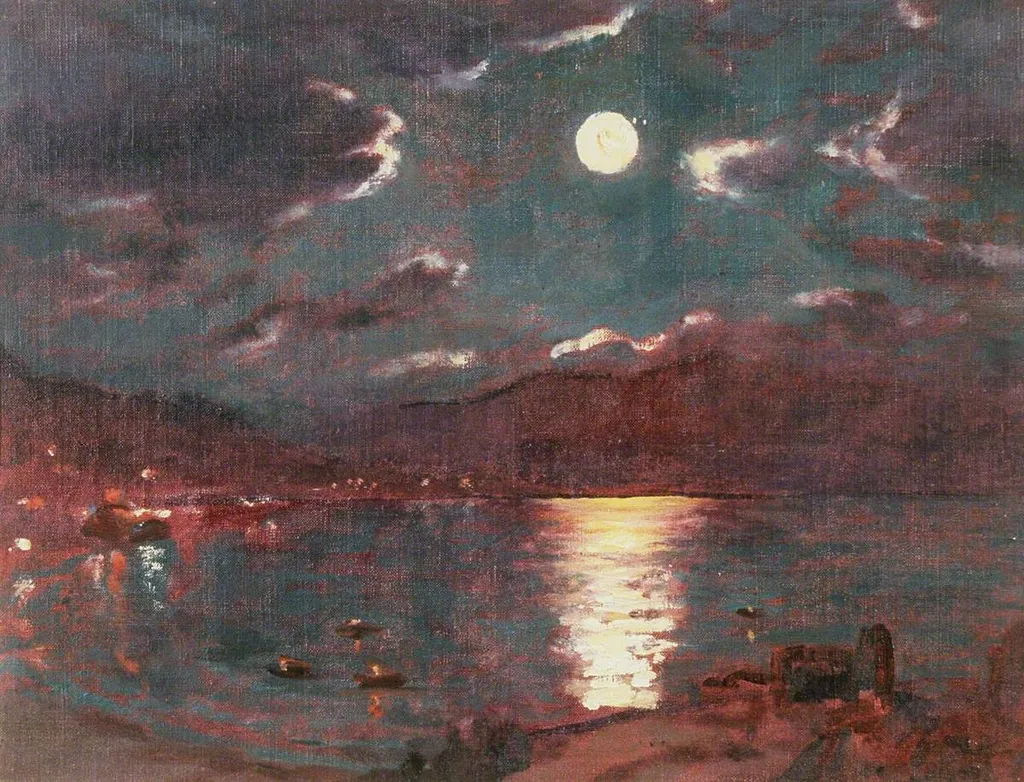
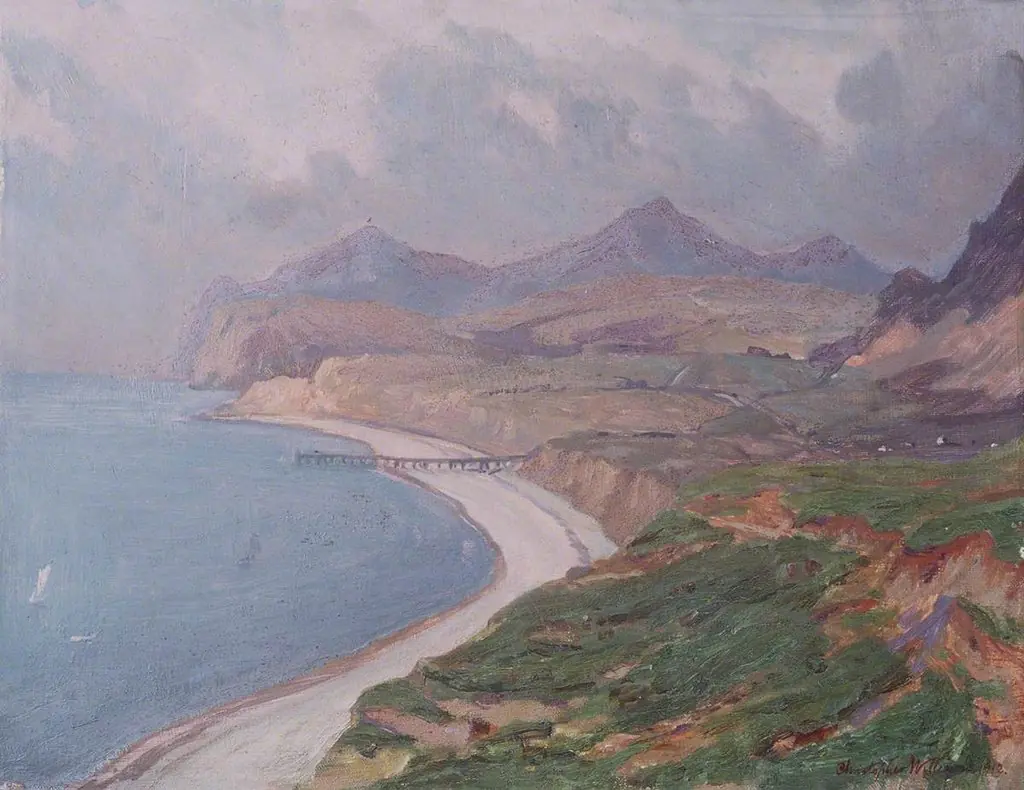
Barmouth Moonlight is an oil painting by the American Impressionist artist Christopher Williams. It dates from 1913 and is held in the collection of the National Library of Wales.
About this work
Overview
9 cm, this modestly scaled landscape is held in the National Library of Wales as part of its Framed Works of Art Collection, acquired in 1981.
Barmouth Moonlight is an oil painting on board by the Welsh artist Christopher Williams, dated to circa 1913. Measuring 28.9 by 37.9 cm, this modestly scaled landscape is held in the National Library of Wales as part of its Framed Works of Art Collection, acquired in 1981. The painting exemplifies Williams's engagement with the Welsh coastal landscape and contributes to the broader tradition of nocturnal landscape painting in British art. As a work by one of Wales's most prominent early twentieth-century painters, it occupies a significant place within both the artist's oeuvre and the institutional collection that preserves it.
Subject & Meaning
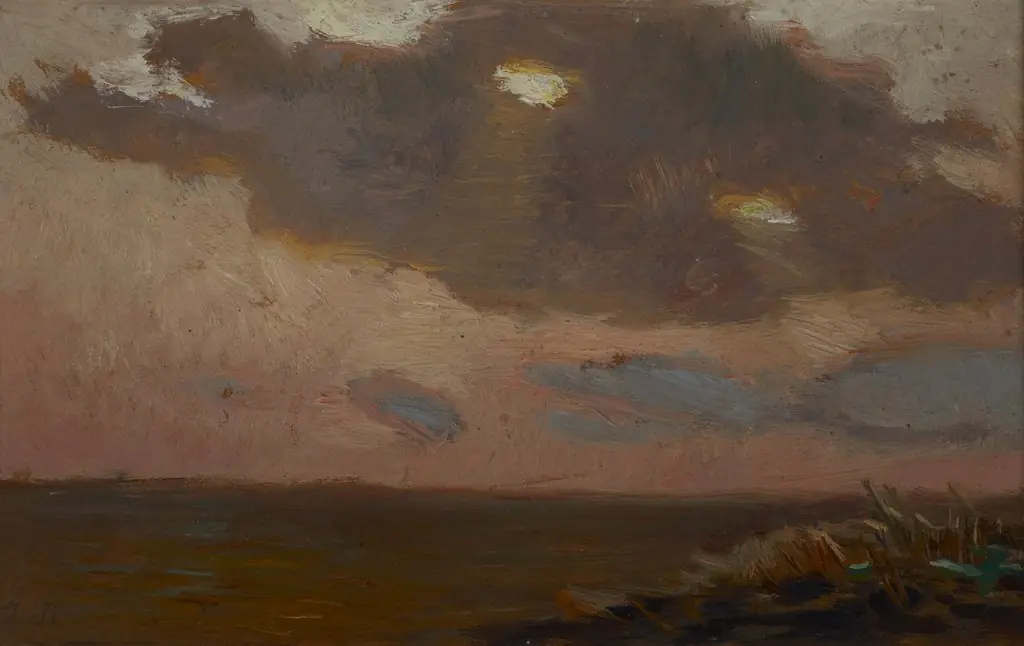
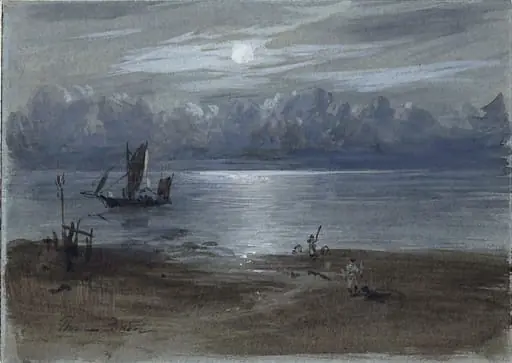
The painting depicts the coastal town of Barmouth on the Welsh coast, rendered under moonlight with the sea and a boat visible within the composition. The scene belongs to a long tradition of moonlit maritime subjects that captivated British and European artists from the Romantic period onward. The iconography draws upon established conventions of nocturnal landscape painting, where moonlight serves to transform familiar topography into something more ethereal and emotionally resonant. The inclusion of a boat suggests human presence and activity even within the quieted world of night, while the moonlit sea creates a contemplative atmosphere that invites reflection on the relationship between humanity and the natural world. The work participates in the broader cultural fascination with the moon as a source of mystery, beauty, and emotional depth in visual art.
Technique & Style
Williams executed Barmouth Moonlight in oil paint on board, a support that provided a stable, rigid surface well suited to the detailed handling evident in the work. The dimensions of 28.9 by 37.9 cm indicate a relatively intimate scale, encouraging close viewing. The medium of oil on board allowed for the layered glazes and subtle tonal gradations necessary to render the effects of moonlight on water and landscape. Stylistically, the painting aligns with Williams's broader practice as a landscape painter working within traditional British conventions, while demonstrating particular attention to atmospheric conditions and the transient effects of light. The work shows affinities with the nocturne tradition established by artists such as James McNeill Whistler and Atkinson Grimshaw, who similarly explored the aesthetic possibilities of moonlit scenes.
History & Provenance
The painting was created around 1913, during a productive period in Williams's career when he was actively exhibiting and had already received significant commissions, including the 1911 royal commission to paint the Investiture of Edward, Prince of Wales at Caernarfon Castle. The National Library of Wales acquired Barmouth Moonlight in 1981 through purchase from Ivor Williams, the artist's son, who was himself a painter. The accession number for the work is PE01328. This provenance connects the painting directly to the artist's family and underscores the continued artistic legacy of the Williams family in Wales. The work has been made available as a public domain image through Art UK, facilitating broader public access to this example of Welsh landscape painting.
Context
Christopher Williams (1873-1934) was a central figure in Welsh art during the early twentieth century. Born in Maesteg, he trained at the Royal College of Art and the Royal Academy Schools, exhibiting regularly at the Royal Academy from 1902 onward. His career encompassed portraiture, historical subjects, and landscape painting, with works held in major collections including the National Museum of Wales, the Royal Collection, and numerous Welsh regional museums. Barmouth Moonlight belongs to his landscape output, which ranged across Wales and continental Europe. The painting reflects the period's continued interest in landscape as a vehicle for national and regional identity, as well as the enduring appeal of nocturnal subjects within British art. Critical reception of Williams's work has emphasized his technical accomplishment and his role in stimulating artistic interest in Wales, where he served as an adjudicator at the National Eisteddfod and held positions on the Arts Committee of the National Museum of Wales.
Legacy
Barmouth Moonlight remains in the collection of the National Library of Wales, where it contributes to the institution's mission of preserving and presenting Welsh visual culture. The painting's availability as a public domain image through Art UK has extended its accessibility beyond the physical collection, allowing it to serve as a representative example of Williams's landscape practice and of early twentieth-century Welsh painting more broadly. Within the artist's legacy, the work demonstrates the range of his subject matter beyond the portraits and historical scenes that dominated his public reputation. The 2012 major retrospective exhibition of Williams's work at the National Library of Wales, which subsequently toured to Bangor, helped to consolidate scholarly and public understanding of his contribution to Welsh art. The continued presence of his works in public collections throughout Wales and beyond ensures that paintings such as Barmouth Moonlight remain available for study and appreciation as part of the nation's artistic heritage.
Artist & collection
Artist
Christopher Williams (born 1956 in Los Angeles) is an American conceptual artist and fine-art photographer who lives in Cologne and works in Düsseldorf.

![Untitled [Bay landscape with Italian cities], by Girolamo P. Nerli](https://artifactworldgallery.com/img/girolamo-p-nerli--untitled-bay-landscape-with-italian-cities--780d4d5dc853bdfd-w320.webp)