Artwork
Comedy
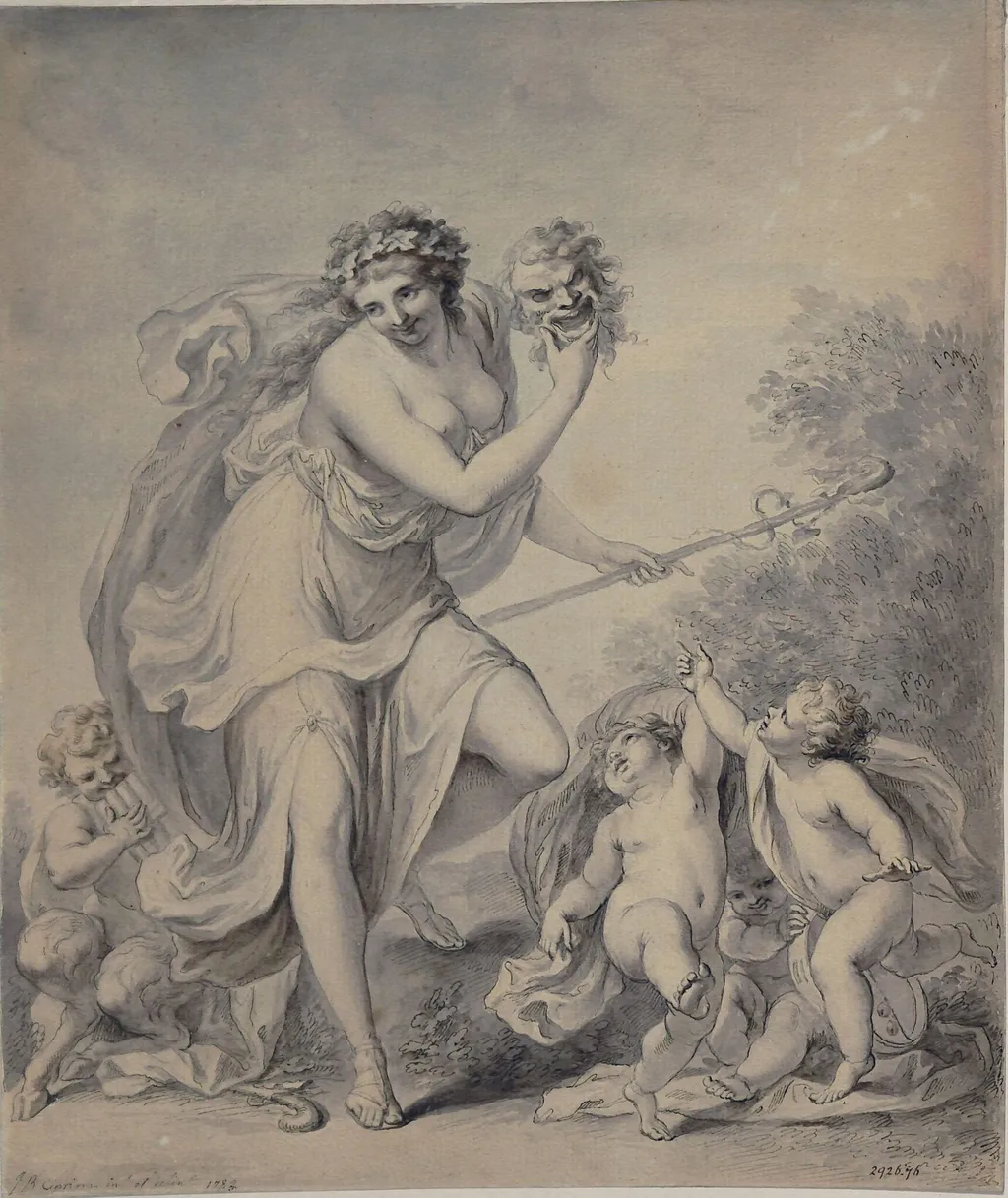
Comedy is a watercolor work on paper by the Rococo painting artist Giovanni Battista Cipriani. It dates from 1782 and is held in the collection of the Victoria and Albert Museum.
About this work
Overview
This watercolour work, dated 1782 and signed by Giovanni Battista Cipriani, presents an allegorical representation of Comedy. Rendered in delicate washes of muted tones, the composition centers on a female figure surrounded by three cherubs. The medium’s transparency enhances the lightness of the scene, contrasting with the more defined lines typical of pen-and-ink drawings of the period.
Subject & Meaning
The central figure embodies Comedy, identified by the theatrical mask she holds and the staff in her other hand, traditional symbols of the genre.
The central figure embodies Comedy, identified by the theatrical mask she holds and the staff in her other hand, traditional symbols of the genre. The cherubs, engaged in playful, dynamic gestures, suggest the lightheartedness and inspiration associated with theatrical performance. Their presence elevates the figure into a mythic realm, aligning the art form with divine muse-like qualities common in 18th-century allegory.
Technique & Style
Cipriani employs watercolour with subtle layering and soft edges, allowing forms to emerge gently from the paper. The flowing drapery of the figure’s dress and the loose curls of her hair are rendered with fluid brushwork, while the cherubs’ limbs and wings are defined with minimal, suggestive lines. The muted palette, soft pinks, greys, and ochres, creates a quiet harmony, avoiding sharp contrasts to sustain a contemplative mood.
History & Provenance
Created in 1782, this work belongs to a series of allegorical subjects Cipriani produced during his tenure as a professor at the Royal Academy. It reflects his interest in classical themes and theatrical iconography, likely intended as a study or presentation piece. Its survival in private collections suggests it was valued as a refined example of academic watercolour practice rather than a public commission.
Context
In late 18th-century Britain, allegorical imagery was widely used to elevate the arts within academic discourse. Cipriani’s watercolours responded to a growing appreciation for delicate, intimate works that could convey intellectual themes without the grandeur of oil painting. This piece aligns with contemporaneous efforts to define national artistic identity through classical references and refined technique.
Legacy
Though not widely exhibited, this watercolour exemplifies Cipriani’s contribution to the development of academic watercolour as a serious medium. Its restrained elegance influenced later artists exploring allegory in non-oil formats. The work remains a quiet testament to the period’s belief in art’s capacity to embody abstract ideals through subtle, controlled expression.
Own this work as a print
Artist & collection
Artist
Giovanni Battista Cipriani (1727 – 14 December 1785) was an Italian painter and engraver, who lived in England from 1755.

![Reclining Woman [verso], by Giovanni Battista Cipriani](https://artifactworldgallery.com/img/giovanni-battista-cipriani--reclining-woman-verso--00754221290578f9-w320.webp)
![A Turk [recto], by Giovanni Battista Cipriani](https://artifactworldgallery.com/img/giovanni-battista-cipriani--a-turk-recto--12cde5f9bac9a966-w320.webp)
![Mythological Composition with Chronos and Harpies [recto], by Giovanni Battista Cipriani](https://artifactworldgallery.com/img/giovanni-battista-cipriani--mythological-composition-with-chronos-and-harpies-recto--23e4197a1ba0ae7e-w320.webp)
![Figure Studies [recto], by Giovanni Battista Cipriani](https://artifactworldgallery.com/img/giovanni-battista-cipriani--figure-studies-recto--32b47b1a71716a78-w320.webp)
- Apollo and Daphne
 St. Catherine
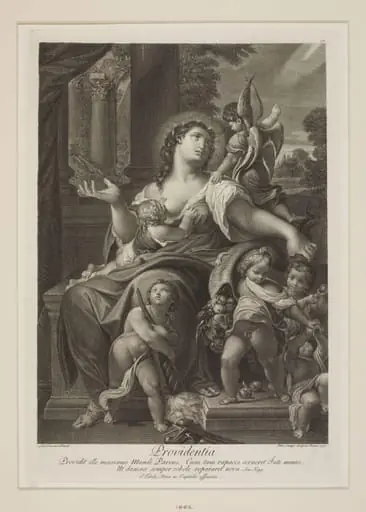 Providentia
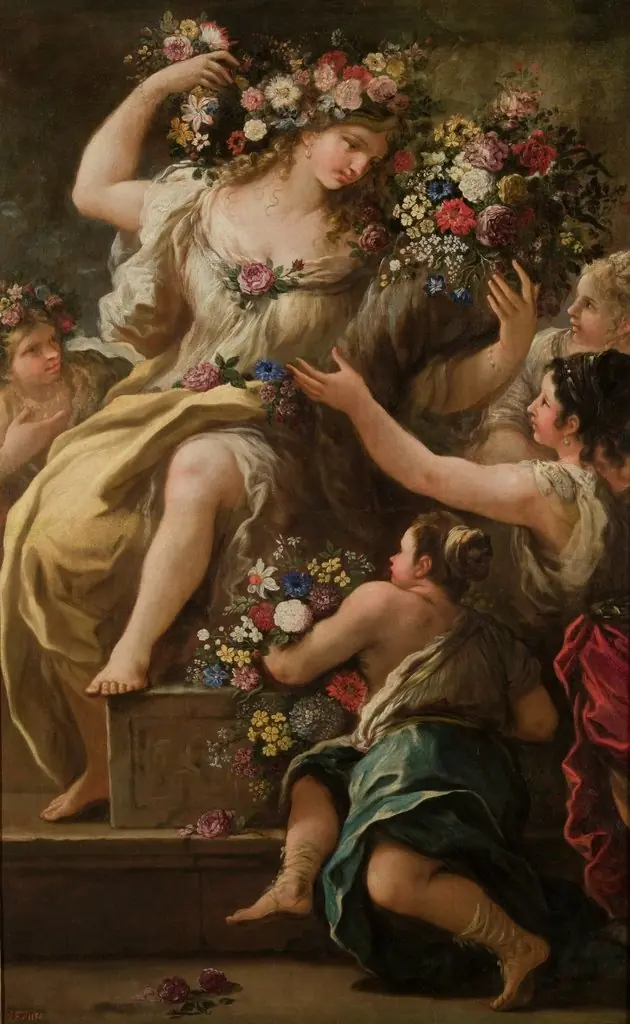 The Goddess Flora
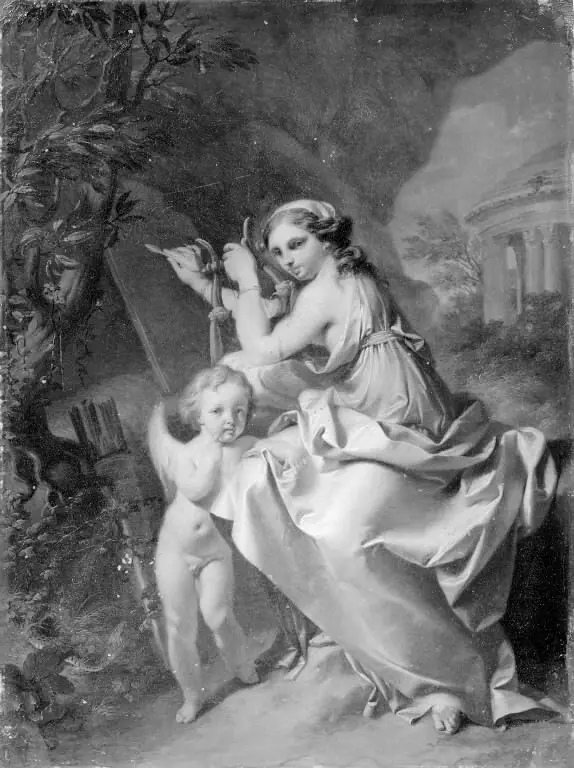 Sappho and Cupid
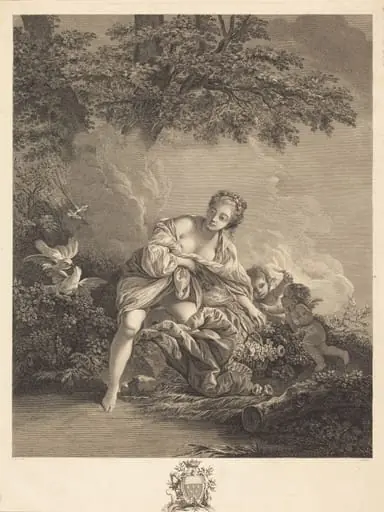 Venus et les amours
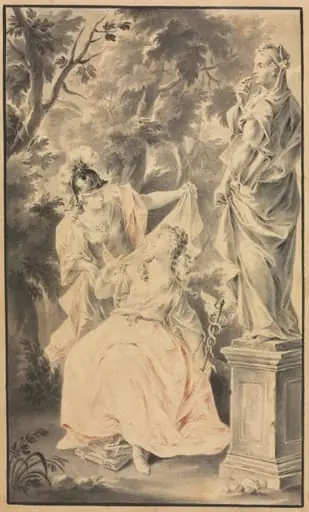 Allegorical Scene: Couple before a Statue
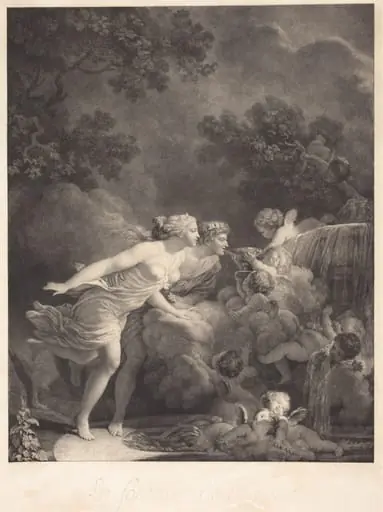 La Fontaine d'Amour (The Fountain of Love)
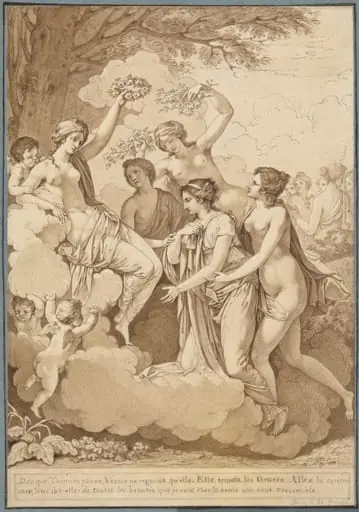 Venus and the Graces Crowning Thémire
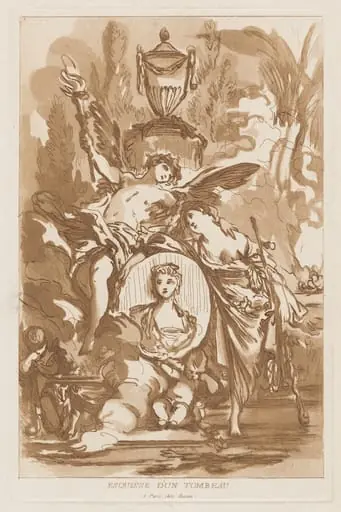 Esquisse d’un tombeau (Sketch for a Tomb)
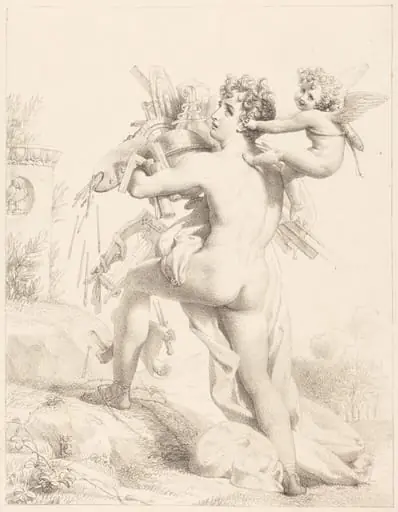 Grasp All, Lose All (Qui trop embrasse, mal etrient)
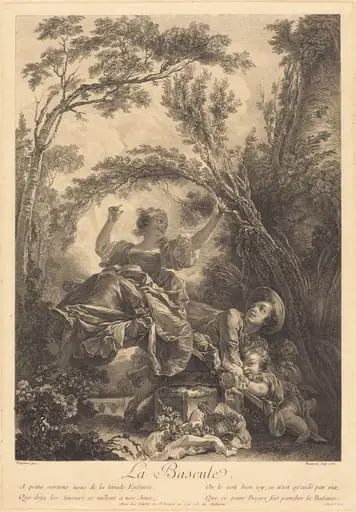 La Bascule