Artwork
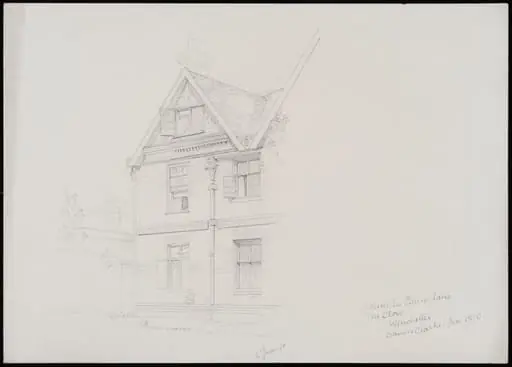
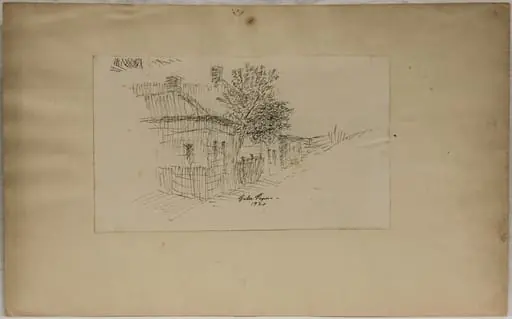
Sketch of part of old house, East Mascalls
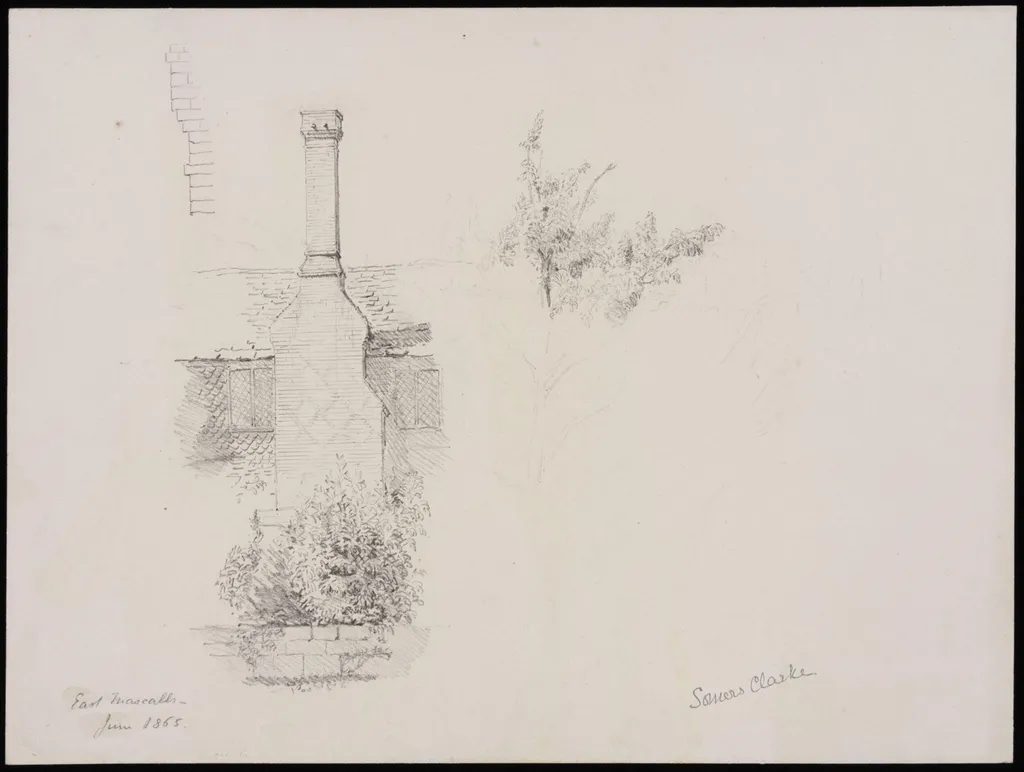
Sketch of part of old house, East Mascalls is a drawing by the Impressionist artist Somers Clarke. It dates from 1865 and is held in the collection of the Victoria and Albert Museum.
About this work
If you like this style, look up cross-hatching next, it’s a way to build up shadows with lines.
This sketch shows a crumbling old house with a tall chimney and a small window. The walls are made of rough stone, and a bush grows near the base. To the right, a tree branch with leaves is drawn quickly. The lines are light and sketchy, like a quick note of what the artist saw.
The date in the corner says June 1865, and the artist wrote his name in the bottom right. This was drawn outside, not in a studio. The artist focused on how the light and shadows fell on the building.
If you like this style, look up cross-hatching next, it’s a way to build up shadows with lines.
Overview
Sketch of part of old house, East Mascalls is a modest drawing executed by the artist Clarke Somers in June 1865. Rendered on paper, the work records a fragment of a dilapidated rural dwelling, its stone walls and chimney rendered with quick, light strokes. The piece is part of the Victoria and Albert Museum’s collection of 19th‑century British drawings.
Subject & Meaning
The composition captures a solitary section of a crumbling house, its rough stone façade punctuated by a narrow window and a tall chimney that rises above a modest bush at the base. A lone tree branch with a few leaves extends across the right edge, suggesting the building’s integration within a neglected landscape. The sketch conveys a momentary observation of decay and the passage of time.
Technique & Style
Somers employed a loose, sketchy line that emphasizes the play of light and shadow across the stone surfaces. The drawing relies on delicate hatching to suggest tonal variation, while the overall handling remains spontaneous, indicative of on‑site work rather than studio refinement. The lightness of the marks conveys immediacy, capturing the atmosphere of an outdoor study.
History & Provenance
Created in June 1865, the drawing bears the artist’s signature in the lower right corner, confirming its authorship. It entered the Victoria and Albert Museum’s holdings as part of its 19th‑century British drawing collection, where it remains accessible for study and public display.
Context
The work reflects a broader Victorian interest in documenting rural architecture and the changing countryside. Sketches such as this were often produced by artists traveling through the English landscape, recording vernacular structures before they disappeared under industrial and agricultural modernization.
Own this work as a print
Artist & collection

Artist
George Somers Clarke was an architect and English Egyptologist who worked on the restoration and design of churches and at a number of sites throughout Egypt, notably in El Kab, where he built a mud brick house.

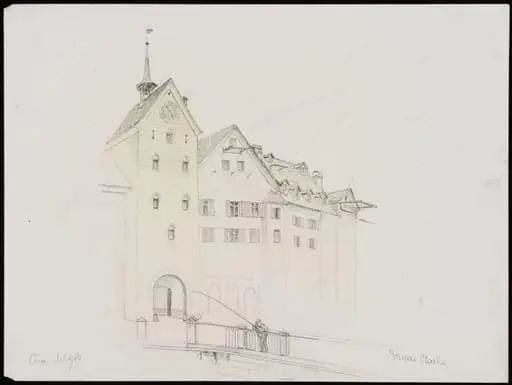
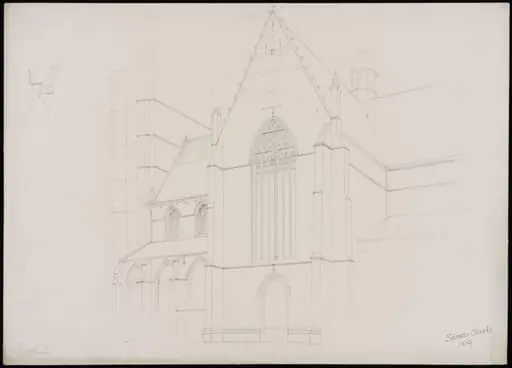
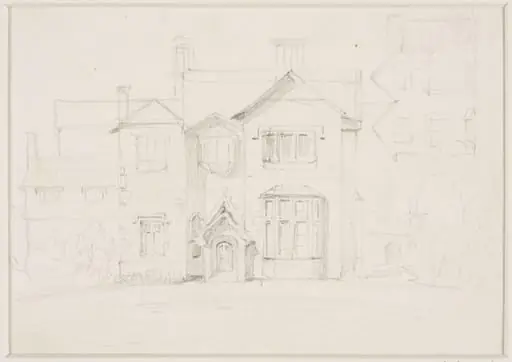
- Front of a house
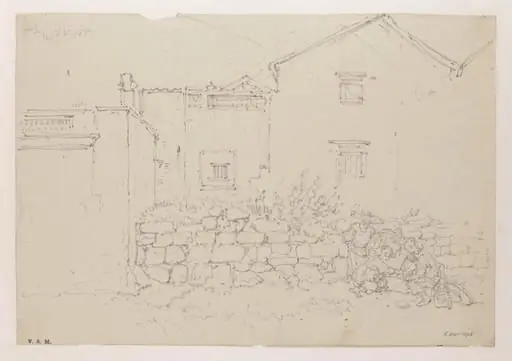 Figures by a stone wall with houses behind, Macau
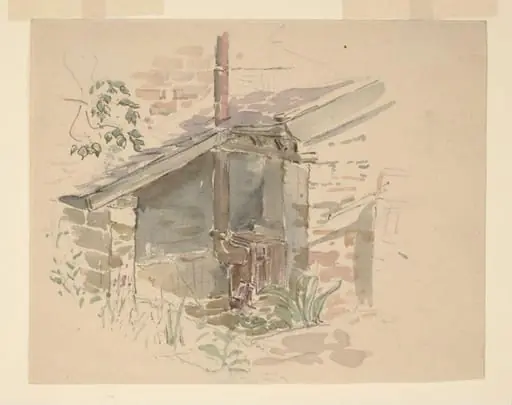 A garden shed with iron stove and chimney in the garden at Gwaynynog
 Peisaj cu case
 Leckhampstead
 A house, with trees
 The Maltings, Saffron Walden
 Siena Brickwork
 The Old Gates, Ham House
 Old Doorway, Easthampton
 View of the Church of St. Michael, Ghent, from N.E.