Artwork
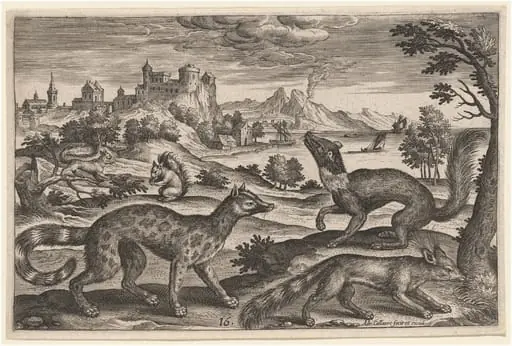
A Monkey, a Porcupine, Two Hedgehogs, a Buffalo and a Fox
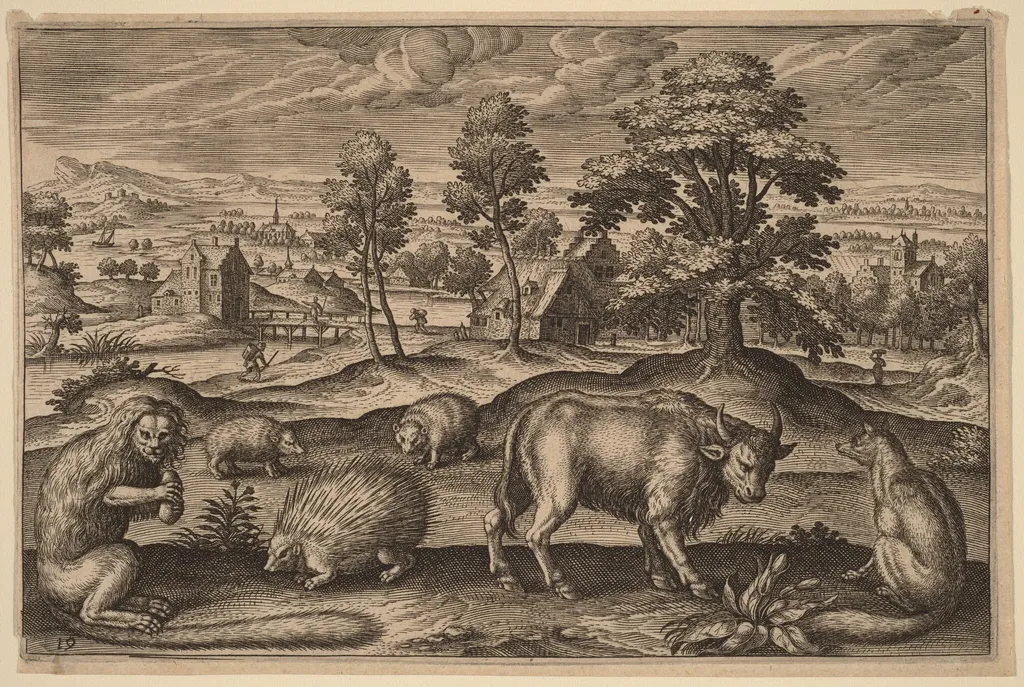
A Monkey, a Porcupine, Two Hedgehogs, a Buffalo and a Fox is an ink print by the Renaissance artist Adriaen Collaert. It dates from 1597 and is held in the collection of the National Gallery of Art.
About this work
Overview
The work demonstrates the artist's technical precision in rendering varied fur textures and atmospheric depth through fine line work.
Created in 1597 by the Flemish engraver Adriaen Collaert, this work is a detailed print on laid paper depicting a lively assembly of animals within a pastoral landscape. The composition centers on a monkey seated on the ground, scratching its head, positioned near a standing buffalo. Surrounding these larger figures are two hedgehogs and a porcupine resting on the grass.
The background expands the scene to include a village featuring houses and a church, with small figures of people engaged in labor amidst trees and rolling hills. Collaert, a prominent Antwerp printmaker known for his reproductive engravings after the designs of other artists, likely produced this piece as part of a series illustrating fables or natural curiosities, a popular genre in late 16th-century Flemish art. The work demonstrates the artist's technical precision in rendering varied fur textures and atmospheric depth through fine line work.
While the specific source design is not identified here, the print reflects the broader artistic interest in the natural world and moral allegory characteristic of the period, serving as both an educational illustration and a decorative object for collectors.
Subject & Meaning
The composition juxtaposes a range of fauna, both domestic and wild, creating a study of natural diversity. The monkey’s inquisitive pose, the porcupine’s spiky form, and the hedgehogs’ curled bodies invite contemplation of animal behavior, while the background village hints at the coexistence of human activity and the natural world.
Technique & Style
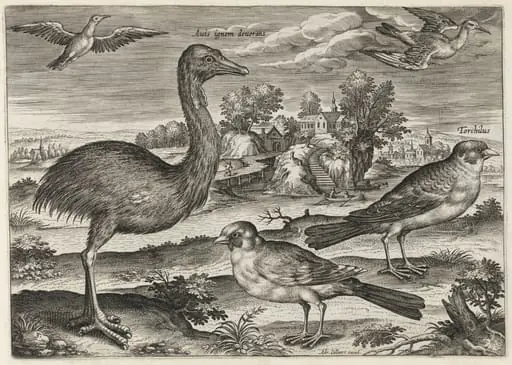
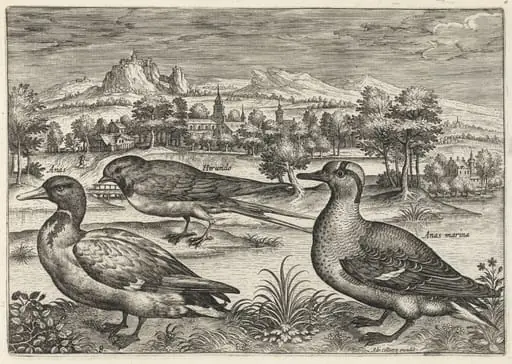
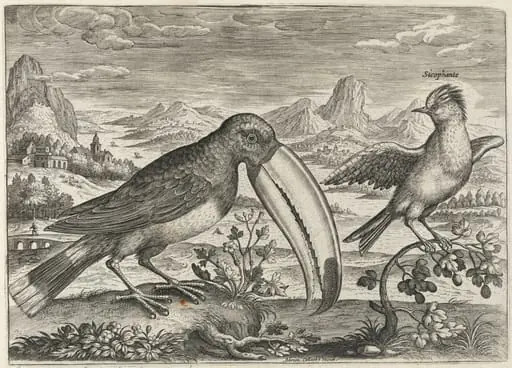
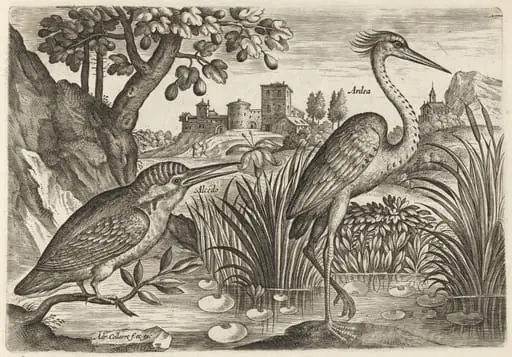
Collaert employed meticulous line engraving on laid paper, using fine, parallel strokes to render textures such as fur, feathers and foliage. The delicate hatching builds tonal variation, a hallmark of late‑sixteenth‑century printmaking that emphasizes precision over broad washes.
History & Provenance
Created in the late 1590s, the print reflects the flourishing market for engraved curiosities in the Low Countries. While specific ownership records are sparse, the work circulated among collectors of naturalistic prints, contributing to Collaert’s reputation as a skilled engraver for the Antwerp publishing houses.
Context
The engraving belongs to a period when European artists frequently depicted exotic and familiar animals together, often for educational or decorative purposes. Its detailed representation aligns with contemporary interests in natural history and the burgeoning genre of animal studies that accompanied scientific exploration.
Own this work as a print
Artist & collection