Artwork
The Parable of the Barren Fig Tree
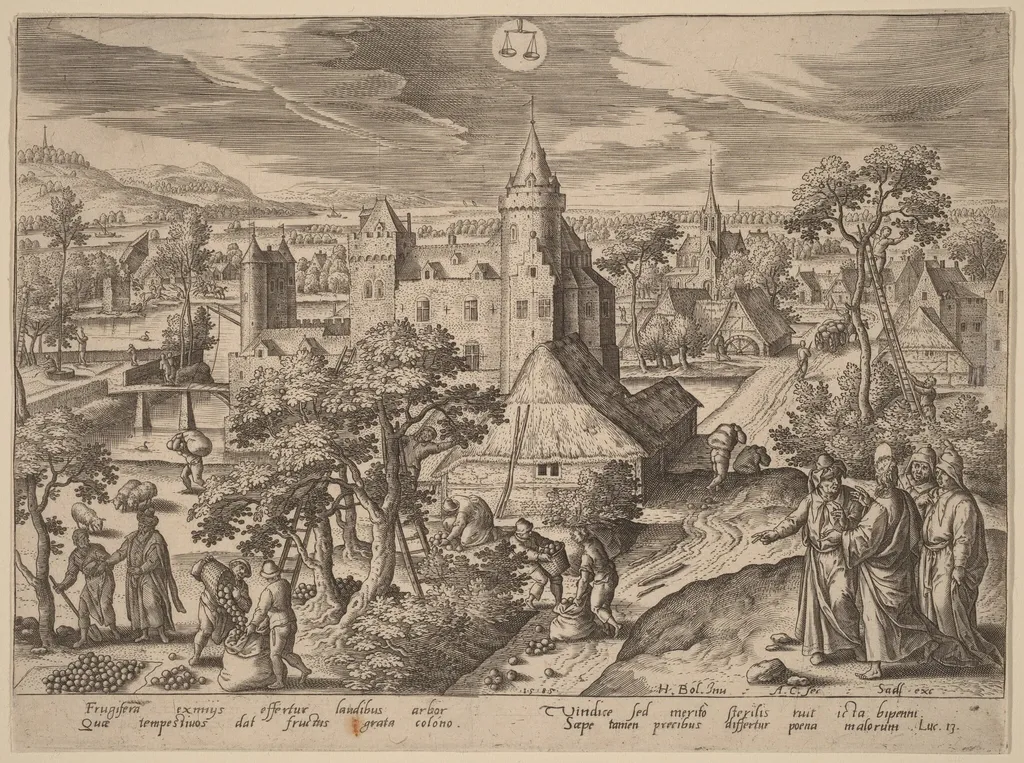
The Parable of the Barren Fig Tree is an ink print by the Renaissance artist Adriaen Collaert. It dates from 1585 and is held in the collection of the National Gallery of Art.
- Inscription
- Inscribed:lower center, in plate, in image: .1.5.8.5.; lower right, in plate, in image: .H. Bol. Inu A.C. fec Sadl .exc; below image, in plate: Frugifera eximijs offertur laudibus arbor / Quae tempestivos dat fructus grata colono. / Vindice sed merito sterilis ruit icta bipenni. / Saepe tamen precibus differtur poena malorum. Luc. 13. (The fruitful tree which graciously confers seasonable fruits on the husbandman, is shown high praise. But the barren one, having justly been struck by the vengeful ax, falls to ruin. Yet often is the punishment of evildoers deferred through prayers of supplication. Luke 13. [translation from Melion, Walter S. and James Clifton_Through a Glass Darkly: Allegory & Faith in Nethlerlandish Prints from Lucas van Leyden to Rembrandt._Atlanta: Michael C. Carlos Museum, Emory University, 2019, p.152.])
About this work
Overview
The Parable of the Barren Fig Tree is a 1585 engraving on laid paper by Adriaen Collaert, depicting a vivid, detailed scene centered around a large fig tree, set amidst a bustling landscape with architectural and maritime elements.
Subject & Meaning
The engraving illustrates a biblical parable (quoted in Latin at the bottom) about a non-fruiting fig tree, conveying a moral lesson. The choice of a crowded, everyday setting contextualizes the religious narrative within a relatable, mundane environment.
Technique & Style
Characterized by intricate, layered details achieved through dense, tiny lines that create textures and shadows. The dark sky adds depth to the composition, while the overall style reflects the meticulous craftsmanship of 16th-century engraving techniques.
History & Provenance
Created in 1585 by Adriaen Collaert, specific provenance details are not provided, highlighting the work's existence as a notable example of late Renaissance printmaking.
Context
Reflects the Renaissance interest in blending religious themes with everyday life. The inclusion of a castle, church, and harbor suggests a scene possibly set in a Flemish or similar European landscape, typical of the period's artistic tendencies.
Legacy
While specific legacy details are not provided, the work contributes to the broader legacy of 16th-century Flemish printmaking, exemplifying the era's technical proficiency and thematic preoccupations.
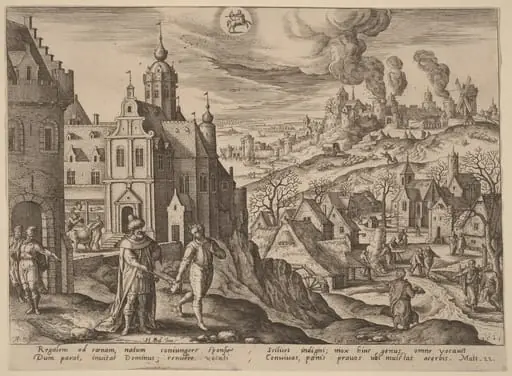
Own this work as a print
Artist & collection


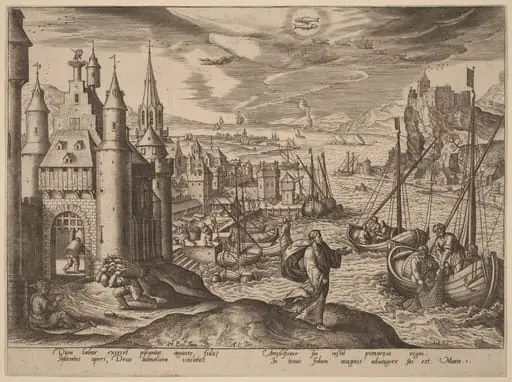
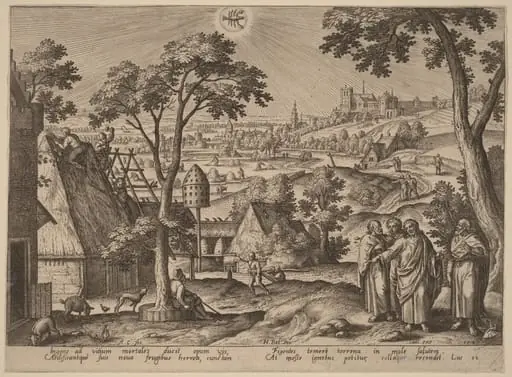 The Parable of the Rich Fool
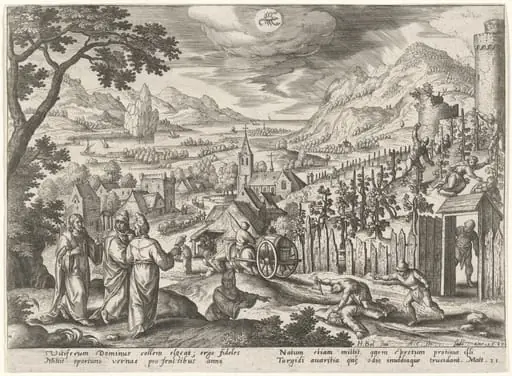 The Parable of the Unjust Husbandmen
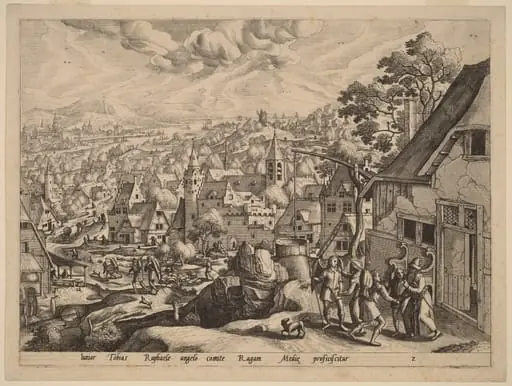 Tobias Taking Leave of his Parents
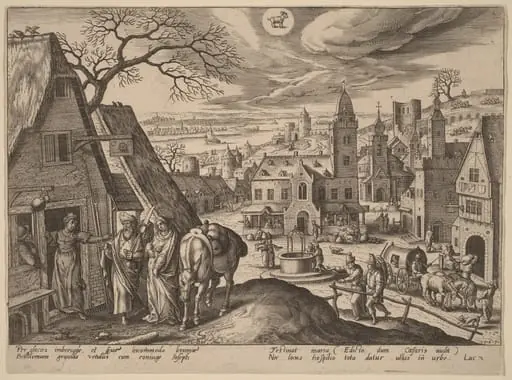 The Virgin and Joseph at the Inn
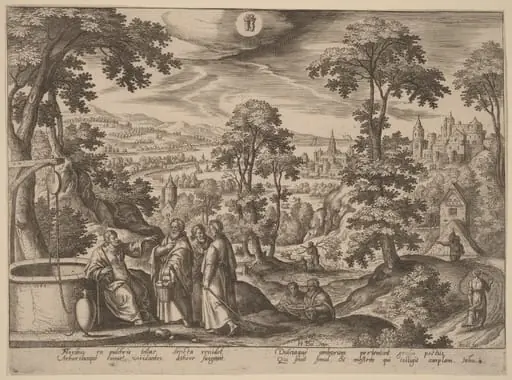 Christ and the Woman of Samaria
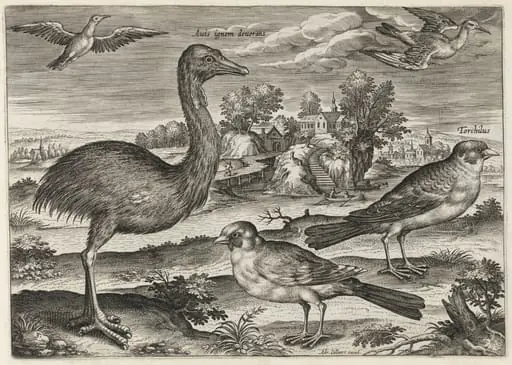
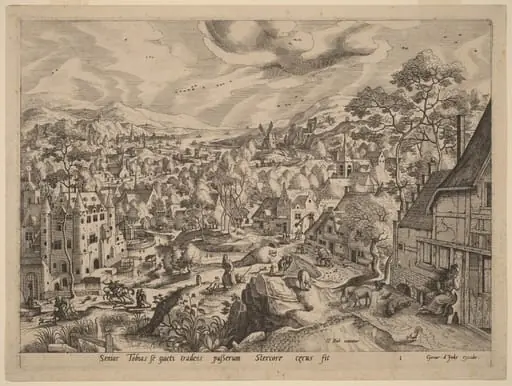 Bird Dropping Blinding Tobit
 The Angel Telling Joseph to Flee and the Flight into Egypt
 The Rabbit Hunters
 The Parable of the Two Sons and the Unjust Husbandmen