Artwork
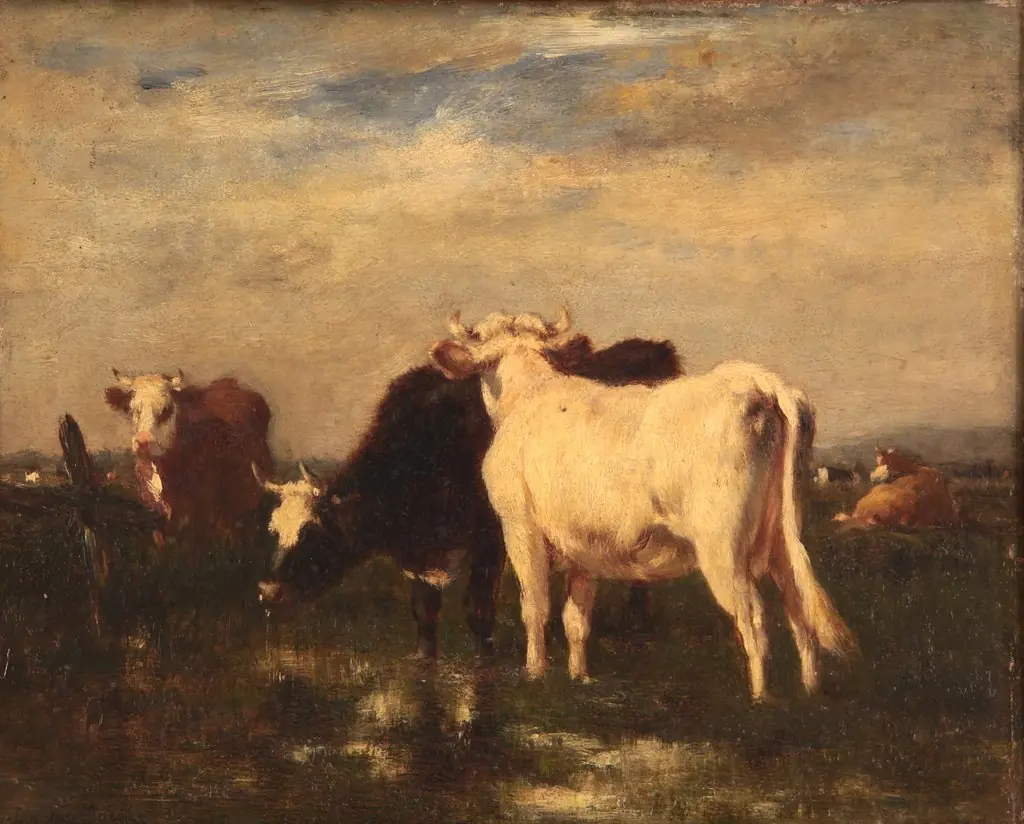
Cattle at the Trough
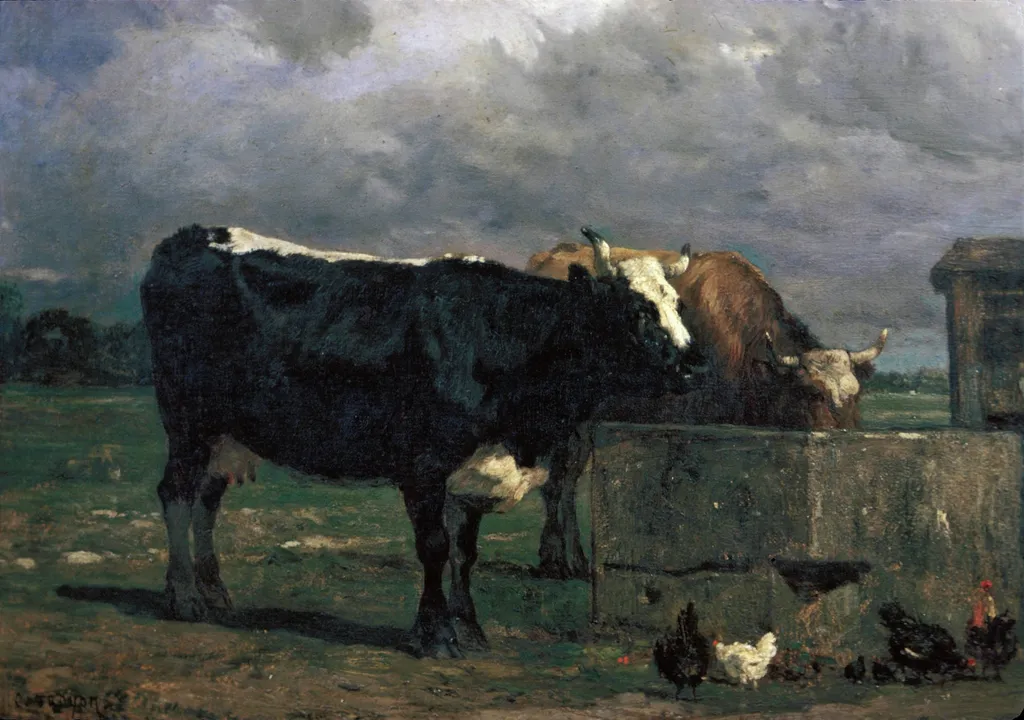
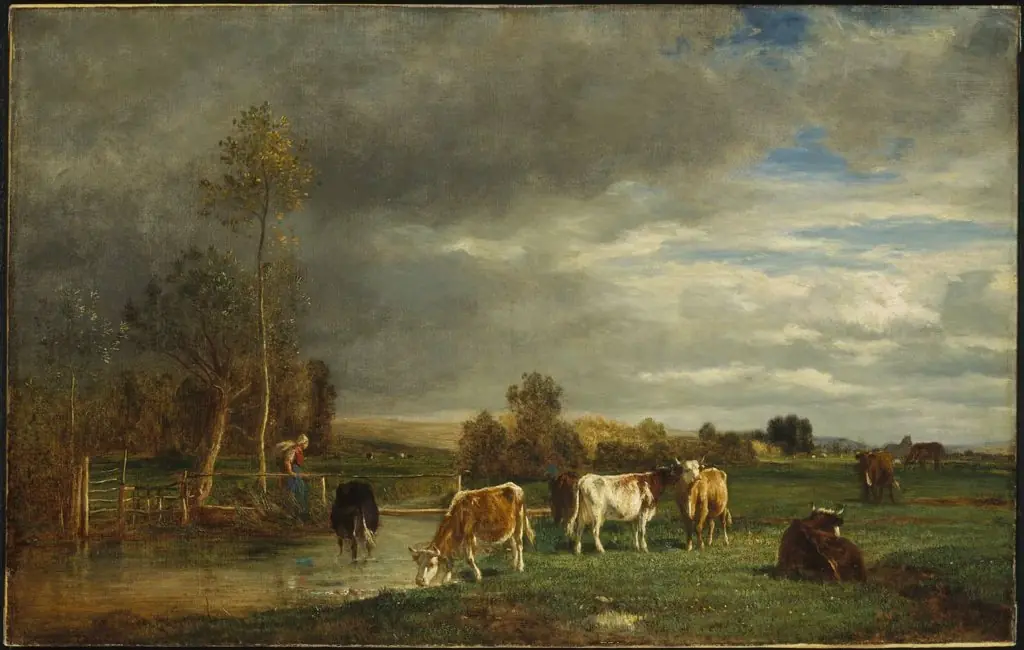
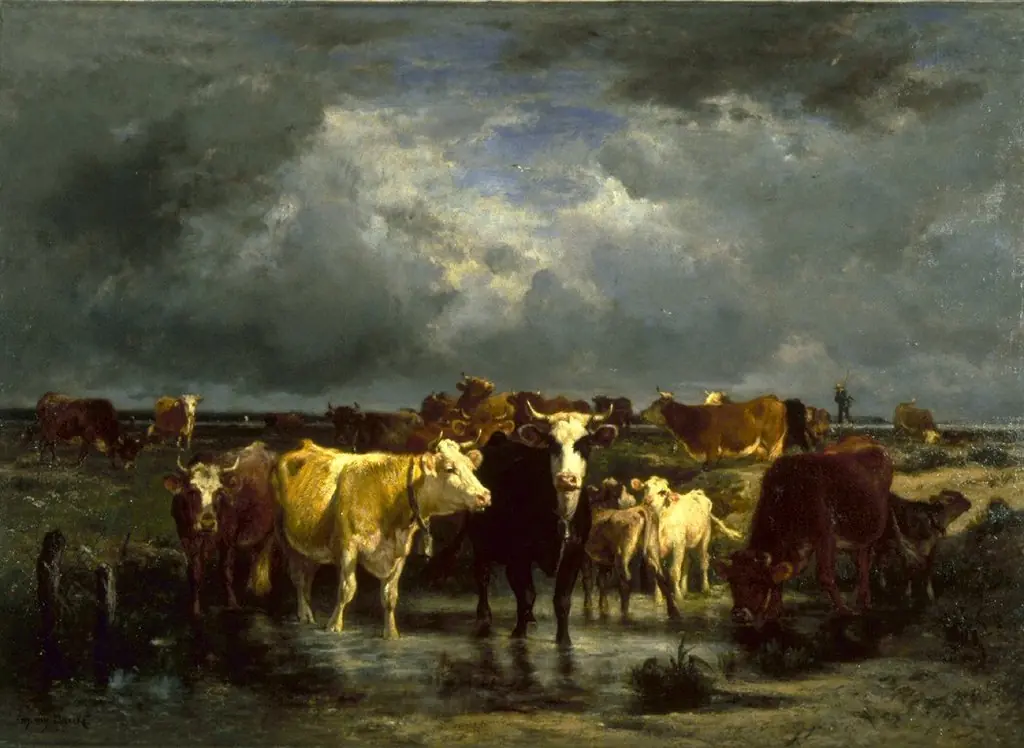
Cattle at the Trough is an oil painting by the Barbizon school artist Constant Troyon. It dates from 1847 and is held in the collection of the Detroit Institute of Arts.
About this work
Overview
Rather than dramatizing the scene, he captures a still, uneventful interlude in the daily life of farm animals, emphasizing atmosphere over narrative.
Cattle at the Trough, painted around 1847 by French artist Constant Troyon, is an oil-on-canvas work depicting a quiet rural moment. The painting is part of the Detroit Institute of Arts collection and exemplifies Troyon’s focus on livestock within natural landscapes. Rather than dramatizing the scene, he captures a still, uneventful interlude in the daily life of farm animals, emphasizing atmosphere over narrative.
Subject & Meaning
The painting centers on a group of cattle drinking from a weathered wooden trough, their forms relaxed and grounded. There is no human presence, allowing the animals to exist independently within their environment. The subdued mood suggests harmony between creature and landscape, reflecting a 19th-century interest in the dignity of rural labor and the quiet rhythms of agricultural life.
Technique & Style
Troyon employed thick, layered oil paint to render the cattle’s dark hides and the trough’s rough grain with tactile precision. The sky, rendered in soft grays and pale blues, contrasts gently with the earth tones below, creating depth without sharp definition. Brushwork is deliberate yet unobtrusive, favoring atmospheric cohesion over fine detail, aligning with the Barbizon School’s emphasis on naturalism and mood.
History & Provenance
Created in the mid-1840s, the painting emerged during Troyon’s period of growing recognition for his animal studies. It entered the Detroit Institute of Arts collection in the 20th century, likely through acquisition or donation. Its provenance prior to museum ownership is not widely documented, but its presence in a major American institution underscores its acceptance within broader Western art traditions.
Context
Troyon worked alongside Barbizon painters who rejected idealized landscapes in favor of observed rural life. Cattle at the Trough reflects this shift, aligning with a broader European movement to depict ordinary scenes with emotional sincerity. The painting resonates with contemporary interest in pastoralism and the changing relationship between humans and the land during industrialization.
Legacy
Though not among Troyon’s most widely reproduced works, Cattle at the Trough remains a representative example of his quiet, observational approach. It contributes to the legacy of 19th-century French realism, influencing later artists who sought to portray animals not as symbols, but as living beings within their natural settings.
Own this work as a print
Artist & collection
Artist
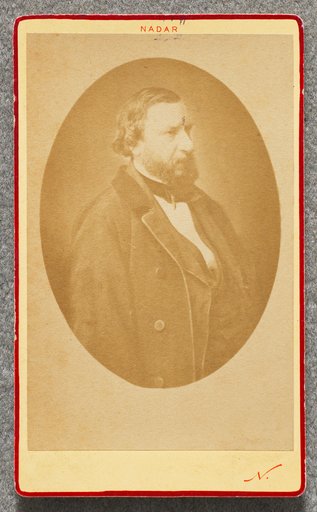
Constant Troyon was a French painter of the Barbizon school. In the early part of his career, he painted mostly landscapes. It was only comparatively late in life that Troyon found his métier as a painter of animals,…