Artwork
Fruit Still Life with Oysters
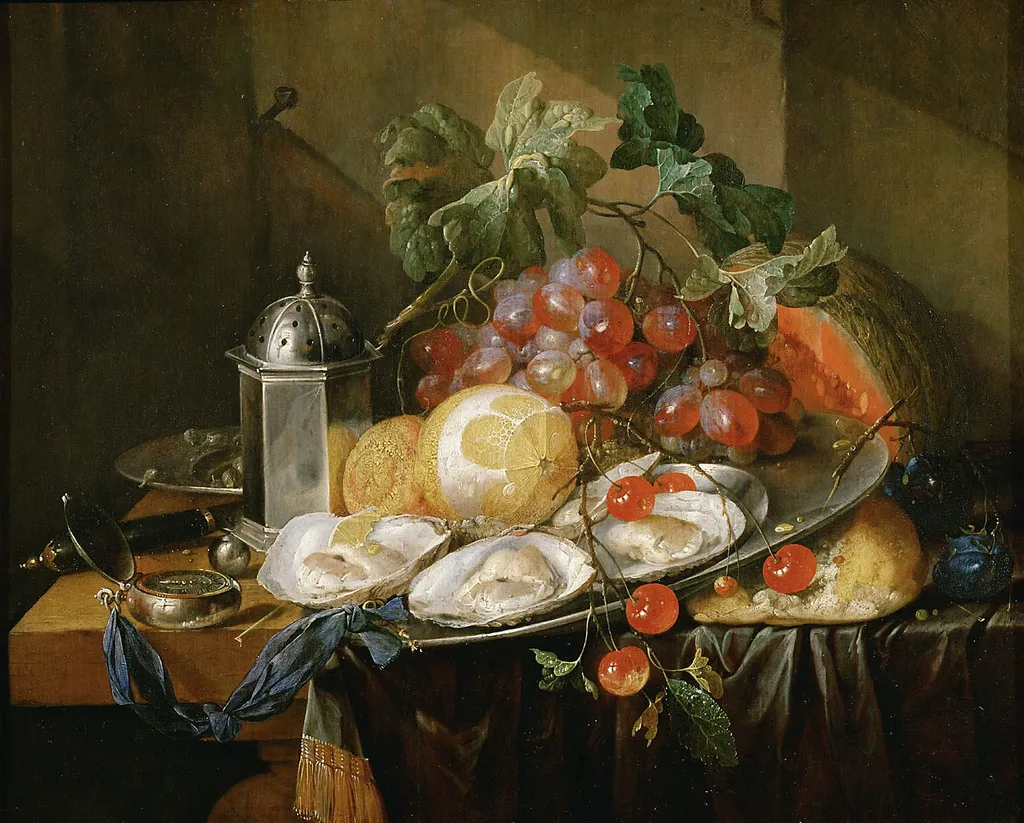
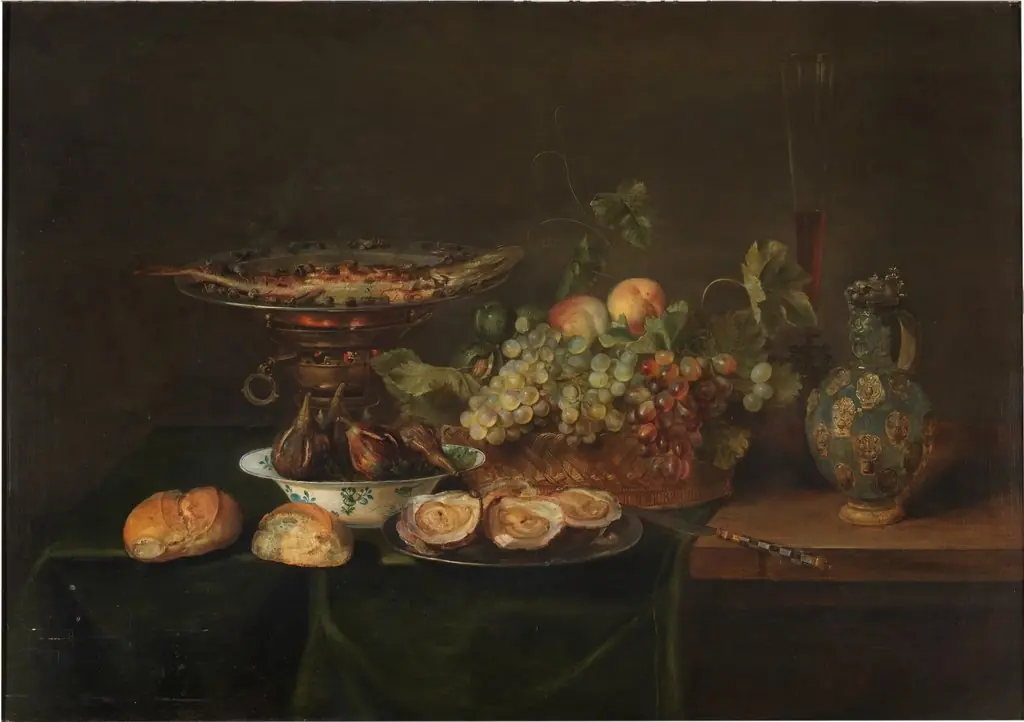
Fruit Still Life with Oysters is an unspecified painting by the Dutch Golden Age artist Cornelis de Heem. It dates from 1673 and is held in the collection of the Kunsthistorisches Museum.
About this work
Subject & Meaning
The painting presents a lavish arrangement of perishable goods and domestic objects that together define a pronk still life.
The painting presents a lavish arrangement of perishable goods and domestic objects that together define a pronk still life. Visible elements include clusters of grapes, a sliced melon, an oyster, plums, a lemon, a salt cellar, a ribbon, cherries, a caper, and a pocket watch, all rendered with meticulous detail. These items, typical of fruit still lifes, combine natural produce with luxury accessories.
The work is housed in the Kunsthistorisches Museum and is catalogued as a fruit painting by Cornelis de Heem.
History & Provenance
The painting is held in the Kunsthistorisches Museum, Vienna, where its inventory number is GG_644. It was included in the museum’s 2016 exhibition “The Story of a Collection: Highlights of the Picture Gallery in the Kunsthistorisches Museum Vienna,” which presented key works from the institution’s holdings.
Overview
Cornelis de Heem's Fruit Still Life with Oysters, dated 1673, is a quintessential example of Dutch Golden Age still life painting. The composition centers on a lavish arrangement of foodstuffs displayed on a table, emphasizing the artist's mastery of texture and light. A silver platter holds freshly shucked oysters, their wet interiors rendered with precise detail to suggest freshness.
Surrounding the seafood are clusters of red grapes spilling from a bowl, a pale-skinned melon, bright cherries, and a lemon. De Heem employs a dark, neutral background to isolate these objects, allowing the interplay of light to define the reflective surfaces of the silver, the translucent quality of the grape skins, and the varied textures of the fruit and shells. Created during the height of the artist's career in the late 17th century, the work reflects the era's fascination with abundance, sensory experience, and the technical virtuosity required to mimic reality.
As a son of the renowned Jan Davidsz. de Heem, Cornelis continued the family tradition of elaborate banquet pieces, though this specific work demonstrates his independent command of the genre with a focus on the tactile qualities of the depicted items.
Technique & Style
De Heem's artistic approach is characterized by a precise attention to detail and a skillful manipulation of light. The artist renders the various textures and forms, from the reflective surfaces of the oysters to the plumpness of the grapes, with a striking sense of realism. The interplay of shadows and highlights across different materials contributes to the lifelike quality of the scene, demonstrating a sophisticated understanding of chiaroscuro to create depth and volume.
Artist & collection

Artist
Cornelis de Heem was a still-life painter associated with both Flemish Baroque and Dutch Golden Age painting.

 Still life with fruit
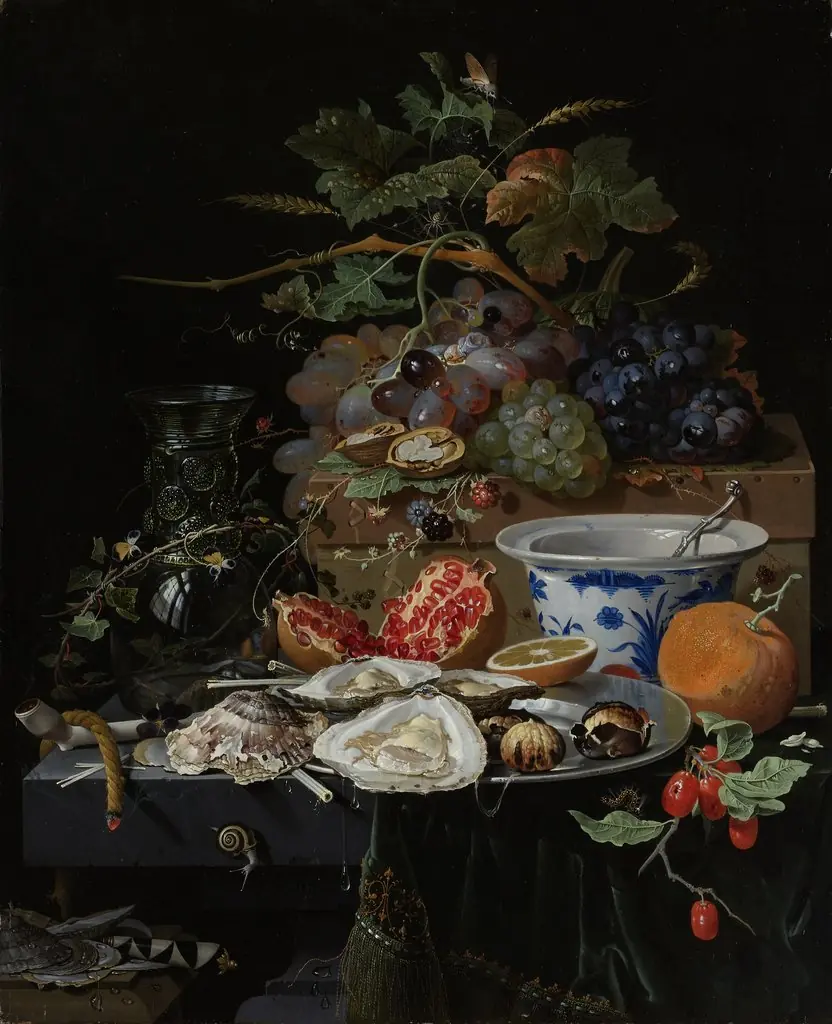 Still Life with Fruit, Oysters and a Porcelain Bowl
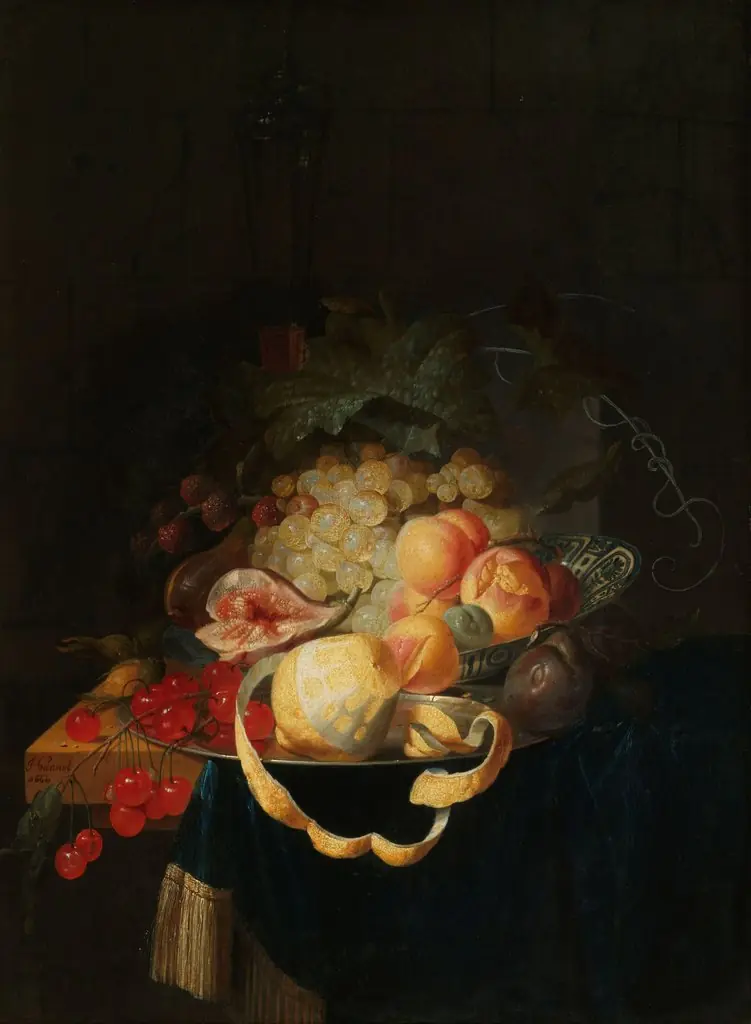 Still life with fruit
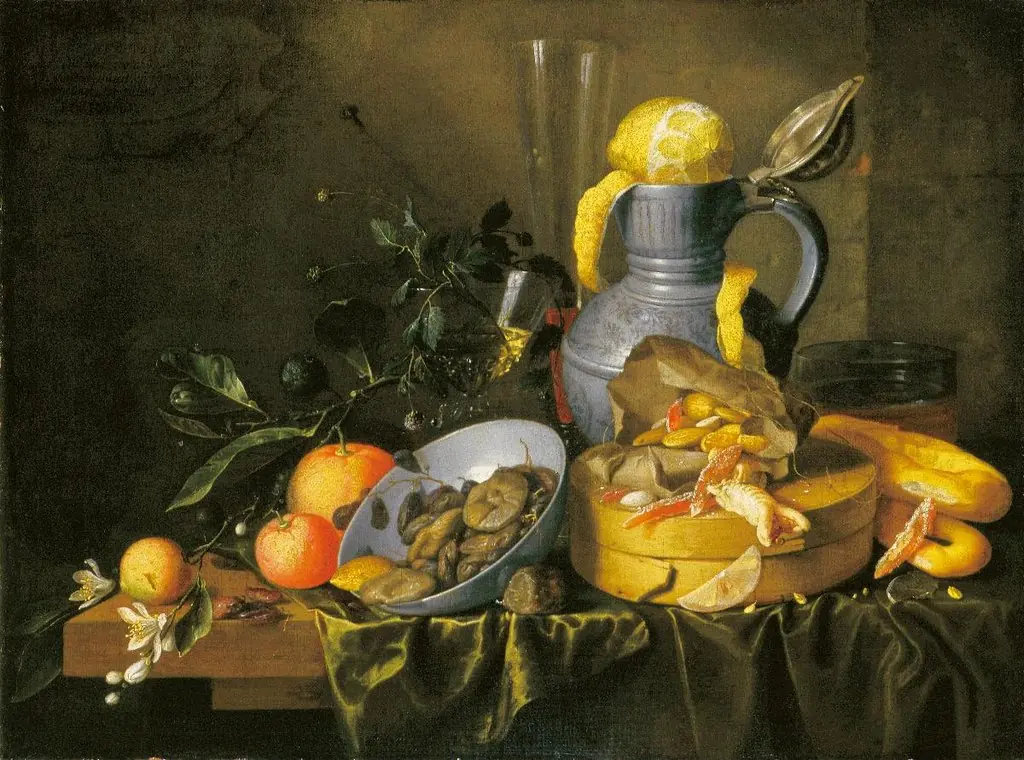 Stillleben mit Sinnspruch und Fastenspeisen
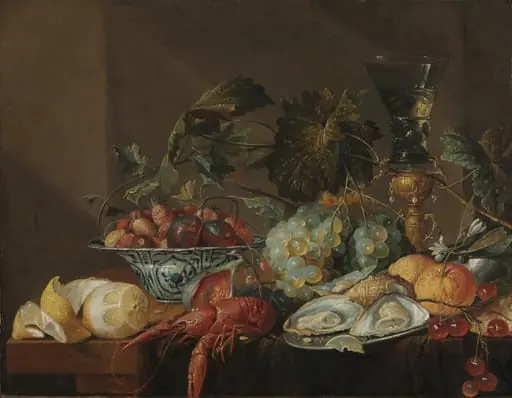 Still-Life with Crayfish, Oysters, and Fruit
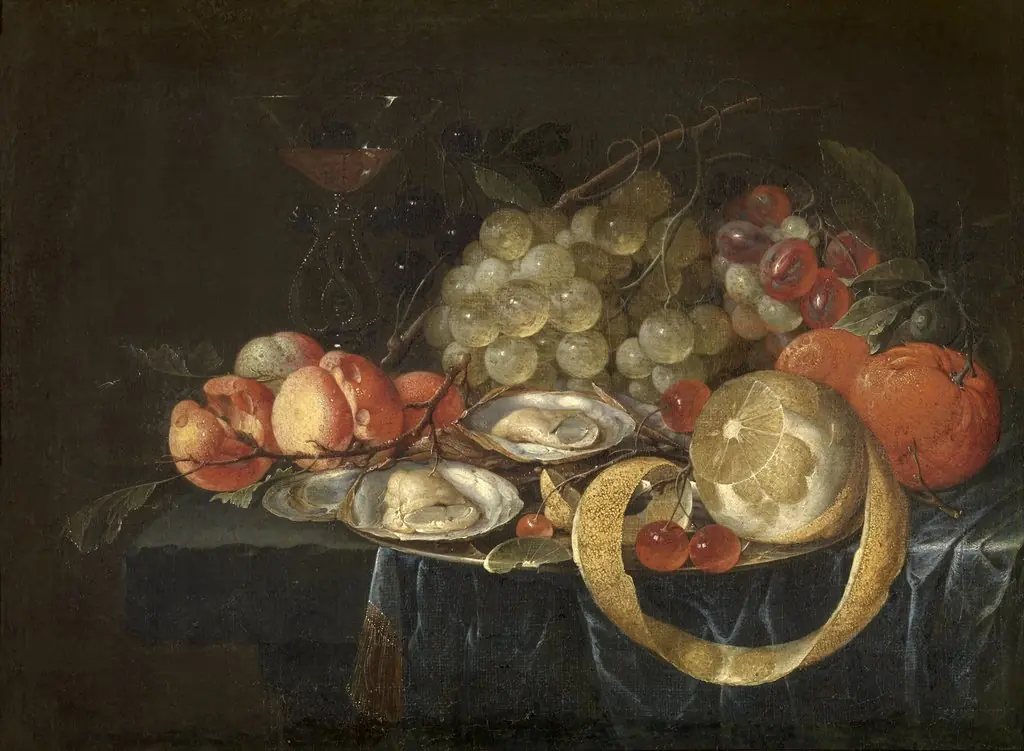 Still Life
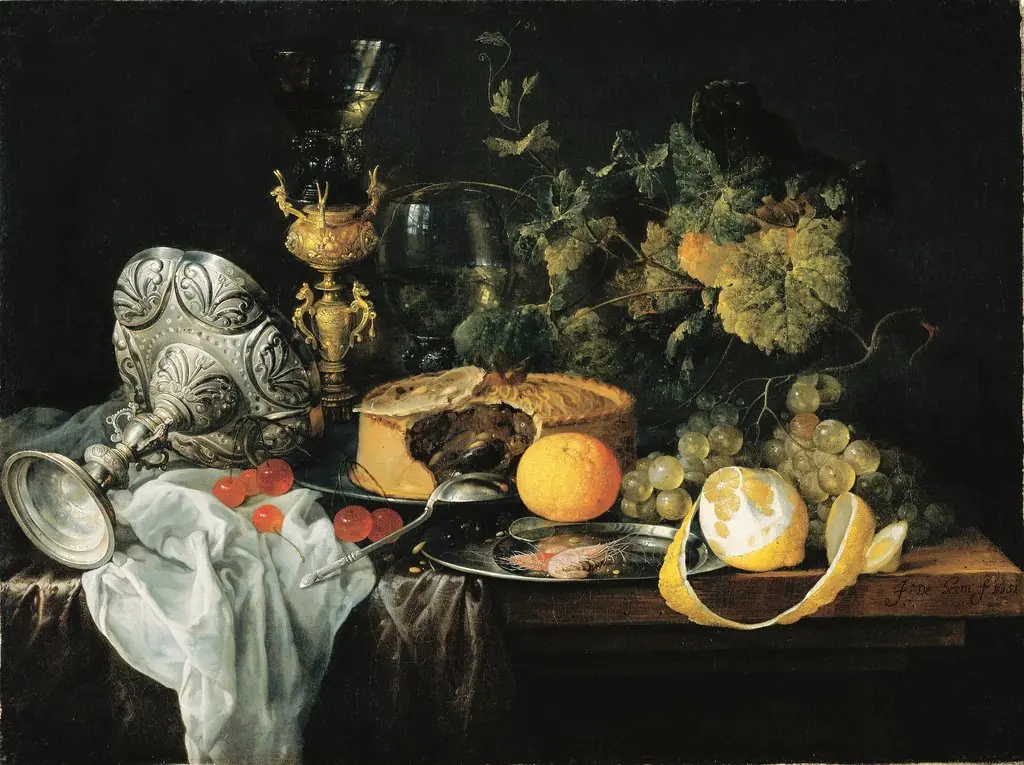 Sumptuous Still Life with Fruits, Pie and Goblets, 1651
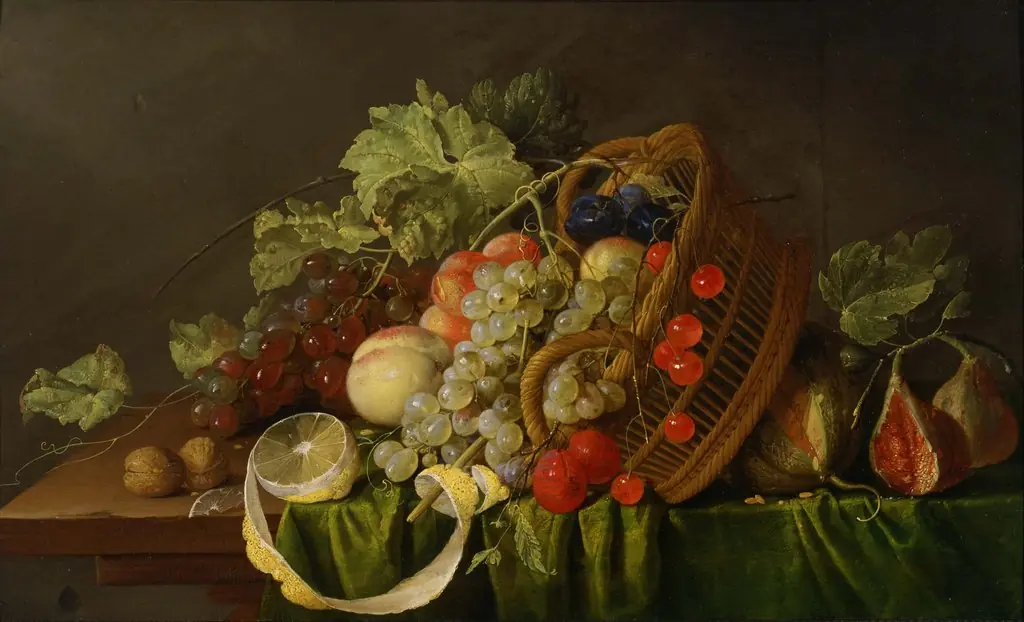 Still Life with a Basket of Fruit
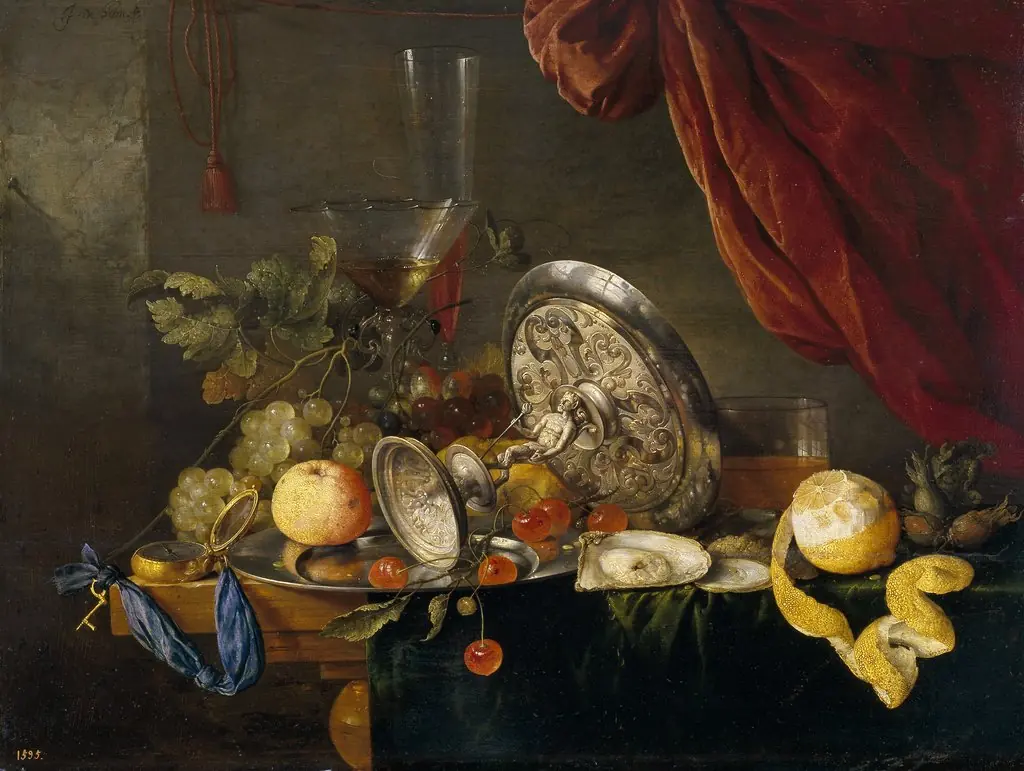 Still Life on a Wooden Table (Mesa)
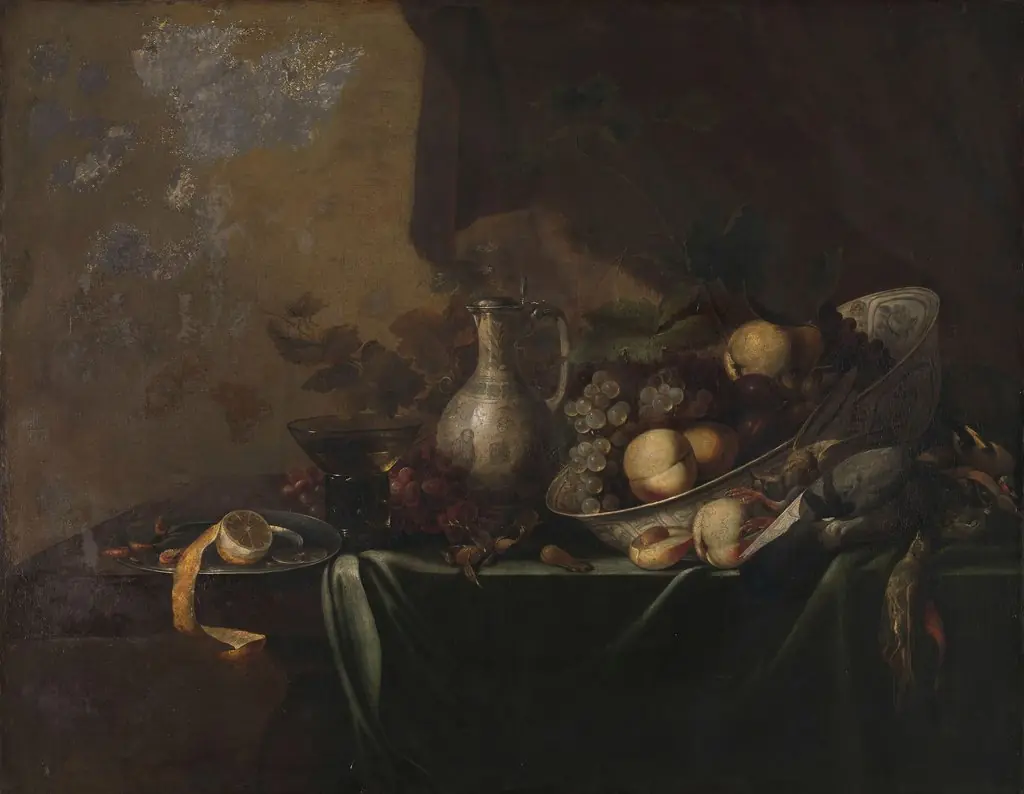 Still Life with Fruit
 PBanquet still life
- Still life with fruit and oysters