Artwork
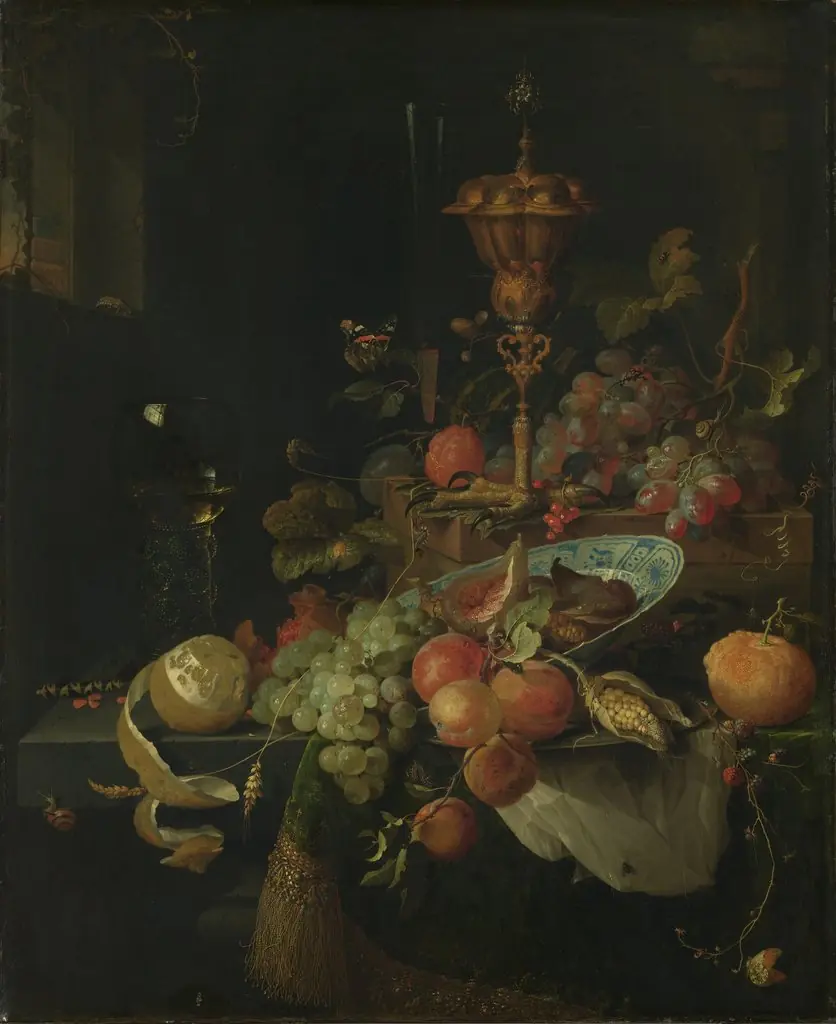
Still Life with Fruit, Oysters and a Porcelain Bowl
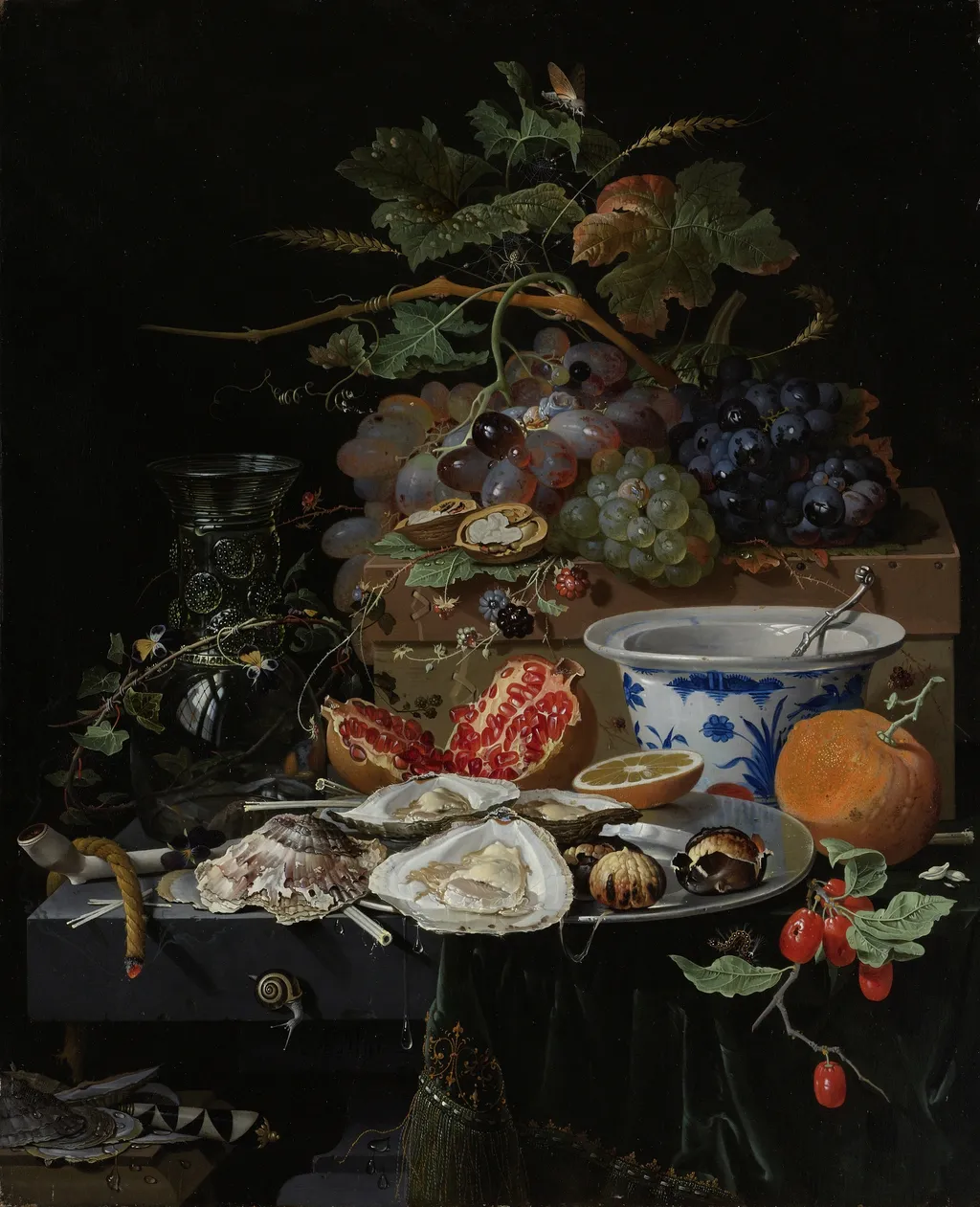
Still Life with Fruit, Oysters and a Porcelain Bowl is an oil painting by the Dutch Golden Age artist Abraham Mignon. It dates from 1669 and is held in the collection of the Rijksmuseum.
About this work
Subject & Meaning
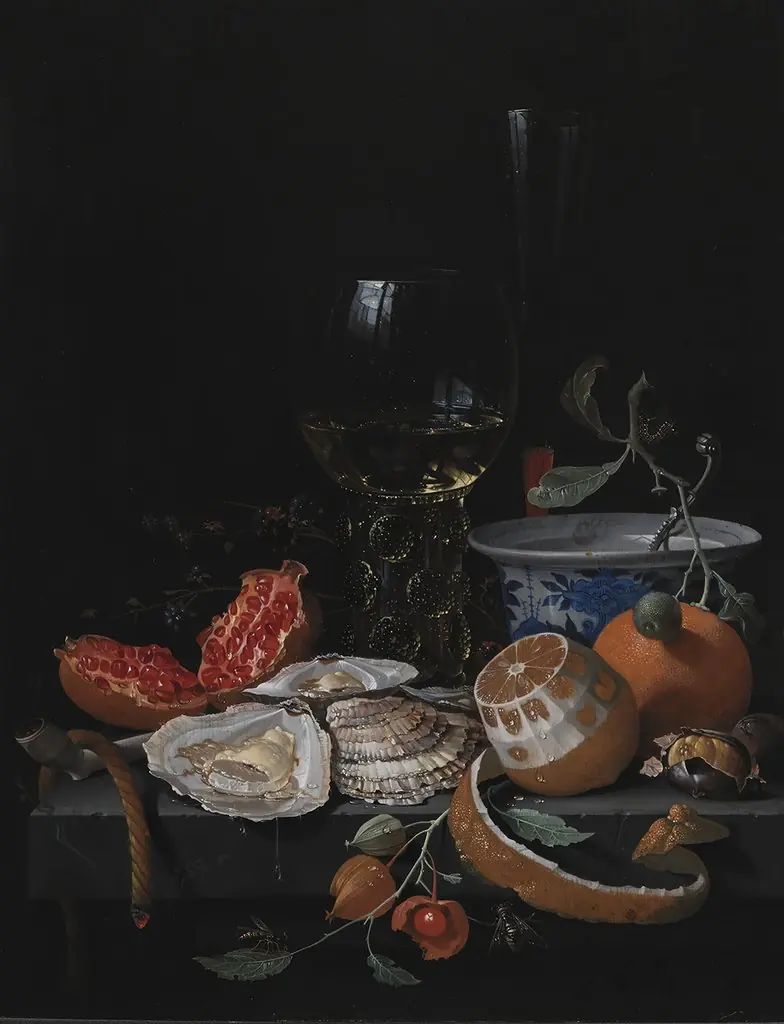
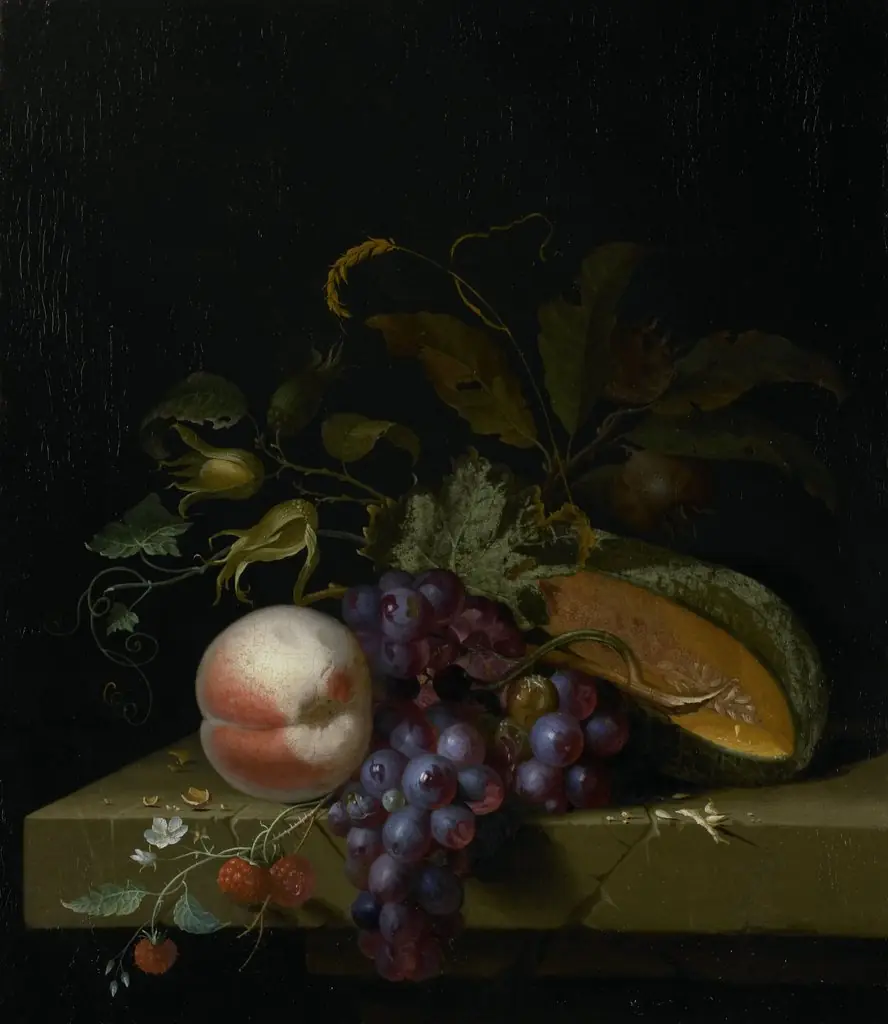
The painting depicts a classic still life arrangement featuring fruit and oysters alongside a porcelain bowl. Created by Abraham Mignon in 1669, the work focuses on the detailed representation of these specific natural and manufactured objects. As a genre piece, it presents a collection of edible items and fine tableware without an explicit narrative context provided in the available records.
Technique & Style
Abraham Mignon executed Still Life with Fruit, Oysters and a Porcelain Bowl in 1669 using oil paint applied to a panel support.
Abraham Mignon executed Still Life with Fruit, Oysters and a Porcelain Bowl in 1669 using oil paint applied to a panel support. The work measures 55 cm in height and 45 cm in width, adhering to the traditional Dutch still-life format of the period. As a genre painting, it depicts an arrangement of fruit and oysters alongside a porcelain bowl, showcasing the artist's focus on detailed naturalism within the still-life tradition.
History & Provenance
Abraham Mignon created the oil-on-panel painting Still Life with Fruit, Oysters and a Porcelain Bowl in 1669. The work measures 55 cm in height and 45 cm in width. Its ownership history traces back to Lucretia Johanna van Winter, followed by Hendrik Six van Hillegom, and subsequently the Six family line including Jan Pieter Six VI, Pieter Hendrik Six van Vromade, and Jan Six van Vromade. The painting is currently held in the collection of the Rijksmuseum.
Still Life with Fruit, Oysters and a Porcelain Bowl is held in the collection of the Rijksmuseum. The work, created in 1669 by Abraham Mignon, was previously owned by a series of private collectors including Lucretia Johanna van Winter and members of the Six family, such as Hendrik Six van Hillegom and Jan Pieter Six VI. The painting eventually entered the holdings of the Museum Arnhem before becoming part of the Rijksmuseum's collection. No specific inventory numbers or details regarding public exhibition history are provided in the available records.
Overview
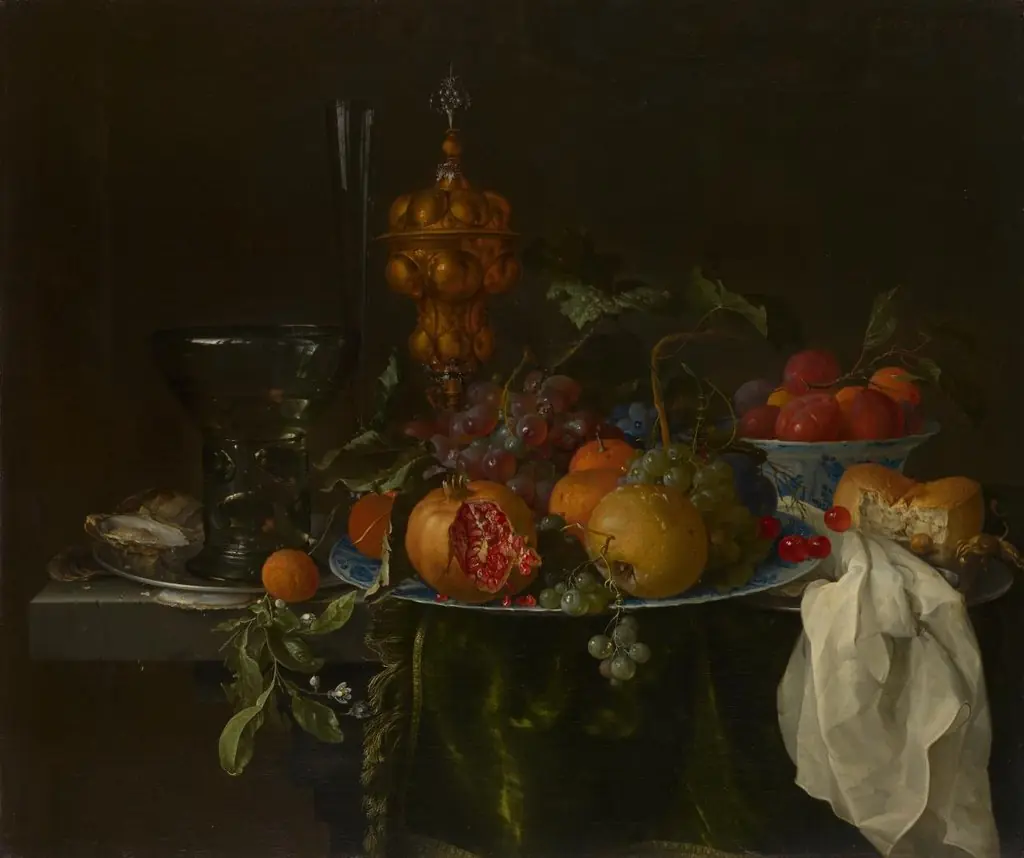
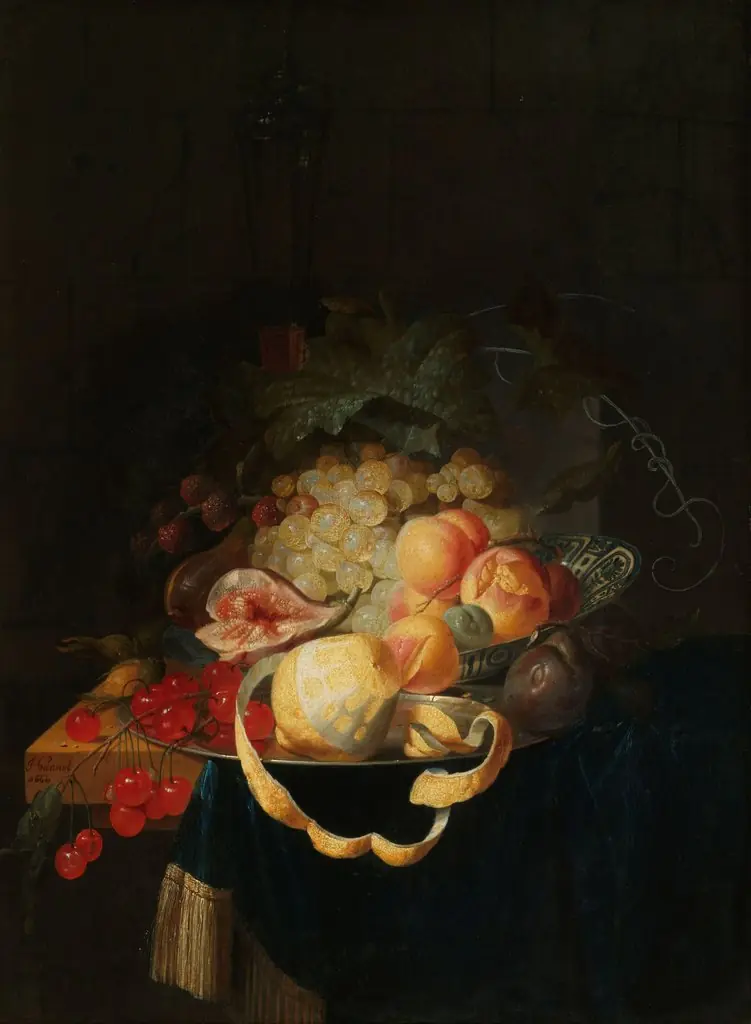
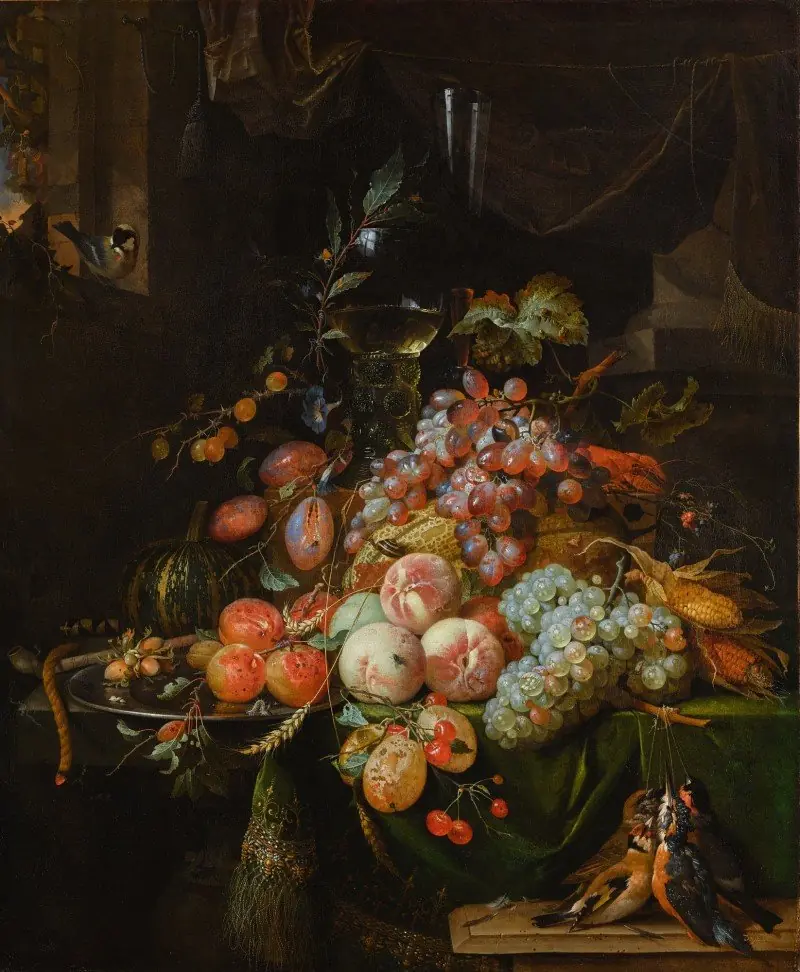
Abraham Mignon’s Still Life with Fruit, Oysters and a Porcelain Bowl (1669) presents a densely arranged banquet on a darkened tabletop. A half‑opened pomegranate releases ruby seeds, a shallow dish holds a cluster of oysters, and a blue‑white porcelain bowl sits beside grapes, plums, cherries, a cut orange and a glass jar. The composition balances abundant produce with luxurious tableware, typical of Dutch still‑life conventions.
Context
Mignon’s still lifes belong to a broader Dutch tradition that celebrated domestic prosperity through meticulous depictions of food and objects. By 1669, such paintings served both decorative and didactic purposes, illustrating the skill of the artist and the moral lesson of vanitas. The inclusion of imported porcelain also signals the era’s fascination with Eastern ceramics, a hallmark of the period’s material culture.
Own this work as a print
Artist & collection
Artist
Abraham Mignon or Minjon (21 June 1640 – 27 March 1679) was a Dutch still life painter.