Artwork
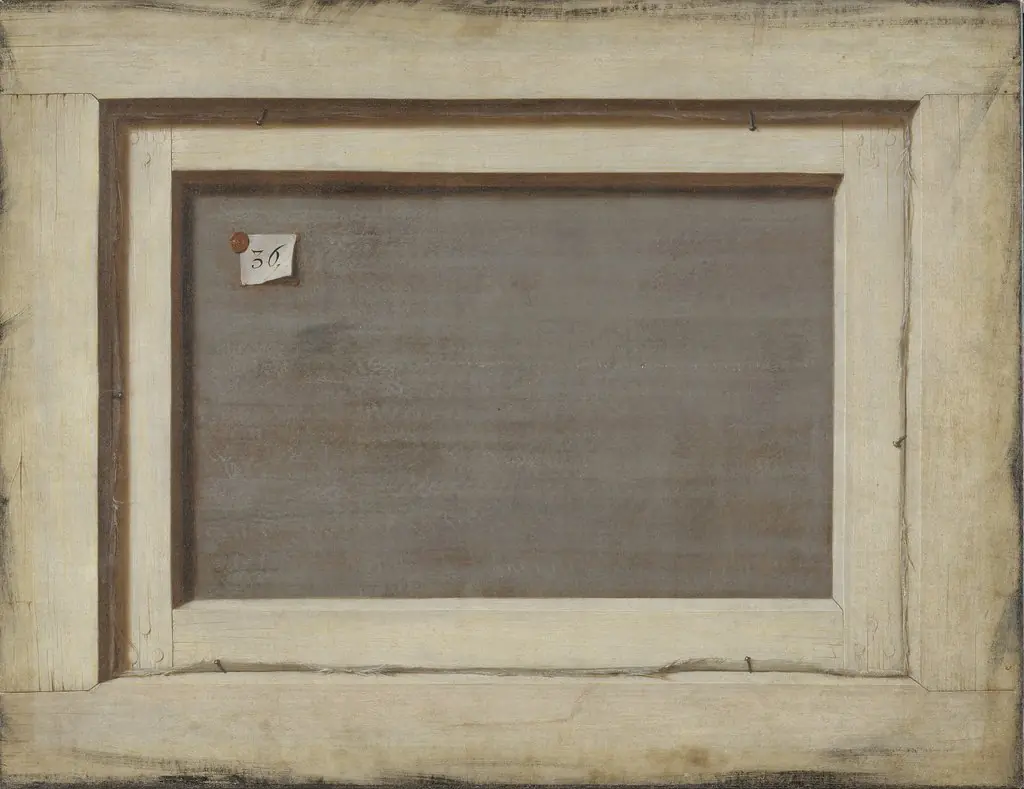
Trompe-l'œil. A Cabinet in the Artist's Studio
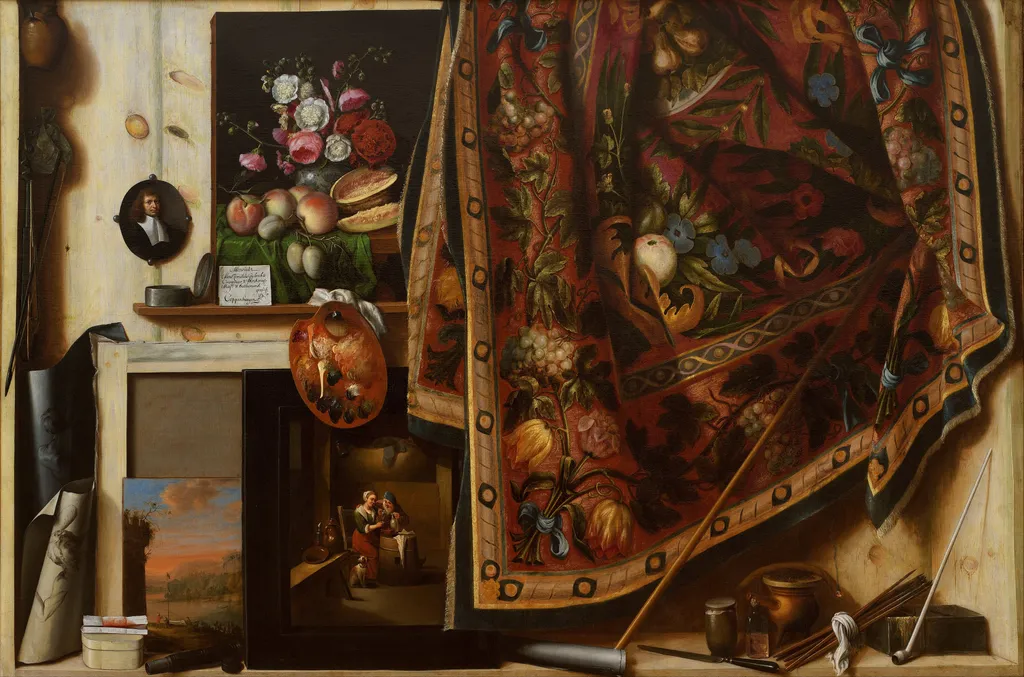
Trompe-l'œil. A Cabinet in the Artist's Studio is an oil painting by the Flemish Baroque painting artist Cornelis Norbertus Gijsbrechts. It dates from 1670 and is held in the collection of the Statens Museum for Kunst.
About this work
Technique & Style
The artist's handling of the oil paint achieves a high degree of visual verisimilitude, characteristic of the genre's intent to trick the eye.
Created in 1670, Trompe-l'œil. A Cabinet in the Artist's Studio is executed in oil paint on a canvas support. The work measures 132 cm in height and 199 cm in width, establishing a substantial scale for this illusionistic genre.
As a quintessential example of the trompe-l'œil style, the painting depicts a cabinet containing a palette and other painting implements, utilizing the medium to create a deceptive sense of three-dimensional reality on a two-dimensional surface. The artist's handling of the oil paint achieves a high degree of visual verisimilitude, characteristic of the genre's intent to trick the eye.
History & Provenance
Trompe-l'œil. A Cabinet in the Artist's Studio, painted in oil in 1670 by Cornelis Norbertus Gijsbrechts, entered the collection of the Statens Museum for Kunst, where it remains on view.
The work was created as a cabinet illusion painted for the artist’s studio, depicting a painted cabinet with associated items such as a palette and brushes, exemplifying the trompe-l'œil genre.
The work is held in the collection of the Statens Museum for Kunst, where it is catalogued under the accession number that identifies it within the museum's holdings. It has been included in exhibitions focused on trompe-l'œil painting and on 17th‑century European art, bringing the piece to public view beyond the permanent display.
The painting measures 1320 cm in height and 1990 cm in width, reflecting its large scale as recorded in the museum’s inventory.
Overview
Cornelis Norbertus Gijsbrechts, a Flemish artist active in the latter half of the 17th century, painted a work titled Trompe-l'œil. A Cabinet in the Artist's Studio around 1670. Executed in oil on canvas, the piece belongs to the Flemish Baroque tradition and is now held by the Statens Museum for Kunst. Its primary aim is to deceive the eye by rendering a studio interior with convincing three‑dimensionality.
Subject & Meaning
The composition presents a wooden cabinet filled with typical painter’s tools: a palette, brushes, pigment jars, and a half‑finished landscape leaning against the wall. On the shelf a tiny portrait, a vase of flowers, and a bowl of fruit are arranged alongside a miniature scene of two figures at an easel. By juxtaposing these objects, Gijsbrechts invites viewers to question the boundary between painted illusion and tangible reality.
Context
During the mid‑17th century, Flemish artists frequently explored visual deception, reflecting broader Baroque interests in drama and sensory experience. Gijsbrechts’ studio scene aligns with this trend, serving both as a showcase of artistic skill and a commentary on the artist’s craft within a domestic setting.
Own this work as a print
Artist & collection
Artist
Cornelis Norbertus Gijsbrechts
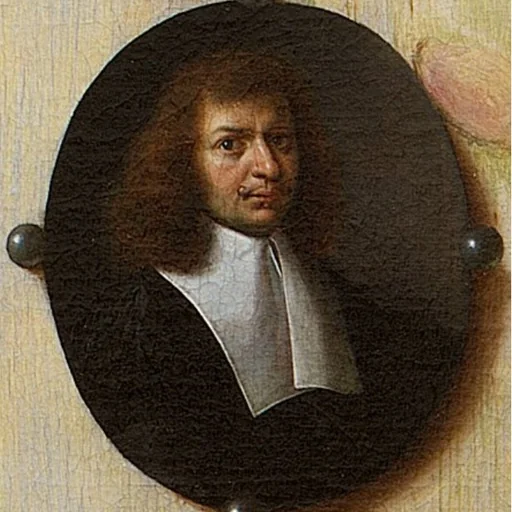
Cornelis Norbertus Gijsbrechts (1625/1629 – after 1675), was a Flemish painter who was active in the Spanish Netherlands, Germany, Denmark and Sweden in the second half of the seventeenth century.

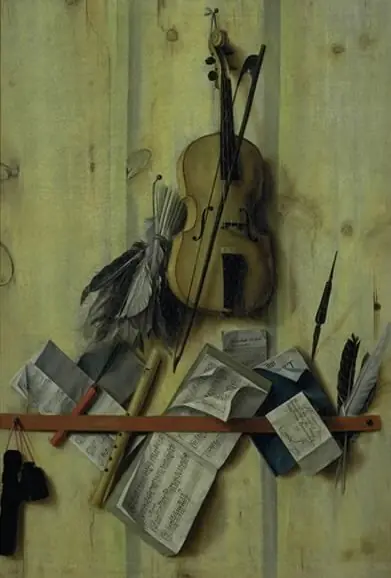
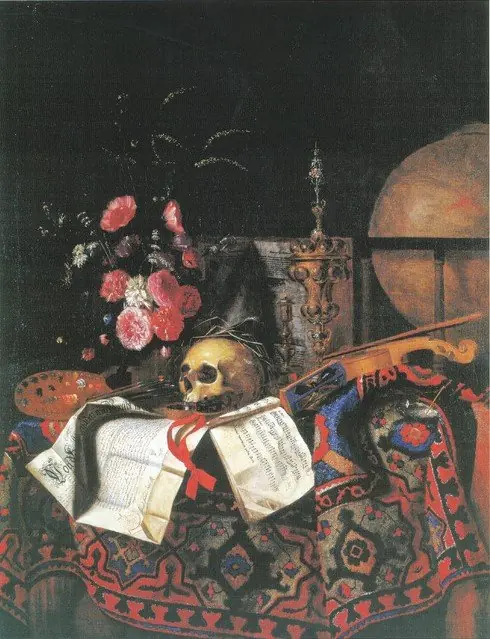
- A Collection
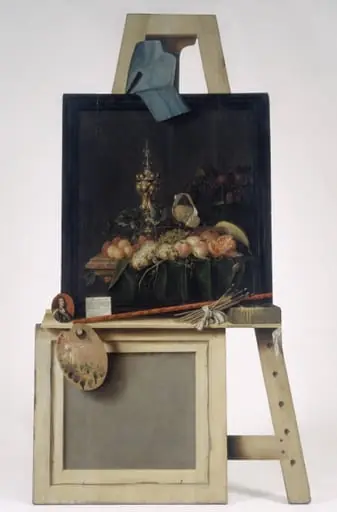 Cut-Out Trompe l'Oeil Easel with Fruit Piece
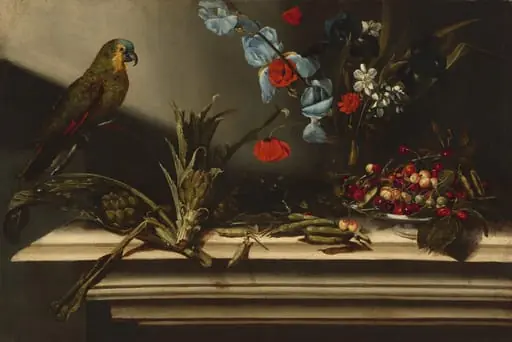 Still Life with Artichokes and a Parrot
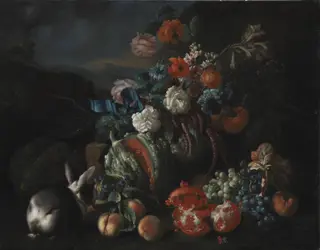 Stone Base with Flowers and Fruit
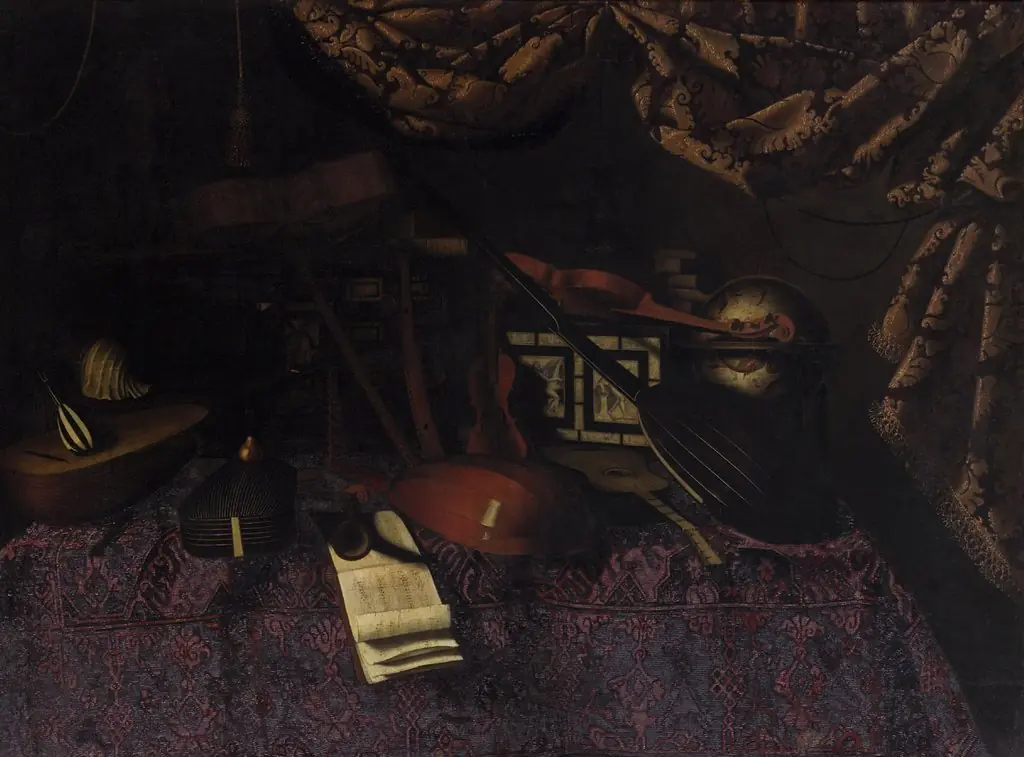 Stilleben mit Musikinstrumenten, Notenblättern, Himmelsglobus und Muschel
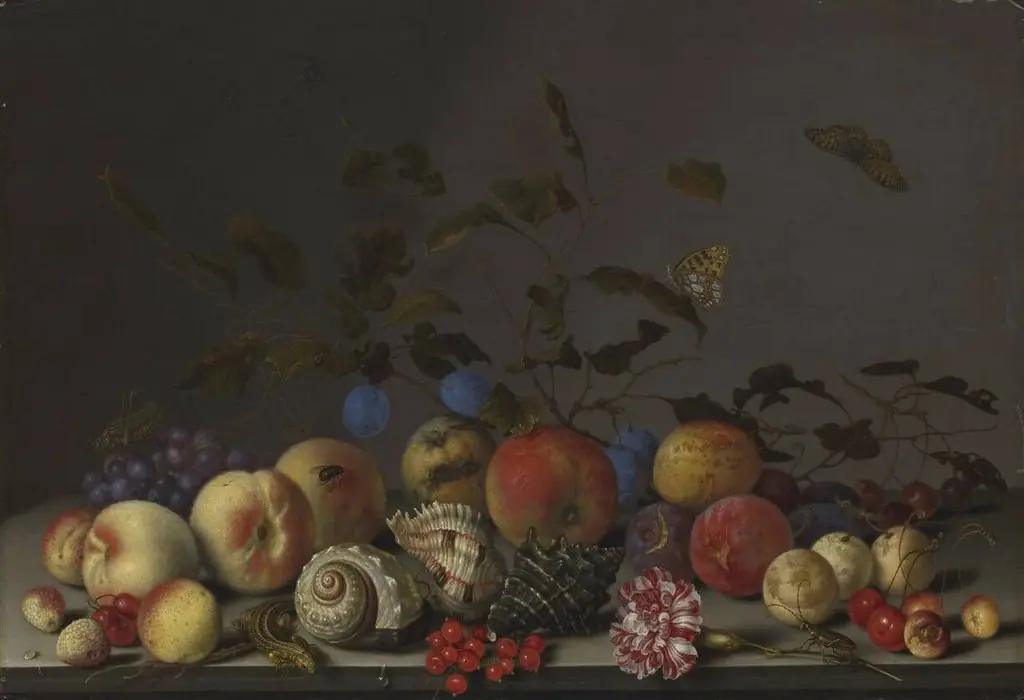 Stillleben mit Früchten und Seeschneckenhäusern
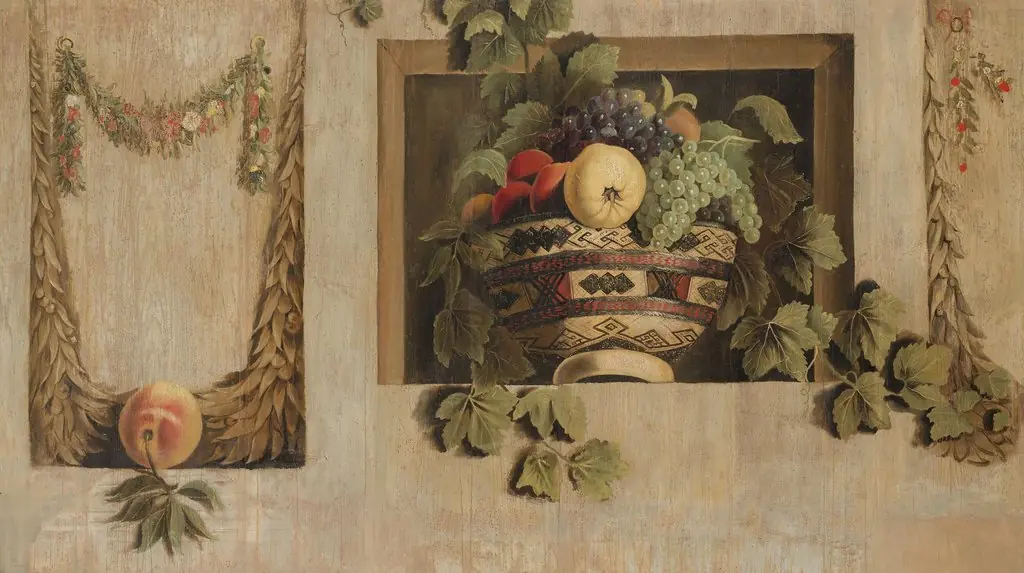 Still Life with Fruit and Flower Garlands
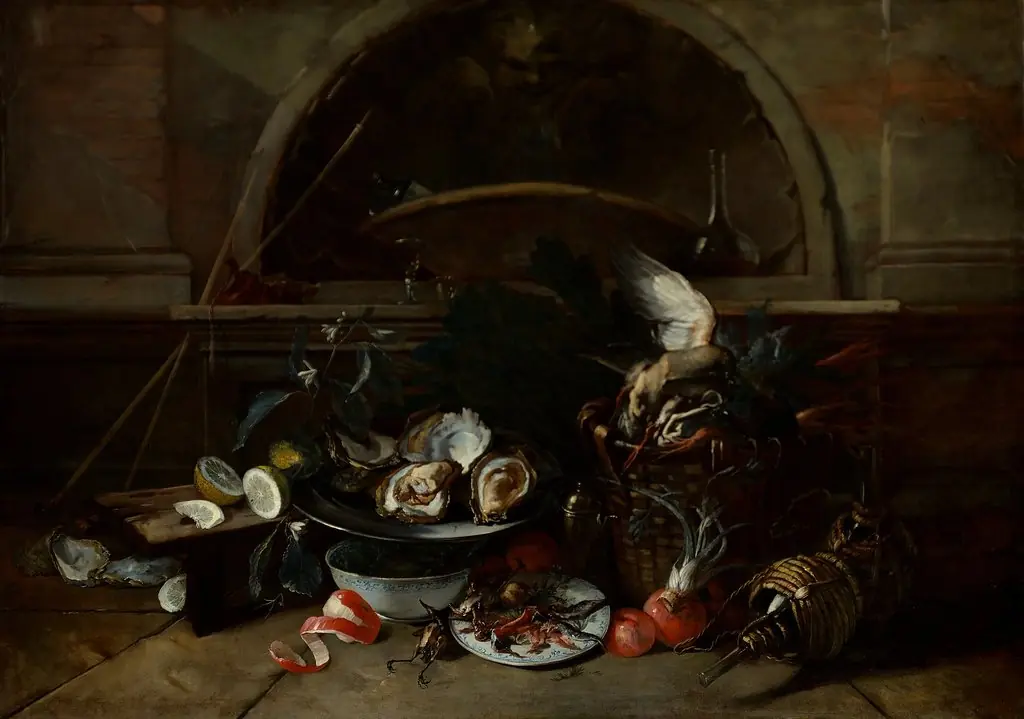 Still Life with Bottles and Oysters
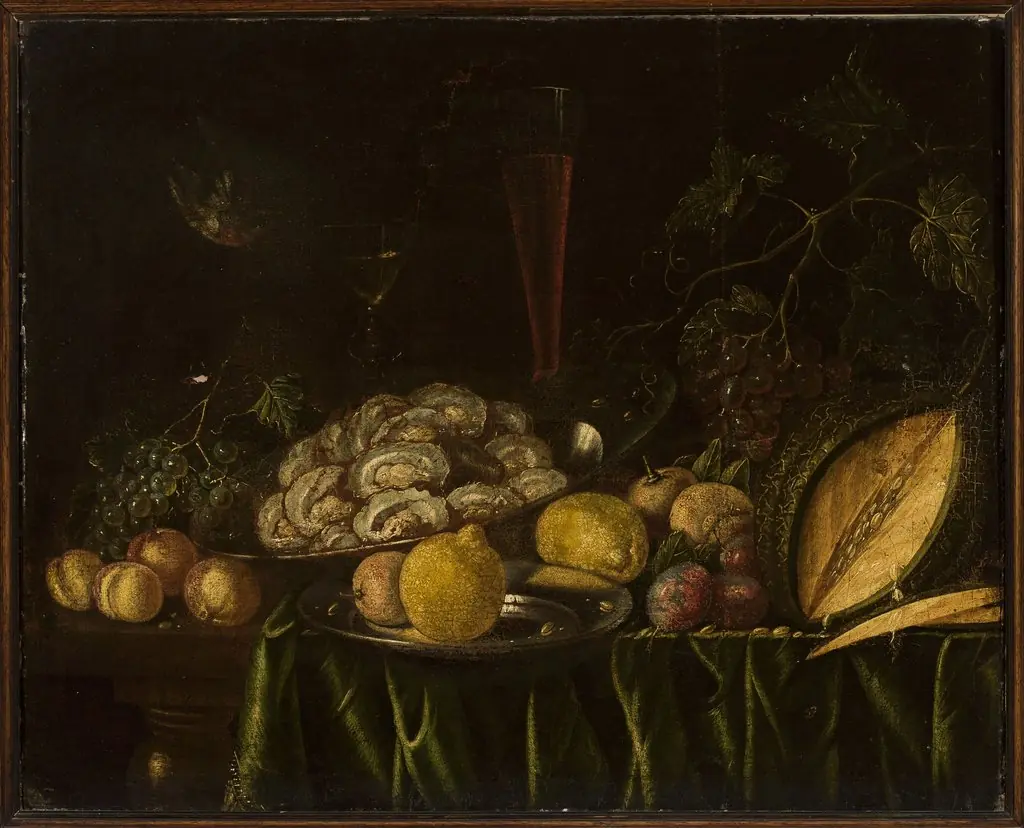 Still life with – fruit, mussels and a bird
 Still Life with Quinces, Medlars and a Glass
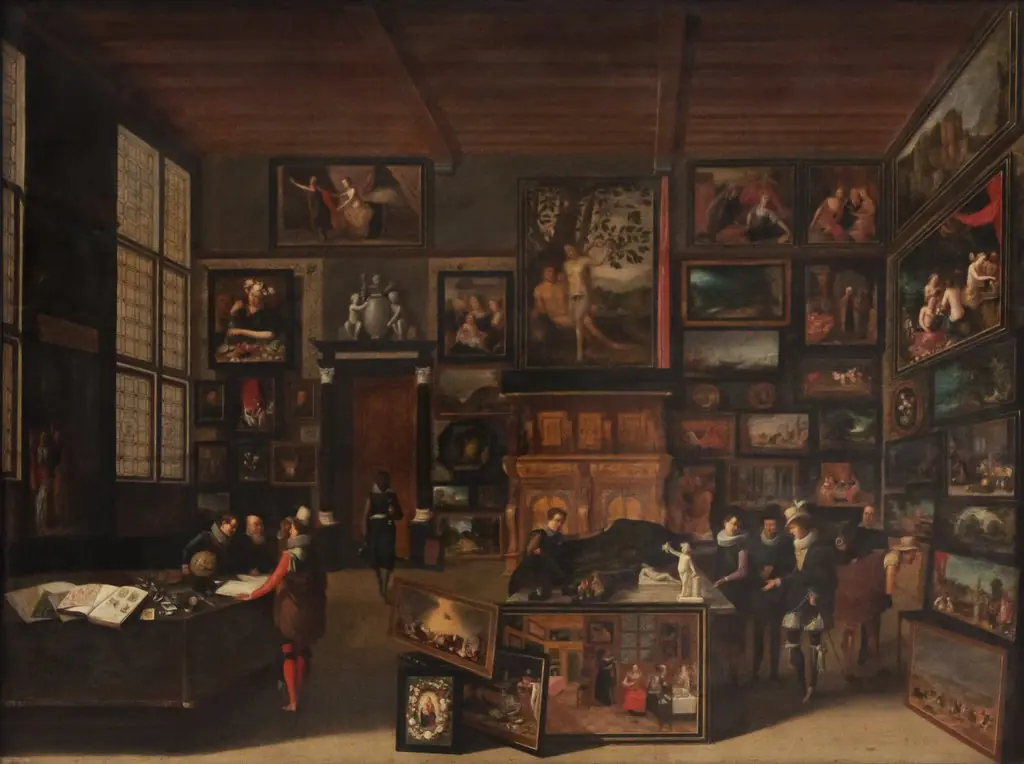 The Art Gallery of Jan Snellinck
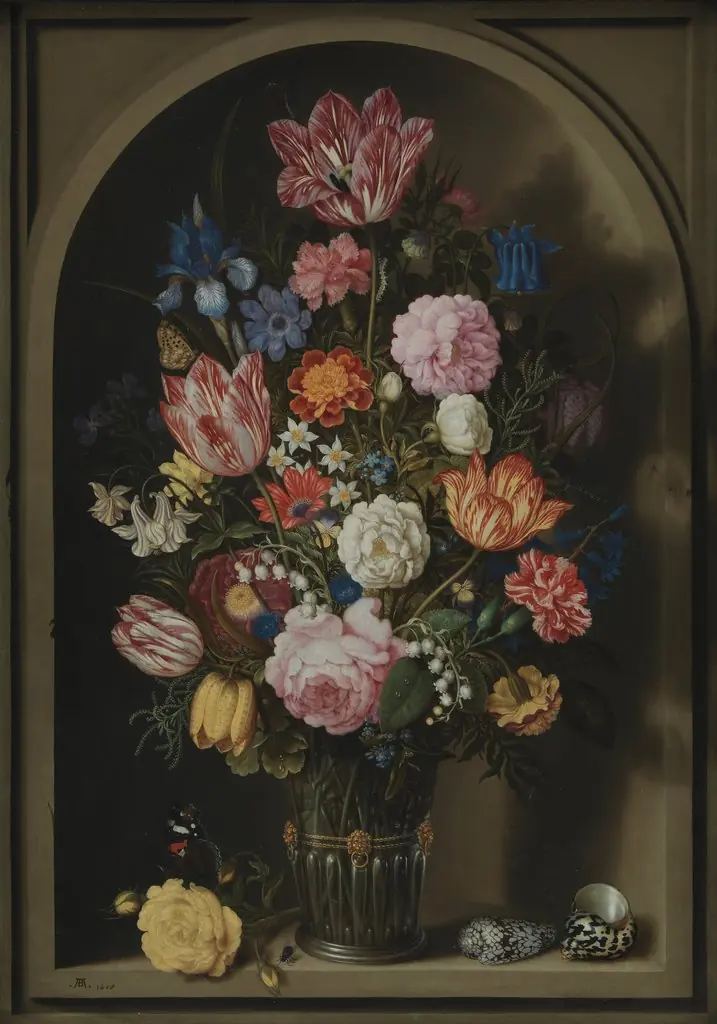 Bouquet of Flowers in a Stone Niche