Artwork
A Collection
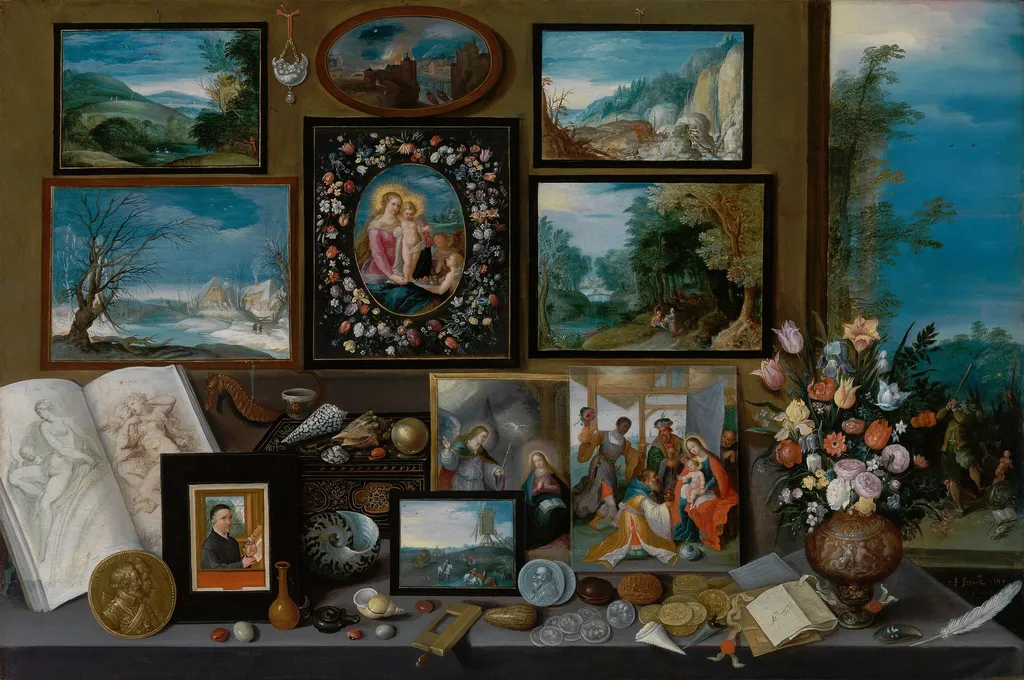
A Collection is an oil painting by the Flemish Baroque painting artist Frans Francken the Younger. It dates from 1619 and is held in the collection of the Vlaamse Kunstcollectie.
About this work
Subject & Meaning
Six paintings hang on the back wall, including a Madonna in a flower garland and an Adoration of the Magi, alongside a portrait of the miniaturist Simon Bening.
The painting depicts a cabinet of curiosities, showcasing both naturalia and artificialia as symbols of wealth, status, and learning for the Antwerp bourgeoisie. Arranged as a still life on a table against a wall, the objects include a sketchbook, seashells, coins, prints, and a bouquet of roses and tulips in a faience vase. The flowers, which bloom at different times, form an artificial composite, while the vase's decoration possibly references water as a life source or alludes to historical conflicts like the 1566 Iconoclastic Fury.
Six paintings hang on the back wall, including a Madonna in a flower garland and an Adoration of the Magi, alongside a portrait of the miniaturist Simon Bening.
A satirical-allegorical background scene features two figures with donkey heads toppling a statue, book, clock, and celestial sphere with a club. This iconography symbolizes the ignorance of the masses toward the arts and sciences, contrasting with the ordered rarities in the foreground and reflecting the contemporary maxim that art has no enemy except the ignorant.
Technique & Style
Frans Francken the Younger executed A Collection in 1619 in oil on panel, measuring 56 × 85 cm. The work belongs to the genre of the art gallery painting (kunstkamer), a type of cabinet picture that depicts rooms filled with art and rare objects.
The composition presents a shallow interior space where valuables are displayed on a table or shelf against a wall, arranged according to still-life principles. The surface is densely populated with objects: an open sketchbook, a bouquet of flowers in a blue-decorated faience vase, coins, seashells, and prints. The back wall features six hanging paintings, including a garland Madonna, landscapes in the styles of Joos de Momper and Jan Brueghel the Elder, and a portrait miniature of Simon Bening.
Infrared examination has revealed an owl moth beneath the green Italianate landscape upper left, with an overpainted insect above it, suggesting Francken initially intended an insect scene in that area. Behind the flower bouquet, a satirical-allegorical scene shows two ass-headed figures smashing objects, a recurring motif in Francken's work symbolizing ignorance of art and science.
The handling is precise and descriptive, with careful attention to the varied textures of naturalia and artificialia, and the shallow space creates a compressed, accumulative effect characteristic of Flemish cabinet pictures of the period.
History & Provenance
A Collection is an oil on panel work created by Frans Francken the Younger in 1619, measuring 56 by 85 cm. The painting entered the Royal Museum of Fine Arts Antwerp, where it is inventoried under number 816. The museum acquired the work in 1903, purchasing it from the Antwerp-based art dealer Joseph Hallyn. The painting is also associated with the collections of the Vlaamse Kunstcollectie and the Rubenshuis.
Context
Frans Francken the Younger's 1619 cabinet painting belongs to the kunstkamer genre that flourished in Antwerp during the early seventeenth century, embodying the city's mercantile wealth and taste for exotic naturalia and artificialia. Scholarly attribution once credited Jan Brueghel the Elder with inventing the genre in 1617, but Ursula Härting's 1989 research established that Francken II was already producing such works before that date, with 21 kunstkamer paintings now attributed to him. The work reflects the shift from noble to bourgeois collecting practices, as wealthy Antwerp merchants and magistrates increasingly displayed erudition through curated collections.
Francken integrates still-life principles with symbolic commentary, including a recurring satirical motif of donkey-headed figures destroying objects of art and learning, a conventional emblem of ignorance that contrasts with the ordered display of rarities and reinforces the maxim that art's only enemy is the ignorant.
Legacy
A Collection by Frans Francken the Younger, created in 1619, is recognized as an early example of the kunstkamer genre in Flemish art. It helped establish the visual conventions later associated with such collections, particularly the arrangement of valuable objects on a table or shelf against a wall and the inclusion of symbolic elements reflecting contemporary attitudes toward knowledge and ignorance. The work influenced later depictions of art galleries and scholarly interiors, contributing to the development of still-life painting as a medium for representing intellectual curation.
Its legacy is noted in scholarly discussions of 17th-century European collecting practices, where it is cited as evidence of the genre's emergence prior to Jan Brueghel the Elder's Allegorie van het gezicht (1617), a theory confirmed by Härting's research identifying 21 such works by Francken.
Overview
Frans Francken the Younger’s 1619 oil on panel, titled A Collection, depicts a densely arranged interior tableau that functions as a visual inventory of assorted objects. The composition centers on a wooden table crowded with shells, coins, a book, and assorted tools, while miniature paintings adorn the wall behind, showing landscapes and religious scenes. A large vase of flowers adds a splash of colour amid the predominantly earthy palette.
Own this work as a print
Artist & collection
Artist
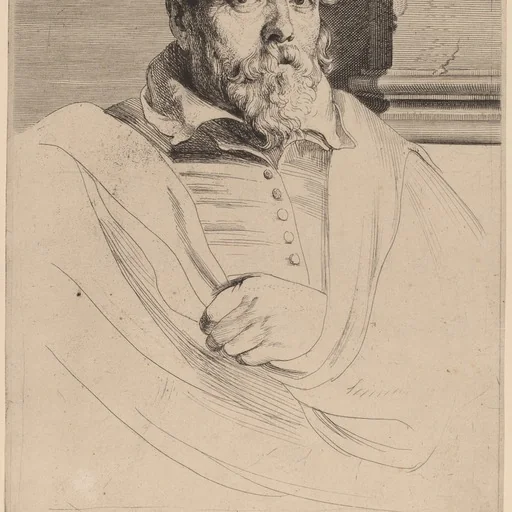
Frans Francken the Younger (1581, Antwerp – 6 May 1642, Antwerp) was a Flemish painter and the best-known and most prolific member of the large Francken family of artists.
 Garland of Flowers with Adoration of the Shepherds
 Allegory on the Christ child as the lamb of God
 The Triumph of Neptune and Amphitrite
 Chamber of Art and Curiosities
 The Prodigal Son
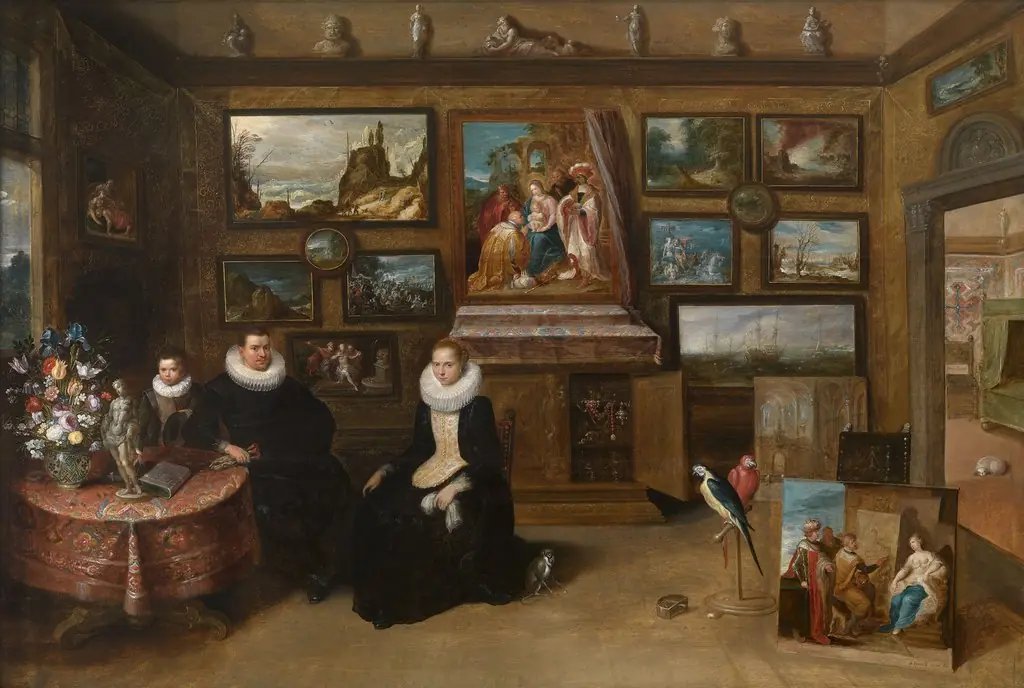 The Collection of paintings of Sebastiaan Leerse
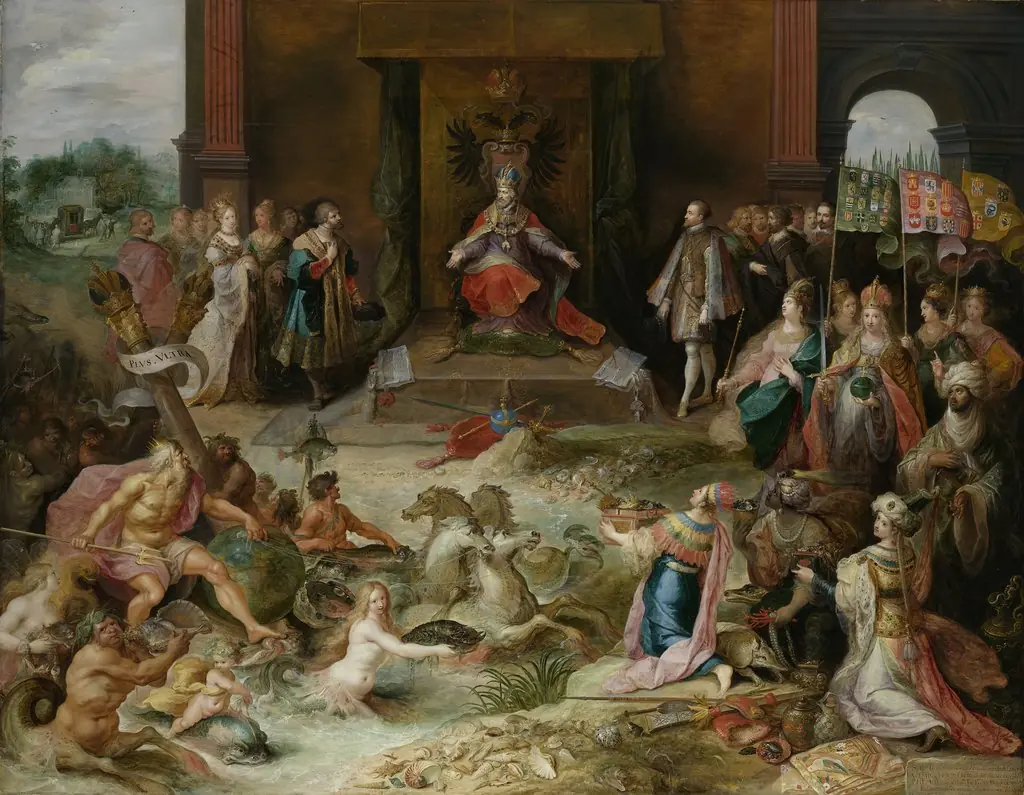 Allegory on the Abdication of Emperor Charles V in Brussels
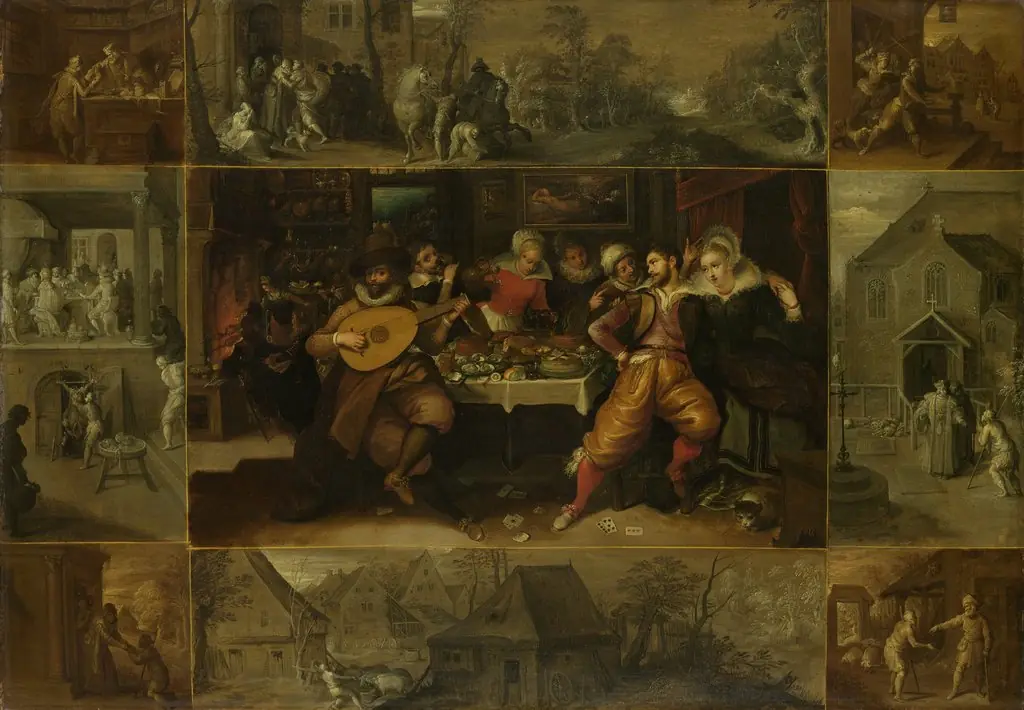 The parable of the prodigal son
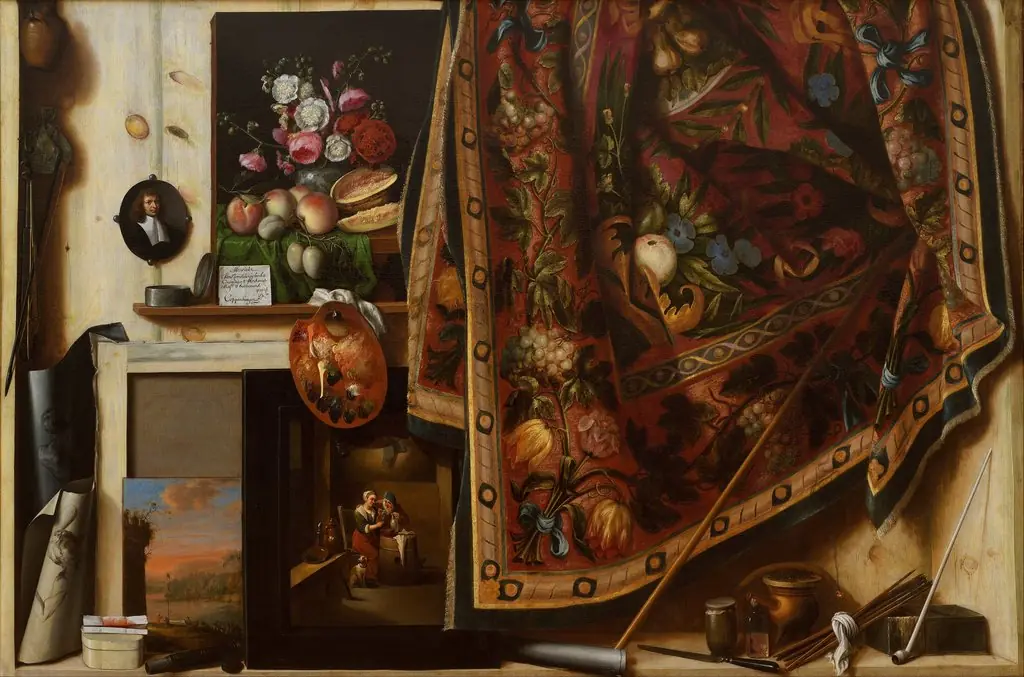 Trompe-l'œil. A Cabinet in the Artist's Studio
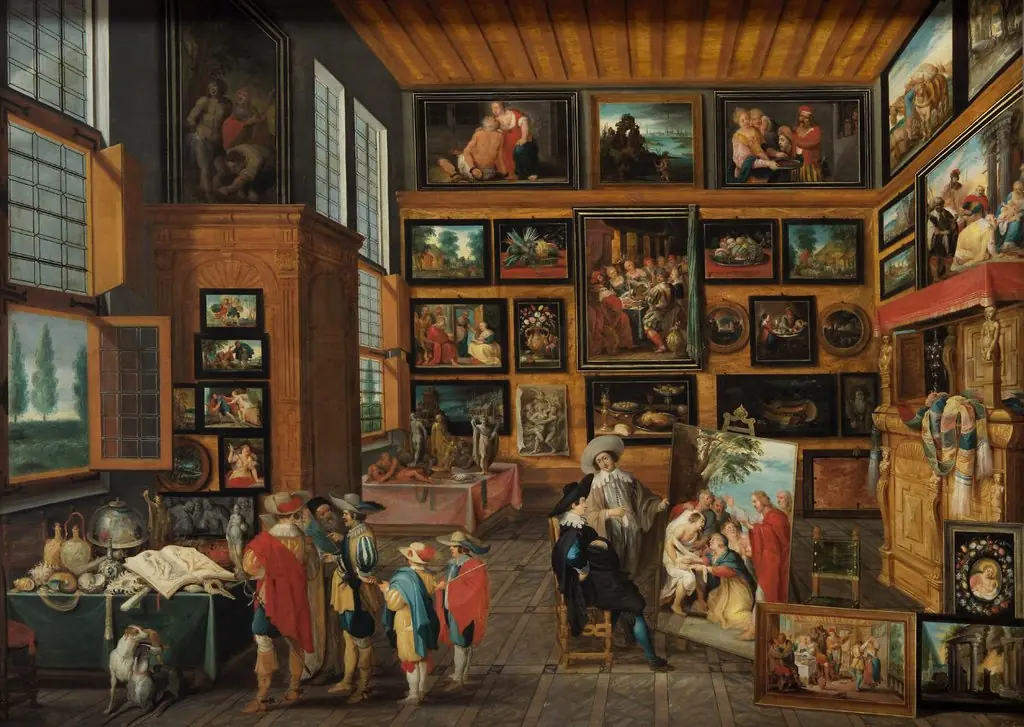 Art and Rarity Cabinet
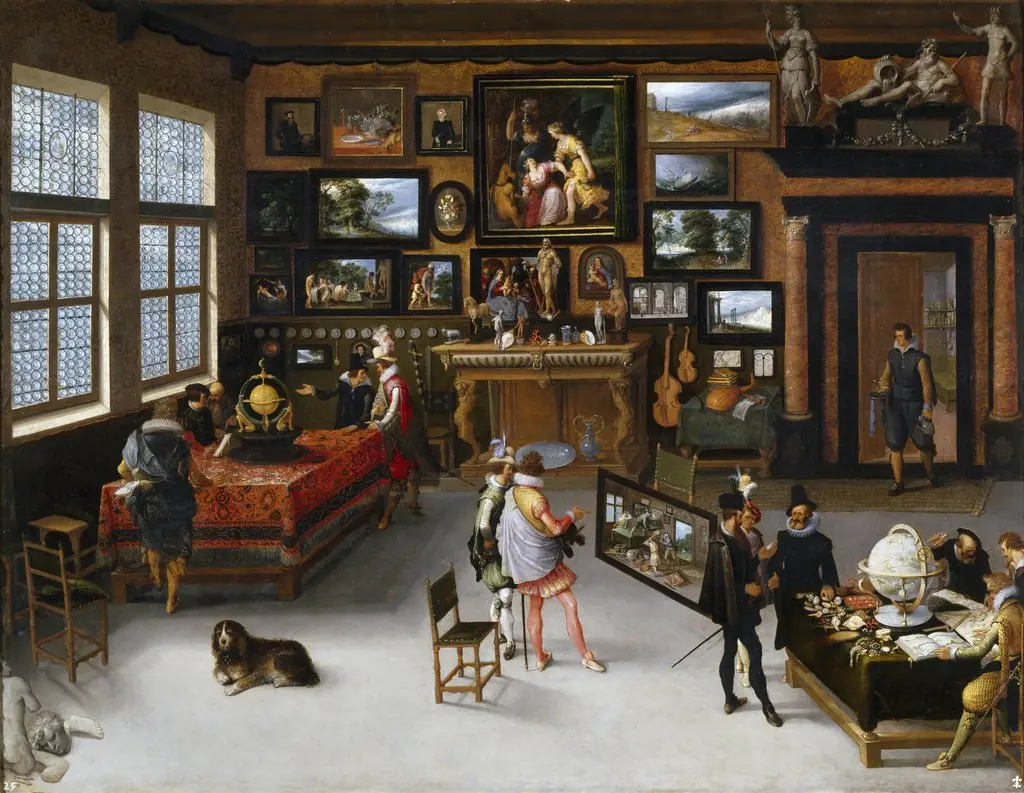 The Sciences and Arts
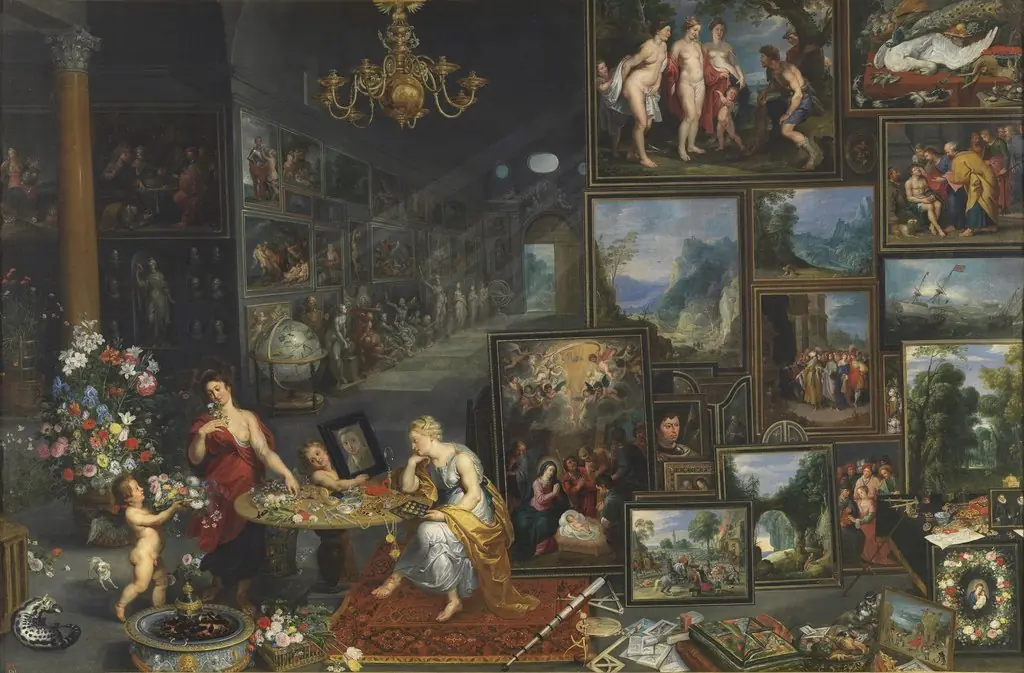 Allegory of Sight and Smell
 A Picture Gallery with an Artist Painting a Woman and a Girl. Allegory of the Art of Painting
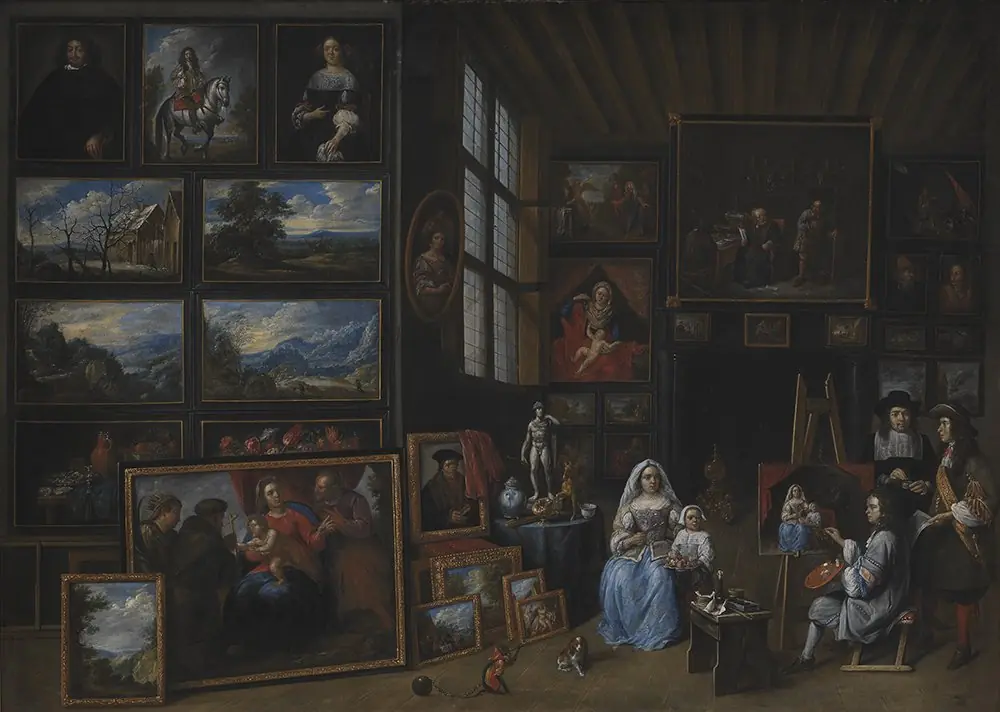 Et billedgalleri med en kunstner, der maler en kvinde og en pige. Allegori over malerkunsten
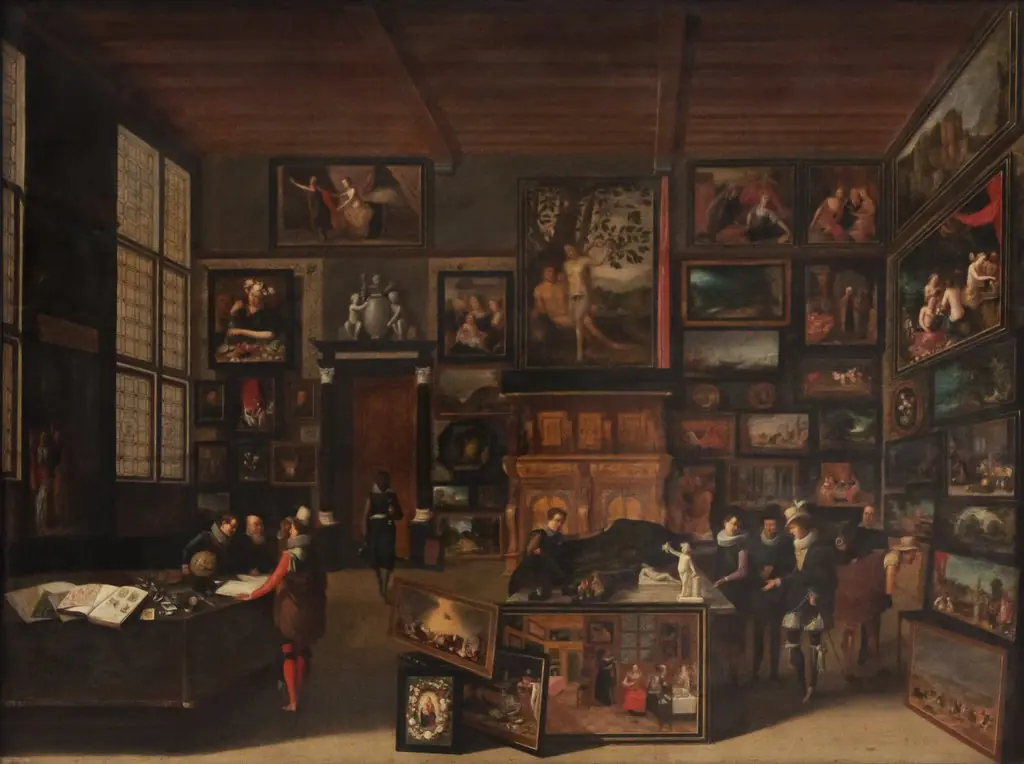 The Art Gallery of Jan Snellinck
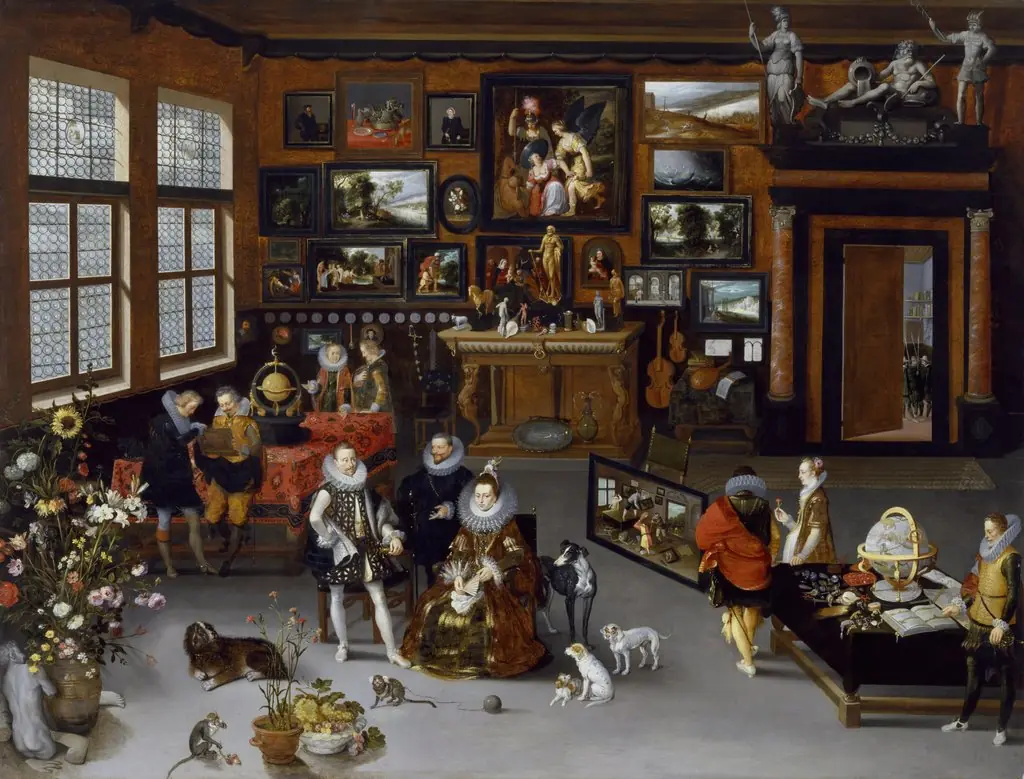 The Archdukes Albert and Isabella Visiting a Collector's Cabinet
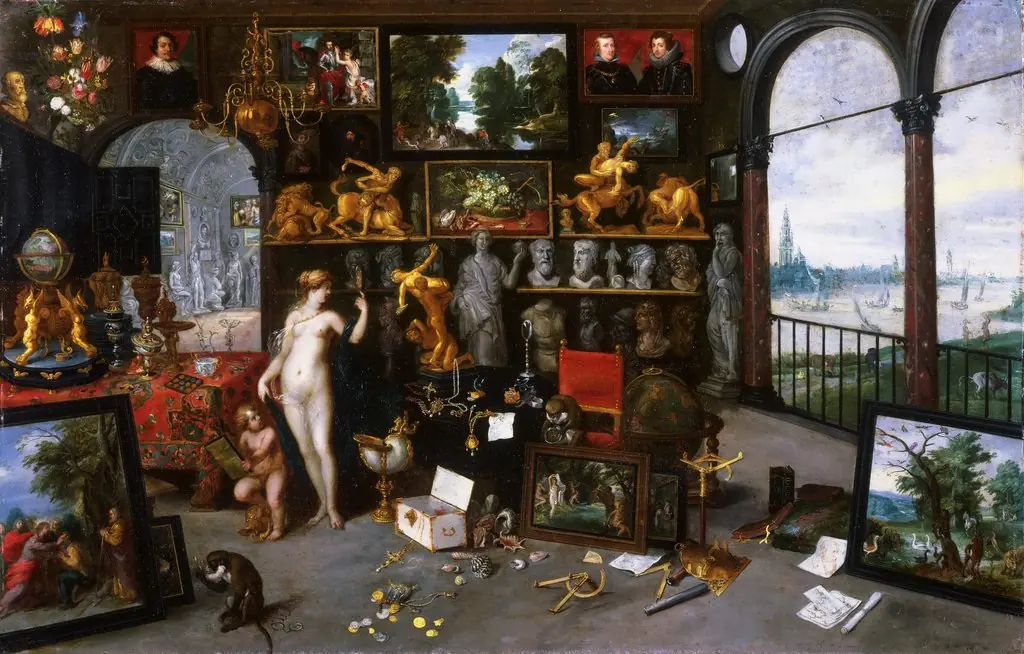 Allegory of Sight (Venus and Cupid in a Picture Gallery)
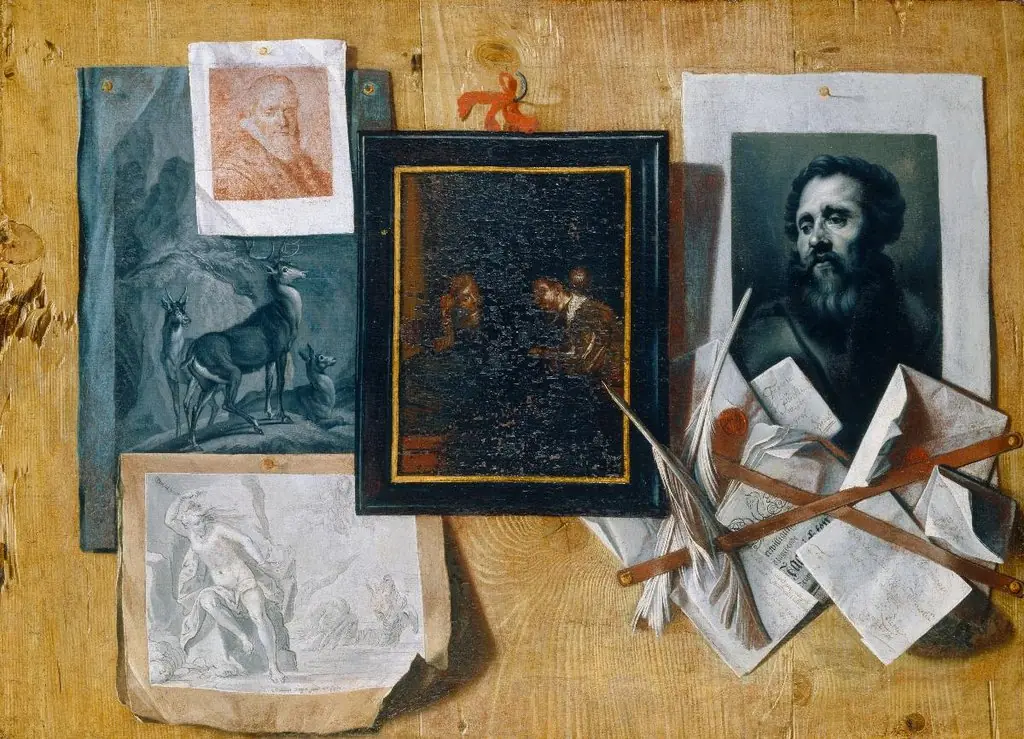 Quodlibet mit einem Gemälde, Zeichnungen, einem Schabkunstblatt und Briefen
- Intérieur avec personnages devant une collection de peintures