Artwork
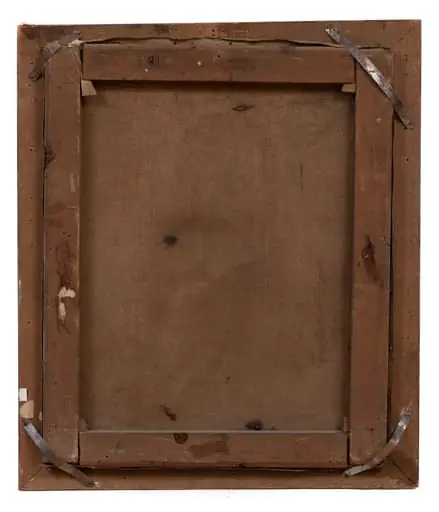
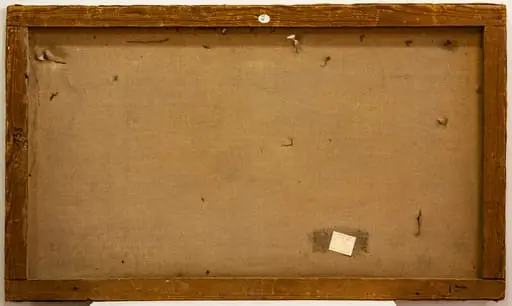
Trompe l'oeil. The reverse of a framed painting.
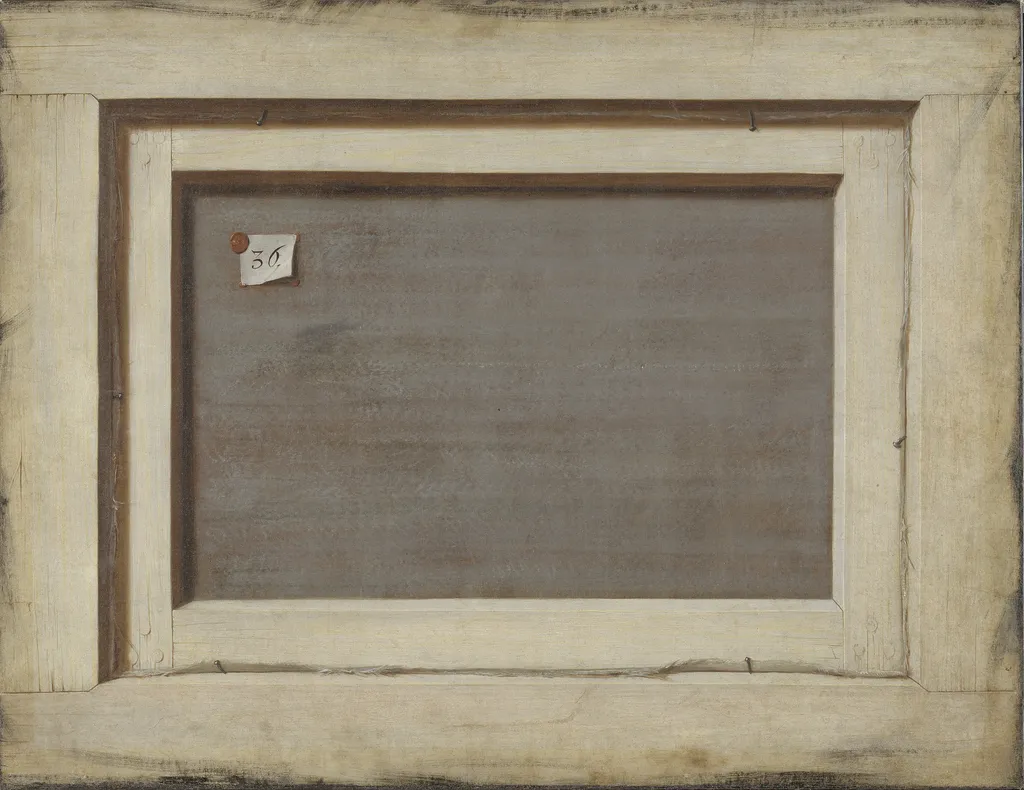
Trompe l'oeil. The reverse of a framed painting. is an oil painting by the Dutch Golden Age artist Cornelis Norbertus Gijsbrechts. It dates from 1670 and is held in the collection of the Statens Museum for Kunst. Cornelius Norbertus Gysbrechts painted this trompe‑l’œil work in 1670 while serving as the court painter to Denmark.
About this work
Subject & Meaning
Light from the left casts sharp shadows that emphasize the three‑bolt joints and the label’s seal, creating a tactile illusion of depth.
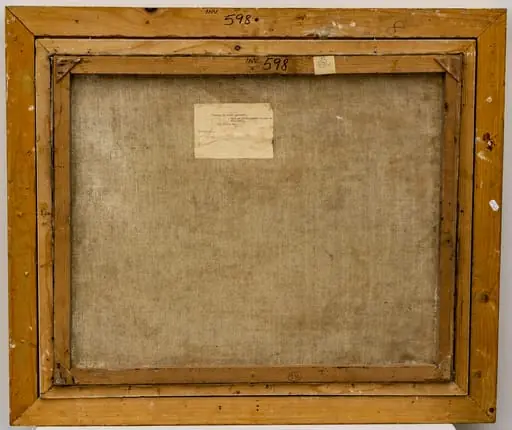
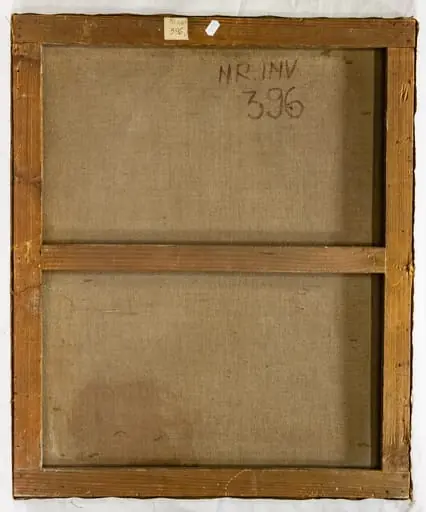
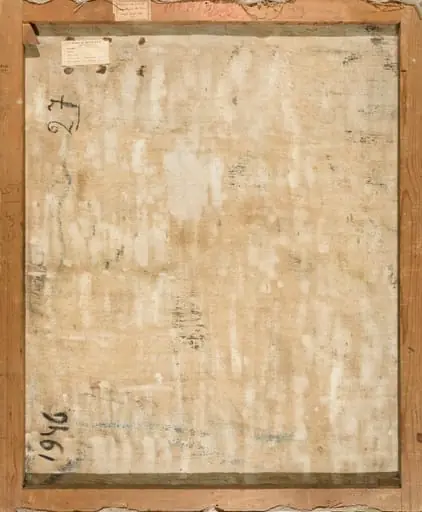
The painting shows the reverse side of a framed canvas, exposing the stretched linen, wooden stretcher, and a double‑wide frame with visible nail holes; a small label bearing the number 36 is affixed in the upper left corner. Light from the left casts sharp shadows that emphasize the three‑bolt joints and the label’s seal, creating a tactile illusion of depth. By rendering the back of a picture as a standalone object, Gijsbrechts collapses the distinction between representation and reality, turning the work into a meditation on painting as material object and as image, a stance that early scholars have linked to conceptual art.
Technique & Style
The painting is executed in oil on canvas stretched over a wooden stretcher and enclosed by a broader wooden frame. Its trompe‑l'œil rendering depicts the back of a framed work, using the canvas, stretcher and frame as subject matter. The work was intended for display in a Kunstkammer, and today it is shown leaning against the museum wall, reinforcing the illusion that it is an unfinished frame.
The frame bears worn surfaces, six irregularly placed nails, and a small paper label marked “36” secured with sealing wax. Light from the upper left casts strong L‑shaped shadows, highlighting the textured canvas and the “easel ear” of the label, creating a deceptive, sculptural effect.
History & Provenance
The work, titled Trompe l'oeil. The reverse of a framed painting, was executed in 1670 by Flemish artist Cornelis Norbertus Gijsbrechts while he served as court painter for King Frederick III of Denmark. It was likely commissioned by Frederick III, who had a strong interest in Flemish collections, and first appeared in the 1 August 1674 inventory of the Danish Kunstkammer compiled during the reign of Christian V. The painting entered the royal collection and has remained in the Statens Museum for Kunst in Copenhagen since its acquisition.
Originally displayed leaning against the entrance wall of the Kunstkammer to enhance its illusion of a freestanding frame, the work exemplifies the trompe‑l'œil genre through its meticulous rendering of canvas, stretcher, and frame.
The painting is held in the collection of the Statens Museum for Kunst in Copenhagen. It was first documented in the inventory of the Danish royal family's Kunstkammer on August 1, 1674, during the reign of Christian V, though it was likely commissioned by his predecessor, Frederick III.
Historically, the work was displayed leaning against a wall in the entrance hall of the Museum Regium to enhance its illusion of being an unmounted canvas awaiting hanging. The museum continues to exhibit the piece in this same manner today.
Context
Painted in 1670 by Cornelis Norbertus Gijsbrechts while he served as official painter to the Danish royal court, the work is regarded as a masterpiece of trompe-l'œil painting for its deceptively sculptural depiction of the back of a framed canvas. It is frequently cited as an early example of conceptual art, with art historian Victor I. Stoichiţă describing it as "the most radical meditation about painting as an object and as an image" in his study of early modern meta-painting. The painting belongs to a series in which Gysbrechts used picture frames to subvert viewer expectations, a body of work examined in Sybille Ebert-Schifferer's survey of trompe-l'œil traditions and in the 2005 Dutch exhibition catalogue Bedrogen ogen.
Its first documented appearance is the 1 August 1674 inventory of the Kunstkammer of the Danish royal family, and it is now held by the Statens Museum for Kunst in Copenhagen.
Legacy
The Reverse of a Framed Painting has been repeatedly cited as a radical antecedent to later conceptual strategies that interrogate painting’s status as both object and image. Modern discussions frequently frame it as an early instance of meta-painting, emphasizing its destabilization of viewer expectations through an illusion that collapses into its own material support.
Its reputation within trompe l’oeil scholarship rests on the work’s sustained capacity to sustain disbelief, a quality that has led curators to preserve its original display mode, leaning against a wall as if awaiting hanging, thereby maintaining the deception Gijsbrechts intended for a seventeenth-century Kunstkammer context.
Overview
Cornelius Norbertus Gysbrechts painted this trompe‑l’œil work in 1670 while serving as the court painter to Denmark. Rendered in oil on canvas, the image depicts the reverse side of a picture frame, complete with wooden grain, nails, and a small paper tag marked with the number 36. The illusionary surface invites viewers to question the boundary between painted representation and the physical object itself.
Own this work as a print
Artist & collection
Artist
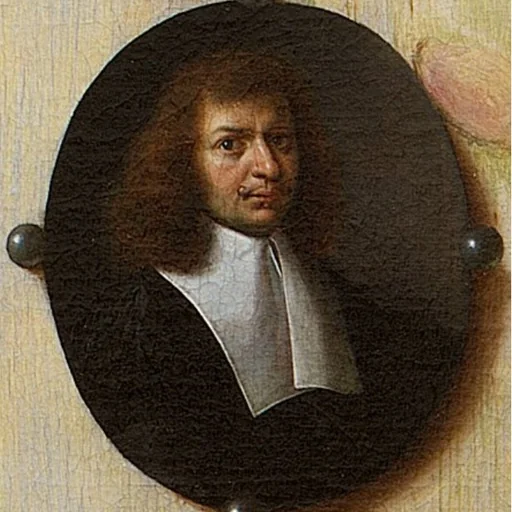
Cornelis Norbertus Gijsbrechts
Cornelis Norbertus Gijsbrechts (1625/1629 – after 1675), was a Flemish painter who was active in the Spanish Netherlands, Germany, Denmark and Sweden in the second half of the seventeenth century.