Artwork
Still Life with Quinces, Medlars and a Glass
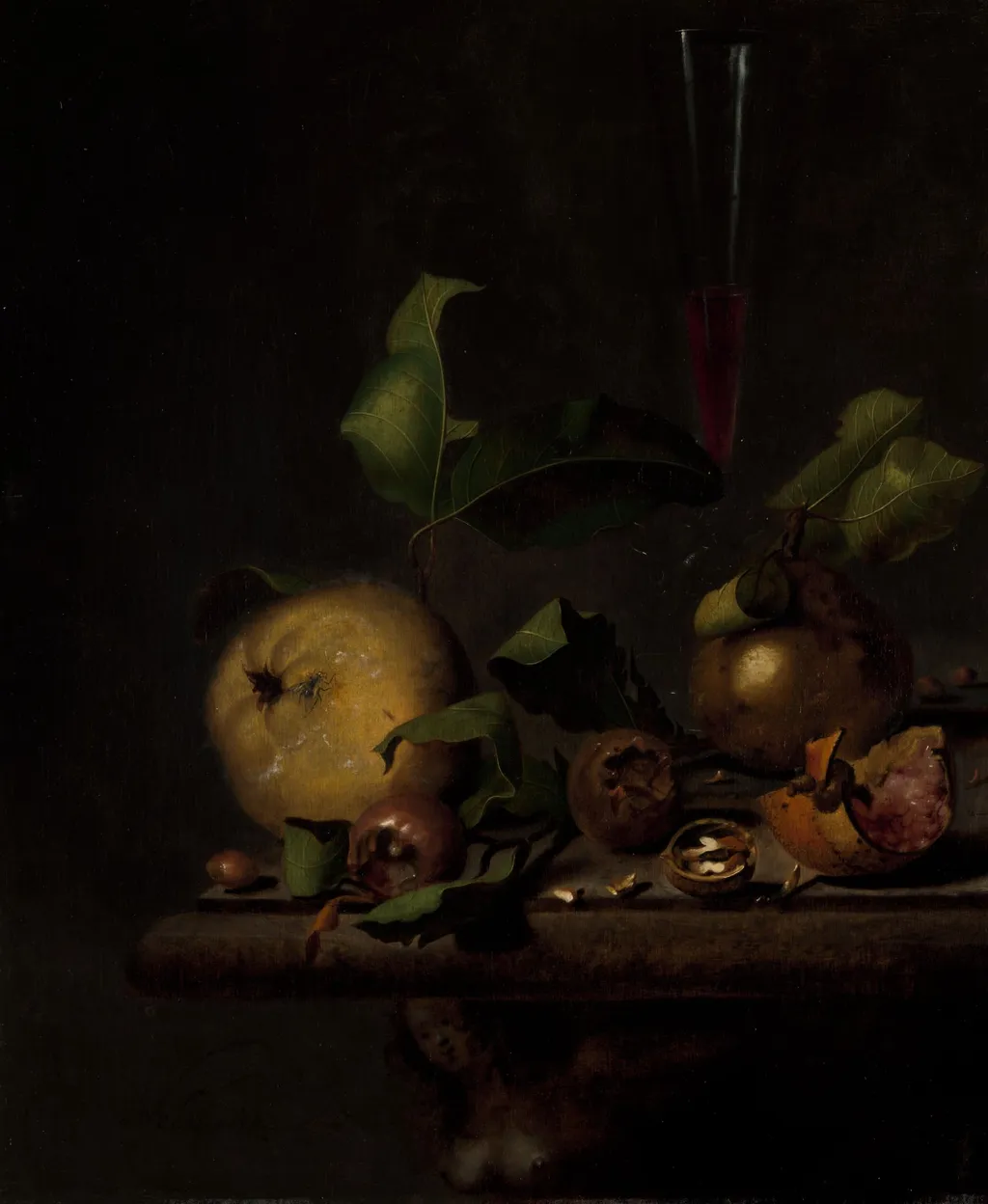
Still Life with Quinces, Medlars and a Glass is an unspecified painting by the Dutch Golden Age artist Martinus Nellius. It dates from 1694 and is held in the collection of the Rijksmuseum.
About this work
Subject & Meaning
The work exemplifies typical Dutch still life iconography of the period, where everyday objects carry layered symbolic weight beyond their literal depiction.
The painting presents a still life arrangement featuring quinces, medlars, and a glass vessel filled with wine. The inclusion of a large fly resting on fruit and a crumpled almanac leaf functions as vanitas symbolism, referencing the transience of time and mortality. The crystal goblet, both transparent and reflective, carries dual meaning: it showcases material realism while also serving as an Eucharistic symbol. These elements collectively convey themes of temporal fragility and spiritual contemplation within the Dutch Golden Age tradition.
The work exemplifies typical Dutch still life iconography of the period, where everyday objects carry layered symbolic weight beyond their literal depiction.
Context
Martinus Nellius, a Dutch Golden Age painter active from the 1670s until his death in 1719, specialized in still life compositions characterized by abundant fruit and glassware. His work, including *Still Life with Quinces, Medlars and a Glass*, is noted for its light brushwork and chromatic quality. Art historical analysis interprets recurring motifs in his paintings, such as oversized flies on fruit and crumpled calendar pages, as symbols of time's passage and decay. These elements function within a *vanitas* tradition, though Nellius employs a more ambiguous visual language. The crystal roemer, often filled with wine, is cited as a dual symbol representing both transparency and light reflection alongside eucharistic connotations. Nellius is documented working in Leiden by 1674 and later in The Hague, with a career spanning dated works from 1671 to 1712.
Legacy
Martinus Nellius' Still Life with Quinces, Medlars and a Glass (1669-1719) has been recognized for its role in the evolution of Dutch still-life painting, particularly in the incorporation of symbolic vanitas elements within seemingly decorative compositions. The work exemplifies the subtle use of objects such as a large fly, crumpled Almanac leaf, and wine-filled crystal goblet to convey themes of transience and mortality, blending realistic detail with moral symbolism. Though less documented than contemporaries like Willem Kalf, Nellius influenced later artists through his nuanced handling of light and texture, especially in fruit and glass depictions. His paintings, including this piece, are held in major European collections and continue to be referenced in scholarly discussions of 17th-century Dutch art. The attribution and analysis of this work have contributed to broader reassessments of Dutch still life beyond the more famous masters, highlighting regional variations in style and symbolism. Art historical literature, including entries in both Dutch and Spanish Wikipedia, cites the painting as representative of Nellius' mature output, characterized by a delicate brushwork and chromatic clarity. Its symbolic depth has been interpreted as a restrained form of vanitas, where everyday objects carry layered meanings related to time and death, influencing later interpretations of Dutch genre painting.
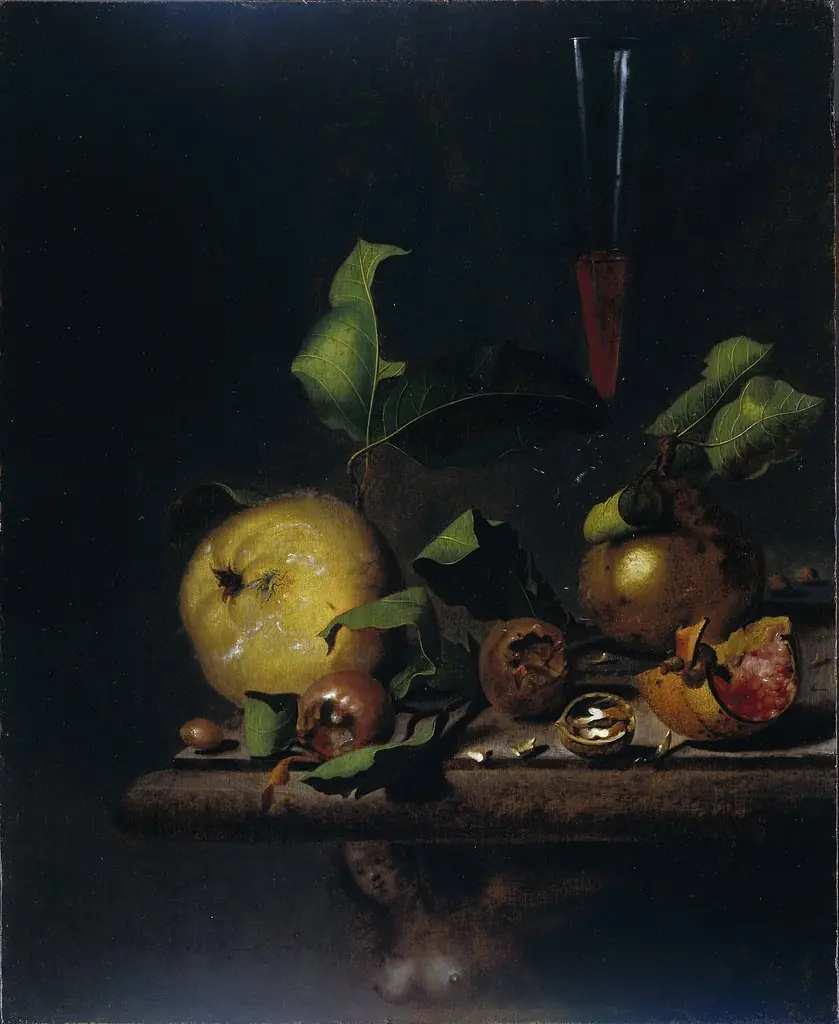
Own this work as a print
Artist & collection

 Stillleben mit Früchten und Seeschneckenhäusern
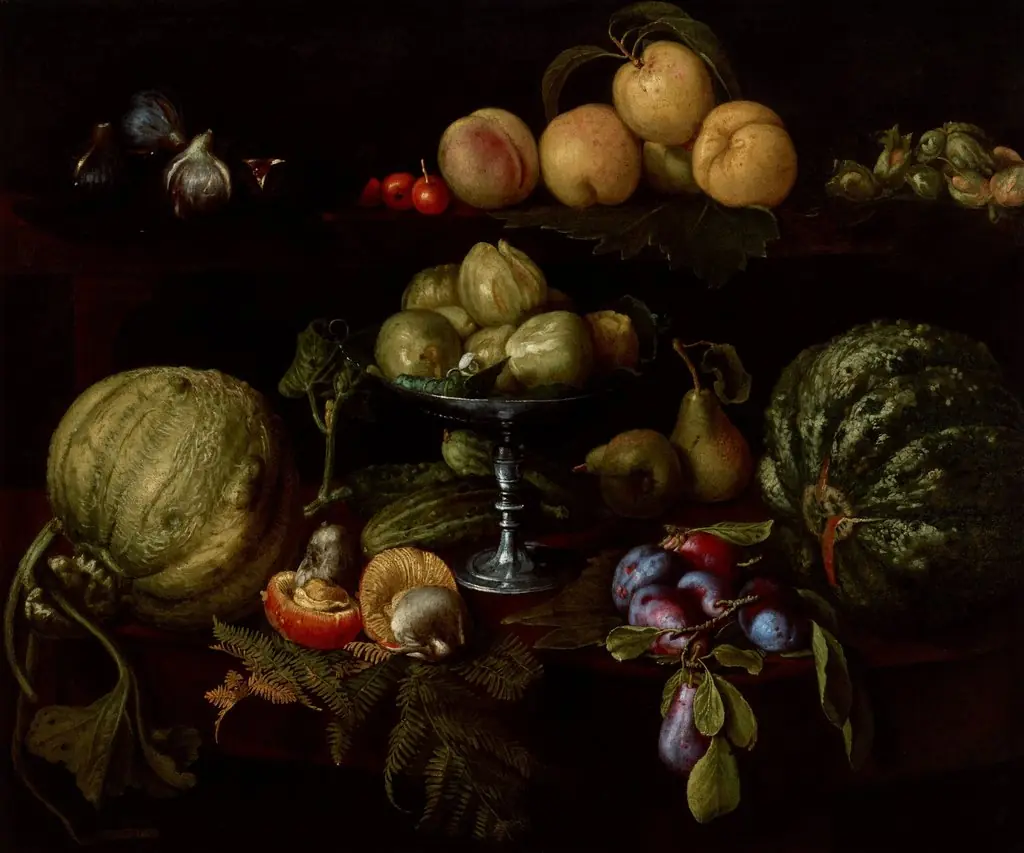 Figs on a Tazza with Pears, Quinces, Melons, Plums, Mushrooms on a Table, with Figs, Cherries, Peaches, and Acorns on a Ledge Above
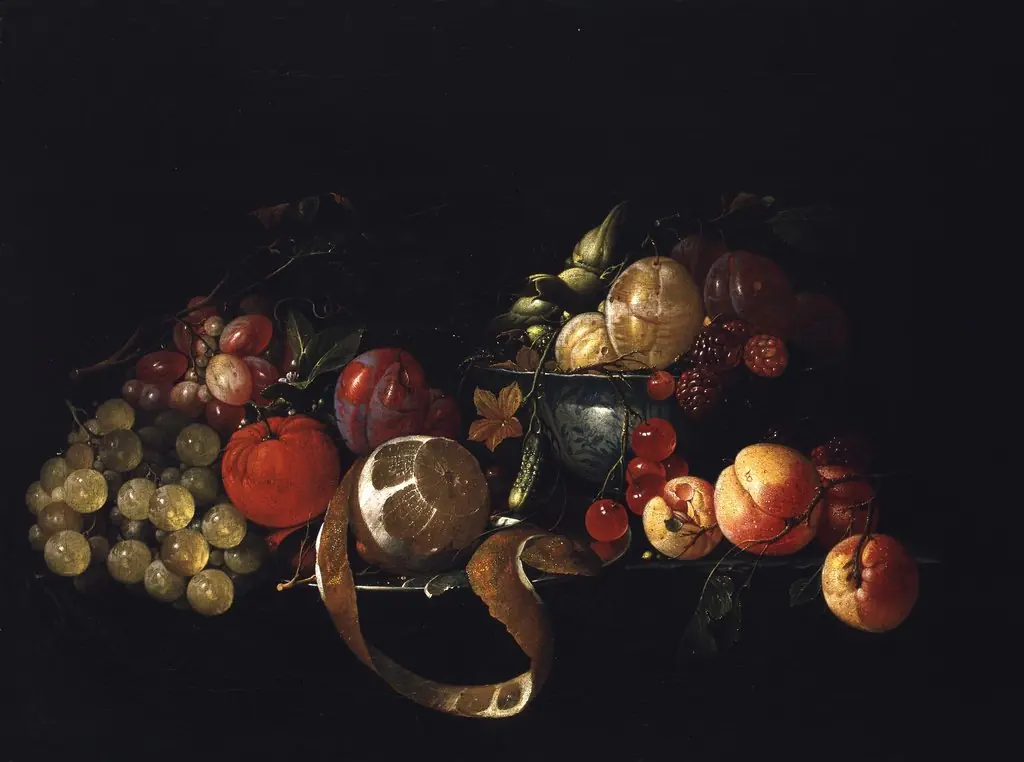 Still Life with Fruits
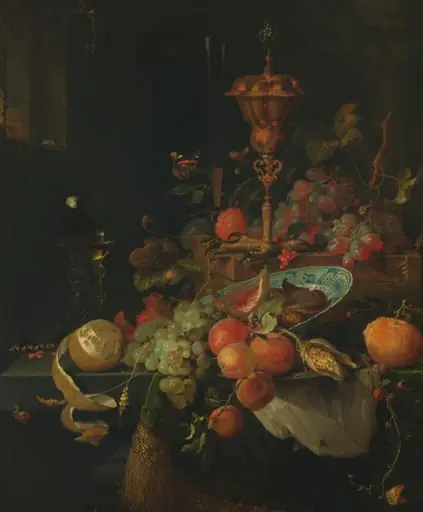 Still Life with Fruit and a Beaker on a Cock's Foot
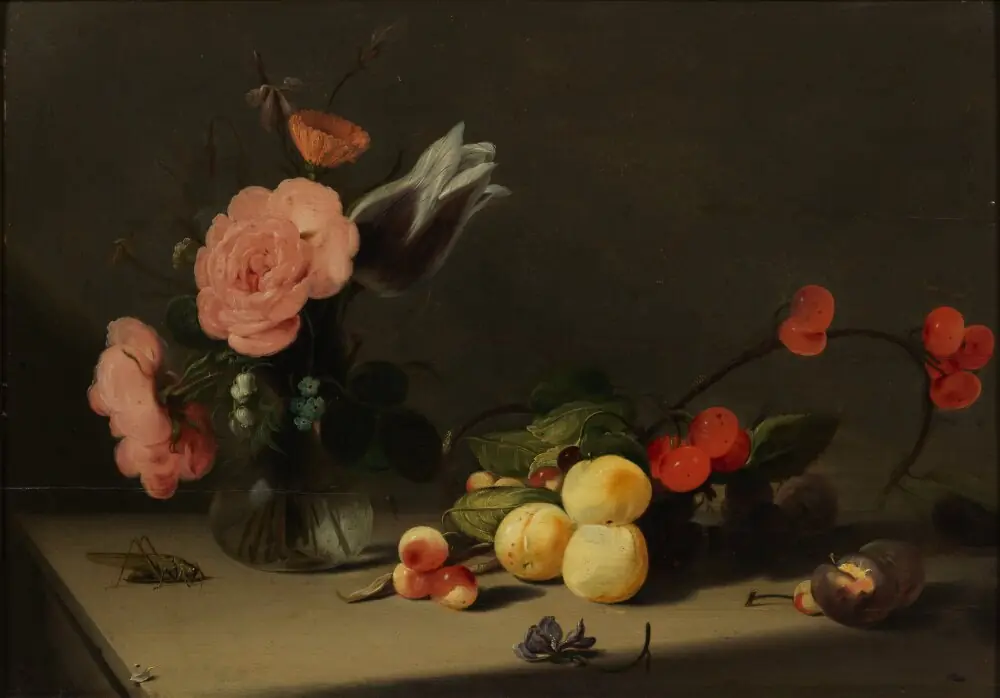 Still Life with Flowers and Fruit
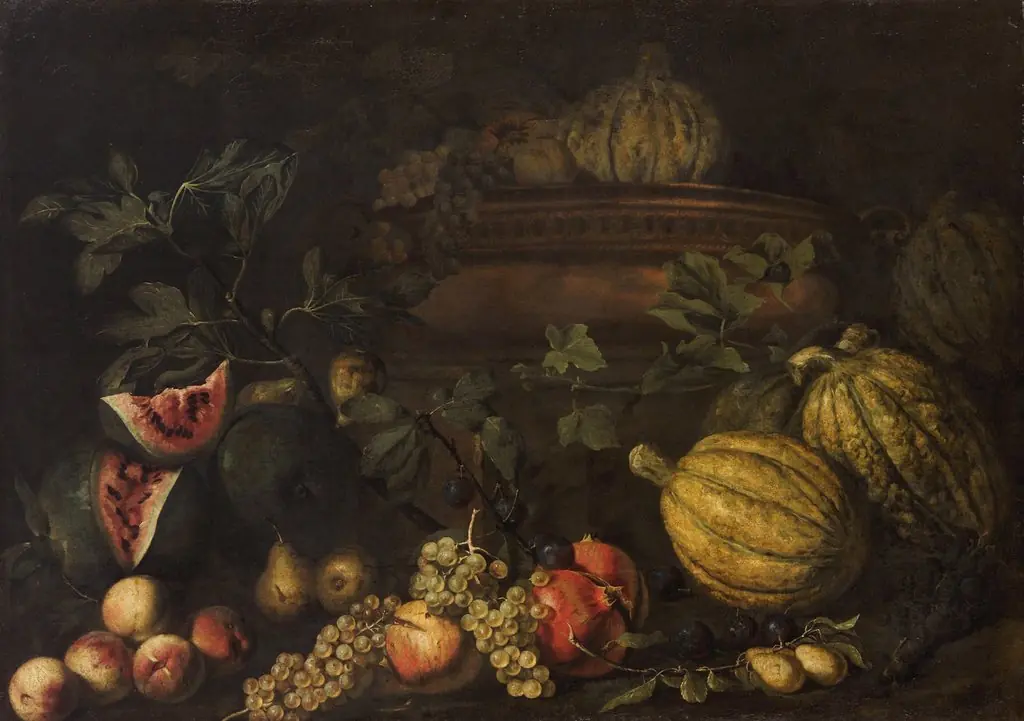 Früchtestilleben
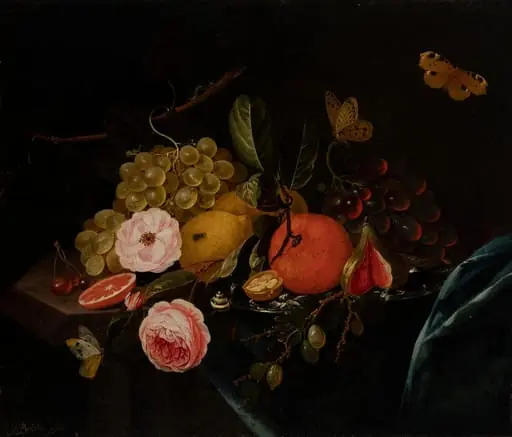 Asetelma
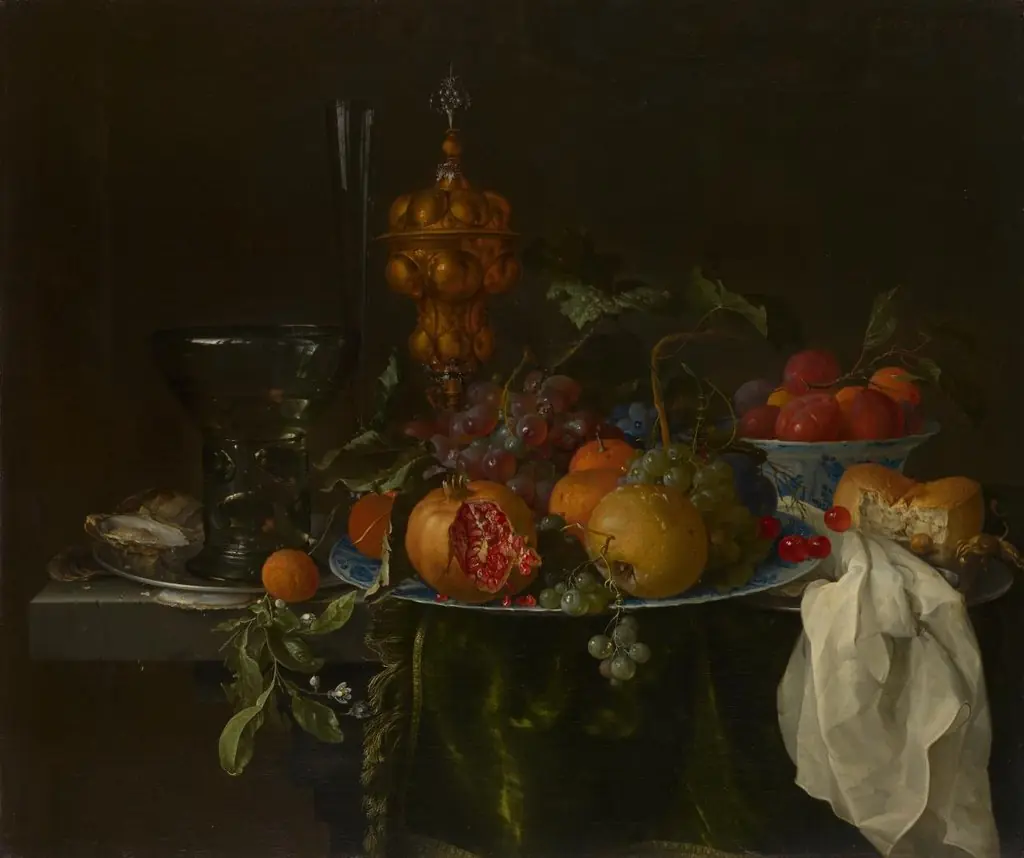 Still life with fruit
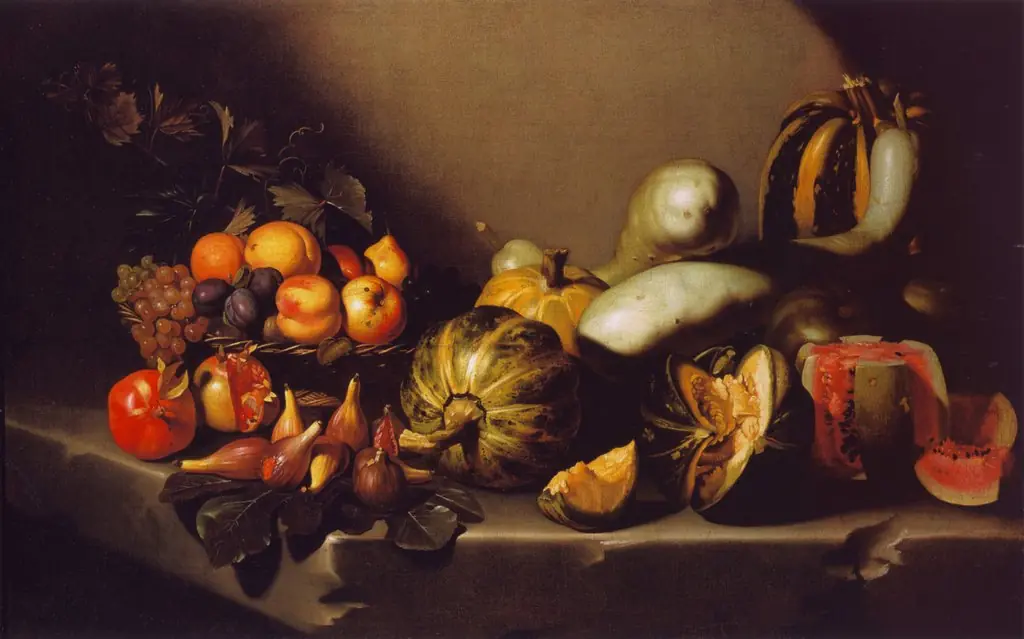 Still Life with Fruit
 Fruit Still Life
 Still-life with Dish of Fruit