Artwork
Ringwood Market
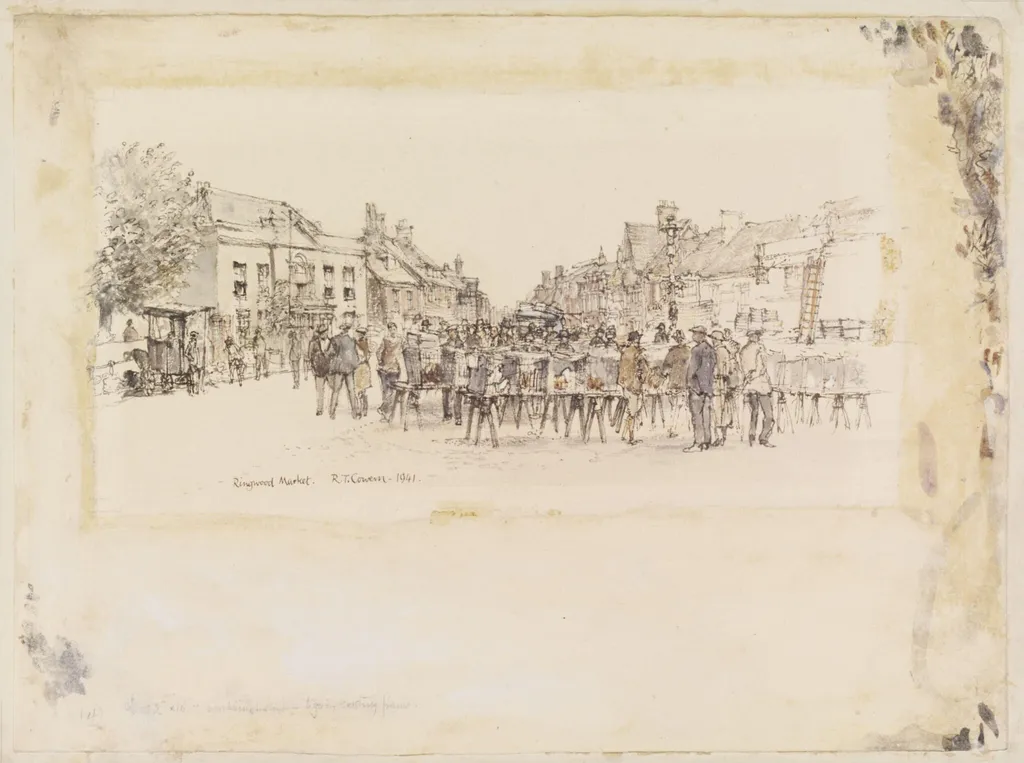
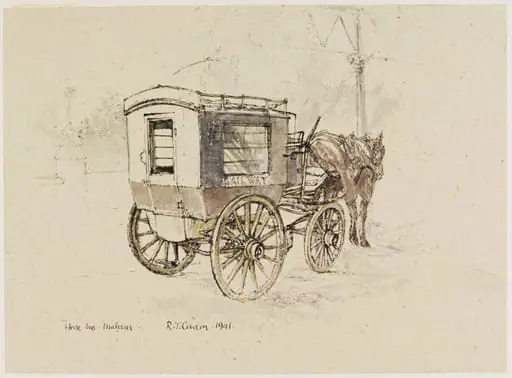
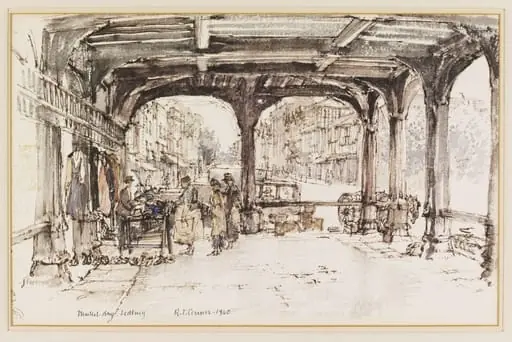
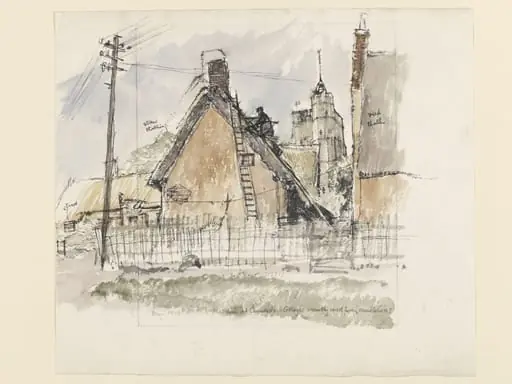
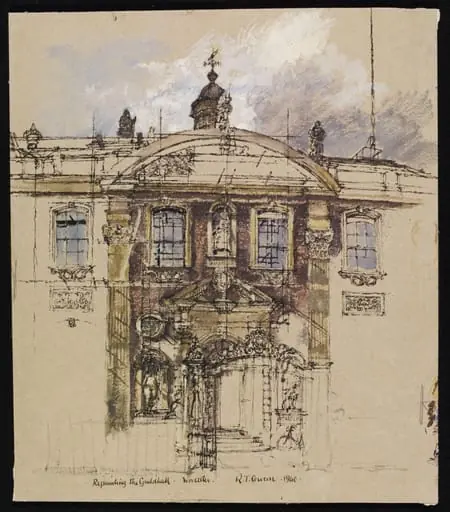
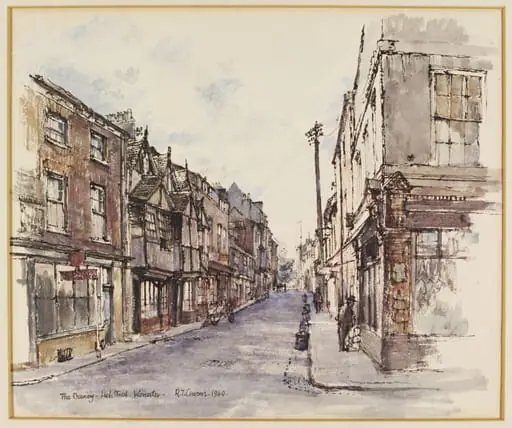
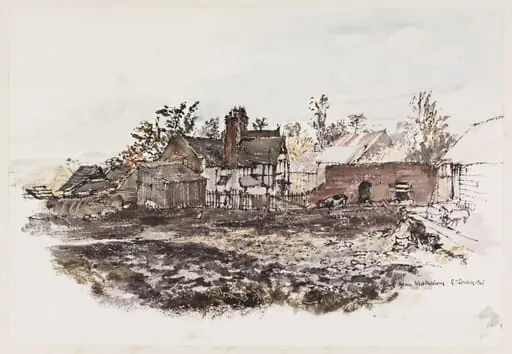
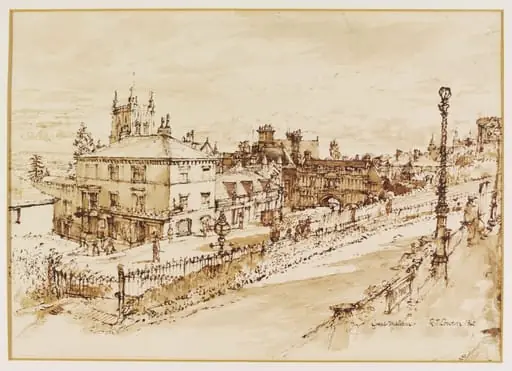
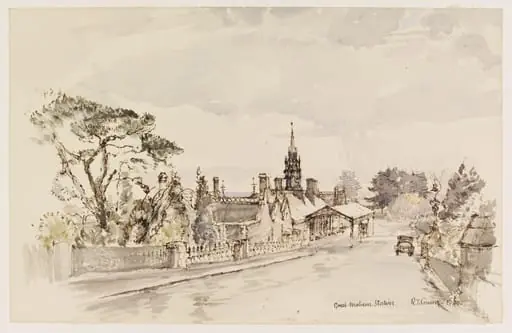
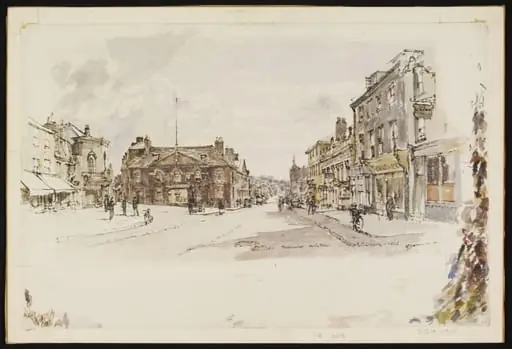
Ringwood Market is a watercolor work on paper by the Regionalist artist Raymond Teague Cowern. It dates from 1941 and is held in the collection of the Victoria and Albert Museum.
About this work
Overview
The painting’s immediacy stems from its minimal detail and reliance on negative space to suggest form and atmosphere.
Ringwood Market is a 1941 watercolour by Raymond Teague Cowern, created as part of the Recording Britain project. The work captures a bustling outdoor market in the Hampshire town, rendered in loose, spontaneous brushwork. Its unpolished quality reflects the urgency of its commission, to preserve everyday scenes during wartime.
The painting’s immediacy stems from its minimal detail and reliance on negative space to suggest form and atmosphere.
Subject & Meaning
The scene portrays a typical English market day, with trestle tables laden with goods and a crowd of shoppers and vendors gathered around. A central fountain anchors the composition, while rows of modest 18th-century houses recede into the background. The painting documents ordinary civilian life during a time of national upheaval, emphasizing continuity and community amid the uncertainties of war.
Technique & Style
Cowern employed rapid, fluid watercolour techniques, allowing the paper’s white surface to define highlights and suggest light. Brushstrokes are economical, some areas are sketched with near-abstract strokes, while figures and architectural details receive just enough definition to be legible. The absence of heavy outlines and the use of wet-on-wet washes create a sense of transient movement, mirroring the fleeting nature of the market itself.
History & Provenance
Commissioned by the Recording Britain scheme, funded by the Pilgrim Trust and overseen by Sir Kenneth Clark, the painting was one of hundreds produced between 1939 and 1945. The project aimed to record at-risk rural and urban landscapes before they were altered by conflict or modernization. Ringwood Market was acquired by the Victoria and Albert Museum as part of this national archive, preserving a snapshot of pre-industrial English commerce.
Context
Created during the Second World War, the painting reflects a broader cultural effort to affirm British identity through its vernacular landscapes. While cities faced bombing and rural areas saw changes from military use, scenes like this market offered a sense of enduring tradition. The Recording Britain initiative deliberately avoided grand monuments, focusing instead on humble, everyday spaces that defined local character.
Legacy
Ringwood Market remains a representative example of the Recording Britain collection, valued for its honest, unembellished observation. Its sketch-like quality influenced later documentary art practices, emphasizing immediacy over finish. Today, it is held in the Victoria and Albert Museum’s permanent collection, where it continues to serve as a quiet testament to civilian life during wartime.
Artist & collection
Artist
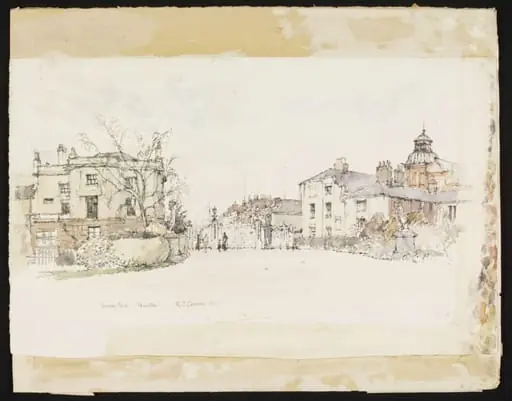
Raymond Teague Cowern painted quiet watercolors of mid-century Worcestershire life during the Second World War.