Artwork
A Princess of Saxony
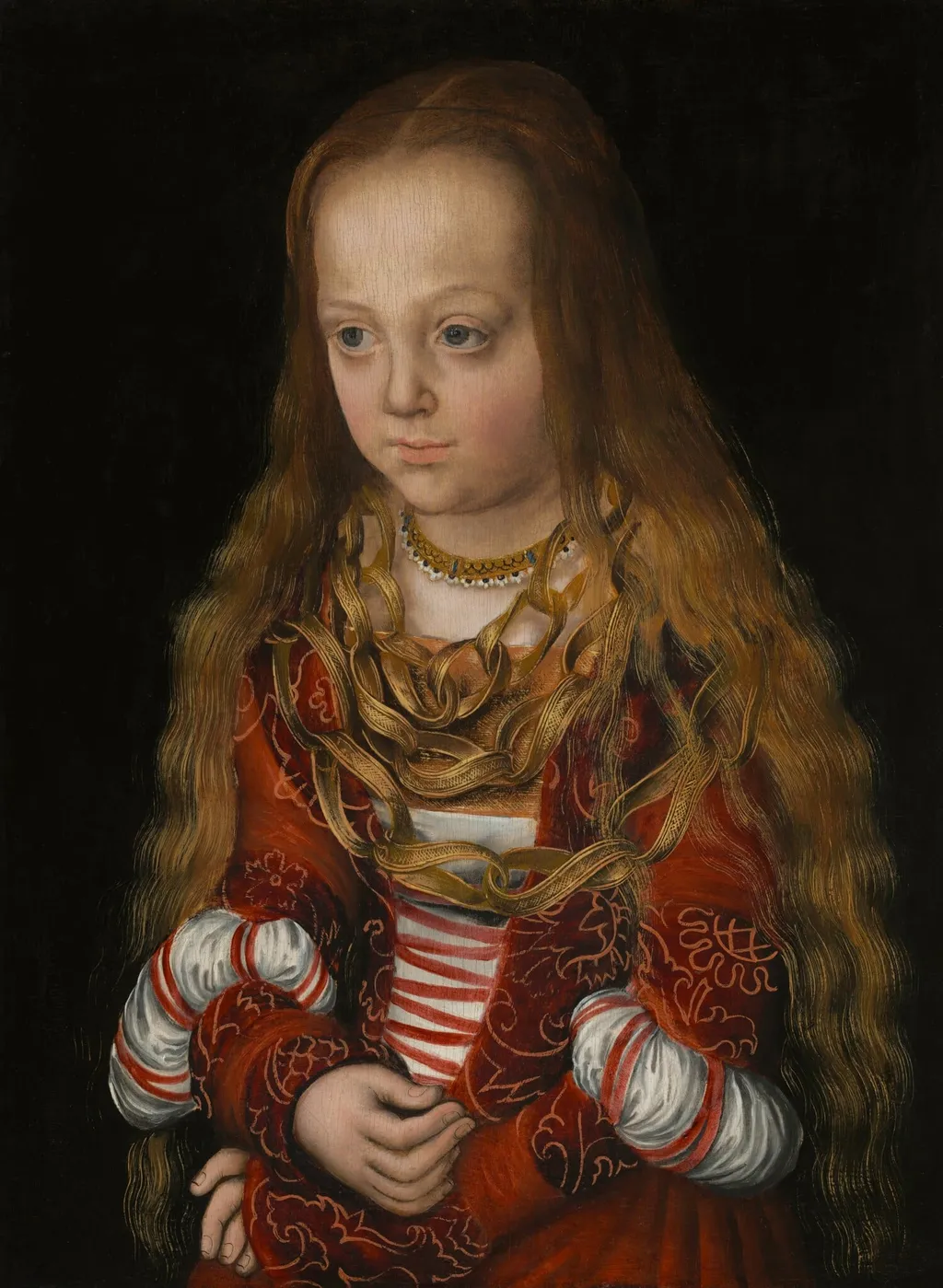
A Princess of Saxony is an oil painting by the Northern Renaissance artist Lucas Cranach the Elder. It dates from 1517 and is held in the collection of the National Gallery of Art.
About this work
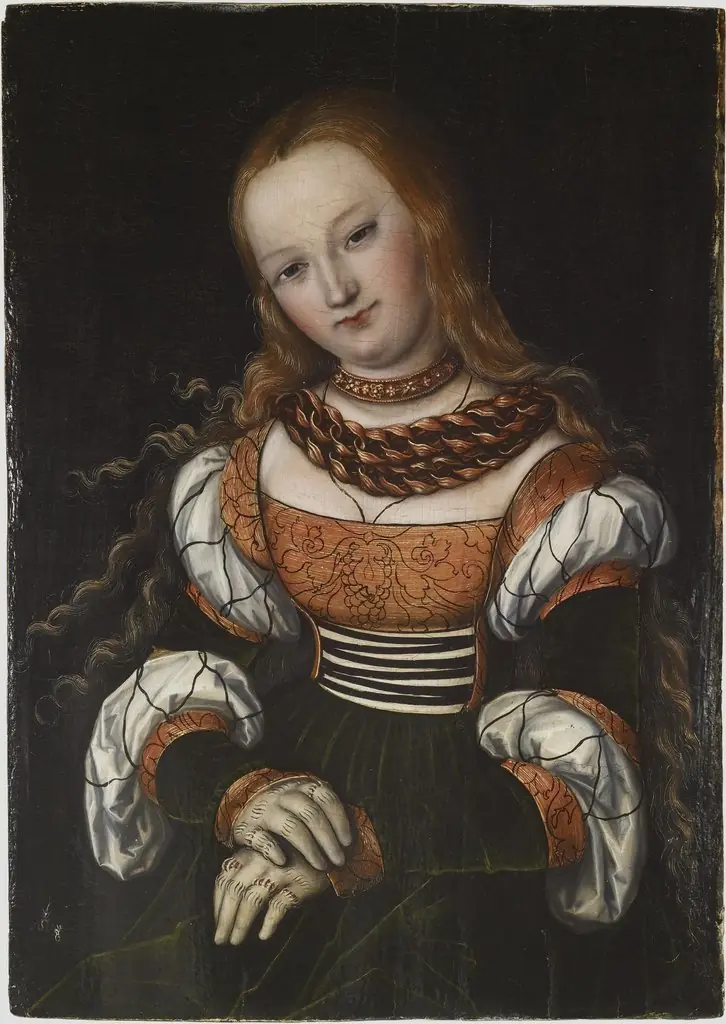
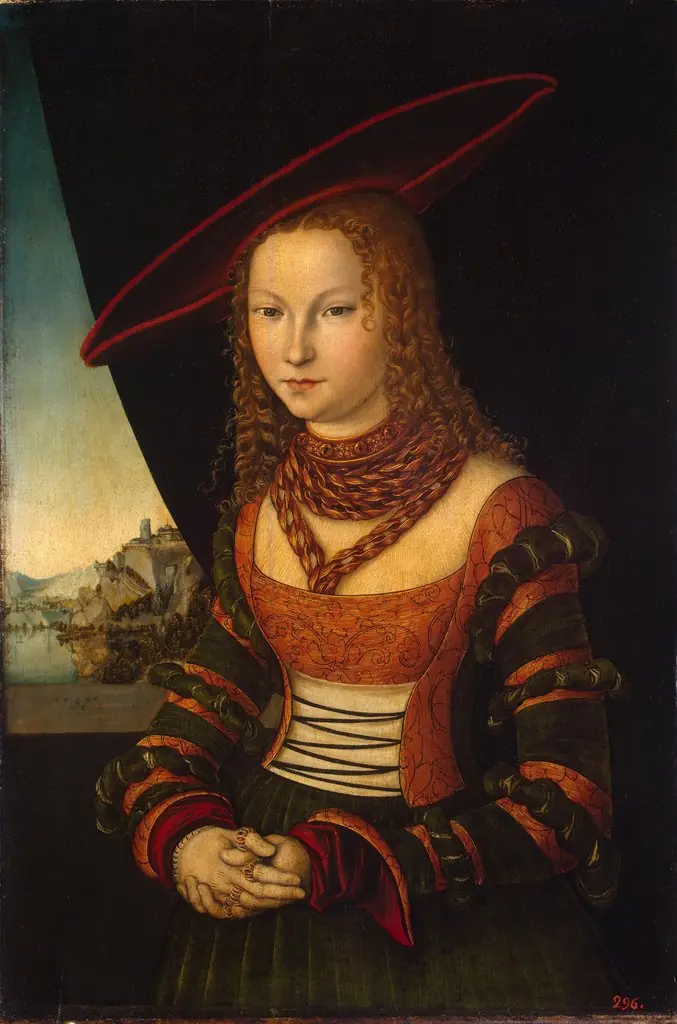
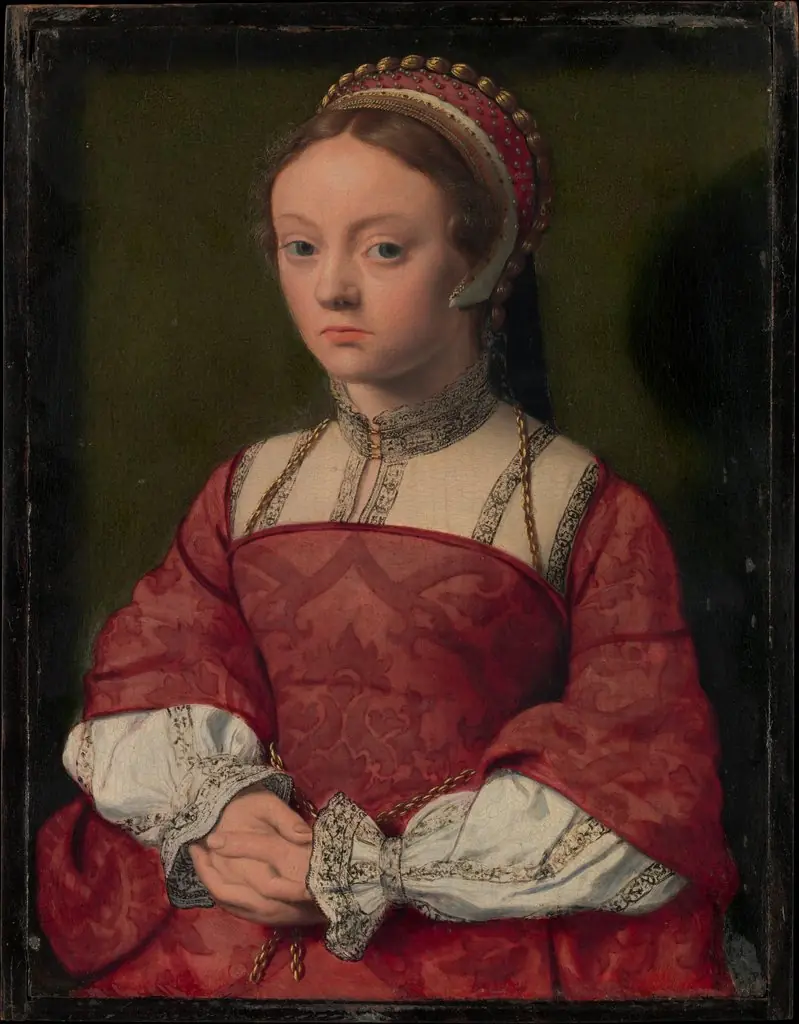
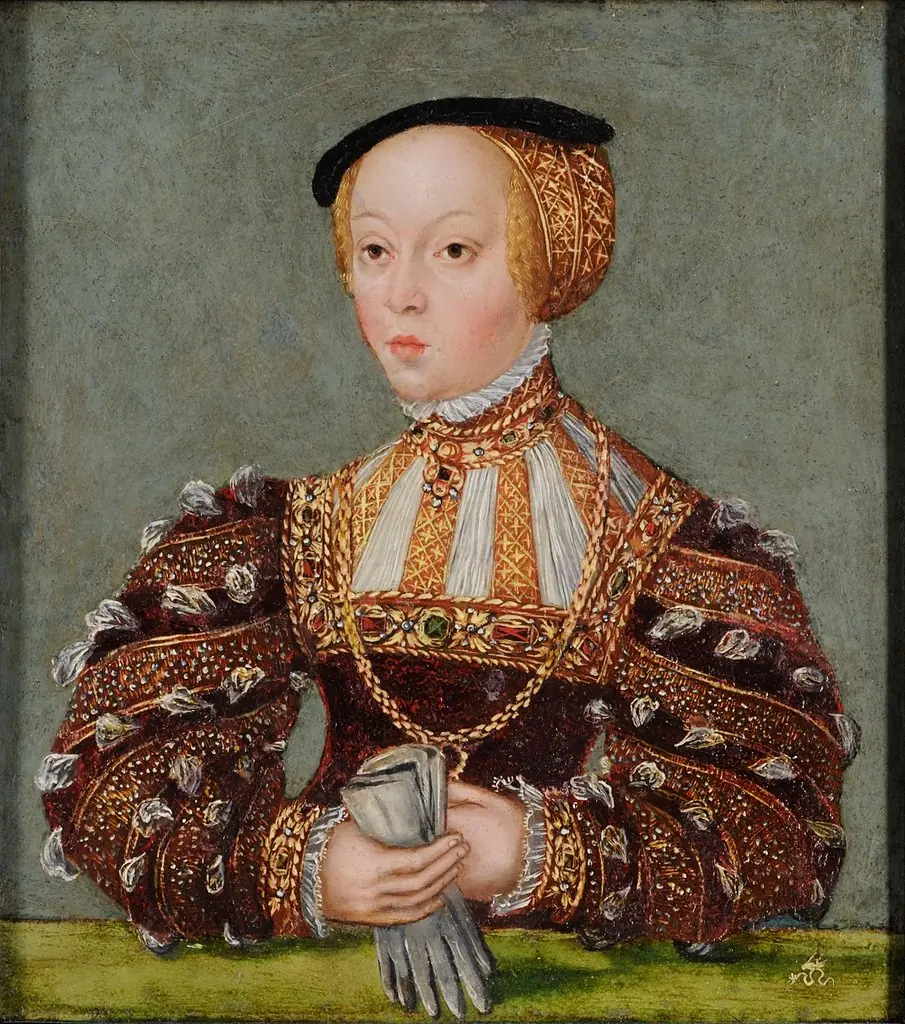
A woman in a dark dress and red headdress looks straight out, her lace collar stiff and a thick gold chain at her neck. Lucas Cranach the Elder painted this Saxon princess in 1517, the gold marking her rank without a word. The colors stay soft but clear.
Technique & Style
The support of lime panel was a standard material choice for the artist, providing a smooth surface for the detailed application of paint.
Lucas Cranach the Elder executed A Princess of Saxony in 1517 using oil paint applied to a lime wood panel. The work measures 43.4 cm in height and 34.3 cm in width, adhering to the artist's characteristic small-scale format for portraiture. Stylistically, the painting exemplifies the formal qualities of a court portrait, focusing on the sitter's likeness and her adornment, specifically a prominent necklace.
The handling of the oil medium allows for the precise rendering of the princess's features and the texture of her attire, consistent with Cranach's refined workshop production during this period. The support of lime panel was a standard material choice for the artist, providing a smooth surface for the detailed application of paint.
History & Provenance
Lucas Cranach the Elder painted A Princess of Saxony in 1517, an oil on panel portrait that entered the market via the Munich dealer Julius Böhler, who held it jointly with August Salomon of Dresden and later with Paul Cassirer in Berlin. In August 1925 the work was acquired by Detroit collectors Ralph Harman Booth and Mary Batterman Booth, who bequeathed it to the National Gallery of Art in Washington, D.C., in 1947, where it remains. The painting has been included in the exhibition titled "Remember Me."
Legacy
A Princess of Saxony, created by Lucas Cranach the Elder in 1517, is noted for a well-documented ownership chain that includes the dealers Julius Böhler, August Salomon, and Paul Cassirer before its 1925 acquisition by Ralph Harman Booth and Mary Batterman Booth and its 1947 gift to the National Gallery of Art. The work has been featured in the exhibition "Remember Me," reflecting its continued relevance in studies of early German Renaissance portraiture and contributing to Cranach's reputation as a master of courtly representation.
Overview
Lucas Cranach the Elder completed A Princess of Saxony in 1517, rendering the subject in oil on panel. This painting captures a woman in a dark gown and a prominent red headdress, her gaze directed forward. The artist portrays her with a stiff lace collar and a substantial gold chain, elements that subtly convey her status. The overall palette is characterized by its clarity and subdued tones.
Subject & Meaning
The portrait presents a Saxon princess adorned in attire indicative of her noble standing. Her elaborate gold necklace serves as a visual marker of her high rank, communicating her position without explicit declaration. The direct, unwavering gaze of the sitter engages the viewer, creating an immediate connection and asserting her presence. Her formal dress, including the stiff lace collar, further emphasizes her dignified bearing.
Context
Created during a period when German aristocracy favored specific aesthetic qualities in portraiture, this work reflects the prevailing tastes of 1517. Noble patrons sought images that conveyed both strength and composure. Cranach the Elder's depiction of the princess aligns with this demand, presenting a figure who embodies a quiet authority and a refined presence, characteristic of the era's desired aristocratic image.
Own this work as a print
Artist & collection
Artist
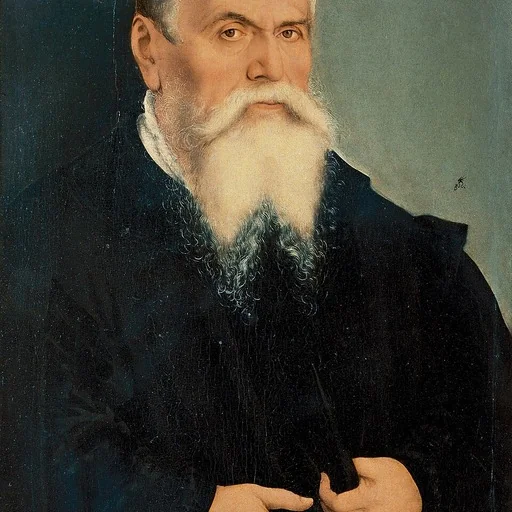
Lucas Cranach the Elder was a German Renaissance painter and printmaker in woodcut and engraving.