Artwork
Easby Abbey, near Richmond
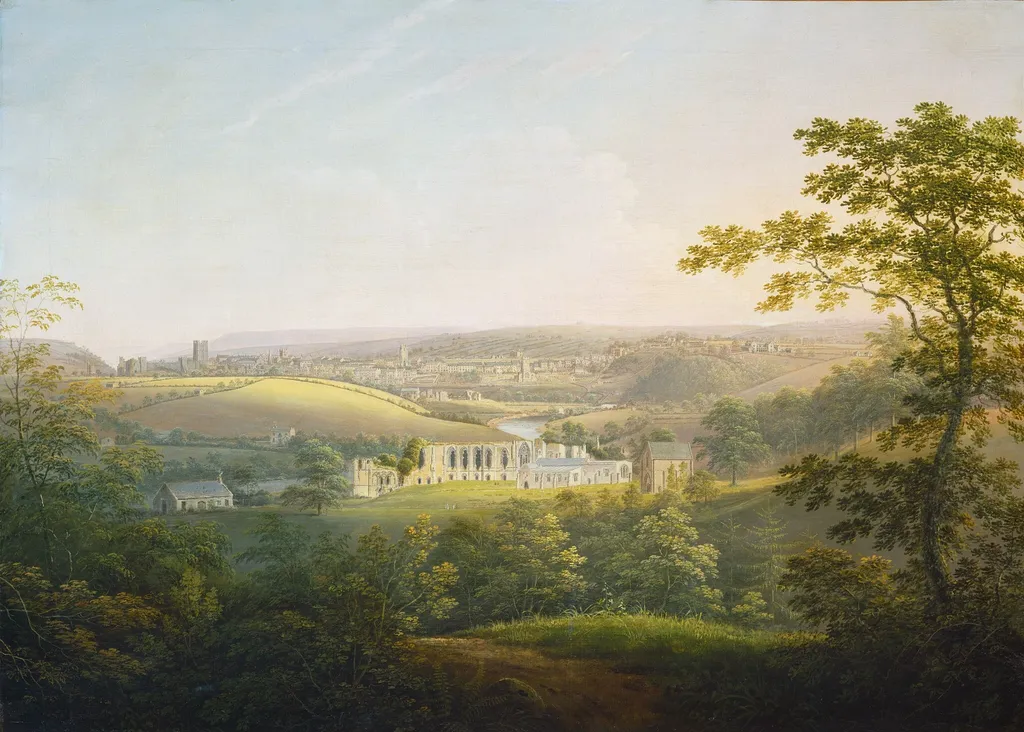
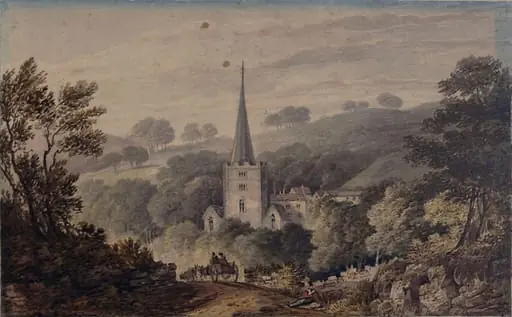
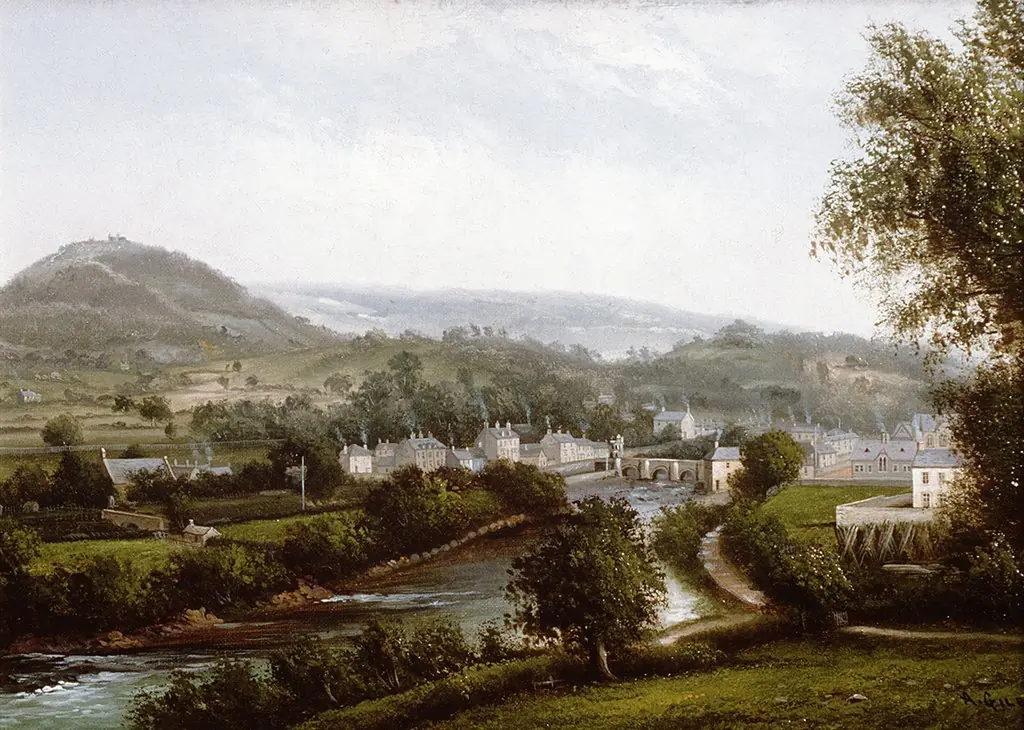
Easby Abbey, near Richmond is an oil painting by the British Romanticist artist George Cuitt the Younger. It dates from 1821 and is held in the collection of the National Gallery of Art.
About this work
Easby Abbey's ruins rise from green hills under a cloudy sky, a gnarled tree leaning over the stone walls. George Cuitt the Younger painted it in 1821, when ruins were a popular subject, the broken arches and tall windows recalling the past. Soft light warms the decaying stone.
Technique & Style
The palette is subdued, dominated by earthy greens and soft greys, with subtle highlights on architectural detail.
The painting employs oil on canvas, a standard medium for early nineteenth-century British landscape views. Handling is precise and linear, emphasizing topographical clarity rather than atmospheric dissolution. Formal qualities include a measured recession into space, with the abbey’s ruins framed by a prominent tree and distant hills, conveying a Picturesque balance between cultivation and decay.
The palette is subdued, dominated by earthy greens and soft greys, with subtle highlights on architectural detail. No evidence of pentimenti is recorded, suggesting careful, deliberate execution. Condition appears stable, with no significant losses or discoloration noted in institutional records.
History & Provenance
George Cuitt the Younger created the oil on canvas landscape Easby Abbey, near Richmond in 1821. The painting's early ownership history remains unrecorded in the available sources, but its later provenance can be traced to Miss Harriet Patterson Winslow of Washington, D.C., who inherited the work from her brother. At that time, the painting was misidentified as Fountains Abbey and misattributed to George Smith of Chichester.
In 1959, while Winslow still owned the work, she gifted it to the National Gallery of Art in Washington, D.C. Winslow died in 1964.
The painting is held by the National Gallery of Art in Washington, D.C. It entered the museum's collection in 1959 as a gift from Miss Harriet Patterson Winslow, who had inherited the work from her brother. At the time of the gift, the painting was misidentified as Fountains Abbey by George Smith of Chichester. The provided sources do not document any specific inventory or accession numbers, nor do they record an exhibition history for the artwork.
Legacy
Easby Abbey, near Richmond, painted by George Cuitt the Younger in 1821, entered the National Gallery of Art in Washington, D.C., through a 1959 gift from Miss Harriet Patterson Winslow, who inherited the work from her brother; this trajectory underscores its recognized cultural value. The painting’s presence in the museum’s collection and its documented description in authoritative references such as Wikidata affirm its standing as a notable example of early‑19th‑century English landscape art. Its continued display highlights its lasting reputation within the study of British landscape painting and the evolution of museum acquisitions.
Overview
This oil on canvas painting by George Cuitt the Younger depicts the remnants of Easby Abbey, situated amidst verdant hills near Richmond. The composition captures the historical site under a dramatic, cloudy sky, conveying a sense of quietude and enduring history. The artist's approach emphasizes the atmospheric quality of the scene, inviting contemplation of the abbey's weathered architecture.
Subject & Meaning
The artwork centers on the decaying structure of Easby Abbey, characterized by its fragmented arches and towering windows. A solitary, twisted tree leans prominently against the stone walls, its branches catching the ambient light. This portrayal aligns with early 19th-century aesthetic preferences for ruins, which served as evocative reminders of the past, prompting reflection on time's passage rather than celebrating former opulence.
Context
Created in the early 1800s, this painting reflects a widespread fascination with architectural ruins during that period. Such subjects resonated with audiences who appreciated their capacity to evoke a sense of history and nostalgia without presenting idealized grandeur. Cuitt's work exemplifies this artistic trend, offering a tranquil yet poignant view of historical decay that was highly valued by his contemporaries.
Own this work as a print
Artist & collection