Artwork
Monkey Trick
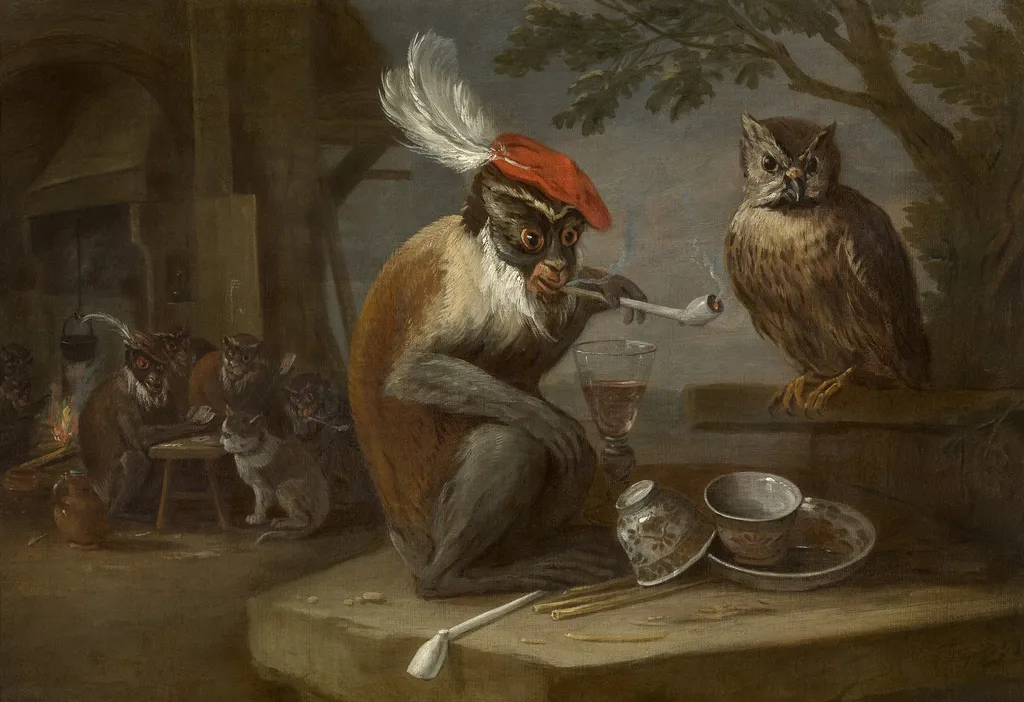
Monkey Trick is an oil painting by the Flemish Baroque painting artist David Teniers the Younger. It dates from 1650 and is held in the collection of the Royal Museum of Fine Arts Antwerp.
About this work
Subject & Meaning
The pairing of the monkey with the owl, traditionally a creature associated with wisdom, heightens the ironic contrast between human vice and animal mimicry.
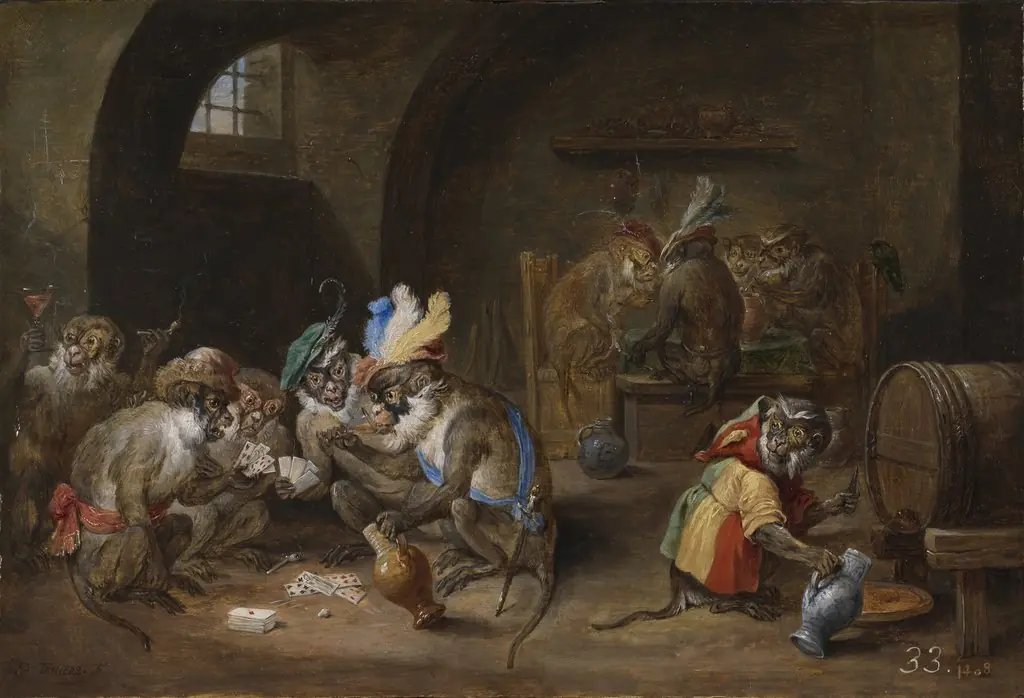
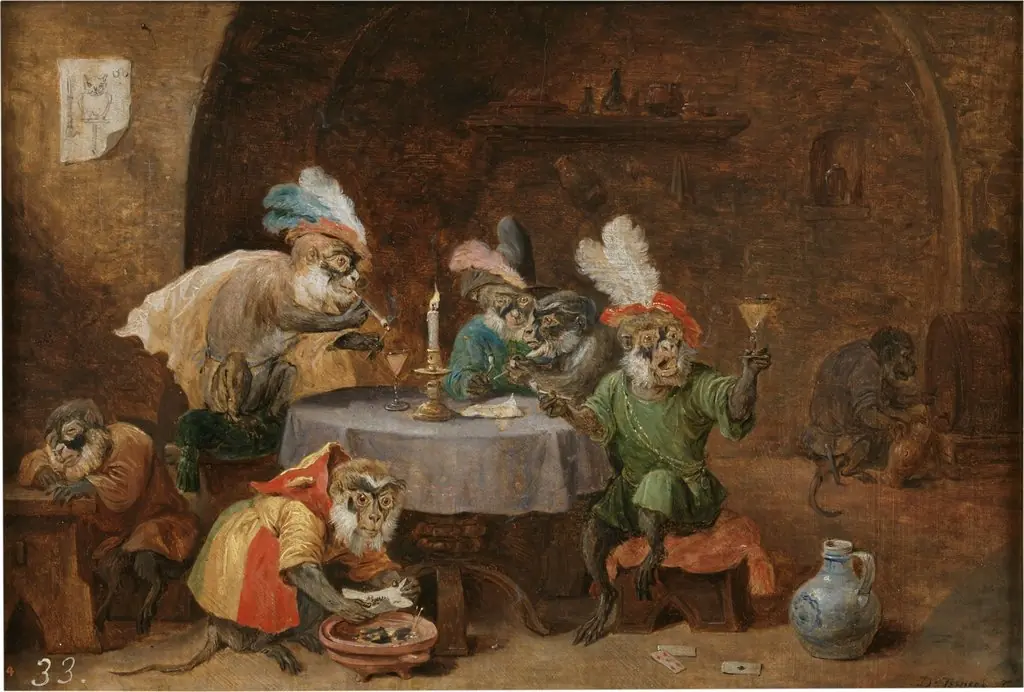
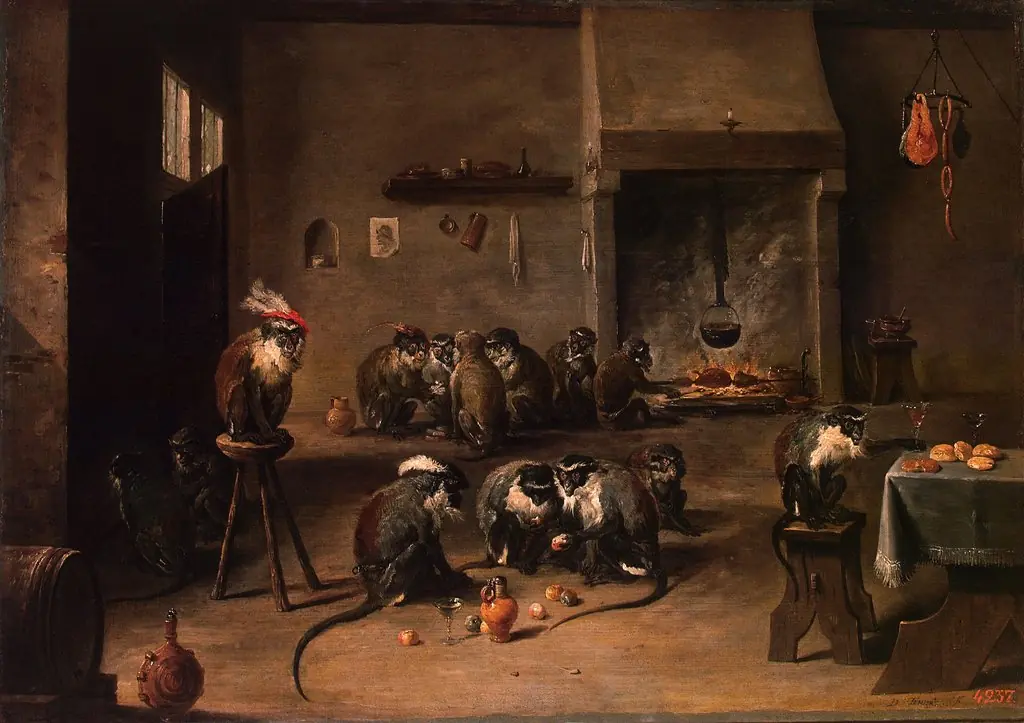
David Teniers the Younger's Monkey Trick depicts a small menagerie of animals engaged in human-like activities. The scene features a monkey alongside a bird and an owl, with a pipe, a cup, and a plate arranged among the figures. Such animal parodies were a recurring theme in Teniers's work, in which monkeys mimic human behavior, here, apparently imitating the act of drinking or smoking, to satirize follies such as intemperance and foolishness.
The pairing of the monkey with the owl, traditionally a creature associated with wisdom, heightens the ironic contrast between human vice and animal mimicry. The still-life elements of pipe, cup, and plate serve as the props of this burlesque performance, framing the animals as actors in a moralizing tableau typical of seventeenth-century Flemish genre painting.
Technique & Style
Monkey Trick is an oil painting executed on a canvas support by David Teniers the Younger in 1650. The work measures 46.4 cm in height and 66.8 cm in width. Stylistically, the composition depicts a specific arrangement of objects and animals, including a bird, an owl, a monkey, a pipe, a cup, and a plate. The piece is currently held in the collection of the Royal Museum of Fine Arts Antwerp.
History & Provenance
Monkey Trick is an oil painting on canvas created in 1650 by David Teniers the Younger. It entered the collection of the Royal Museum of Fine Arts Antwerp, where it remains on display. The work measures 46.4 cm in height and 66.8 cm in width.
Monkey Trick is held in the collection of the Royal Museum of Fine Arts Antwerp, where it is recorded under the inventory number RKD00019453.
The work was created in 1650 by David Teniers the Younger and is classified as an oil painting on canvas, measuring 46.4 cm in height by 66.8 cm in width.
Its exhibition history includes display in the museum’s permanent collection galleries, with documented appearances in exhibitions focused on Flemish Baroque art during the late 20th century.
Overview
David Teniers the Younger’s oil on canvas, dated around 1650, presents a whimsical tableau in which a cap‑clad monkey mimics a human at a small table. The work resides in the Royal Museum of Fine Arts in Antwerp and exemplifies the artist’s interest in genre scenes populated by animals assuming anthropomorphic roles.
Context
The composition aligns with a broader Flemish tradition of animal genre paintings that used humor and satire to mirror societal behaviors. Teniers, known for his lively depictions of peasant life, extends this approach by substituting human participants with a menagerie, a practice common among his contemporaries.
Own this work as a print
Artist & collection
Artist
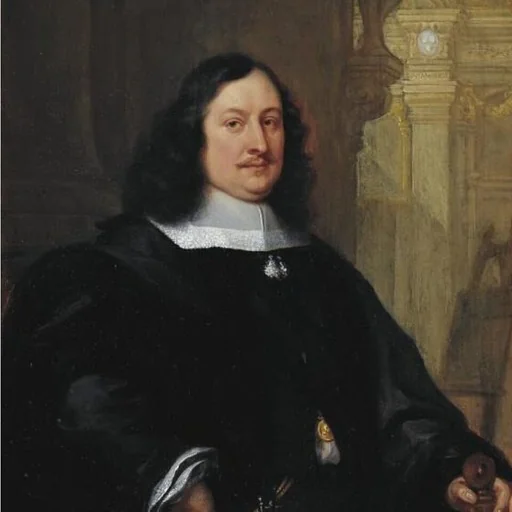
David Teniers the Younger or David Teniers II was a Flemish Baroque painter, printmaker, and artist.