Artwork
The Monkeys’ Banquet
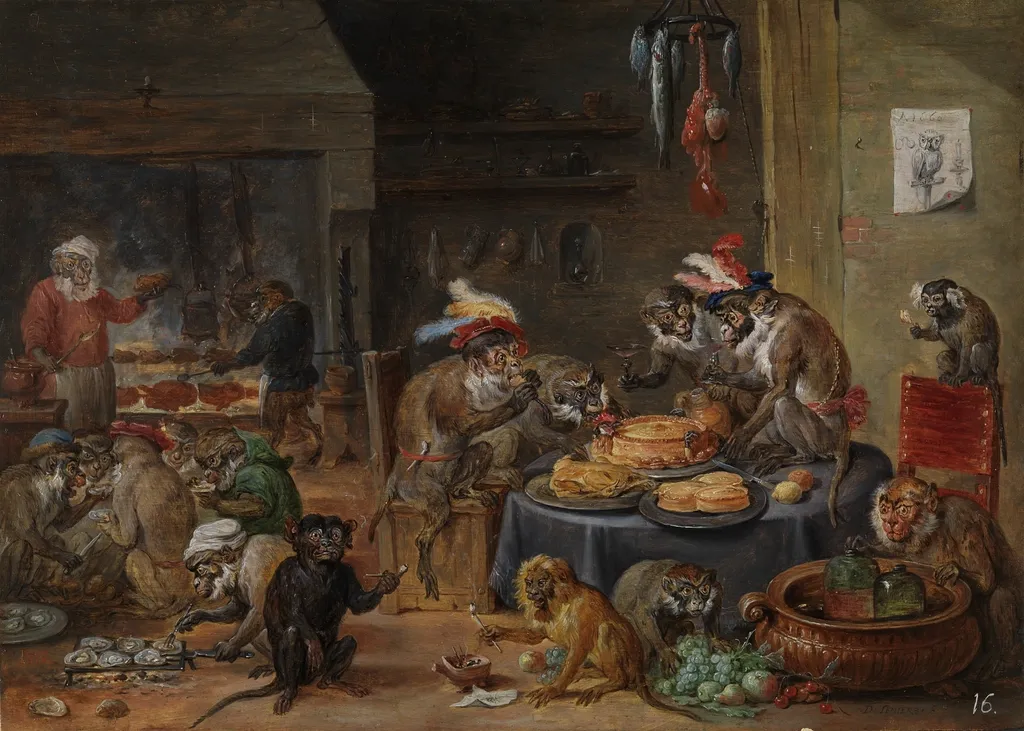
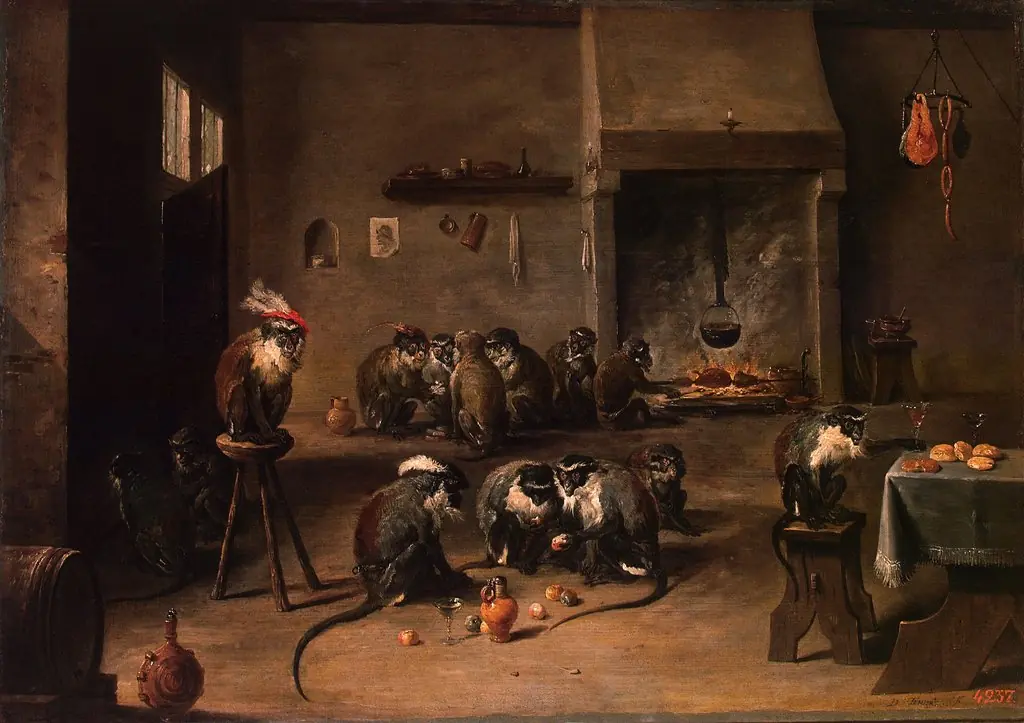
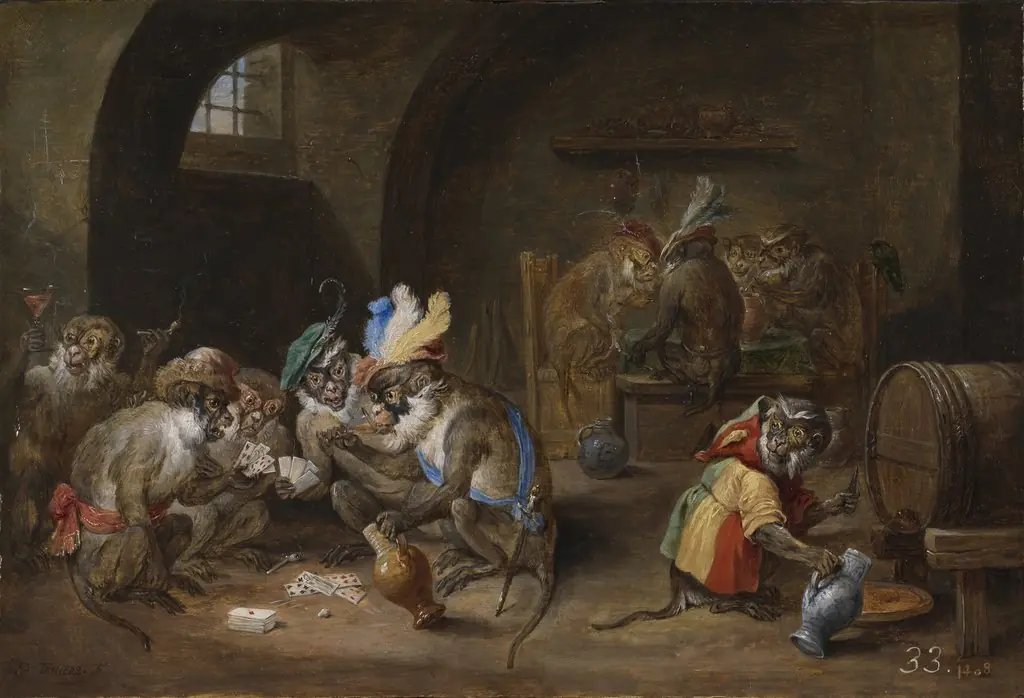
The Monkeys’ Banquet is an oil painting by the Flemish Baroque painting artist David Teniers the Younger. It dates from 1660 and is held in the collection of the Museo del Prado.
About this work
Subject & Meaning
The painting shows a lively banquet among monkeys, a scene that Teniers used to satirize human folly and the excesses of courtly feasting.
The painting shows a lively banquet among monkeys, a scene that Teniers used to satirize human folly and the excesses of courtly feasting. The presence of a knife, a container, and assorted kitchen utensils underscores the parody of a human banquet, turning the animal gathering into a commentary on gluttony and social pretense. This symbolic inversion was a hallmark of Teniers' genre scenes, blending humor with moral critique.
The work belongs to the collection of the Museo del Prado in the Royal Palace of Aranjuez, where it remains on display.
The depiction of monkeys partaking in a meal, accompanied by human‑like kitchen tools, serves as an allegorical critique of human indulgence, reflecting Teniers' broader interest in genre subjects that combine observational detail with moralizing commentary.
Technique & Style
The work is executed in oil paint on a wooden panel support, measuring 25 cm in height by 34 cm in width. Teniers employs a fine, detailed handling typical of mid-seventeenth-century Flemish genre painting, rendering textures from metallic utensils to fur and fabric with meticulous precision. The composition centers on a convivial scene of monkeys dressed in human attire gathered around a table laden with food and drink, a motif that underscores the artist’s playful inversion of social hierarchies through anthropomorphic satire.
Figures are arranged in a shallow, stage-like space, with careful attention to light and shadow that models forms and enhances the illusion of three-dimensionality.
History & Provenance
Painted in 1660 by David Teniers the Younger, The Monkeys’ Banquet entered the Spanish royal collection during the early nineteenth century. The work is recorded in the holdings of the Museo del Prado by 1818, when it was inventoried among paintings at the Royal Palace of Aranjuez. Inventory documents link the painting to Ferdinand VII of Spain, indicating it passed into the Spanish royal collection before his reign (1813–1833).
No archival evidence connects the canvas to a specific early commission; its subject and style align with Teniers’s mid-career genre scenes.
The Monkeys' Banquet is held in the collection of the Museo del Prado in Madrid. Historical records indicate the painting was once owned by Ferdinand VII of Spain. At various points, the work has been located at the Royal Palace of Aranjuez, which serves as a site associated with the museum's holdings.
The sources do not provide specific inventory numbers or a detailed list of public exhibitions for this artwork.
Overview
David Teniers the Younger’s oil on canvas, dated 1660, presents a bustling kitchen tableau titled The Monkeys’ Banquet. The work is part of the collection at Madrid’s Museo del Prado. In the composition, a group of primates dressed in contemporary attire gathers around a cluttered table laden with pies, fruit, and assorted dishes, while the surrounding space is filled with hanging meat, pots, and a faintly lit hearth.
Own this work as a print
Artist & collection
Artist
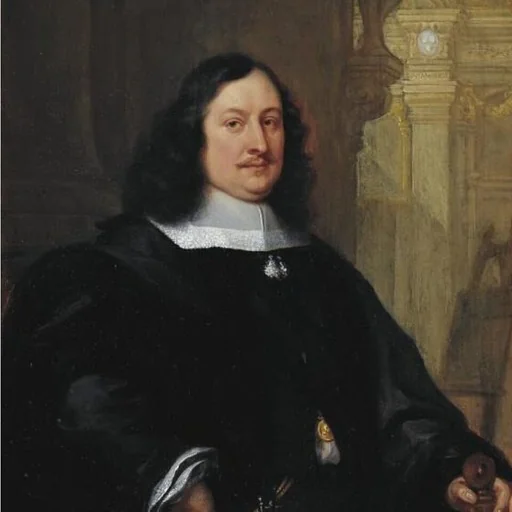
David Teniers the Younger or David Teniers II was a Flemish Baroque painter, printmaker, and artist.