Artwork
Saints John the Evangelist and Lawrence
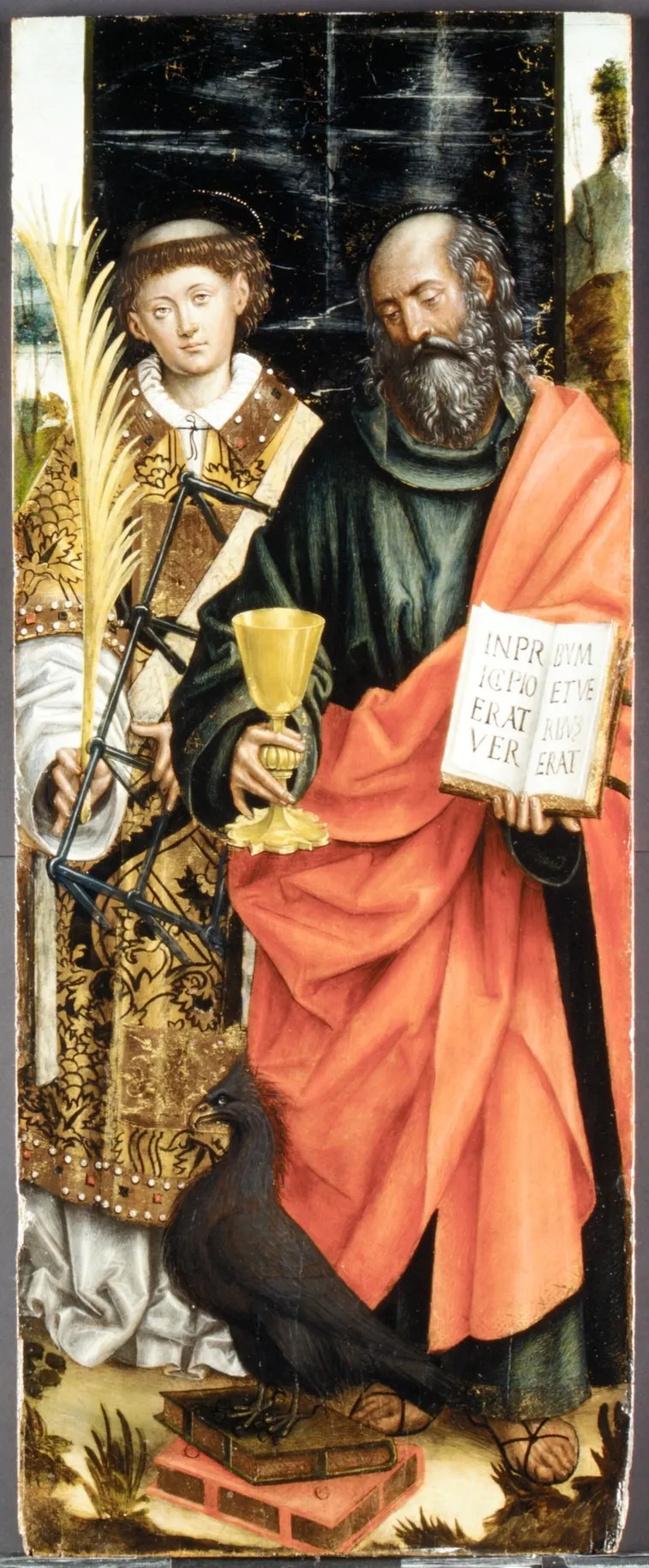
Saints John the Evangelist and Lawrence is an oil painting by the Mannerist artist Defendente Ferrari. It dates from 1520 and is held in the collection of the Metropolitan Museum of Art.
About this work
Two men stand side by side. The younger wears a gold-and-black robe and holds a staff topped with a cross; the older has a long beard and a red robe, a golden cup in one hand and a Latin book in the other. The cut-off text reads like scripture, and the cup and grave expression mark him as a saint. Defendente Ferrari painted it around 1520.
Subject & Meaning
The visual narrative relies on these established symbols to convey the identities and spiritual significance of the saints to the viewer.
The painting depicts two Christian saints: John the Evangelist and Lawrence of Rome. As a work of religious art, it utilizes specific iconographic attributes to identify the figures. John the Evangelist is represented holding a book and a chalice, traditional symbols associated with his role as an evangelist and the legend of his survival of poisoned wine.
Lawrence of Rome is also present within the composition. Created in 1520 by Defendente Ferrari, the panel serves as a devotional image, presenting these holy figures in a manner characteristic of religious genre painting from that period. The visual narrative relies on these established symbols to convey the identities and spiritual significance of the saints to the viewer.
Technique & Style
Executed in 1520 by Defendente Ferrari, this religious work is an oil painting realized on a wooden panel support. The composition features the figures of John the Evangelist and Lawrence of Rome, who are depicted alongside iconographic attributes including a book and a chalice. Physically, the artwork presents a tall, narrow format, measuring 123.2 centimeters in height and 49.5 centimeters in width.
The application of oil paint on panel was a standard medium for Italian religious art of this period, allowing for the detailed rendering of the saints' features and vestments. The piece is currently held within the collection of the Metropolitan Museum of Art, where its material integrity and dimensions are recorded as part of its catalog data.
History & Provenance
The panel painting Saints John the Evangelist and Lawrence was created in 1520 by Defendente Ferrari, employing oil on wood panel as documented in the artist’s catalogue and confirmed by the Metropolitan Museum of Art’s records. The composition depicts the two saints with traditional attributes, a book for John and a martyr’s palm for Lawrence, reflecting contemporary Lombard devotional practice. Following its execution, the work remained in Ferrari’s studio before being acquired by the Metropolitan Museum of Art, where it has been part of the permanent collection since at least the mid‑20th century.
Its provenance is therefore traced from the artist’s workshop to the museum’s custody, with no earlier documented owners noted.
The painting is held at the Metropolitan Museum of Art, New York. It entered the collection as accession number 1975.1.104, where it remains inventoried. The work was included in the exhibition "The Renaissance Rediscovered" at the Museum of Fine Arts, Houston, in 2009–2010, as part of a focused presentation on Defendente Ferrari’s oeuvre.
Overview
This painting, "Saints John the Evangelist and Lawrence," was created around 1520 by the Italian artist Defendente Ferrari. Active in Piedmont during the late 15th and early 16th centuries, Ferrari rendered this work in oil paint. It features two prominent Christian figures, John the Evangelist and Saint Lawrence, and is recognized as an example of the Mannerist style. The artwork is presently part of The Metropolitan Museum of Art's collection.
Artist & collection
Artist
Defendente Ferrari (c. 1480/1485 – c. 1540) was an Italian painter active in Piedmont. His work marks the transition from late Gothic traditions to Renaissance art in the region.

- Saint John the Evangelist
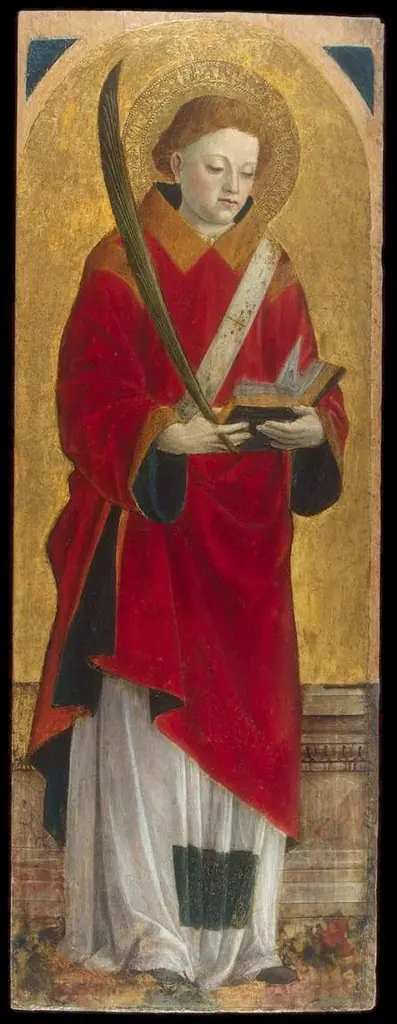 St Stephen (wing of a polyptych)
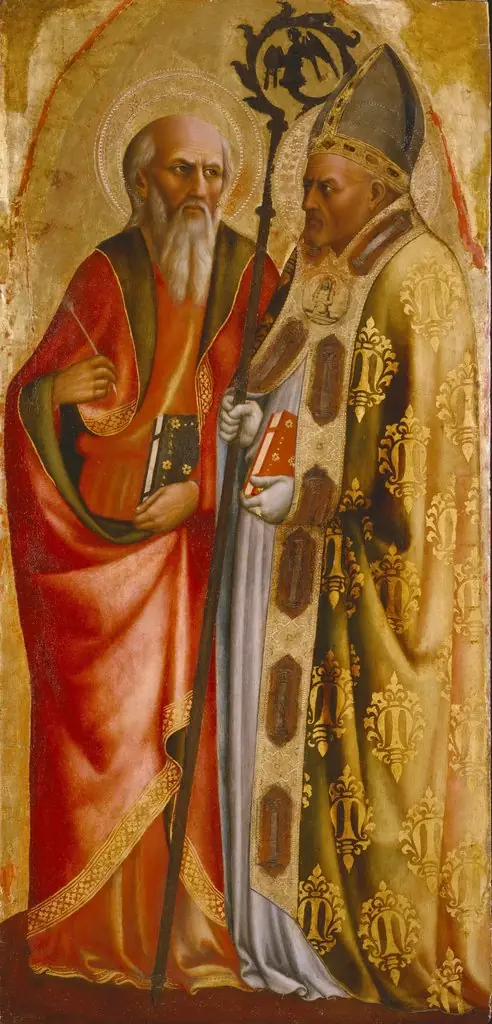 Saints John the Evangelist(?) and Martin of Tours
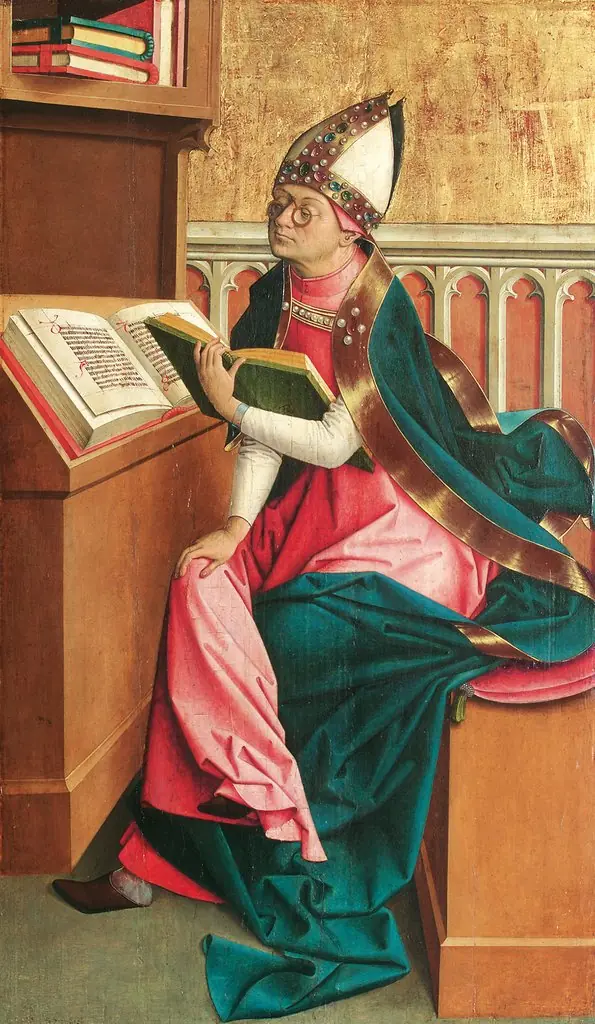 Hl. Augustinus
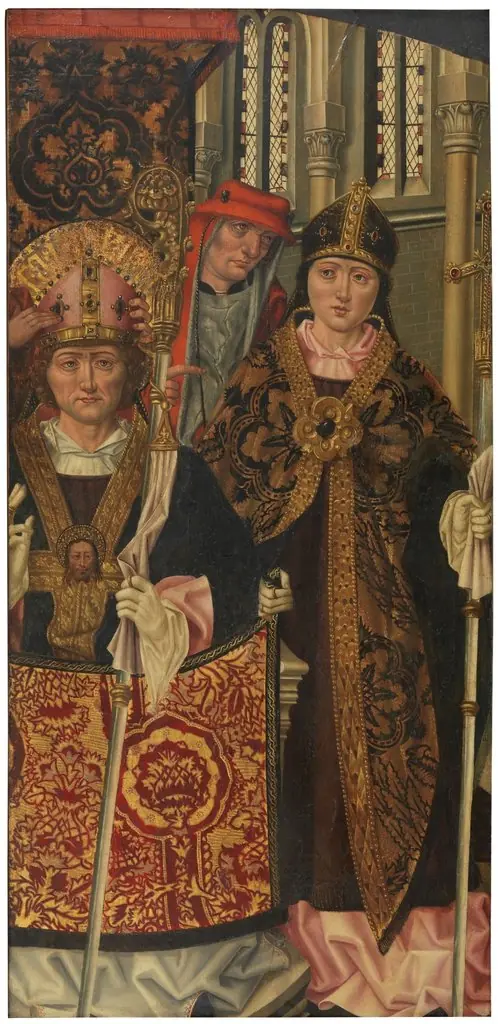 San Agustín de pontifical
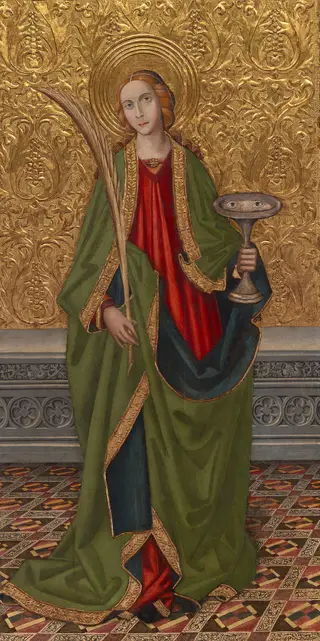 Saint Lucy
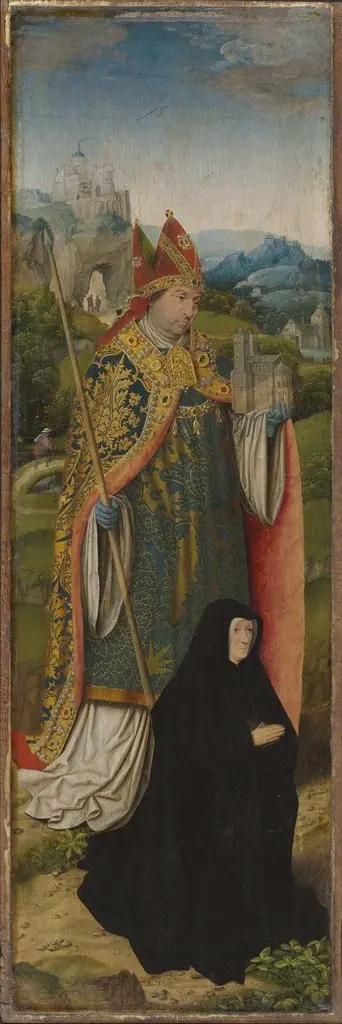 Kreuzigungsaltar: Hl. Bischof (Lambertus von Lüttich?) mit Stifterin
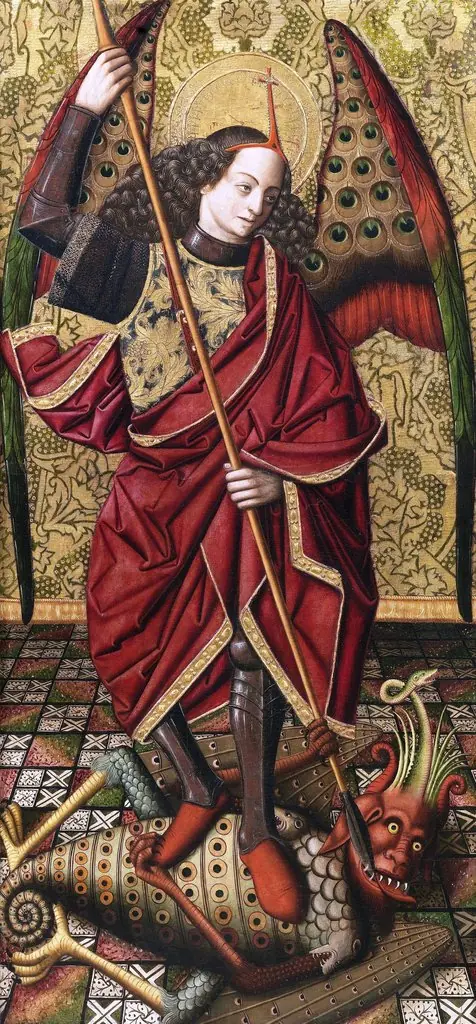 Saint Michael
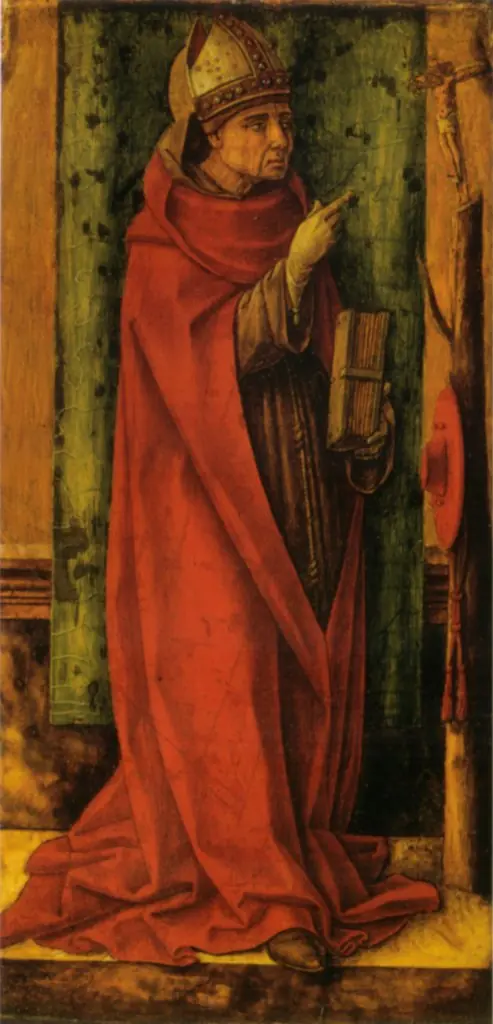 Bonaventure
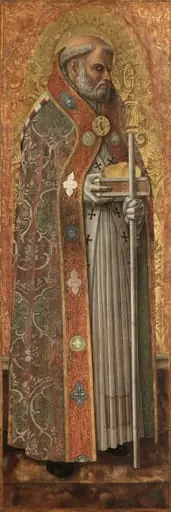 Saint Nicholas of Bari
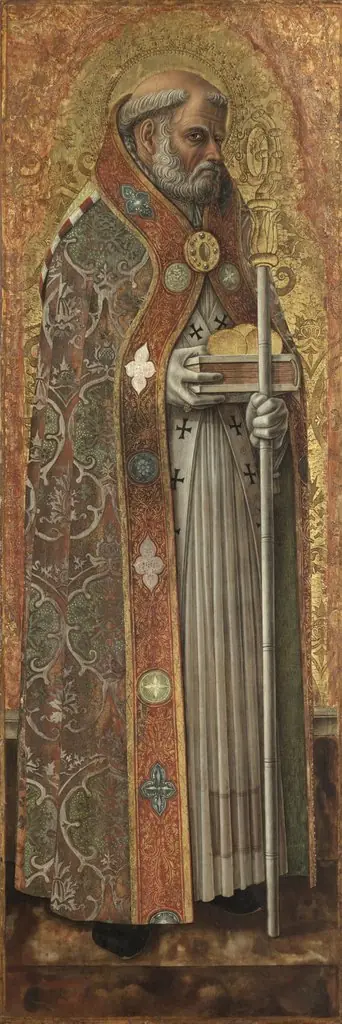 Saint Nicholas of Bari
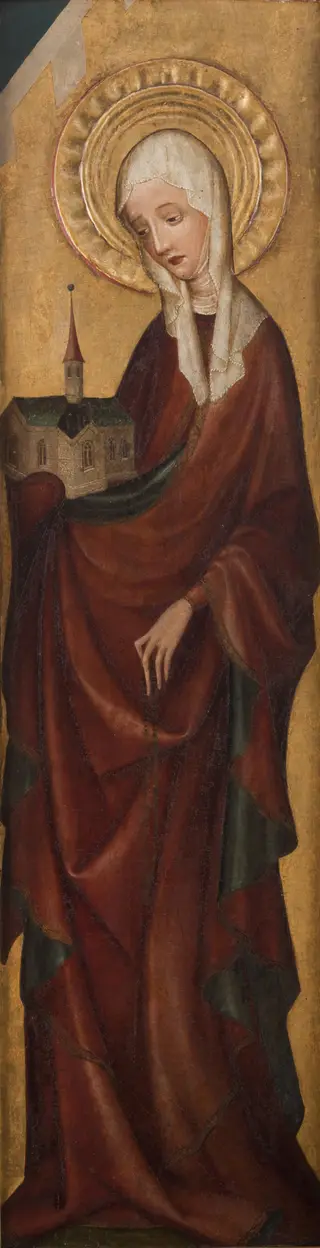 St Hedwig of Silesia. The wing from the altar retable from Trzebunia