Artwork
Saint Nicholas of Bari
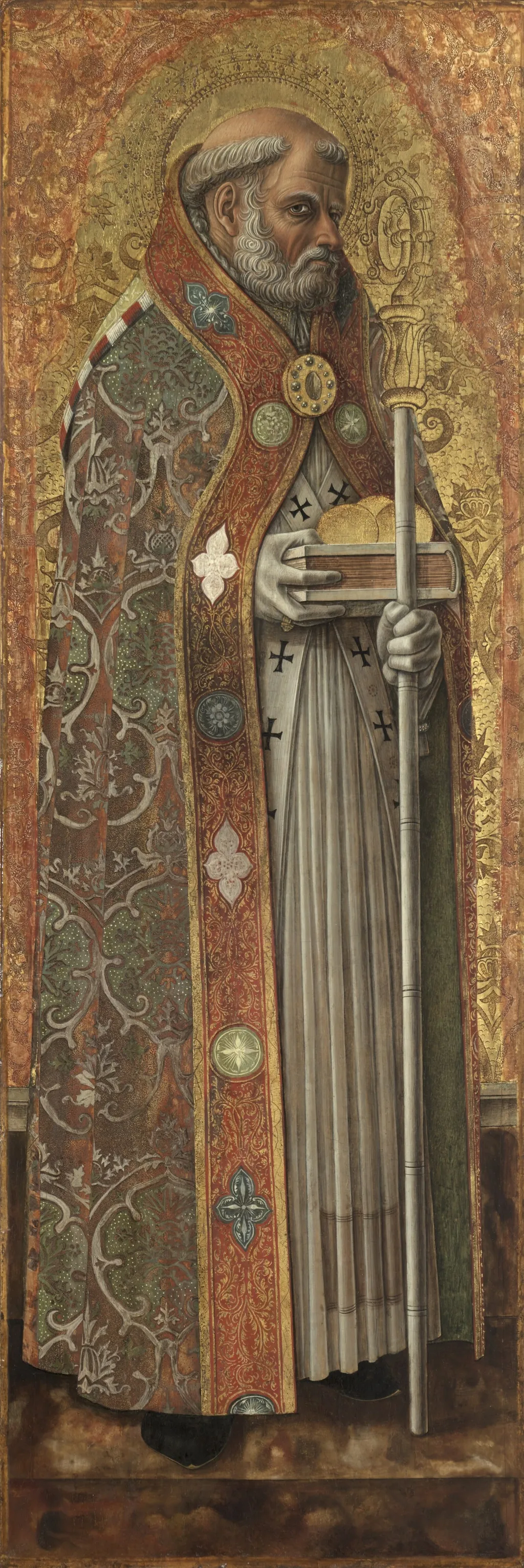
Saint Nicholas of Bari is an unspecified painting by the Early Renaissance artist Carlo Crivelli. It dates from 1472 and is held in the collection of the Cleveland Museum of Art.
About this work
Subject & Meaning
Carlo Crivelli's 1472 panel depicts Saint Nicholas of Bari as a contemplative, elderly bishop with a short white beard.
Carlo Crivelli's 1472 panel depicts Saint Nicholas of Bari as a contemplative, elderly bishop with a short white beard. Dressed in ornate episcopal vestments over a white tunic with tubular folds, the saint stands as a solid, columnar figure against an elegant gold damascened background. He holds a pastoral staff and a book, upon which rest three golden spheres.
These spheres serve as the saint's primary iconographic attribute, symbolizing the dowries he famously donated to three impoverished young women to save them from destitution. The work emphasizes the individual character of the saint through his expressive hands and thoughtful, sidelong gaze, distinguishing him within the larger altarpiece composition while highlighting his role as a charitable protector.
Technique & Style
The panel, measuring 96 × 32.5 cm, is executed in tempera with gold leaf on a wooden support. The background features a richly patterned gold surface reminiscent of damask. Saint Nicholas is rendered in episcopal vestments, holding a pastoral staff and a book, with his traditional three‑gold‑sphere attribute placed on the book.
The figure is depicted as an elderly, short‑bearded man in a contemplative pose, clothed in a richly decorated mantle over a white linen tunic whose folds fall in regular tubular lines. The composition simplifies volume, presenting the saint as a columnar form with expressive hands and a finely individualized face, differentiated from other altar figures. The work has been part of the Cleveland Museum of Art collection since 1952.
History & Provenance
Carlo Crivelli painted Saint Nicholas of Bari in 1472 as part of a polyptych likely commissioned for the church of San Domenico in Fermo; the work measures 96 × 32.5 cm and is executed in tempera and gold on panel. The panel remained part of the ensemble until shortly before 1834, when the polyptych was dismantled and its components entered the art market. It passed into the Roman collection of Cardinal Fesch, then was sold to Reverend Walter Davenport‑Bromley in London by 1845.
A subsequent sale at Christie's in 1863 placed the panel with Baroness Kerbreck of Paris, and in 1952 it was purchased by the Hanna Fund and donated to the Cleveland Museum of Art, where it remains under accession number 1952.111.
Context
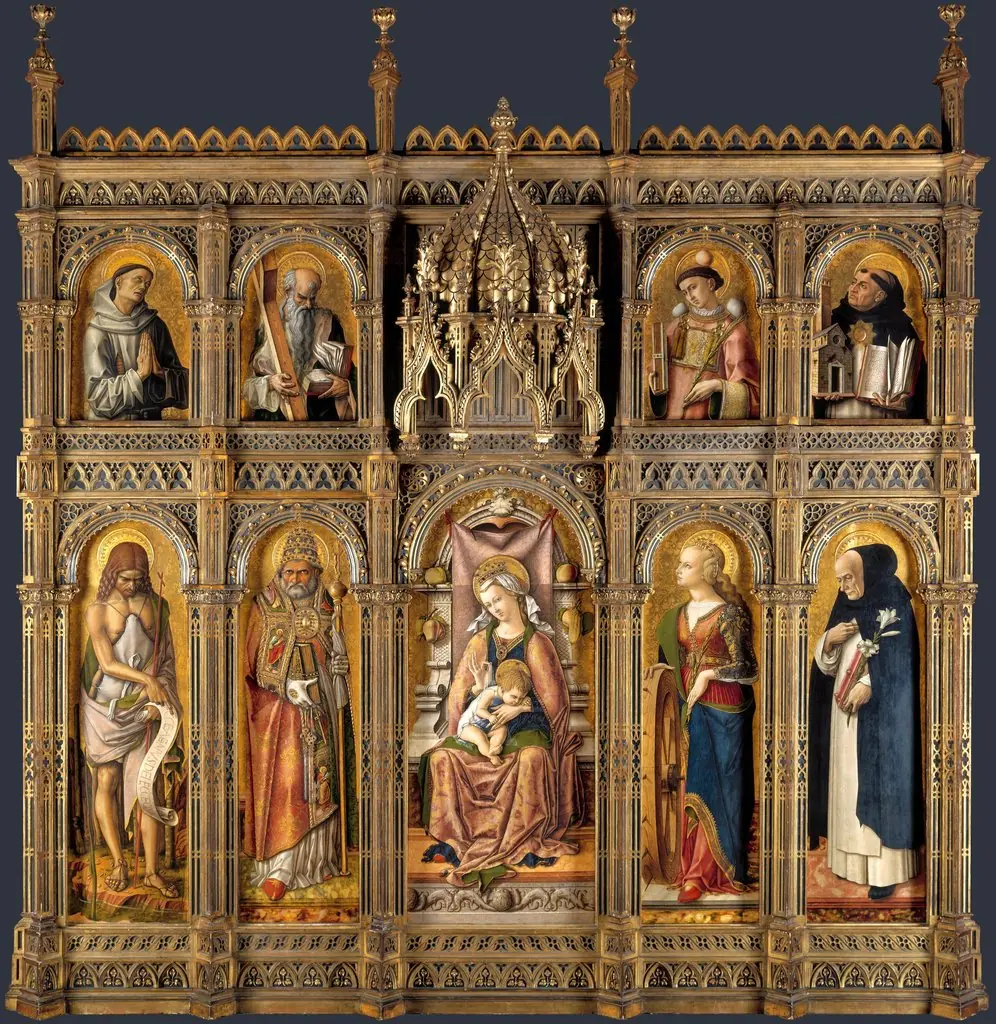
Saint Nicholas of Bari is a panel by Carlo Crivelli, dated 1472, originally part of the Polittico del 1472, a dismembered polyptych likely first installed in the Church of San Domenico in Fermo. The polyptych was broken up shortly before 1834 and its panels dispersed on the antiquarian market. Scholarly attention to the work is anchored in Pietro Zampetti's monograph Carlo Crivelli (Nardini Editore, Florence, 1986), which remains a standard reference.
Within the polyptych, the panel is noted for its individually characterized saint, its richly tooled gold damask ground, and its columnar figural solidity, contributing variety to the ensemble.
Legacy
The painting, documented in the Cleveland Museum of Art since 1952, survives as a key panel of Crivelli's 1472 polyptych, its provenance traced through several private collections before donation. Scholarly study, notably Pietro Zampetti's 1986 catalogue, highlights its stylistic and iconographic importance, while its citation in museum descriptions and multilingual reference entries reflects sustained interest in its legacy and conservation.
Overview
Carlo Crivelli completed Saint Nicholas of Bari, a religious panel painting, in 1472. This work from the Italian Renaissance features the revered saint, depicted in an elaborate ecclesiastical vestment. The painting is currently part of the collection at The Cleveland Museum of Art, representing Crivelli's distinctive artistic output from the late 15th century.
Artist & collection
Artist
Carlo Crivelli (c. 1430 – c. 1495) was an Italian Renaissance painter of conservative Late Gothic decorative sensibility, who spent his early years in the Veneto, where he absorbed influences from the Vivarini,…

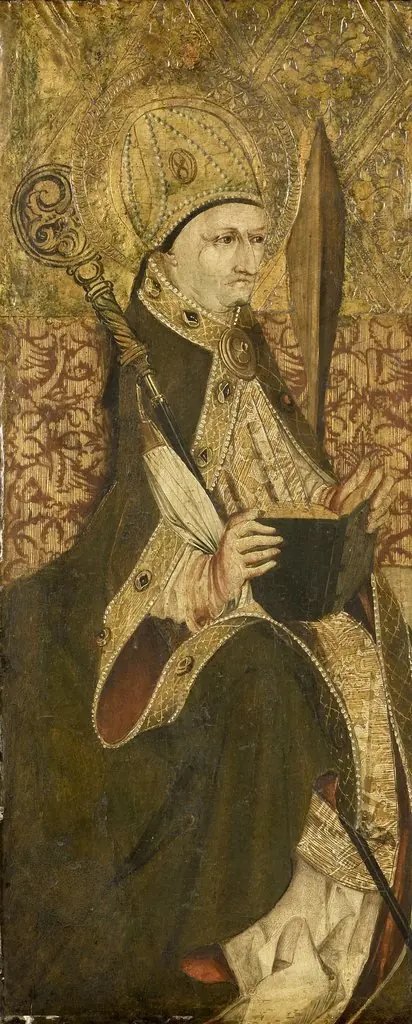 A Holy Bishop
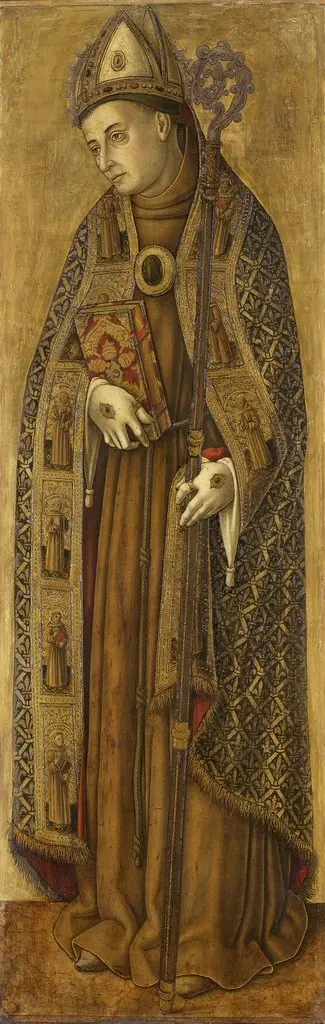 St. Louis of France, pendant to St. Bonaventure
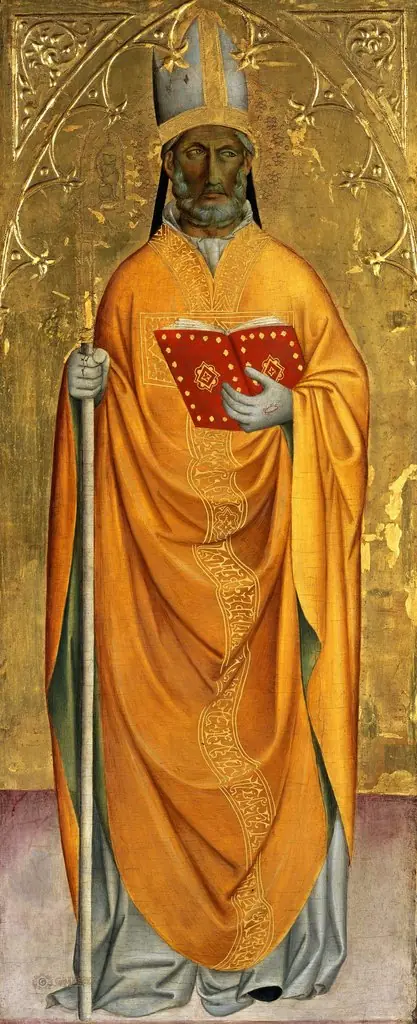 Holy Bishop
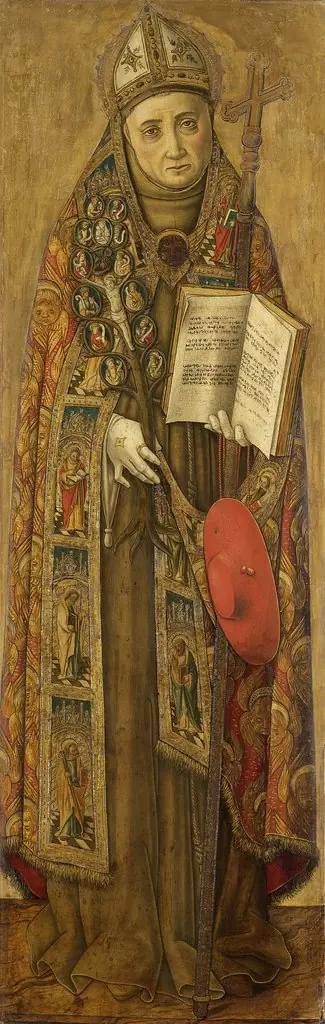 St. Bonaventure, pendant to St. Louis
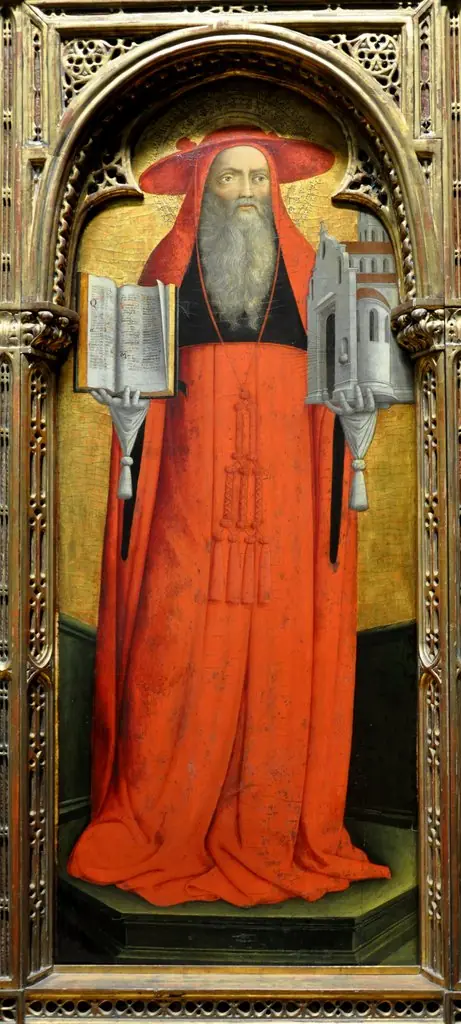 Hieronymusaltar von Santo Stefano in Venedig: Der heilige Hieronymus
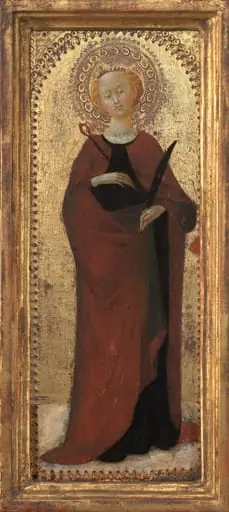 Saint Apollonia
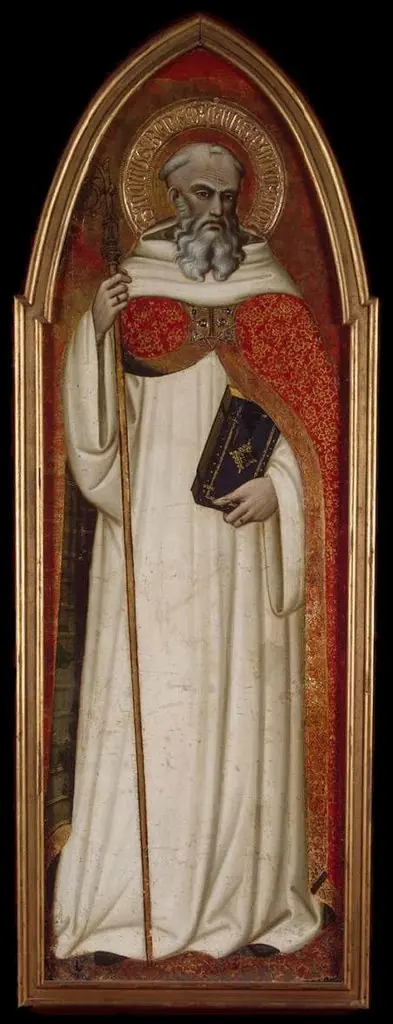 St Benedict (wing of a polyptych)
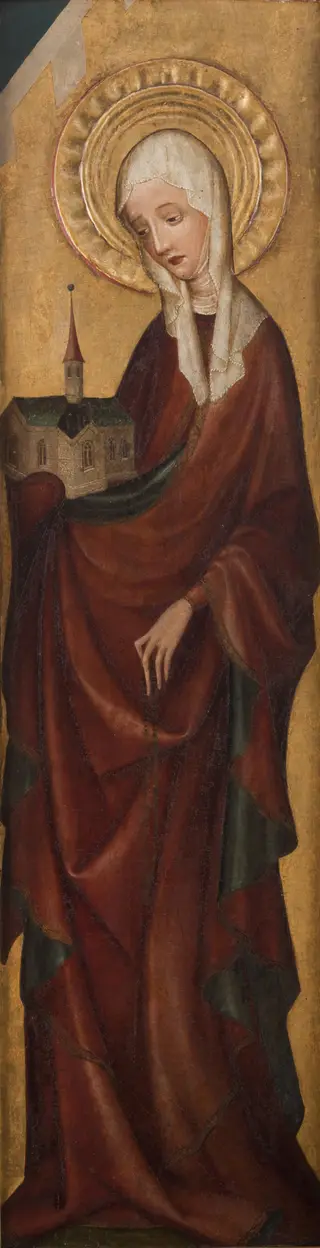 St Hedwig of Silesia. The wing from the altar retable from Trzebunia
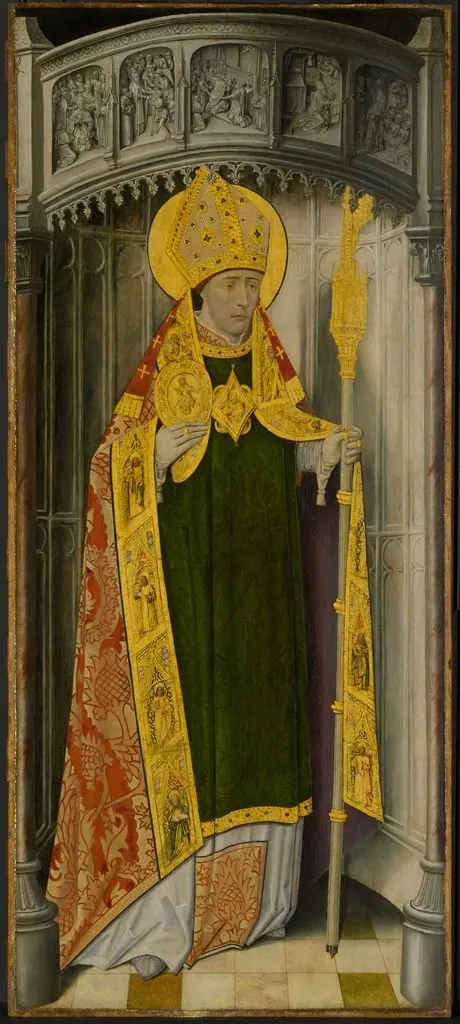 Altarpiece from Thuison-les-Abbeville: Saint Honoré