Artwork
Fallen Jockey (study for "Scene from the Steeplechase: The Fallen Jockey")
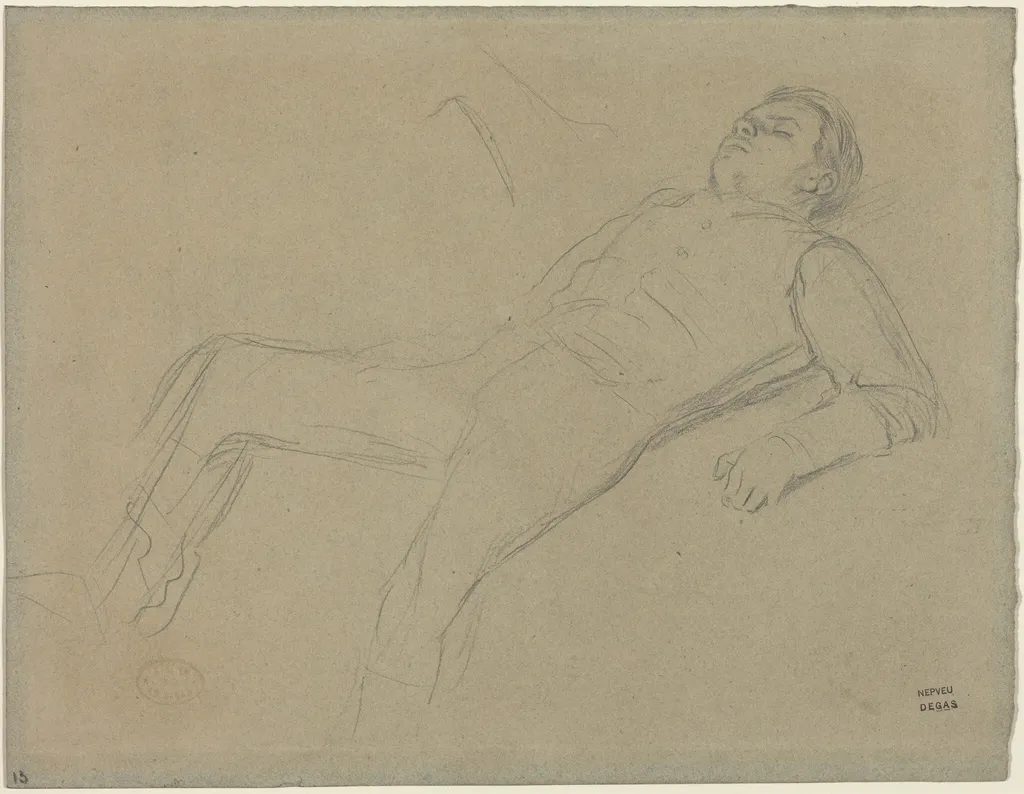
Fallen Jockey (study for "Scene from the Steeplechase: The Fallen Jockey") is a graphite drawing by the Impressionist artist Edgar Degas. It dates from 1866 and is held in the collection of the National Gallery of Art.
- Inscription
- Inscribed:lower left in graphite: 13; upper right in graphite: ppg 13
About this work
Overview
Created around 1866, this graphite drawing on blue paper serves as a preparatory study for Edgar Degas’s larger composition titled “Scene from the Steeplechase: The Fallen Jockey.” The French artist, often linked to Impressionism yet preferring the label realist, used the sketch to explore the moment a jockey collapses during a race, emphasizing motion and immediacy.
Subject & Meaning
The composition captures a solitary figure lying on its back with arms extended, suggesting the sudden loss of balance after a fall. By focusing on the contorted posture, Degas highlights the vulnerability of the rider and the fleeting nature of athletic mishaps, aligning with his broader interest in contemporary, kinetic scenes beyond his famous ballet subjects.
Technique & Style
Executed with loose, rapid graphite strokes, the drawing conveys the body’s volume through minimal lines. The pale blue support provides a subtle tonal contrast, allowing the charcoal‑like marks to stand out. Degas’s approach prioritizes gesture over detail, a method he frequently employed to record movement quickly and efficiently before committing to a finished painting.
History & Provenance
The work originates from Degas’s studio practice in the mid‑1860s, a period when he was intensively investigating equestrian subjects. Though primarily a study, it has been retained within the artist’s oeuvre as evidence of his preparatory process for the larger steeplechase scene, illustrating his methodical planning before executing the final oil composition.
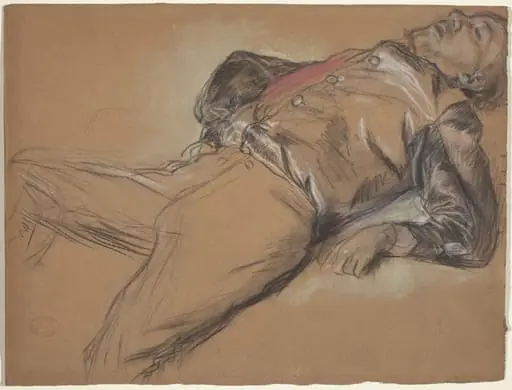
Own this work as a print
Artist & collection
Artist
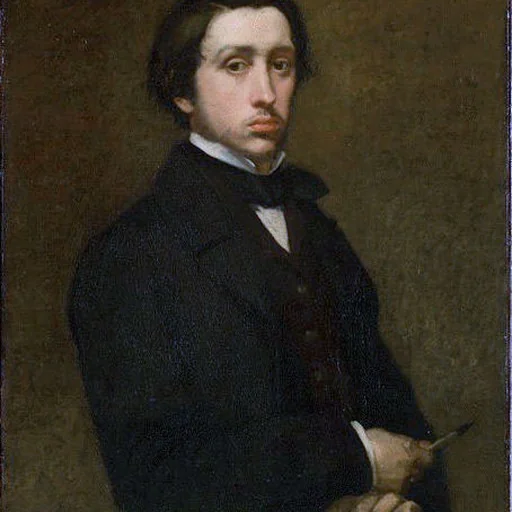
Born Hilaire-Germain-Edgar De Gas on 19 July 1834 in Paris, Edgar Degas came from an affluent banking family with aristocratic roots and spent his childhood among the cultivated circles of the French capital.

![Bust of Madame Cezanne [verso], by Paul Cézanne](https://artifactworldgallery.com/img/paul-cezanne--bust-of-madame-cezanne-verso--8686f7640dae3212-w320.webp)
![Falling Male Nude [verso], by John Singer Sargent](https://artifactworldgallery.com/img/john-singer-sargent--falling-male-nude-verso--bfafa5990eb423f7-w320.webp)