Artwork
Mademoiselle Malot
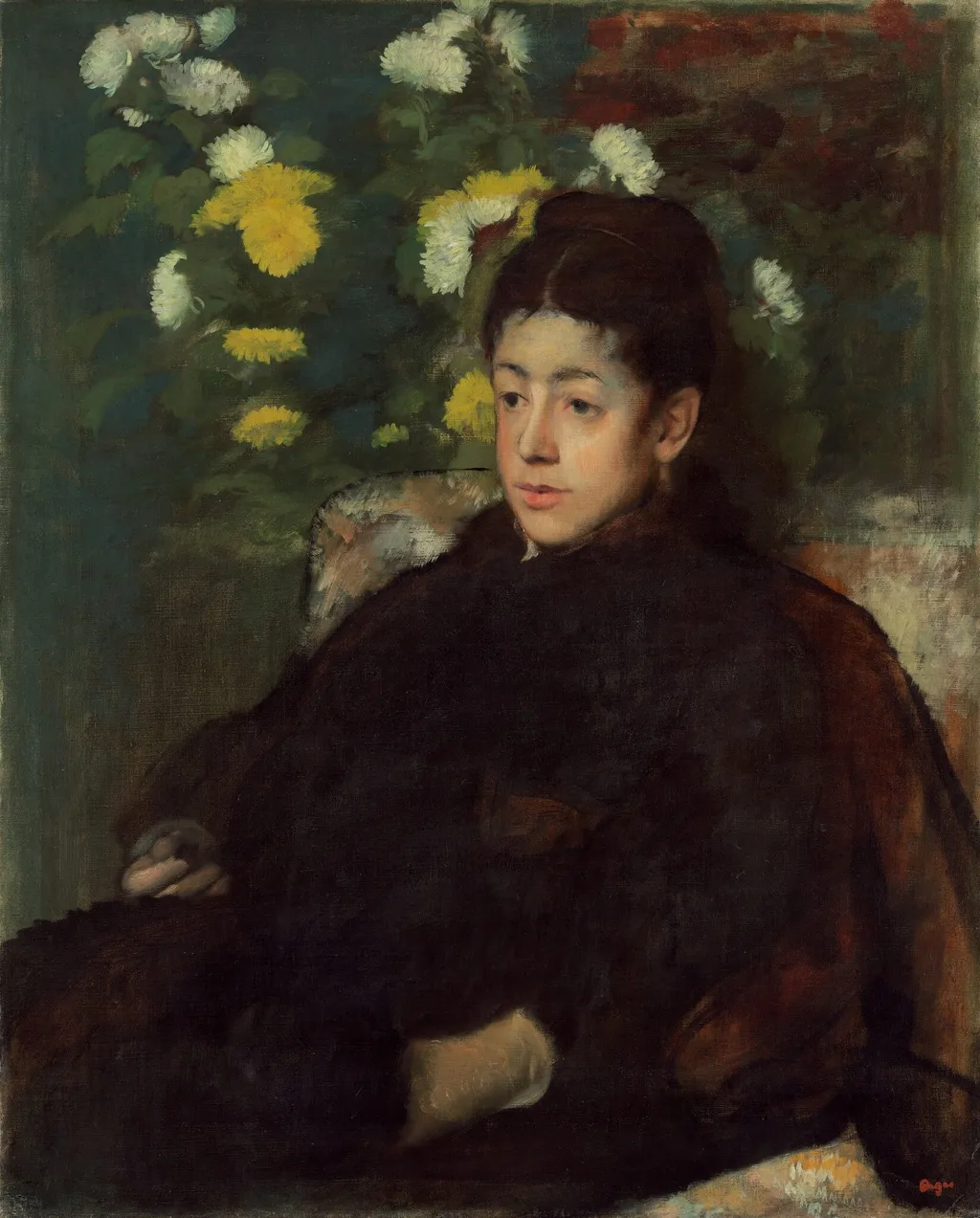
Mademoiselle Malot is an oil painting by the Impressionist artist Edgar Degas. It dates from 1877 and is held in the collection of the National Gallery of Art.
- Inscription
- Inscribed:lower right with atelier stamp: Degas
About this work
Technique & Style
As a portrait, it belongs to Degas's sustained engagement with portraying dancers, family connections, and acquaintances in oil during this period.
Mademoiselle Malot is an oil painting executed on canvas, a medium and support consistent with Edgar Degas's portrait practice of the late 1870s. The work measures 81.1 by 65.1 centimeters, an upright format suited to a half-length or seated sitter. As a portrait, it belongs to Degas's sustained engagement with portraying dancers, family connections, and acquaintances in oil during this period.
The painting is held in the collection of the National Gallery of Art in Washington, D.C., having entered the institution through the 1963 bequest of Chester Dale, following earlier provenance through the artist's estate and dealers including Jacques Seligmann and Scott & Fowles. No specific handling notes, condition reports, or stylistic descriptions are documented in the available sources.
History & Provenance
Edgar Degas created the oil-on-canvas portrait Mademoiselle Malot in 1877. The work remained in the artist's possession in Paris until his estate sale at Galerie Georges Petit in May 1918, where it was acquired by Jacques Seligmann for his private collection. Following Seligmann's death, the painting was sold at American Art Galleries in New York in January 1921 and subsequently passed through the dealers Scott & Fowles to Henry D. Hughes of Philadelphia.
After a period on consignment with Marie Sterner Galleries, the painting was purchased by Chester Dale in New York on November 10, 1928. Dale bequeathed the work to the National Gallery of Art in Washington, D.C., in 1963.
Mademoiselle Malot has been held by the National Gallery of Art in Washington, D.C. since 1963, when it entered the collection as part of the bequest of Chester Dale. The painting's chain of ownership traces through the artist's Paris studio, the 1918 Degas sale at Galerie Georges Petit, Jacques Seligmann's private collection, the 1921 Seligmann sale at the American Art Galleries in New York, and the New York firm Scott & Fowles, before passing to Henry D. Hughes of Philadelphia and then being consigned through Marie Sterner Galleries. Chester Dale acquired the work on 10 November 1928, retaining it until his death in 1962.
No exhibition history beyond the documented 1918 and 1921 sales is recorded in the available sources.
Context
Edgar Degas painted Mademoiselle Malot in 1877, a portrait reflecting his fascination with contemporary bourgeois figures and fleeting modernity. The work entered Jacques Seligmann's collection before Chester Dale acquired it in 1928, eventually bequeathing it to the National Gallery of Art in 1963. Scholarship emphasizes its nuanced psychological depth and role within Degas's exploration of identity, situating it amid his broader portraiture of Parisian life while highlighting its significance in American museum acquisitions through the Dale bequest.
Overview
Created circa 1877, Mademoiselle Malot is an oil on canvas work by the French artist Edgar Degas. Though often linked to the Impressionist circle, Degas identified himself more with realist concerns, emphasizing observation of everyday subjects. The painting presents a solitary figure within an interior space, reflecting the artist’s interest in capturing the physical presence and temperament of his sitters.
Subject & Meaning
The composition centers on a young woman seated at a table, attired in an elaborate dress that suggests a modest social standing. Her expression is sober and composed, conveying a sense of introspection rather than decorative charm. Degas’s treatment underscores a straightforward portrayal of character, avoiding the idealized sentiment common in contemporary portraiture.
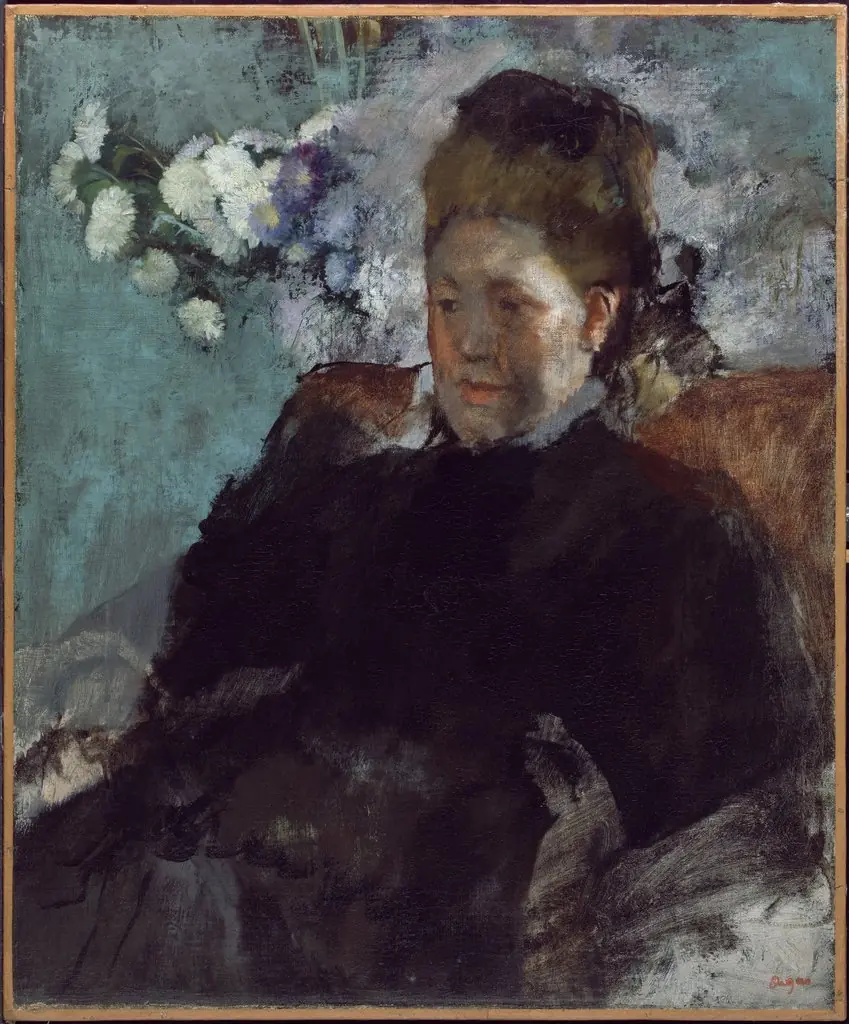
Own this work as a print
Artist & collection
Artist
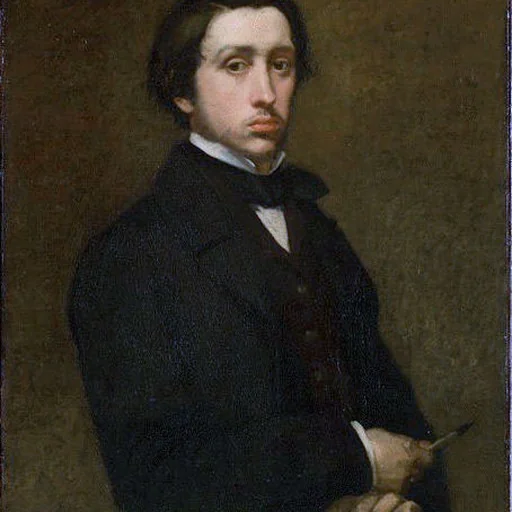
Born Hilaire-Germain-Edgar De Gas on 19 July 1834 in Paris, Edgar Degas came from an affluent banking family with aristocratic roots and spent his childhood among the cultivated circles of the French capital.

- Portrait of a Woman
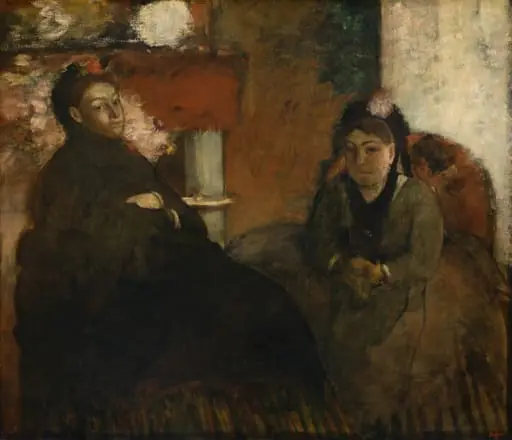 Portrait of Mme Lisle and Mme Loubens
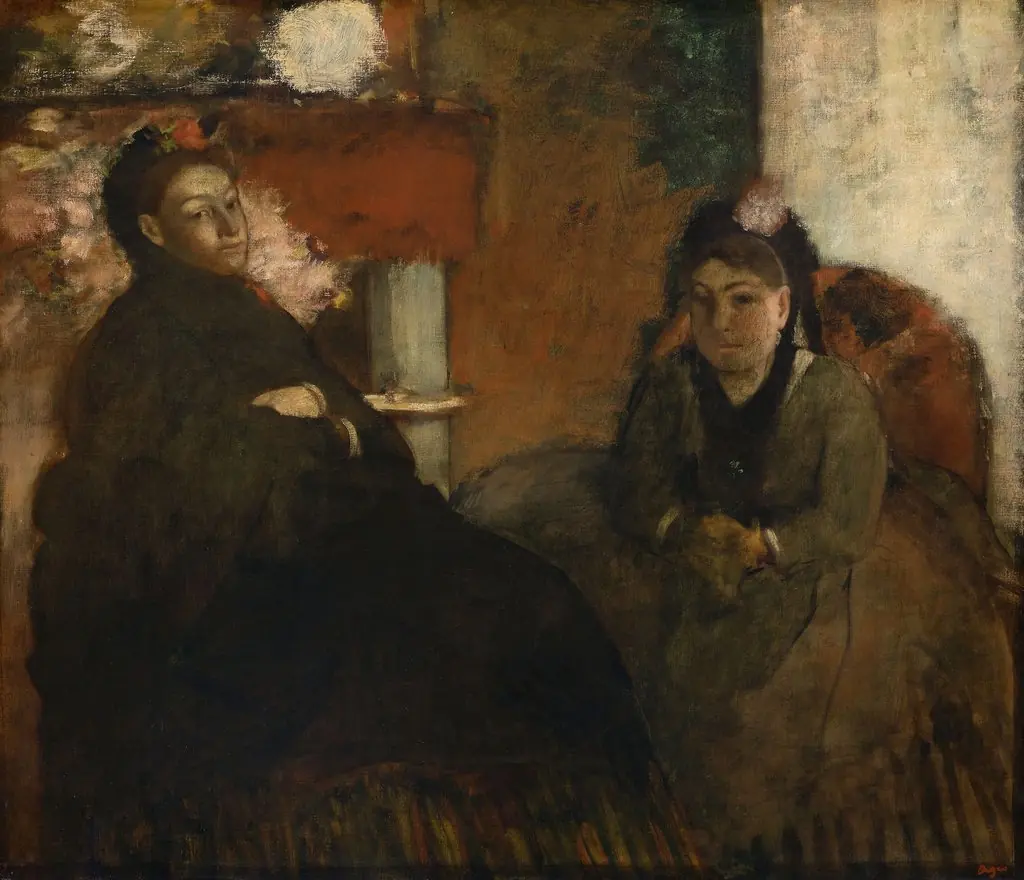 Portrait of Mme. Lisle and Mme Loubens
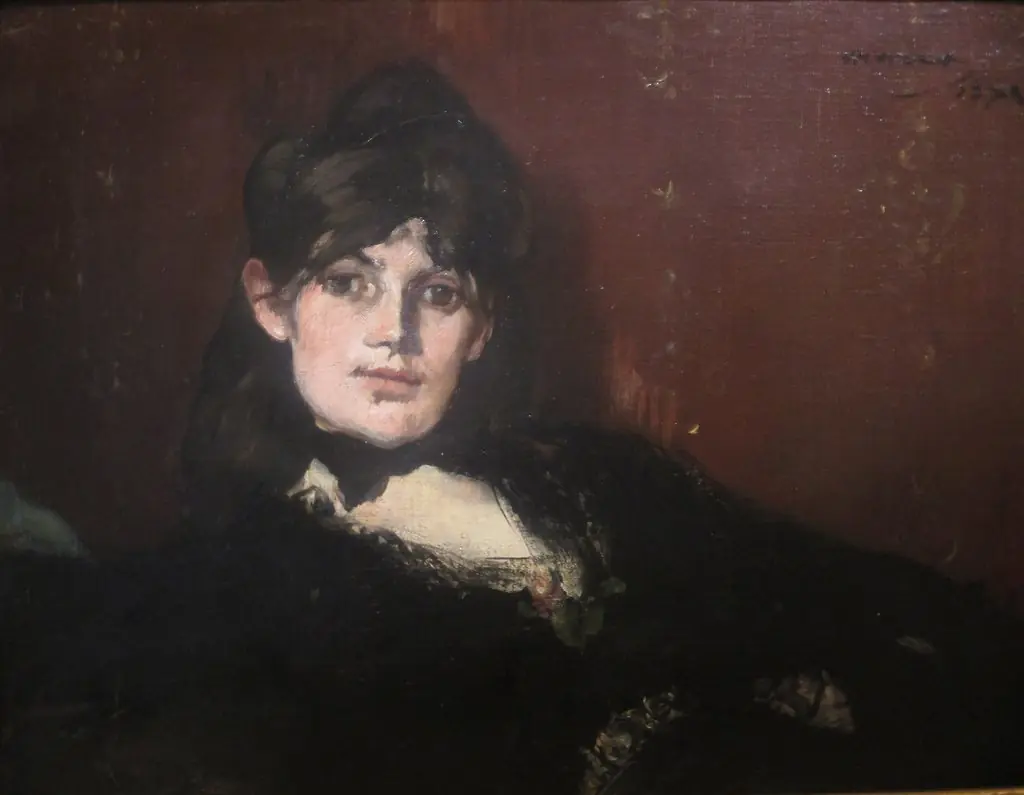 Berthe Morisot
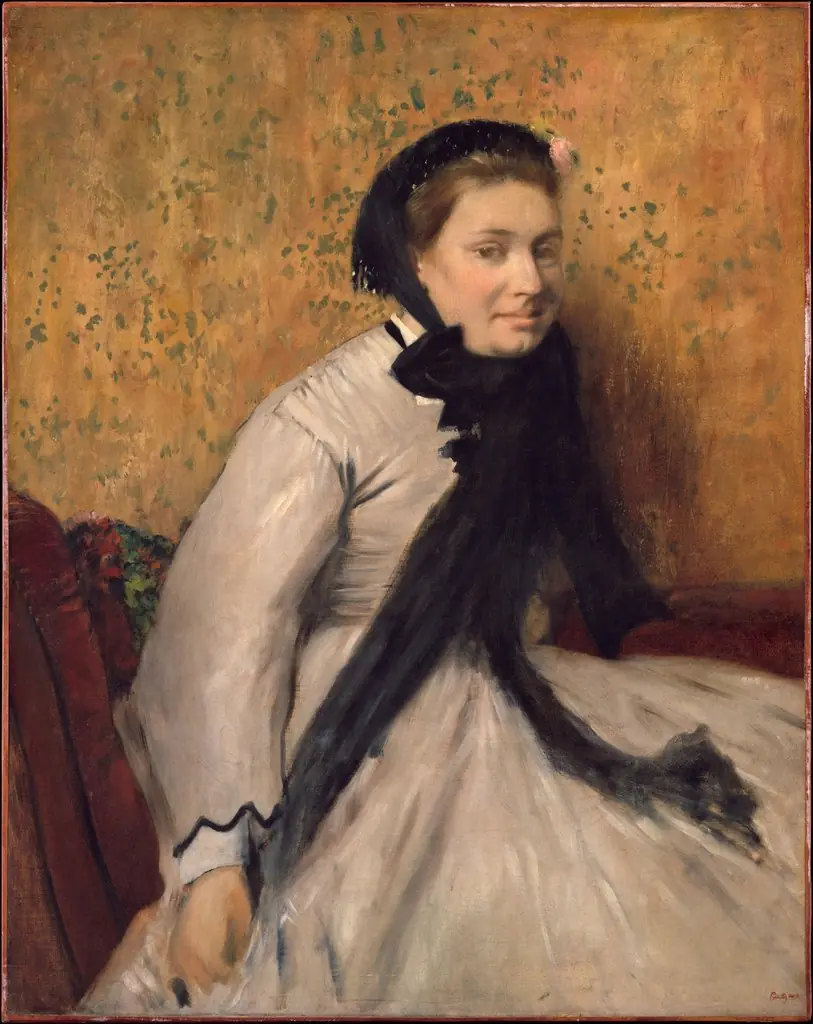 Portrait of a Woman in Gray
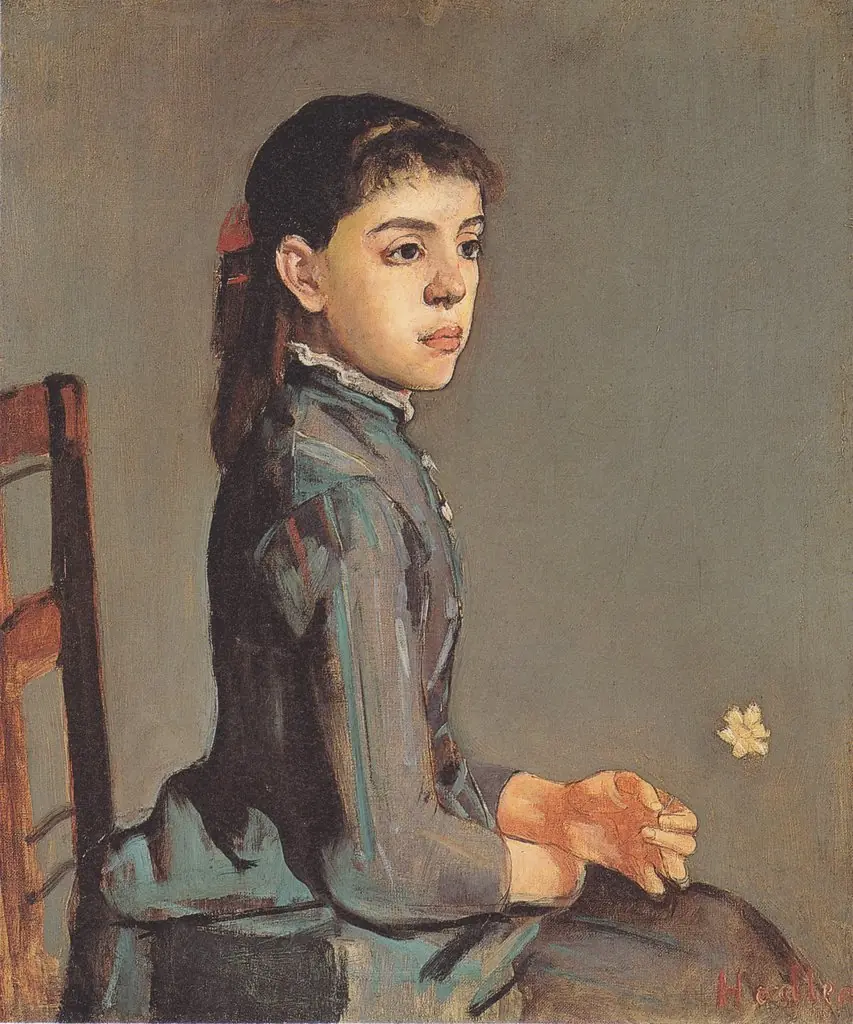 Bildnis Louise-Delphine Duchosal
 Mrs. Charles Gifford Dyer (Mary Anthony)
 Portrait of Alexandrine Patchenko, the Painter’s Sister-in-Law
 Portrait of a Woman
 Portrait of a woman
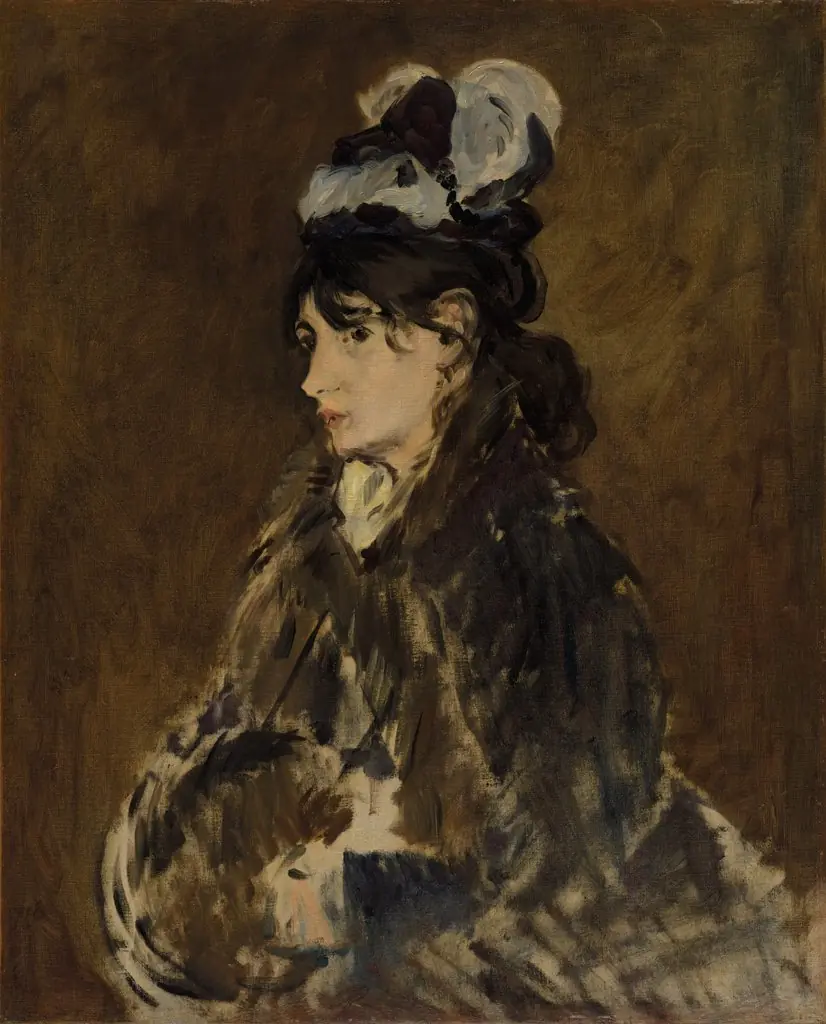 Berthe Morisot
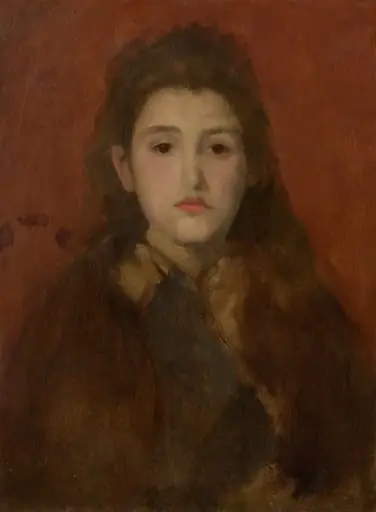 Alice Butt