Artwork
Navigation (Allegory of the Navy)
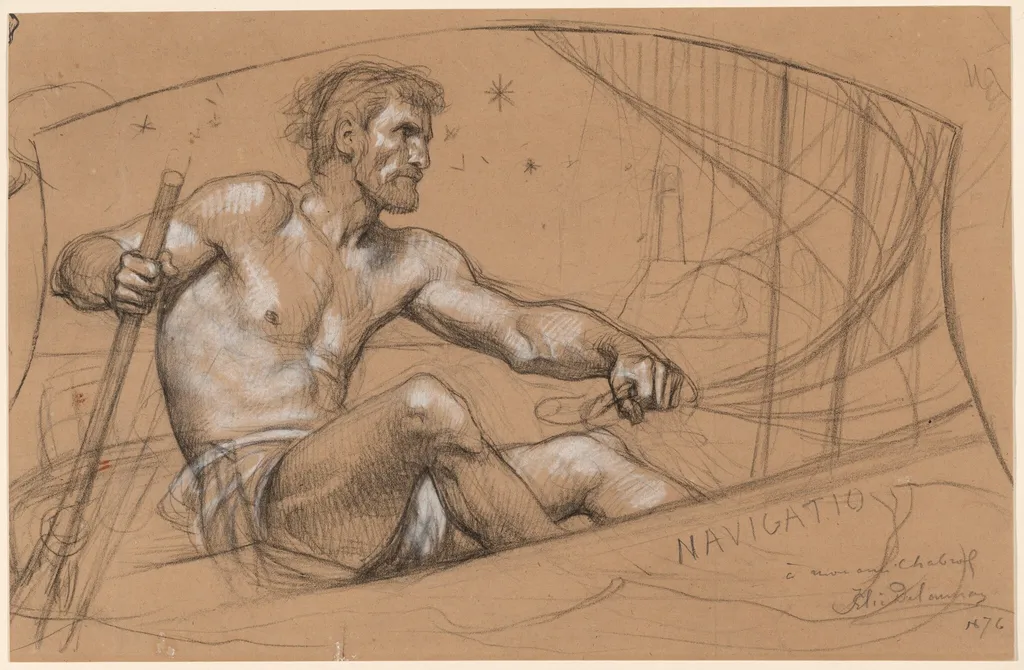
Navigation (Allegory of the Navy) is a graphite drawing by the Impressionist artist Jules-Elie Delaunay. It dates from 1876 and is held in the collection of the National Gallery of Art.
- Inscription
- Inscribed:by the artist at lower right in graphite: NAVIGATION / à mon ami Chabrol / JElie Delaunay / 1876
About this work
Overview
Navigation (Allegory of the Navy) is a drawing by Jules-Elie Delaunay, executed in 1876. Composed with black and white chalk and graphite on light brown wove paper, the work is now part of the collection at the National Gallery of Art in Washington.
Subject & Meaning
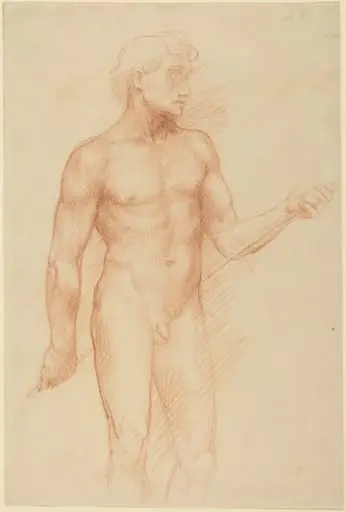
The drawing depicts a muscular, short-haired man seated on the ground with legs bent to one side. Holding a long pole, his gaze directed to the right, the figure suggests engagement in a physically active, nautical-related task, alluding to themes of navigation.
Technique & Style
Delaunay employed a combination of black and white chalk with graphite on light brown wove paper, achieving a sense of depth and texture. The contrast between light and dark values implies the use of chiaroscuro, enhancing the overall visual impact.
History & Provenance
Created in 1876, the drawing is currently housed at the National Gallery of Art in Washington, D.C., as part of its permanent collection.
Context
As an allegory of the navy, the work reflects late 19th-century artistic and thematic interests in symbolism and maritime themes, though specific contextual influences or inspirations are not detailed in available information.
Legacy
Detailed information on the direct legacy or significant impact of 'Navigation (Allegory of the Navy)' on subsequent art or cultural discourse is not provided in the available sources.
Own this work as a print
Artist & collection


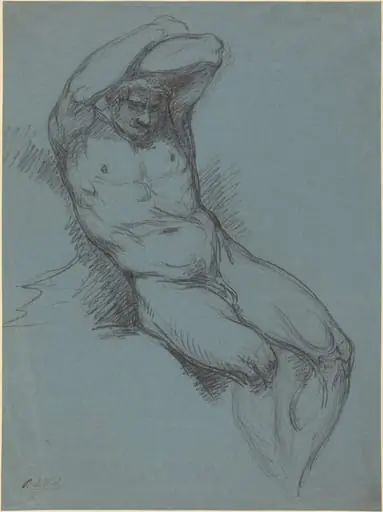
- A Seated Male Nude with His Hands Crossed over His Head
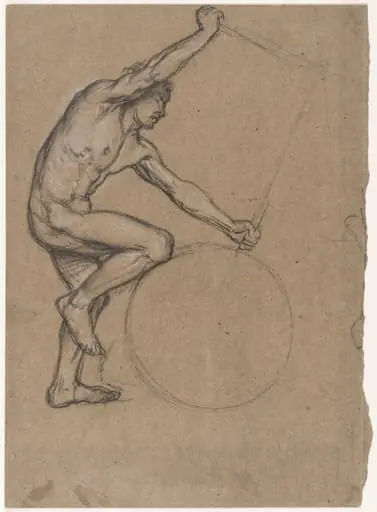 Study for the painting, "The Catapult", exhibited at the Royal Academy, 1868
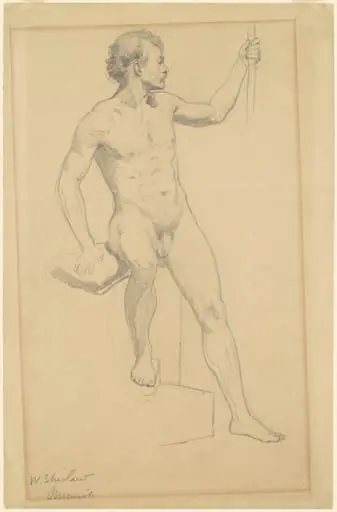 Male Nude
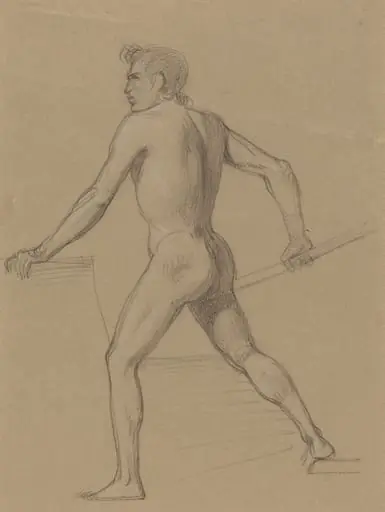 A Male Nude Moving to the Left
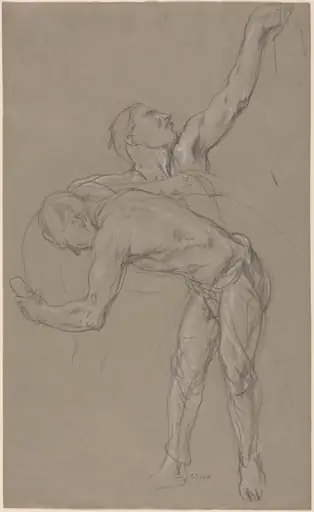 Two Male Figures: Study for "The Good Samaritan"
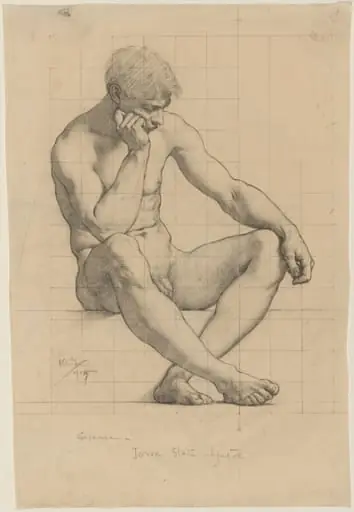 Seated Male Nude: Study for "Science" - Iowa State Capitol
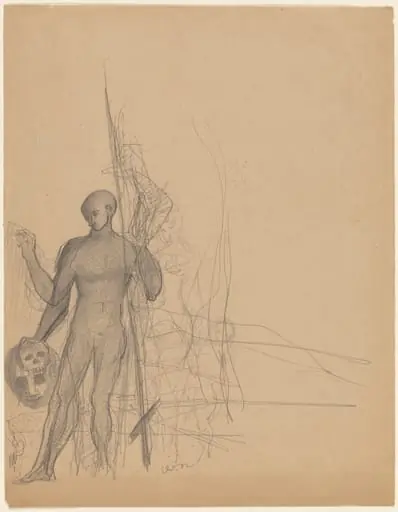 The Headhunter and His Family
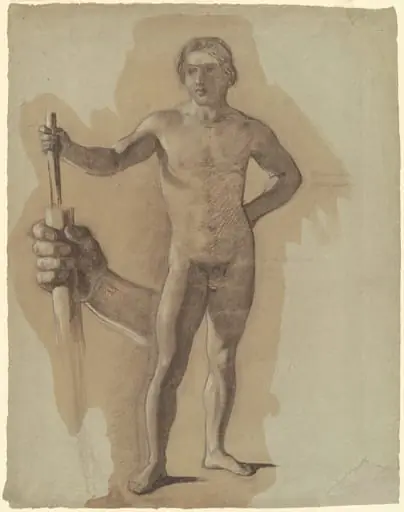 Study for "The Landing of Columbus"
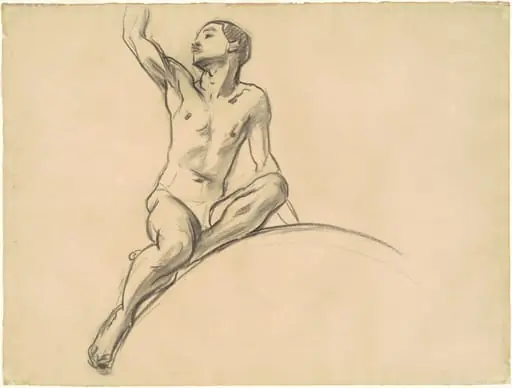 Study for Figure above "Music"
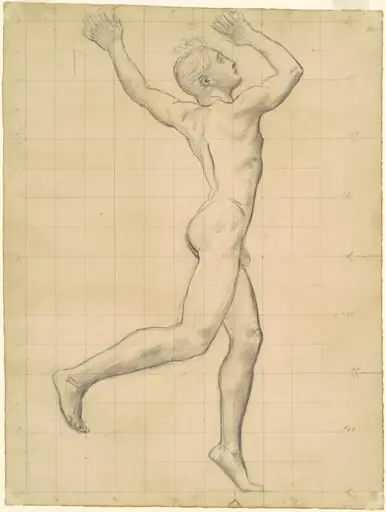 Study of Apollo for "Apollo and Daphne"
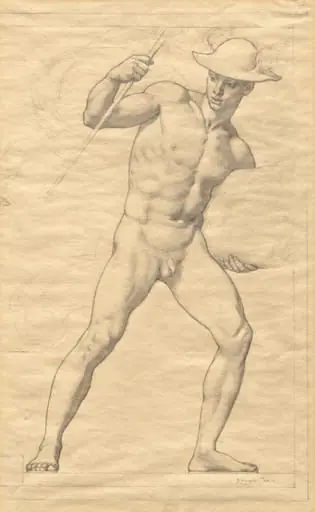 Mercury
 Study of a Man's Figure, Holding Rod behind Back