Artwork
Il appliqua sur cette main un baiser que je sentis sur mon coeur
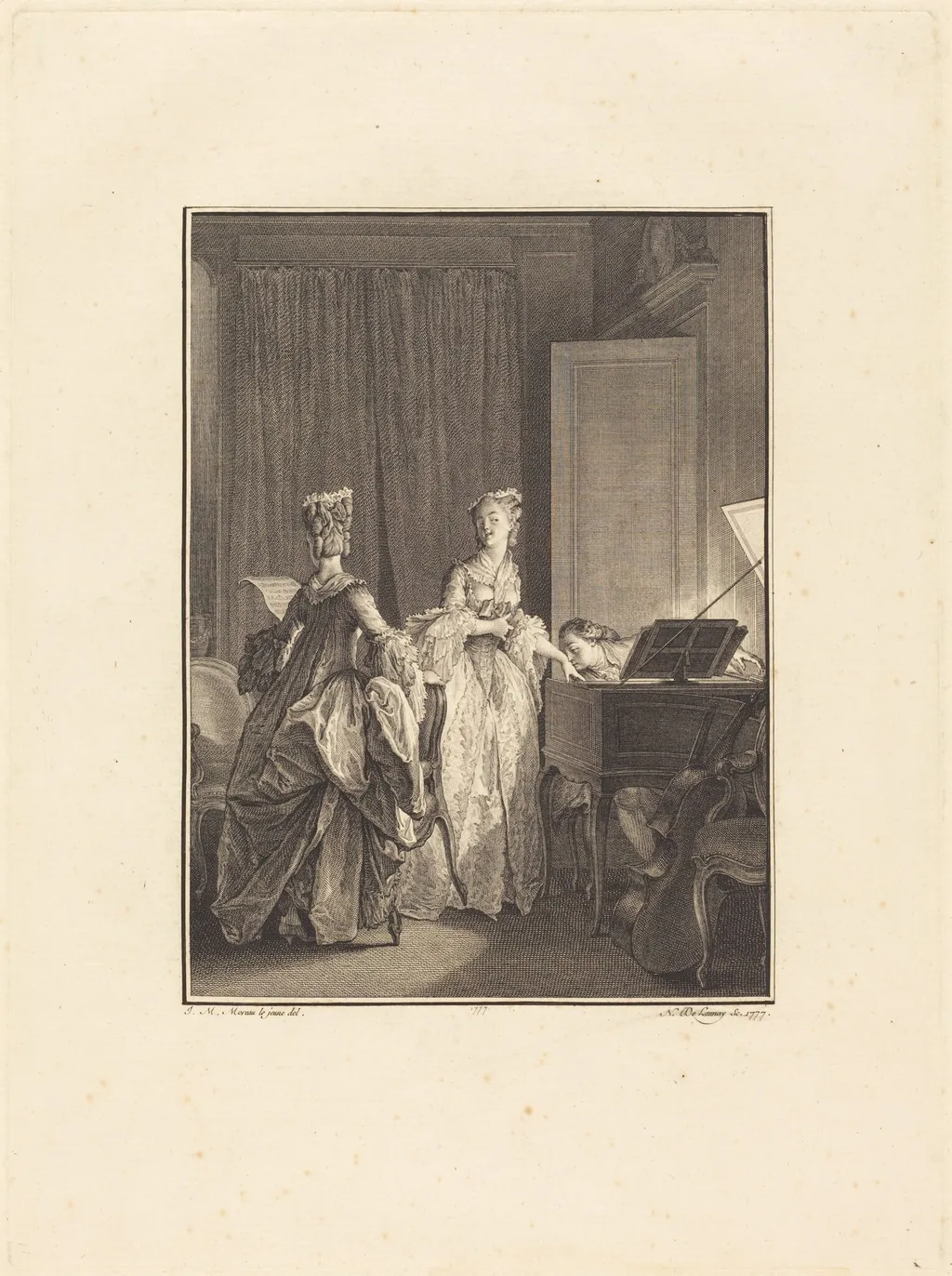
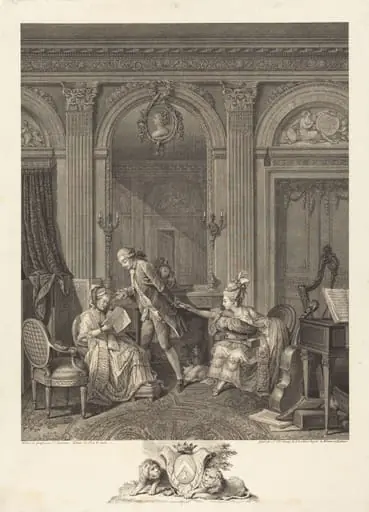
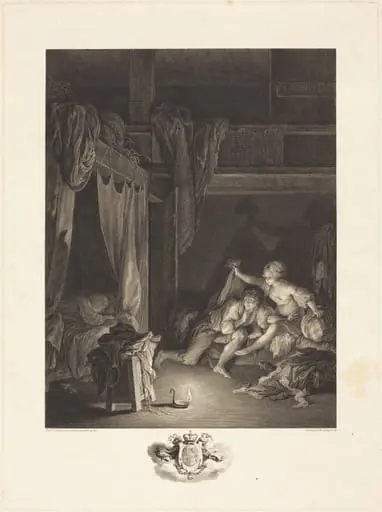
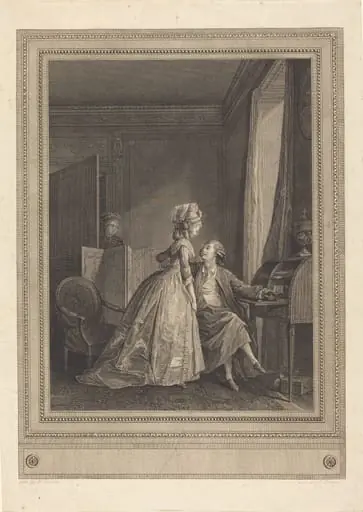
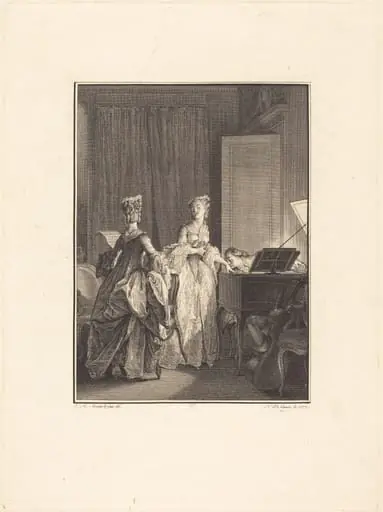
Il appliqua sur cette main un baiser que je sentis sur mon coeur is an ink print by the Romanticist artist Nicolas Delaunay. It dates from 1777 and is held in the collection of the National Gallery of Art.
About this work
Overview
The composition centers on two women in elaborate 18th-century attire within a cozy interior defined by a draped curtain.
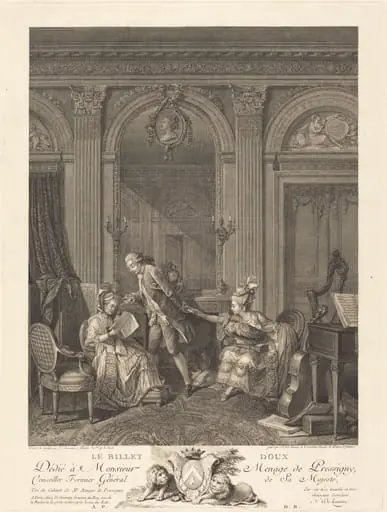
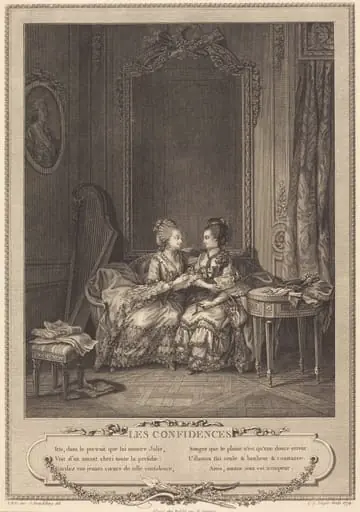
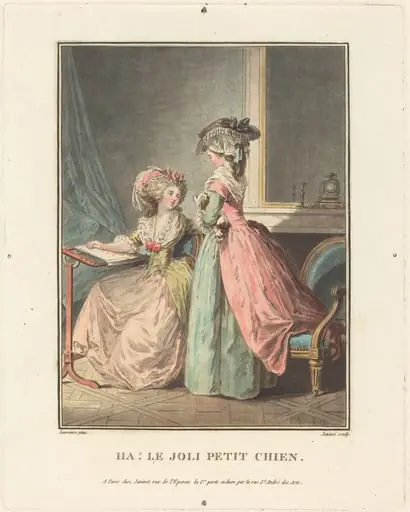
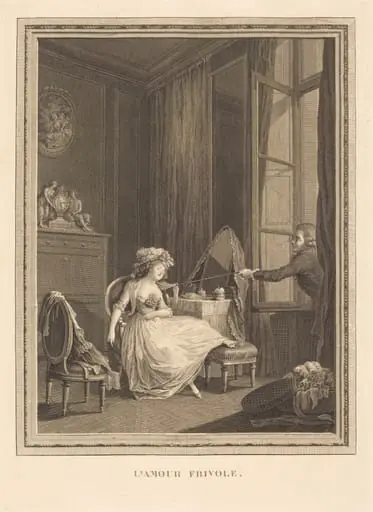
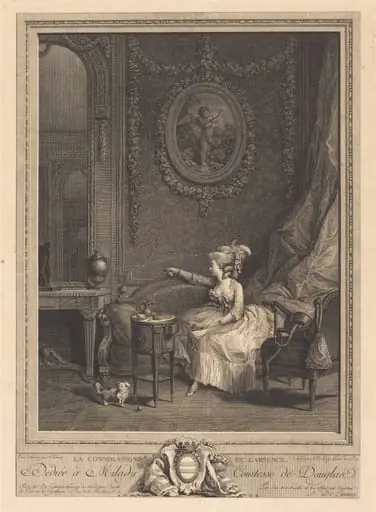
Created in 1777 by Nicolas Delaunay, this etching and engraving illustrates a scene of domestic musical instruction, capturing a moment of intimate interaction between three figures. The composition centers on two women in elaborate 18th-century attire within a cozy interior defined by a draped curtain. One woman stands holding a sheet of music, observing the other, who leans over a small harpsichord to play.
A child seated nearby reaches toward the instrument, suggesting a familial or pedagogical dynamic. The title, 'Il appliqua sur cette main un baiser que je sentis sur mon coeur' (He applied a kiss to this hand that I felt on my heart), indicates the print serves as an illustration for a specific literary narrative, likely a sentimental novel of the period. Delaunay, active during the late French Enlightenment, frequently produced reproductive prints and illustrations that translated literary sentiment into visual form.
This work exemplifies the 18th-century French tradition of using print media to disseminate scenes of bourgeois life and emotional resonance, blending technical precision in the rendering of fabrics and instruments with a focus on narrative gesture.
Subject & Meaning
The central figure holds a sheet of music while the second woman leans over a small harpsichord, actively playing. A child sits nearby, reaching toward the instrument, suggesting a domestic setting where music and familial interaction intertwine. The title alludes to an emotional exchange, likening a kiss placed on the hand to a feeling that touches the heart.
Technique & Style
Delaunay employs fine, incised lines characteristic of metal‑plate engraving, allowing detailed rendering of fabrics and delicate postures. The use of both engraving and etching creates a range of tonal values, from crisp outlines to subtle shading, typical of late‑18th‑century French printmaking.
History & Provenance
The work was produced in 1777, during the latter part of Delaunay’s career. It reflects the artist’s engagement with genre scenes that depict everyday elegance. No further ownership records are presently documented, but the print aligns with the period’s market for collectible domestic images.
Own this work as a print
Artist & collection