Artwork
Political Drama
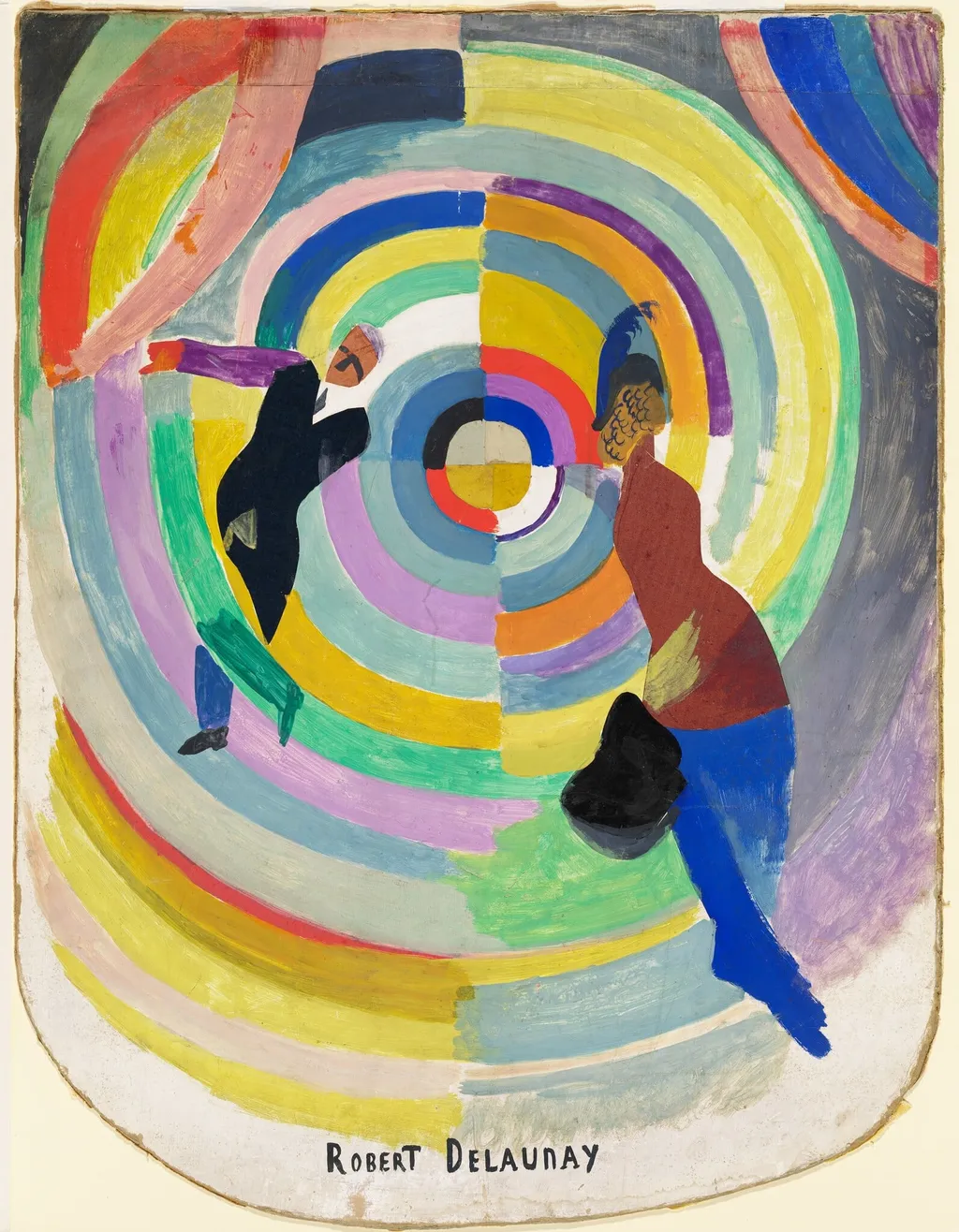
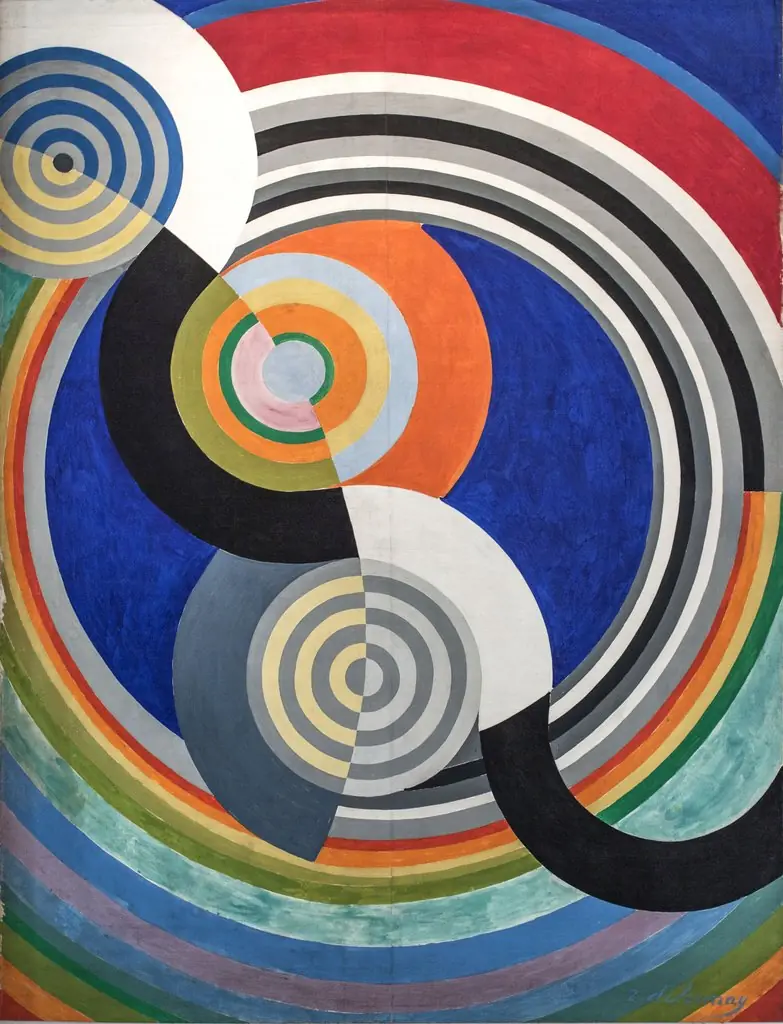
Political Drama is an oil painting by Robert Delaunay. It dates from 1914 and is held in the collection of the National Gallery of Art.
- Inscription
- Inscribed:lower center: ROBERT DELAUNAY
About this work
Overview
The painting remained with the artist's wife, Sonia Delaunay, until at least 1956, passed through the Galerie Fricker in Paris, and was acquired by Mr.
Political Drama is a 1914 painting by the French artist Robert Delaunay, executed in oil and collage on cardboard. Measuring 88.7 by 67.3 centimeters, the work occupies an irregular oval shape within its rectangular support. It is recognized as a significant fusion of current events and avant-garde abstraction, translating a sensational newspaper illustration into a prismatic, concentric composition. The painting remained with the artist's wife, Sonia Delaunay, until at least 1956, passed through the Galerie Fricker in Paris, and was acquired by Mr. and Mrs. Joseph H. Hazen in 1957. It entered the National Gallery of Art in Washington, D.C., as a gift from the Joseph H. Hazen Foundation in 1971, where it is held under accession number 1971.2.1.
Subject & Meaning
The painting derives its subject from a contemporary news event, specifically a cover illustration from the newspaper Le Petit Journal depicting the murder of Gaston Calmette, the editor of Le Figaro, by Henriette Caillaux, the wife of French Finance Minister Joseph Caillaux. Delaunay stripped away most of the narrative details, reducing the scene to two stylized figures and a central, sulfurous circle representing the gunshot explosion. The figure on the left, Mme Caillaux, steps forward with an extended arm, while the figure on the right, Calmette, falls backward holding a dark shape. A vertical axis divides the two figures, and a horizontal axis connects them, capturing the tension of the encounter. The concentric rings become a sign of violence, evoking a marksman's target or scope. Simultaneously, the swirling background patterns and the figures' postures suggest a dance, reflecting Delaunay's experiences at the Bal Bullier dance hall in Paris between 1912 and 1914. Scholars such as David Cottington and Pascal Rousseau have valued the work for engaging with popular national headlines, linking it to Third Republic issues of nationalism, class, and contemporary fashion.
Technique & Style
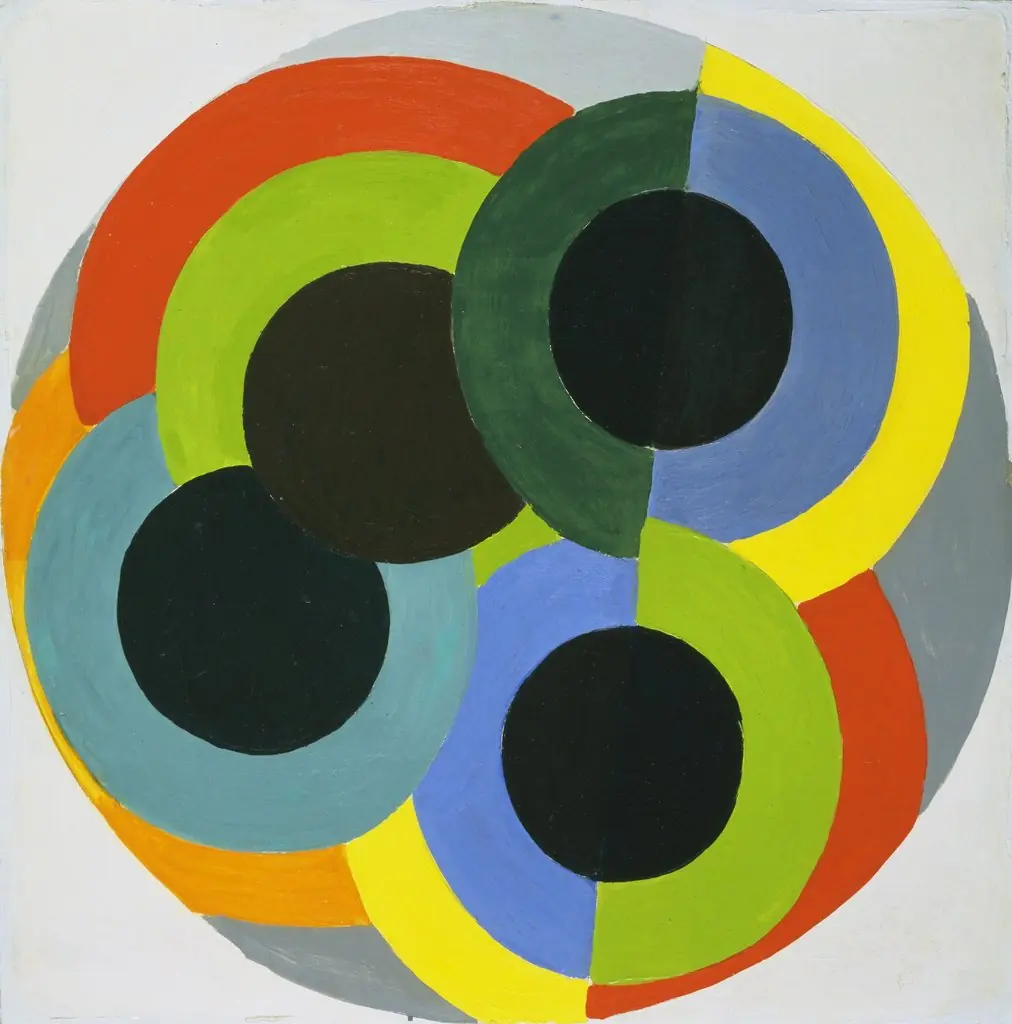
Delaunay employed broad, sweeping brushstrokes to apply vivid, prismatic colors in flat, opaque layers across the cardboard support. The palette features swirling concentric rings of yellow, blue, green, purple, orange, and red, segmented into alternating color blocks. Light is treated evenly and diffusely without modeled shadows, and the surface retains slight texture from the brushwork, with some underlying layers remaining visible. Collage is a crucial component of the technique. The man's jacket and head, the woman's jacket and muff, and the four quadrants of the central circle, now faded, are all cut-and-pasted paper elements. This combination of painting and collage reflects the influence of his wife, Sonia Delaunay, and situates the work within the Orphic Cubism, or Simultaneism, movement that Delaunay co-founded. The style emphasizes the impact of succession, repetition, and contrast on color perception, building on his earlier Circular Forms series and his study of Michel-Eugene Chevreul's color theories. Delaunay described the opposing circular colors in his related First Disk as determining extraordinarily fast vibrations physically perceptible to the naked eye, an experiment he called a first punch, and he carried this idea of visual violence into Political Drama.
History & Provenance
Created in 1914, Political Drama was kept by Sonia Delaunay, who lent it to an exhibition in Leverkusen in 1956. It was subsequently sold by the Galerie Fricker in Paris in 1957 to Mr. and Mrs. Joseph H. Hazen in New York. The Joseph H. Hazen Foundation gifted the work to the National Gallery of Art in 1971. An early photograph reveals that the painting originally bore its title as an inscription at the top of the sheet, balancing the artist's name inscribed at the bottom. At some point, the title inscription was cut off, an alteration that may testify to an attempt to tilt the work's delicate balance of figuration and abstraction toward the latter. Another version of the composition exists in Karlsruhe, though its lack of finish has placed it in the category of a preparatory sketch. The painting's exhibition history includes shows in Paris, Leverkusen, New York, Cambridge, Barcelona, Hannover, Philadelphia, Venice, and Zurich between 1956 and 2018.
Context
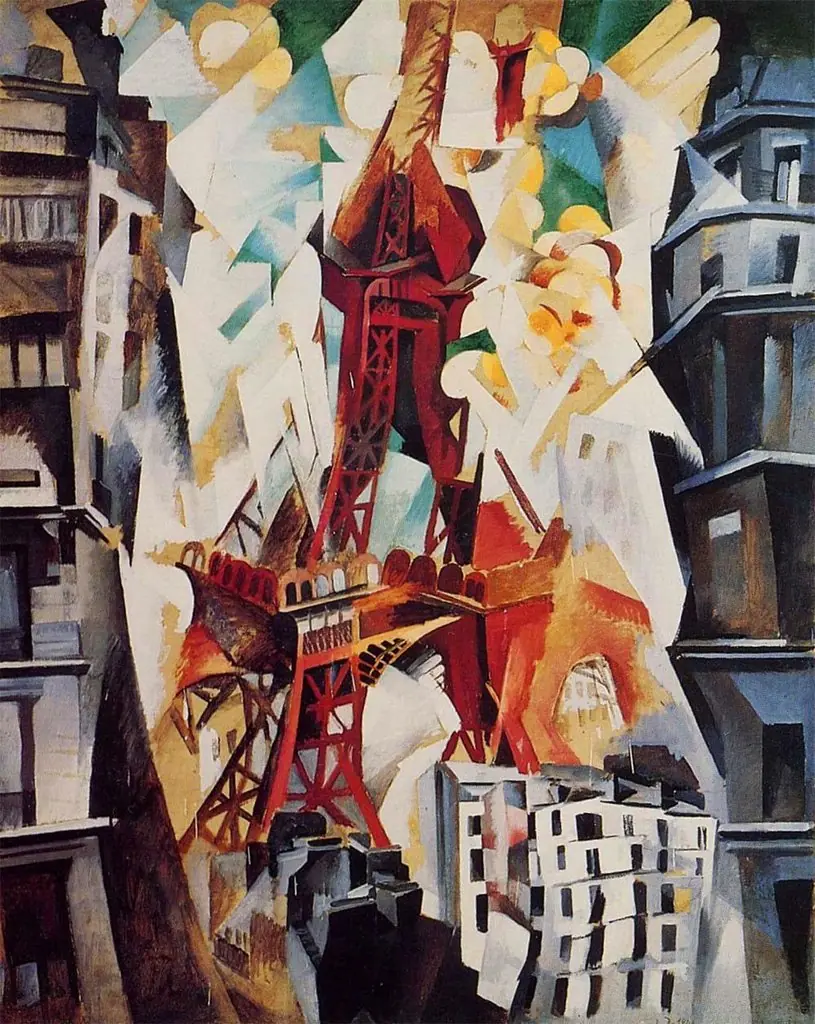
Political Drama emerged during a pivotal phase of Delaunay's career, from 1912 to 1914, when his nonfigurative paintings focused intensely on color. Following his Eiffel Tower series and his Windows and Circular Forms of 1913, this work represents a culmination of his move toward abstraction while retaining a figural core. The poet-critic Guillaume Apollinaire praised Delaunay's use of curving lines and patches of color, naming the style Orphic cubism to emphasize its lyricism and musicality. Delaunay later coined simultaneism to place more emphasis on color theory and Henri Bergson's ideas about the intuitive perception of time and space. Gordon Hughes has drawn formal analogies between the compositional elements of the Le Petit Journal illustration and Delaunay's earlier series, connecting the abstract curves in the upper corners of the painting to similar motifs in the Eiffel Tower and Simultaneous Window series. Rousseau linked the circular form of the gunshot explosion to Delaunay's interest in light sources like the sun and moon in the Circular Forms series and electric lights in Homage to Bleriot, while also noting the elegantly attired figure of Caillaux recalls the fashionable women in his Simultaneous Dress paintings.
Legacy
Political Drama is recognized for its early recognition of the power of concentrically arranged colored forms, a visual strategy that would not be fully exploited again until roughly fifty years later. The target motif anticipated the target paintings of Jasper Johns and Kenneth Noland, as well as the concentric stripe paintings of Frank Stella. However, unlike Delaunay, these later American painters largely sought to exclude political content from their concentric forms. Delaunay's integration of a sensational political event into a radically abstract, simultaneous composition established a distinct precedent for combining pure color abstraction with narrative urgency, securing the work's place as a critical bridge between early Cubist figuration and later twentieth-century abstract movements.
Own this work as a print
Artist & collection

Artist
Robert Delaunay was a French artist of the School of Paris movement; who, with his wife Sonia Delaunay and others, co-founded the Orphism art movement, noted for its use of strong colours and geometric shapes.