Artwork
Stage Design for Cleopatra
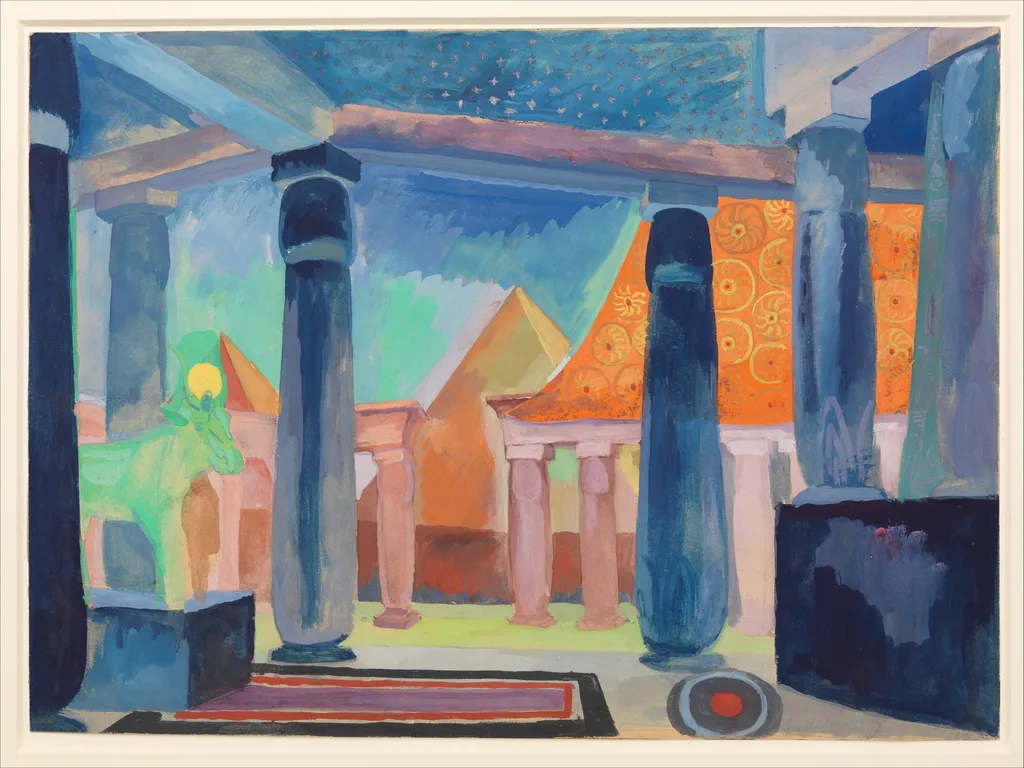
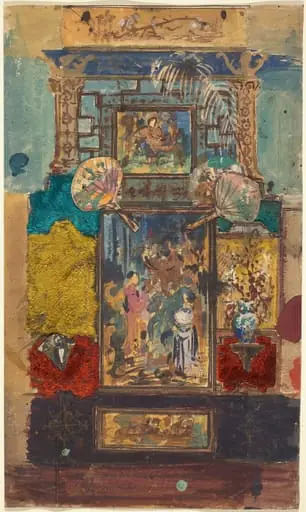
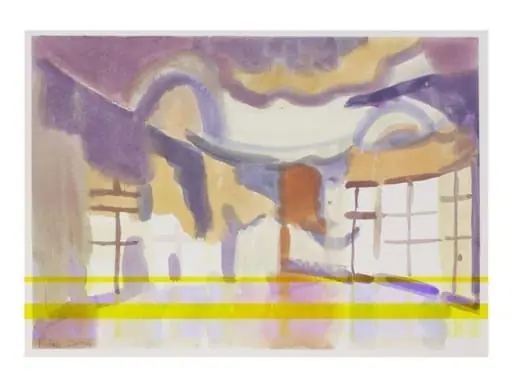
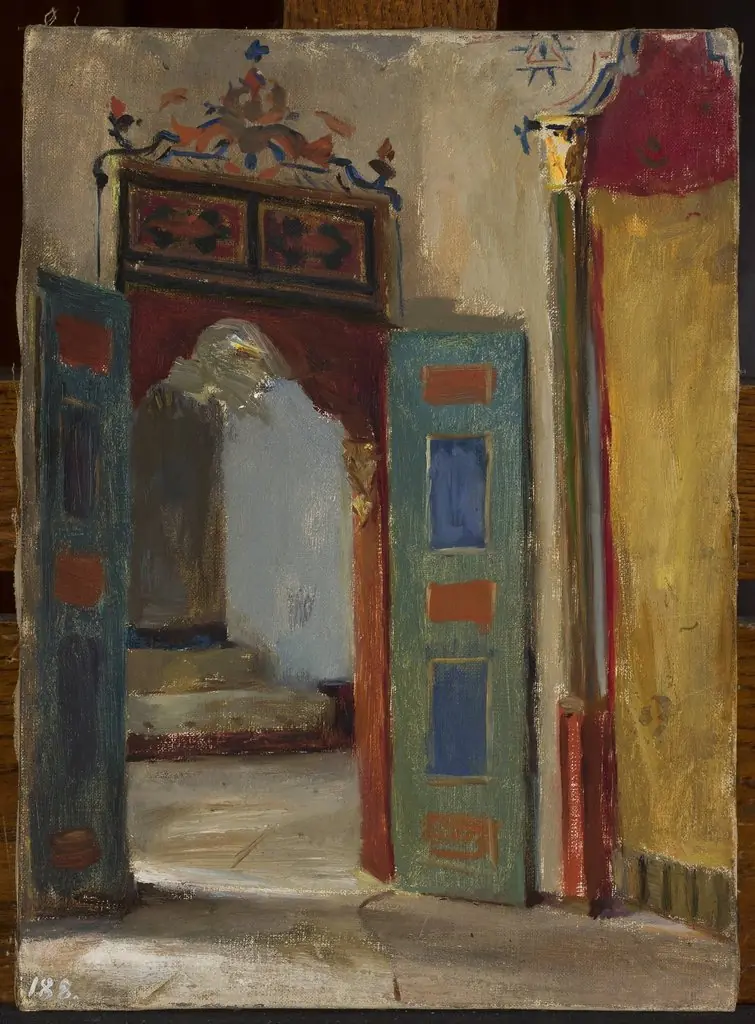
Stage Design for Cleopatra is a gouache painting by the Cubism Synthetic artist Robert Delaunay. It dates from 1918 and is held in the collection of the Metropolitan Museum of Art.
About this work
Subject & Meaning
The composition utilizes these monumental structures to establish the historical location for a production concerning Cleopatra.
Created in 1918, this stage design by Robert Delaunay depicts an architectural setting evocative of ancient Egypt, specifically featuring a column and the Great Pyramid of Giza. The composition utilizes these monumental structures to establish the historical location for a production concerning Cleopatra. Executed in graphite, watercolor, gouache, and metallic paint on paper, the work combines geometric forms with luminous color to represent the grandeur of the pharaonic era.
The inclusion of the pyramid serves as a primary iconographic marker, immediately situating the viewer within the specific cultural and geographic context of the play's narrative. Through this synthesis of recognizable landmarks and abstracted architectural elements, the design functions as a visual shorthand for the opulence and mystery associated with the Egyptian queen.
Technique & Style
Created in 1918, Robert Delaunay's Stage Design for Cleopatra is executed on paper using a complex combination of watercolor, gouache, and metallic paint, supplemented by graphite. The work measures 34.9 by 47.3 centimeters and functions as a painting that integrates architectural elements such as columns and pyramids, including the Great Pyramid of Giza. The inclusion of metallic paint alongside traditional water-based pigments suggests an experimental approach to surface texture and light, characteristic of Delaunay's interest in visual dynamics.
While classified broadly as a painting, the specific use of paper as a support and the layering of opaque gouache with transparent watercolor and metallic accents define its material composition. The graphite underdrawing likely provided the structural framework for the depicted architectural forms before the application of color.
History & Provenance
Robert Delaunay created the work titled Stage Design for Cleopatra in 1918. Executed on paper, the piece combines graphite, watercolor, gouache, and metallic paint to depict architectural elements including columns and the Great Pyramid of Giza. The artwork measures 34.9 cm in height and 47.3 cm in width.
While the specific commissioning context or original patron is not detailed in the available records, the work is currently held in the collection of the Metropolitan Museum of Art. The dating of the piece is consistently recorded as 1918 across sources, establishing its creation during the latter part of World War I. The work is classified as a painting despite its medium mix, reflecting Delaunay's engagement with stage design concepts during this period.
Context
Robert Delaunay’s Stage Design for Cleopatra (1918) exemplifies his interdisciplinary approach, merging painting with theatrical design through layered media of watercolor, gouache, metallic paint, graphite, and paper. The work depicts Egyptian architectural motifs such as a column and the Great Pyramid, reflecting Delaunay’s fascination with geometric form and exotic subject matter. Classified as a painting within the Metropolitan Museum of Art collection, it situates Delaunay’s practice at the intersection of fine art and decorative arts, a focus noted in scholarship on his later career.
Its integration of stagecraft and modernist aesthetics marks a significant contribution to early 20th‑century art history, illustrating how avant‑garde painters engaged with performance spaces.
Overview
Robert Delaunay's 1918 work, Stage Design for Cleopatra, is a preparatory drawing for a theatrical production. This graphite piece, now housed at The Metropolitan Museum of Art, conceptualizes a vibrant and architecturally distinct setting. It blends ancient Egyptian motifs with a modernist aesthetic, creating a dynamic backdrop for the dramatic narrative. The design suggests a blend of tangible stage elements and painted illusions.
Own this work as a print
Artist & collection

Artist
Robert Delaunay was a French artist of the School of Paris movement; who, with his wife Sonia Delaunay and others, co-founded the Orphism art movement, noted for its use of strong colours and geometric shapes.