Artwork
Sacrifice of Abraham
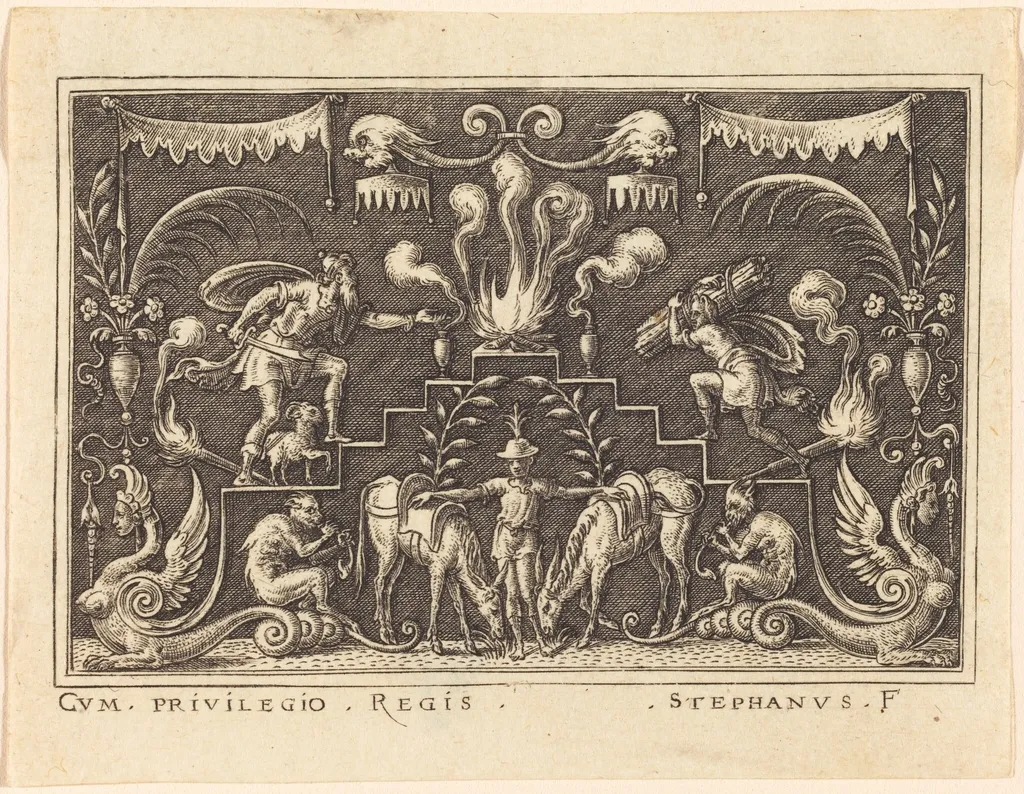
Sacrifice of Abraham is an ink print by the Renaissance artist Etienne Delaune. It dates from 1551 and is held in the collection of the National Gallery of Art.
About this work
Overview
Three angels intervene in the scene: one grasps Abraham's arm to stay the blow, another points upward toward the heavens, and the third observes the event.
Etienne Delaune's 1551 engraving, Sacrifice of Abraham, depicts the biblical moment where the patriarch prepares to sacrifice his son Isaac before divine intervention. The composition centers on Abraham kneeling with a raised knife above the bound Isaac, who lies prone on the ground. Three angels intervene in the scene: one grasps Abraham's arm to stay the blow, another points upward toward the heavens, and the third observes the event.
The figures are arranged within a rocky landscape featuring a tree and animals, likely the ram destined for the sacrifice, framed by swirling clouds that suggest the divine presence. Executed with the intricate line work characteristic of French Mannerist engraving, the work demonstrates Delaune's mastery of complex figural grouping and dramatic tension. Created during the height of his career as a goldsmith and engraver for the French court, this print reflects the period's interest in classical and biblical narratives rendered with sophisticated detail.
The piece stands as a significant example of mid-16th-century religious printmaking, illustrating the artist's ability to translate sculptural forms into the linear medium of engraving.
Subject & Meaning
The work visualizes the test of faith recounted in Genesis, emphasizing divine intervention through the angels’ presence. One angel holds a staff, another points upward, and the third gazes downward, suggesting a narrative of halted violence and the triumph of obedience over sacrifice. The surrounding natural elements reinforce the tension between human action and heavenly oversight.
Technique & Style
Executed as an intaglio engraving, Delaune incised fine lines into a copper plate, achieving intricate textures and tonal contrasts. The dense hatching creates depth in the figures and the atmospheric clouds, while the ornamental border showcases the artist’s skill in decorative detailing. The precise line work reflects the Northern Renaissance’s emphasis on meticulous craftsmanship.
History & Provenance
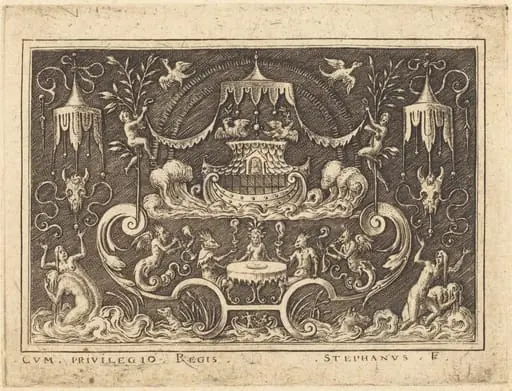
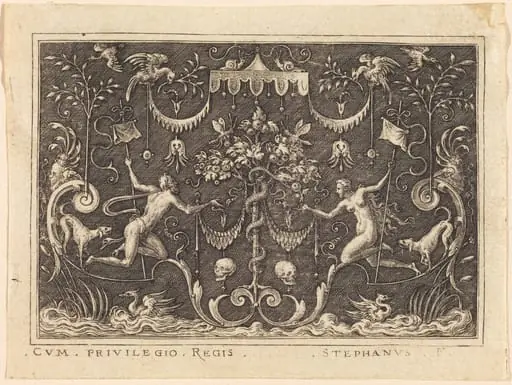
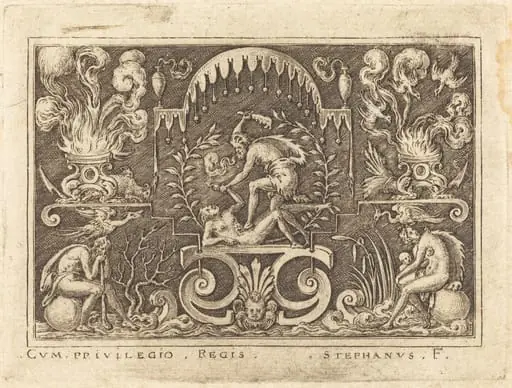
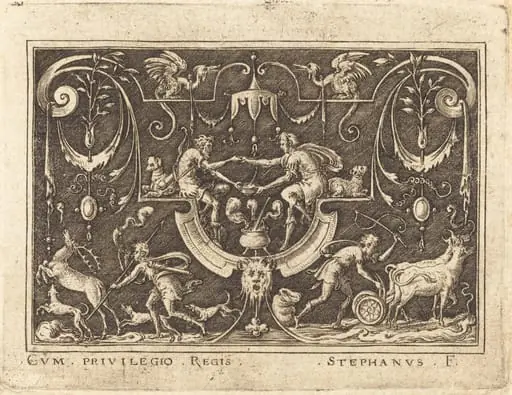
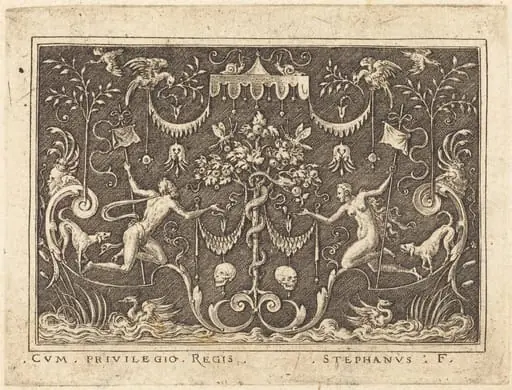
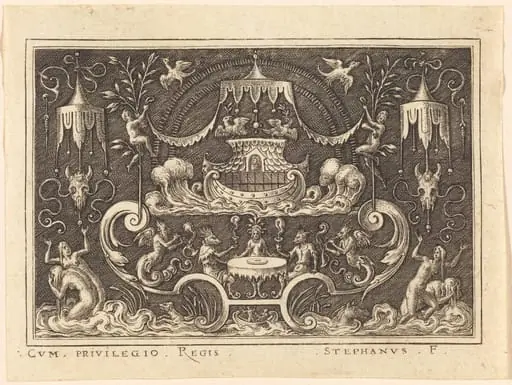
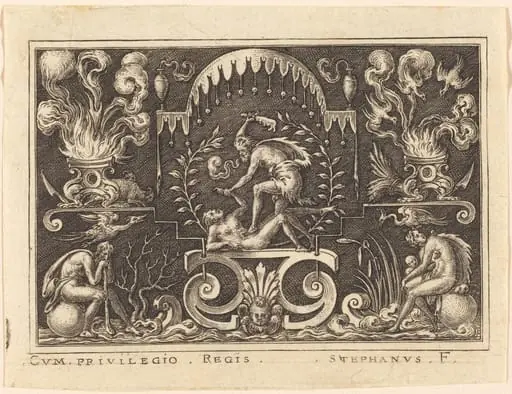
A Latin inscription at the lower margin reads Cum Privilégio Regis, indicating the print was issued under a royal privilege, a common practice to control reproduction and confer prestige. This suggests the engraving was intended for a courtly audience and circulated as a sanctioned work of art in the mid‑16th century.
Own this work as a print
Artist & collection