Artwork
The Skeletons
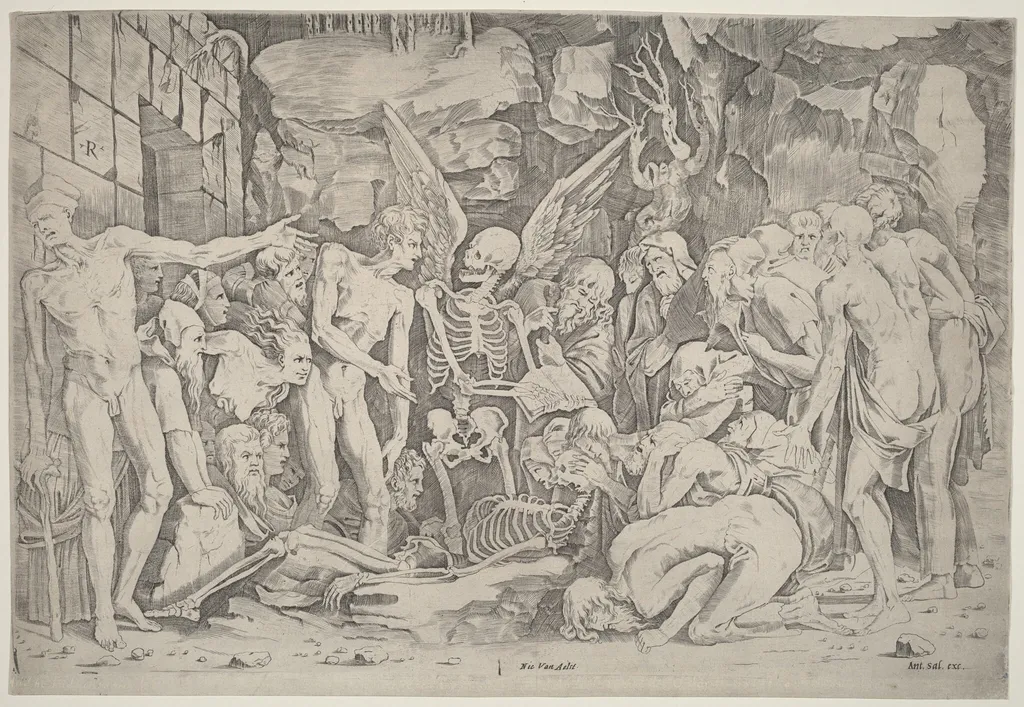
The Skeletons is an ink print by the Renaissance artist Marco Dente. It dates from 1518 and is held in the collection of the National Gallery of Art.
- Inscription
- Inscribed:upper left in plate [on wall]: R; lower center in plate: Nic Van Aelst.; lower right in plate: Ant. Sal. exc.; by later hand, along lower margin, in transparent script: And he said unto me, [Son of man,] can these bones live? And I answered, O Lord GOD, thou knowest. [Ezekiel 37:14]; by later hand, center verso, in graphite: les squelettes / Marco da Ravenna apres Baccio Bandinelli / Bartsch 425; by later hand, lower left verso, in graphite: Maco Dente (da Ravenna) / B. 425 . Ngl. Mon. IV pag. 998 Ill. 7-III / Früjar Abdr. von [Entpflasfürtig?] der Edr. v, Aelsts; by later hand, lower right verso, in blue pencil: 1491
About this work
Overview
The Skeletons is an engraving on laid paper created by Marco Dente around 1518 in Rome, exemplifying the city's early 16th-century reproductive printmaking practices.
Subject & Meaning
The engraving depicts a macabre, crowded scene of skeletal figures alongside living individuals in a rocky, textured background. The mix of poses, expressions, and interactions (including a guiding skeleton) conveys a dramatic, emotive narrative, though its specific interpretation remains open.
Technique & Style
Dente employed fine linework, sharp lines, and shading to achieve depth and drama, characteristic of Renaissance printmaking's expressive tendencies. The style reflects the influence of sculptural restorations on his work.
History & Provenance
Marco Dente, a Ravenna native, created the work within Marcantonio Raimondi’s influential circle in Rome. Dente’s life was cut short during the Sack of Rome in 1527.
Context
The Skeletons aligns with the broader Renaissance fascination with mortality and the emotional potency of art. Its themes and techniques place it within the artistic currents of early 16th-century Rome.
Legacy
While specific lasting impacts of The Skeletons on subsequent art movements are not prominently documented, it remains a notable example of early 16th-century Roman printmaking practices and Dente’s contribution to the genre.
Own this work as a print
Artist & collection

Artist
Marco Dente da Ravenna (1493–1527), usually just called Marco Dente, was an Italian engraver born in Ravenna in the latter part of the 15th Century.

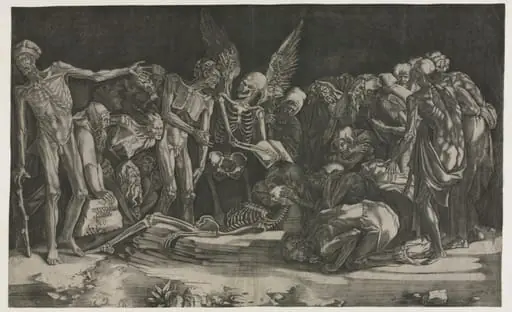 Skeletons, also known as Allegory of Death and Fame
 The Circle of the Corrupt Officials; the Devils Tormenting Ciampolo
 The Circle of the Corrupt Officials; the Devils Tormenting Ciampolo
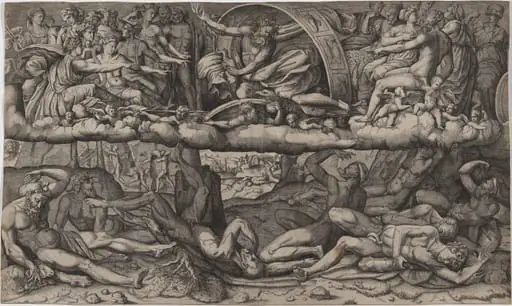 Jupiter Defeating the Giants
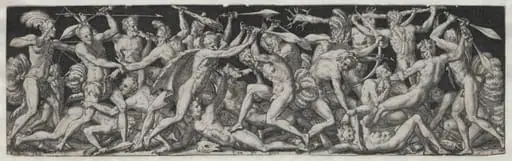 Combats and Triumphs No. 7
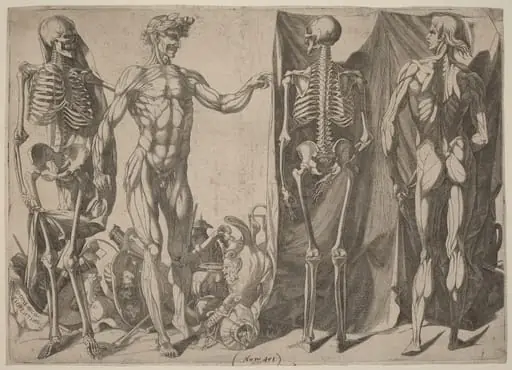 Squelettes et Ecorches
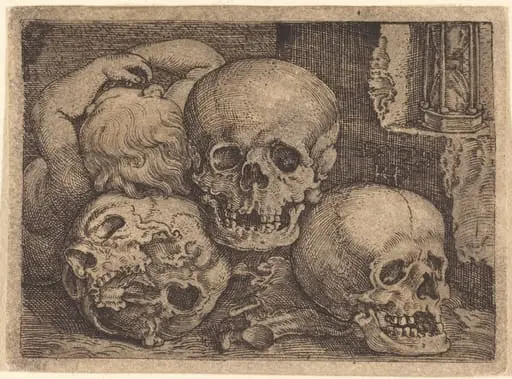 Child with Three Skulls
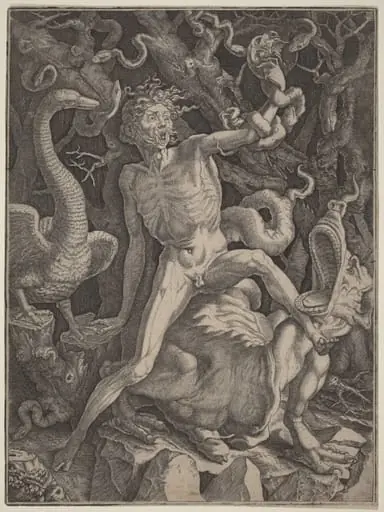 Fury
Fury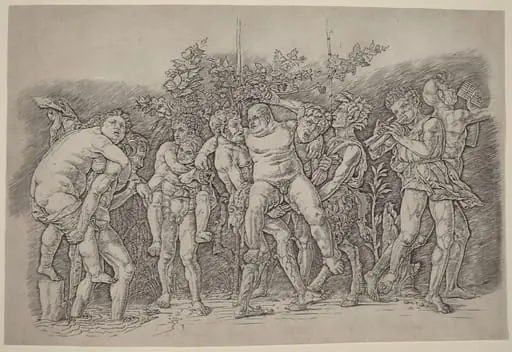 Bacchanal with Silenus
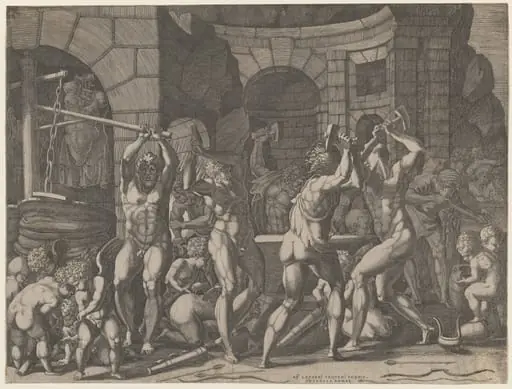 Vulcan and Cyclops Forging Cupid's Arrows
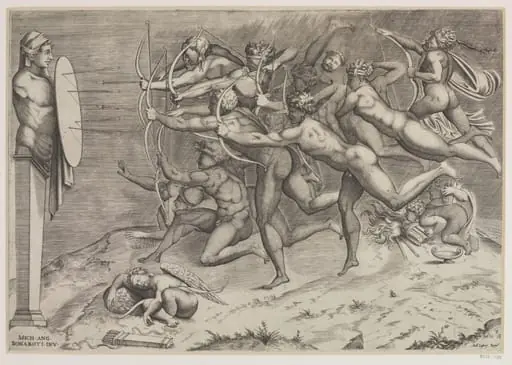 The Archers