Artwork
The penitent Mary Magdalene
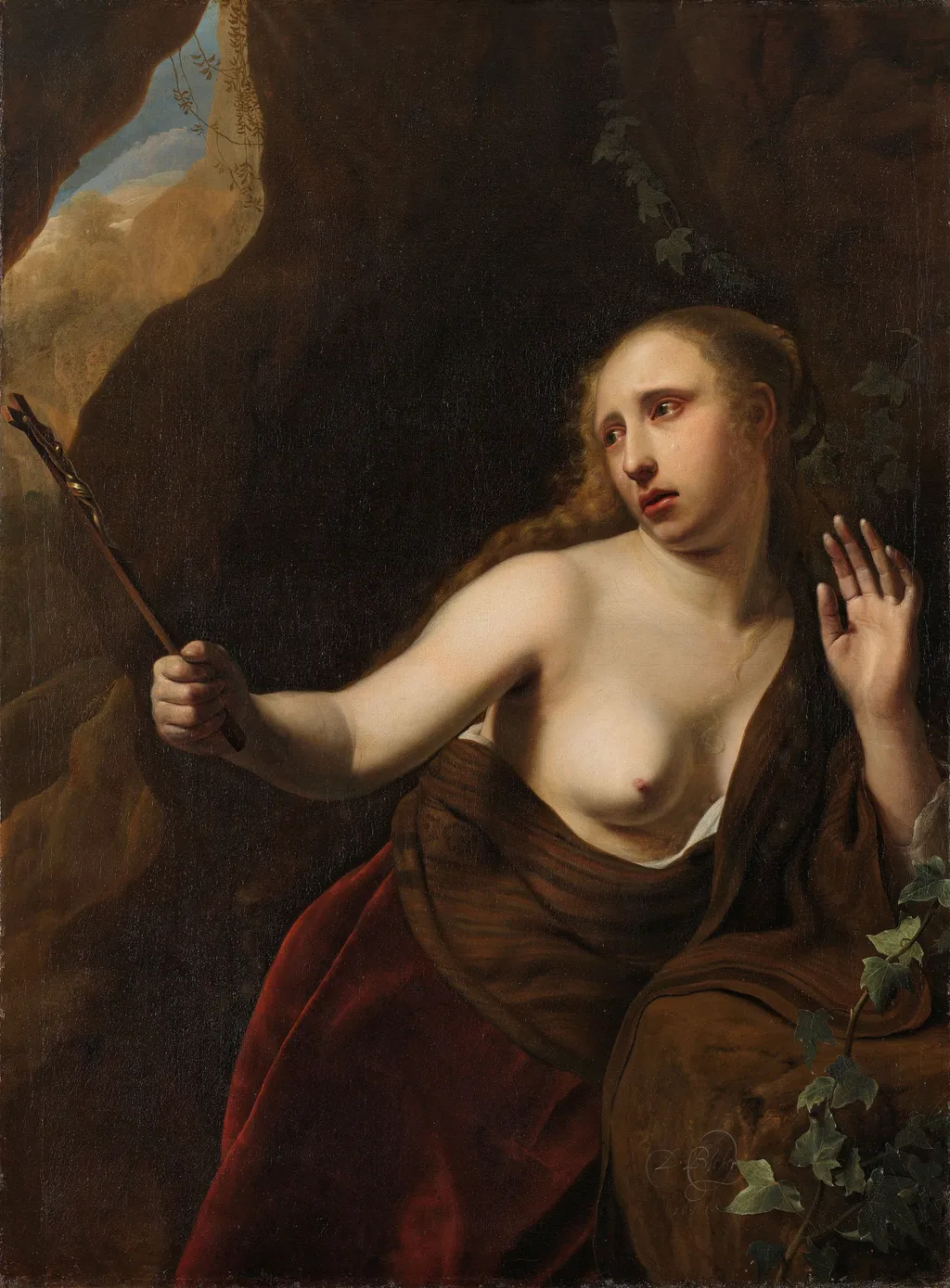
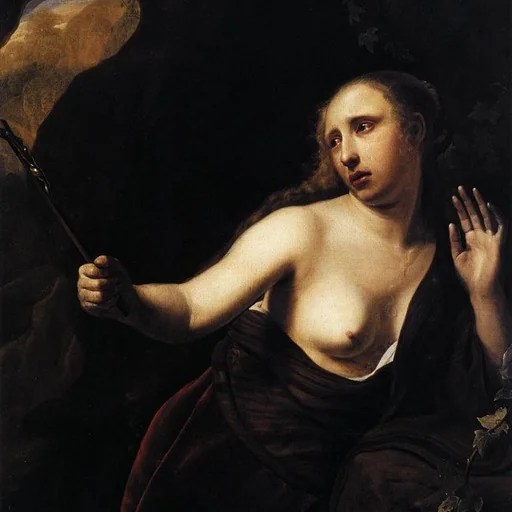
The penitent Mary Magdalene is an oil painting by the Dutch Golden Age artist Dirck Bleker. It dates from 1651 and is held in the collection of the Rijksmuseum.
About this work
Subject & Meaning
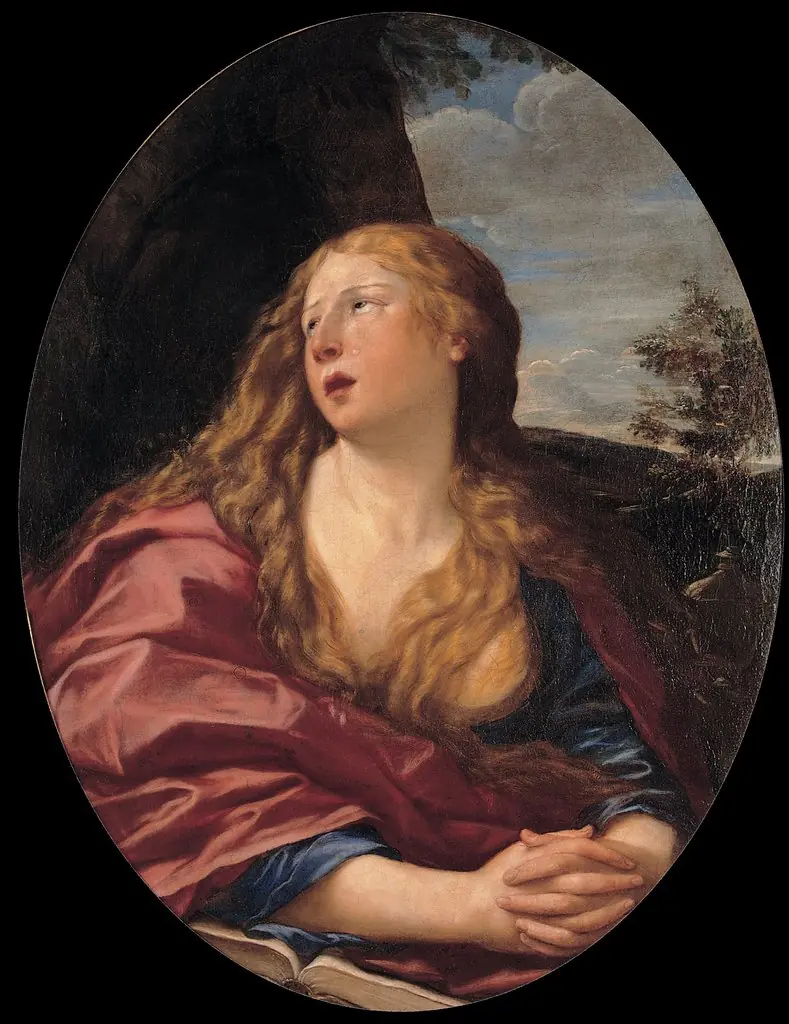
The painting portrays Mary Magdalene as a penitent figure, a devotional subject rooted in the long-standing Christian tradition of the Penitent Magdalene.
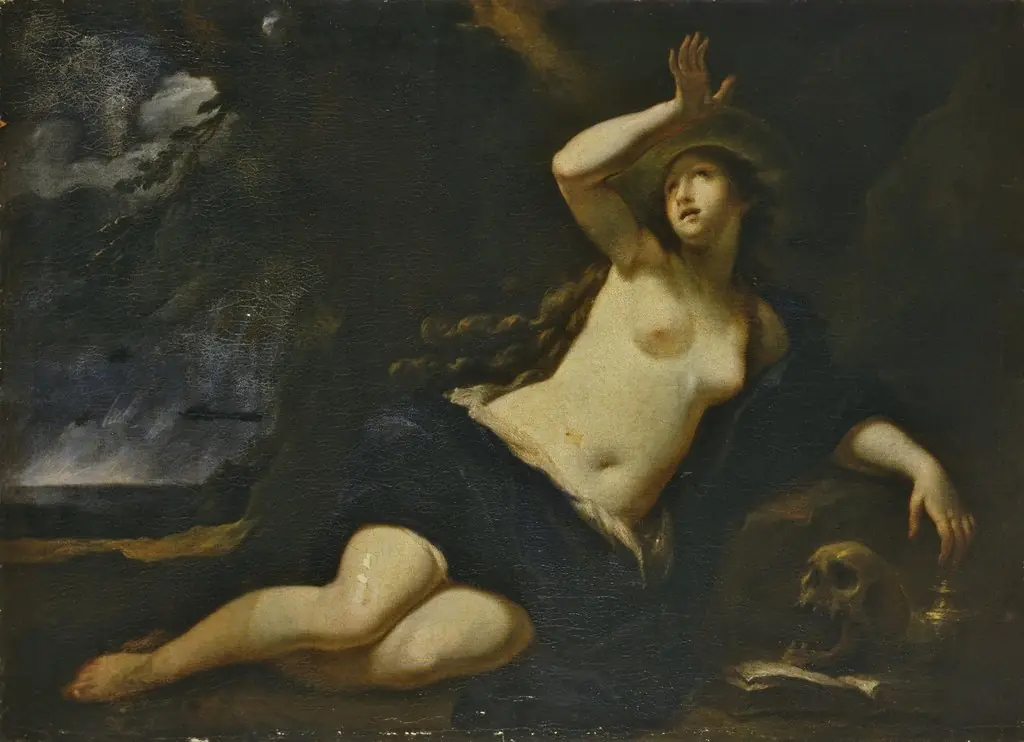
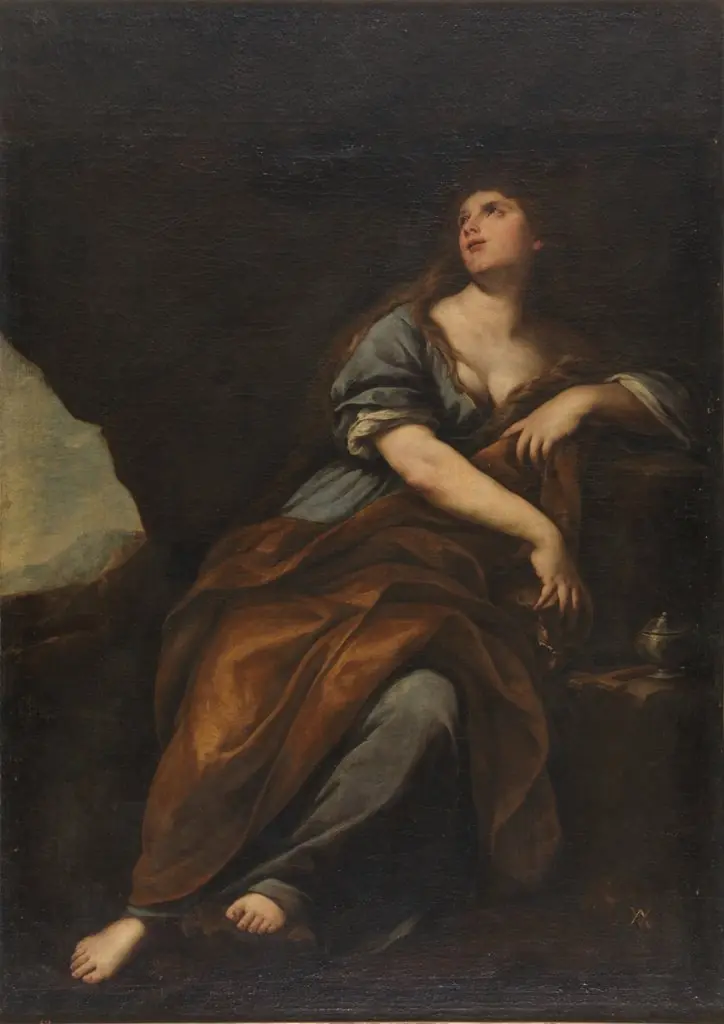
The painting portrays Mary Magdalene as a penitent figure, a devotional subject rooted in the long-standing Christian tradition of the Penitent Magdalene. She is depicted as a woman with long waist-length hair, shown with partial nudity, and is associated with mortification of the flesh, a motif expressing renunciation of worldly vanity. A crucifix appears in the composition, serving as the focal point of her contemplation and repentance, while a cave setting situates her in the wilderness exile traditionally linked to her legend.
Ivy (Hedera) is included among the depicted elements, carrying symbolic associations with fidelity and eternal life. The work is based on the established Penitent Magdalene iconographic type, and the sitter has been identified as Marie Jonas de la Motte, suggesting the painting may also function as a personalized devotional portrait blending sacred imagery with the patron's likeness.
Technique & Style
Dirck Bleker's 1651 depiction of the penitent Mary Magdalene is executed in oil paint on canvas, a standard support for mid-seventeenth-century Amsterdam religious painting. The work measures 112 cm in height by 83 cm in width, an upright format suited to the half-length devotional composition. Stylistically, the painting conforms to the established iconography of the Penitent Magdalene tradition, presenting the saint waist-length with flowing hair, a partially draped torso, and a crucifix as central attributes of meditation and mortification.
The setting incorporates a cave with ivy, reinforcing the ascetic wilderness context typical of the subject. Painted in Amsterdam in 1651, the canvas reflects Bleker's engagement with the devotional image, using the layered translucency of oil glazes to model flesh tones and the textures of hair and drapery. The medium allows for the subtle tonal transitions characteristic of Dutch fine painting of the period.
History & Provenance
The penitent Mary Magdalene is an oil-on-canvas painting produced by Dirck Bleker in 1651, made in Amsterdam. The work entered the holdings of the Rijksmuseum, where it remains part of the collection today. The painting depicts Marie Jonas de la Motte as the Magdalene figure alongside conventional attributes such as the crucifix, cave, ivy, and the motif of mortification of the flesh.
Beyond the documented creation date, place of production, and current institutional ownership, the available sources do not detail an earlier ownership chain, a specific commissioner, or intervening provenance prior to the Rijksmuseum's acquisition.
The work, executed on canvas, measures 112 cm in height and 83 cm in width. While the provided sources confirm the museum's ownership and the physical location of the artwork, they do not specify a unique inventory or accession number for the piece. Furthermore, the available documentation does not contain details regarding a specific exhibition history or past display schedules for this particular religious painting.
Overview
Dirck Bleker's oil painting, The penitent Mary Magdalene, was completed in 1651 during the Dutch Golden Age. This work depicts the biblical figure of Mary Magdalene within a cave, engaged in a moment of profound reflection. The composition highlights her introspective state, characteristic of devotional art from the period. It remains a notable example of Bleker's output and is housed in the Rijksmuseum collection.
Own this work as a print
Artist & collection
Artist
Dirck Bleker (1621 in Haarlem – 1702 in Haarlem), was a Dutch Golden Age painter.