Artwork
Pipe smoker
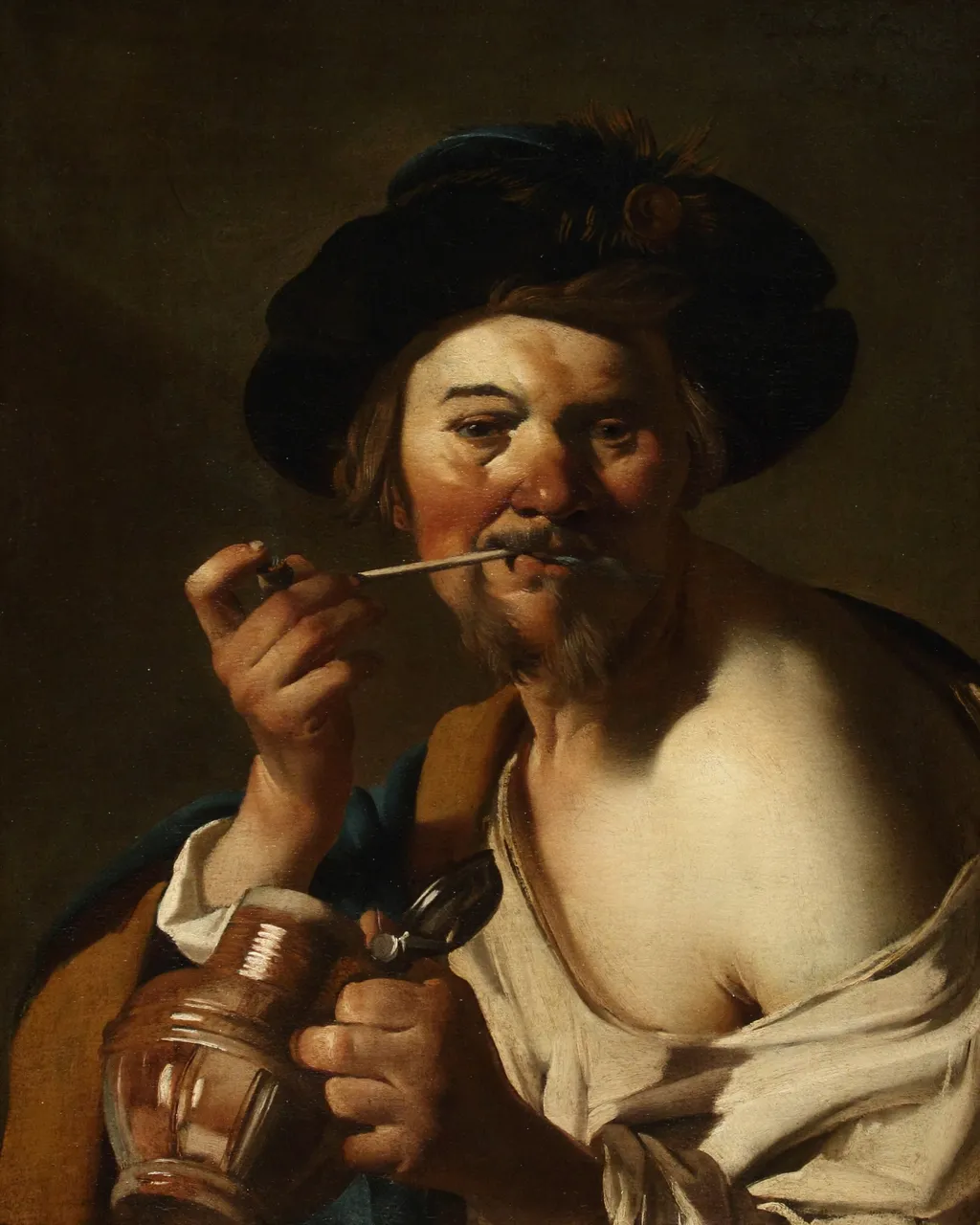
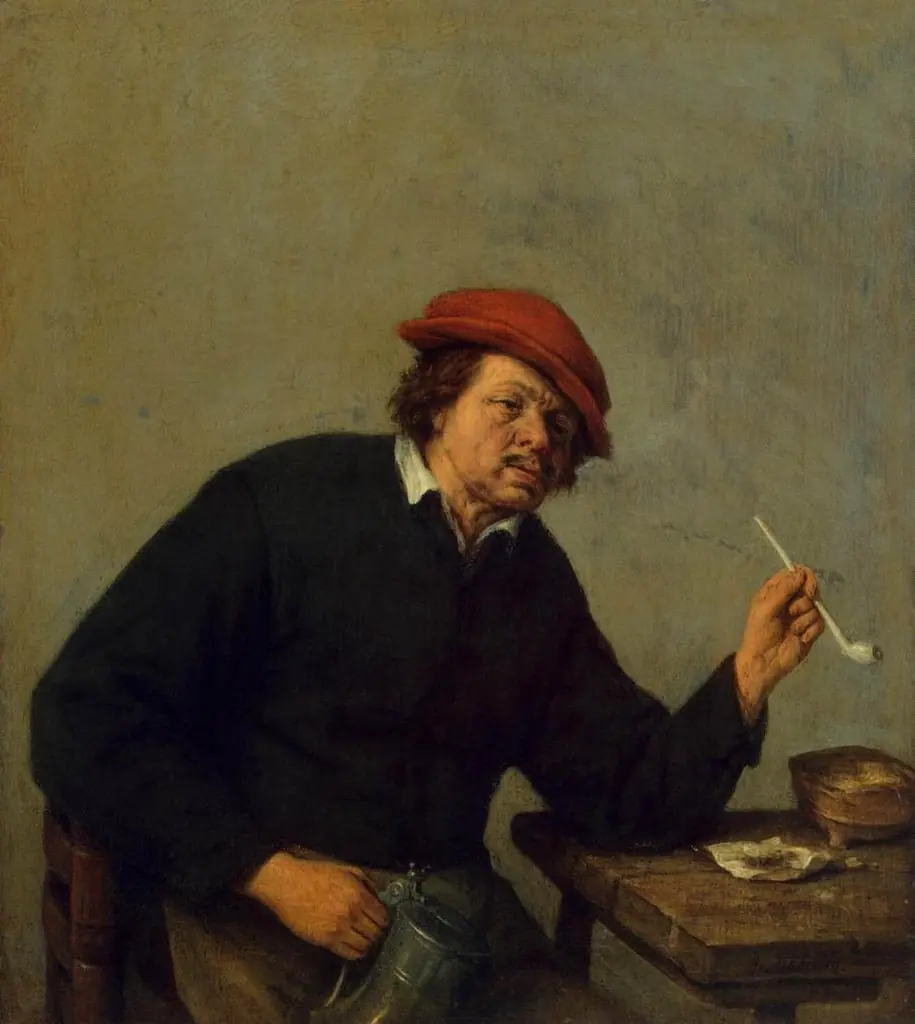
Pipe smoker is an oil painting by the Dutch Golden Age artist Dirck van Baburen. It dates from 1623 and is held in the collection of the Musée des Beaux-Arts de Bordeaux.
About this work
Overview
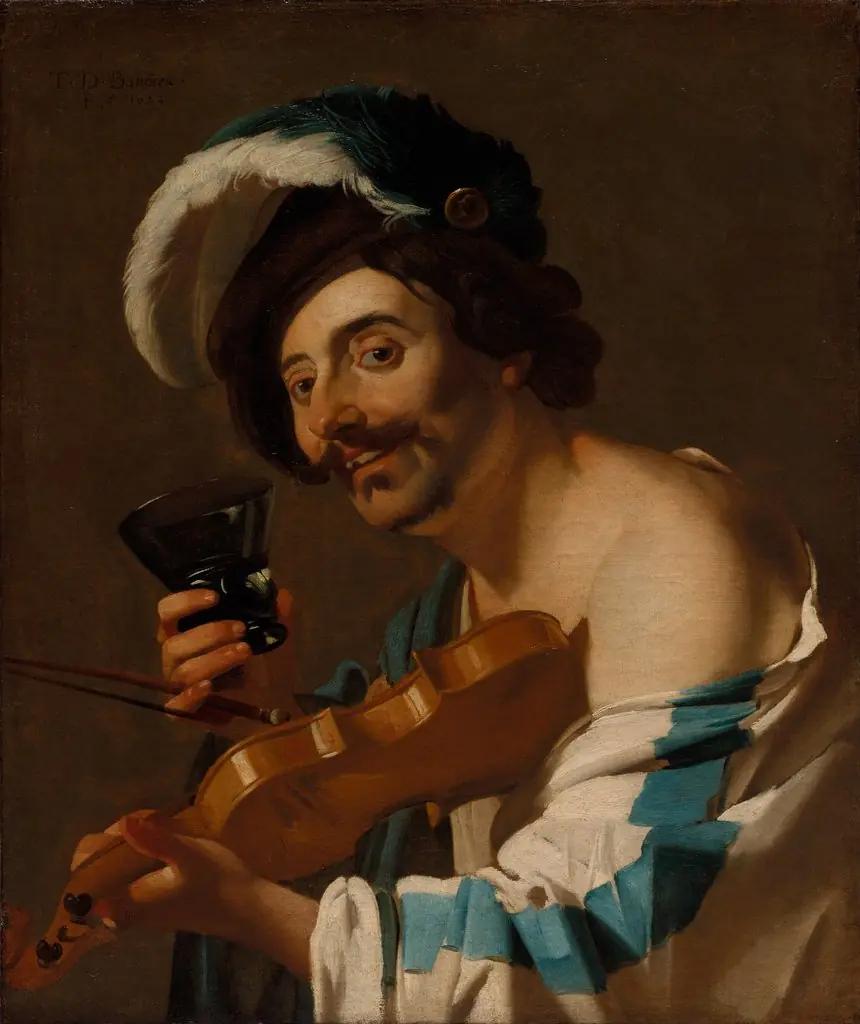
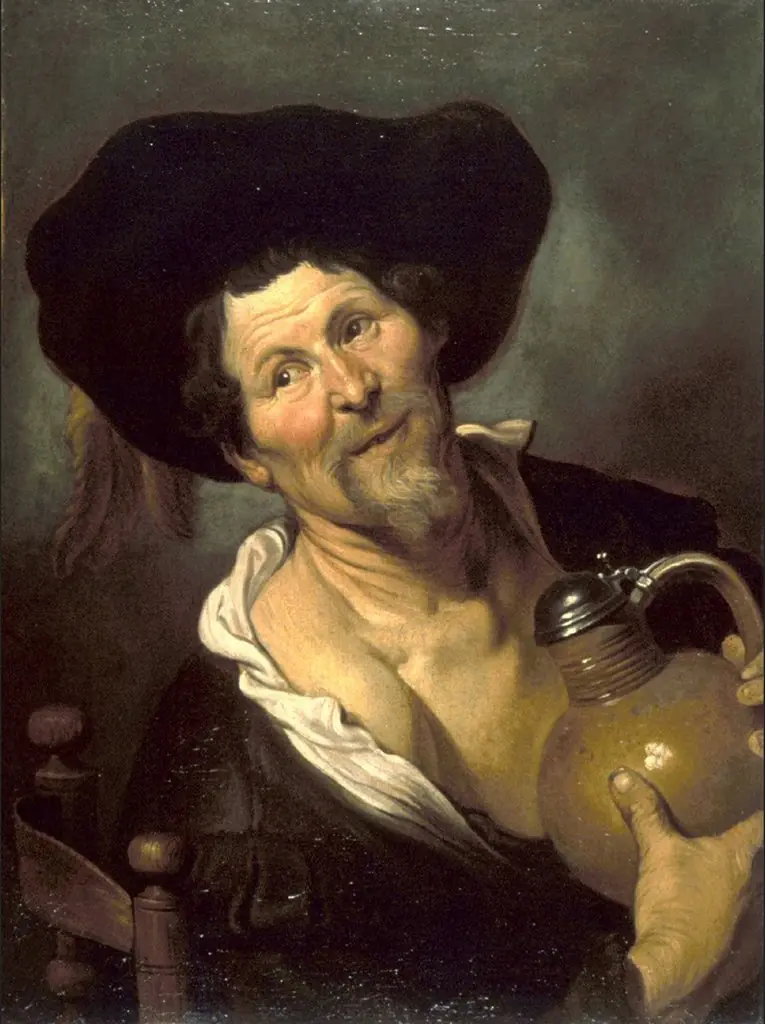
The figure is shown shirtless, with a blue and white cloth draped over his shoulder, holding a jug in one hand while a pipe rests in his mouth.
Dirck van Baburen's 'Pipe Smoker,' executed in 1623, is a half-length genre portrait depicting a man engaged in the act of smoking. The figure is shown shirtless, with a blue and white cloth draped over his shoulder, holding a jug in one hand while a pipe rests in his mouth. Van Baburen employs a dramatic chiaroscuro technique, characteristic of the Utrecht Caravaggisti movement, where a strong light source illuminates the subject's face and torso against a deep, featureless dark background.
This lighting accentuates the textures of the skin and fabric while isolating the figure from any specific setting. Created during the artist's final years in Utrecht after his return from Rome, the work reflects the influence of Caravaggio and his followers, focusing on the realistic depiction of everyday life and the psychological presence of the sitter. The painting exemplifies the Dutch interest in genre scenes of the early 17th century, capturing a moment of casual leisure with a sense of immediacy and tangible physicality.
Subject & Meaning
The central figure is a shirtless man wearing a brimmed hat, clutching a clay pipe to his lips and a ceramic jug in his other hand. A blue‑and‑white cloth drapes over his shoulder, suggesting a domestic setting. The composition emphasizes the everyday act of pipe‑smoking, reflecting the period’s interest in genre scenes that celebrate ordinary life.
Technique & Style
Van Baburen employs a pronounced chiaroscuro, allowing the light to strike the sitter’s face and the jug while the surrounding space recedes into shadow. This contrast creates a three‑dimensional effect and heightens the tactile quality of the objects. The brushwork is relatively smooth, typical of Dutch Golden Age portraiture, yet the dramatic lighting hints at Caravaggesque influences.
History & Provenance
Created in the early 1620s, the painting entered the French museum’s holdings in the 20th century, though earlier ownership records are sparse. Its presence in the Musée Marmottan Monet links it to a broader collection of Dutch 17th‑century works, where it has been displayed alongside other genre pieces by van Baburen and his contemporaries.
Context
The work belongs to a period when Dutch artists increasingly turned to scenes of daily routine, moving away from purely religious or mythological subjects. Van Baburen, a member of the Utrecht Caravaggisti, blended local genre conventions with the stark lighting borrowed from Caravaggio, positioning this portrait within the cross‑currents of Northern European and Italian Baroque art.
Own this work as a print
Artist & collection