Artwork
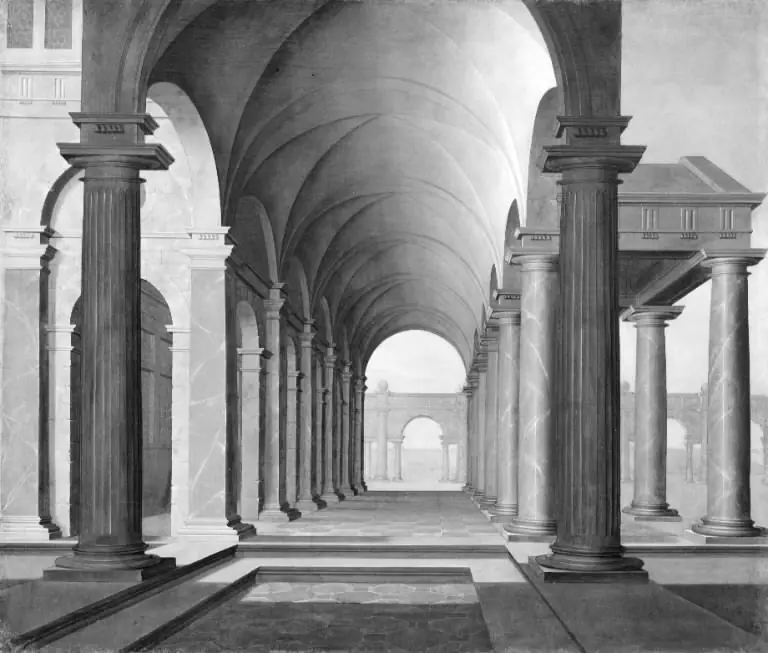
Fantasy architecture with steps and columns
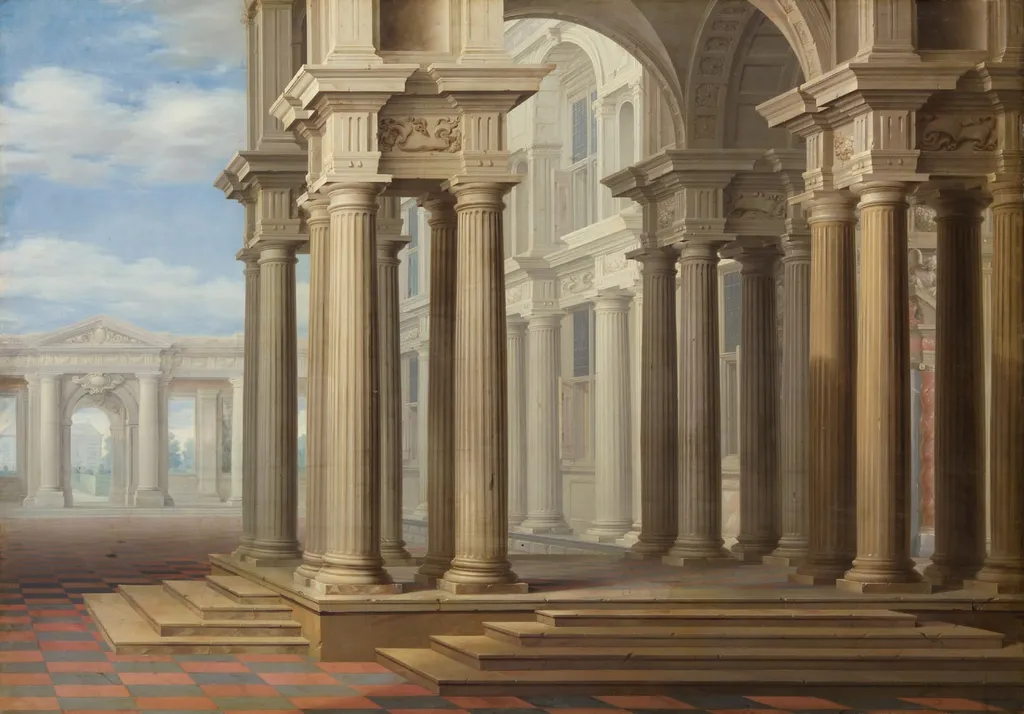
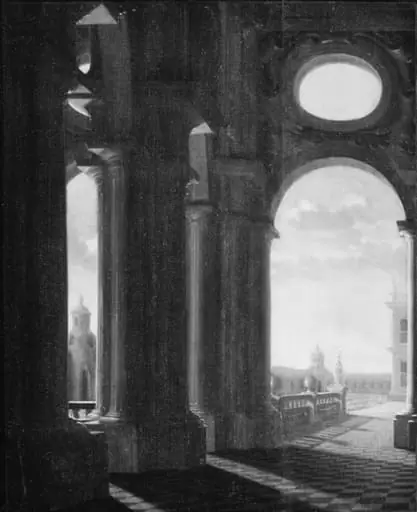
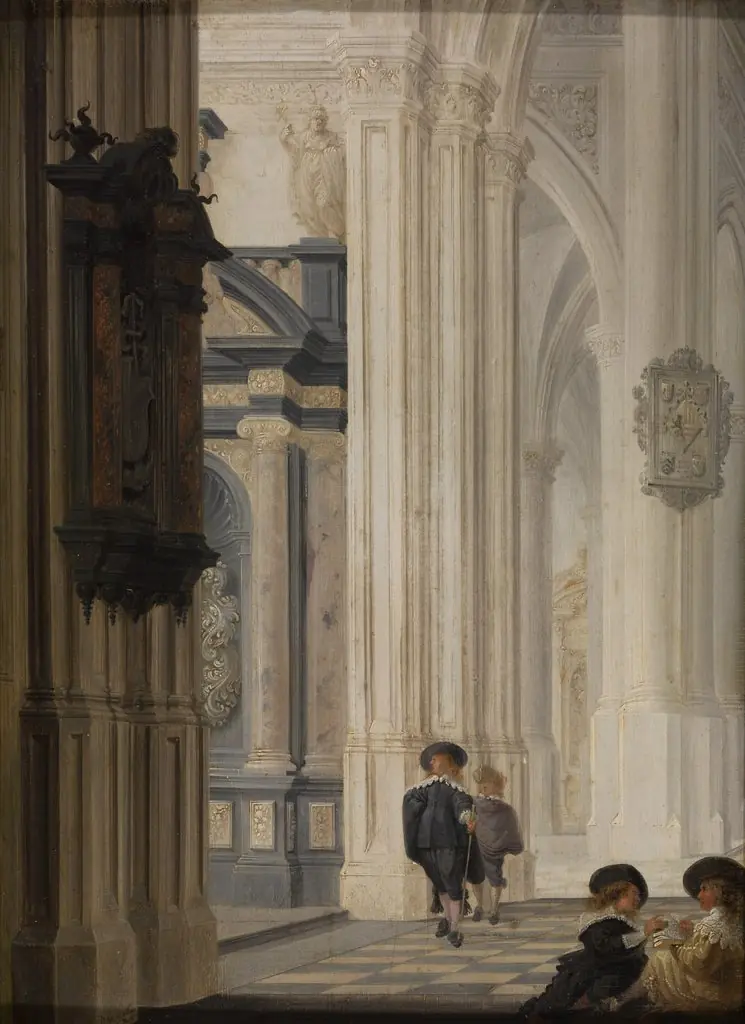
Fantasy architecture with steps and columns is an oil painting by the Dutch Golden Age artist Dirck van Delen. It dates from 1655 and is held in the collection of the Kunsthistorisches Museum.
About this work
Overview
Painted in 1655 by Dirck van Delen, this oil-on-canvas work presents a fictional architectural ensemble dominated by towering columns and grand staircases.
Painted in 1655 by Dirck van Delen, this oil-on-canvas work presents a fictional architectural ensemble dominated by towering columns and grand staircases. Van Delen, a Dutch artist of the Golden Age, devoted his career to meticulously rendered imaginary structures. The painting belongs to a niche tradition of architectural fantasy, distinct from topographical realism, and is now part of the Kunsthistorisches Museum’s collection in Vienna.
Subject & Meaning
The scene depicts no real location but instead assembles classical elements, columns, arches, and tiled steps, into an idealized, monumental space. It evokes the grandeur of ancient or Renaissance architecture without referencing any specific building. The composition suggests order, permanence, and human ambition, reflecting contemporary intellectual interests in symmetry and classical form, rather than narrative or religious themes.
Technique & Style
Van Delen employs precise linear perspective and subtle chiaroscuro to create depth and volume. Light falls diagonally across the white columns, casting defined shadows that model their surfaces and enhance the illusion of three-dimensionality. The tiled floor, rendered in red and blue hues, anchors the composition with geometric regularity. Brushwork is controlled and detailed, emphasizing architectural precision over expressive gesture.
History & Provenance
Created during the height of the Dutch Golden Age, the painting reflects van Delen’s established reputation for architectural fantasies. It entered the Kunsthistorisches Museum’s collection in Vienna, likely through Habsburg acquisitions or later donations. No record of earlier ownership or exhibition history is widely documented, but its survival in a major European collection underscores its enduring recognition among connoisseurs of architectural painting.
Context
In mid-17th-century Holland, artists increasingly turned to imagined interiors and exteriors as subjects, separate from religious or domestic scenes. Van Delen’s work aligns with contemporaries like Pieter Neeffs and Hendrik van Steenwijk, who specialized in church and palace views. These paintings catered to a market fascinated by spatial complexity and classical ideals, even as the Republic embraced secular themes.
Legacy
Van Delen’s paintings, though not widely known today, contributed to a specialized genre of architectural fantasy that influenced later 18th-century capriccios and neoclassical design. His precise rendering of perspective and light provided a visual vocabulary for imagining ideal spaces. While not revolutionary, his work remains a quiet testament to the Dutch fascination with structure, order, and the art of illusion.
Artist & collection
Artist
Dirck van Delen or Dirck Christiaensz van Delen (c. 1605 – 16 May 1671) was a Dutch painter who specialized exclusively in architectural paintings, principally depicting palace perspectives and church interiors.

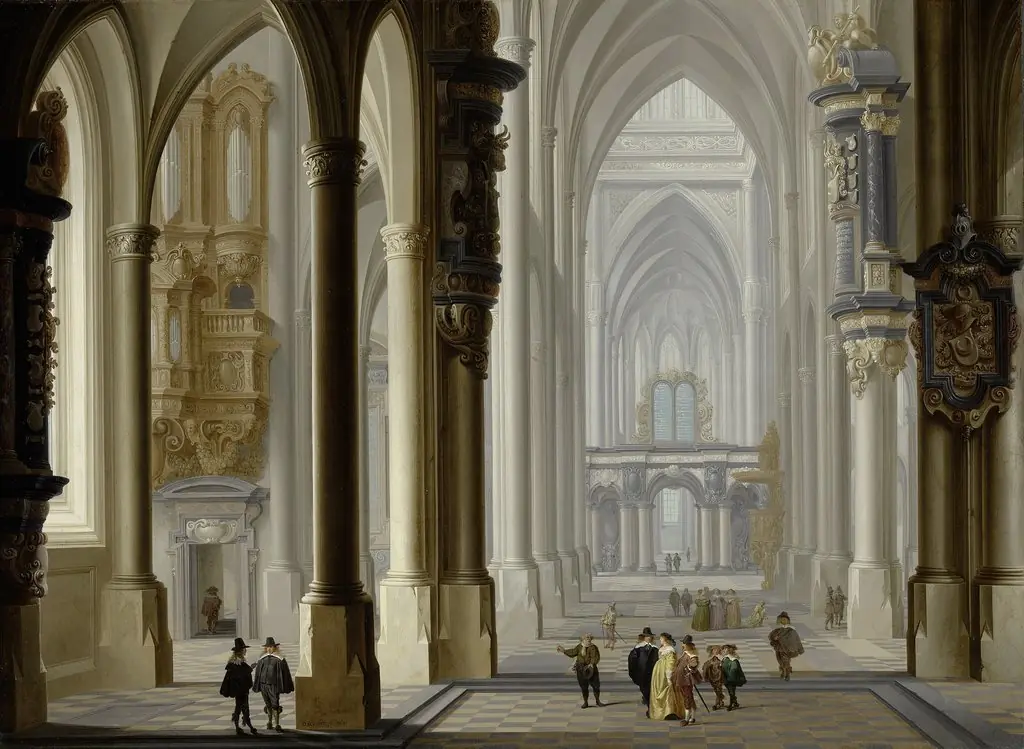 Interior of a Gothic Church
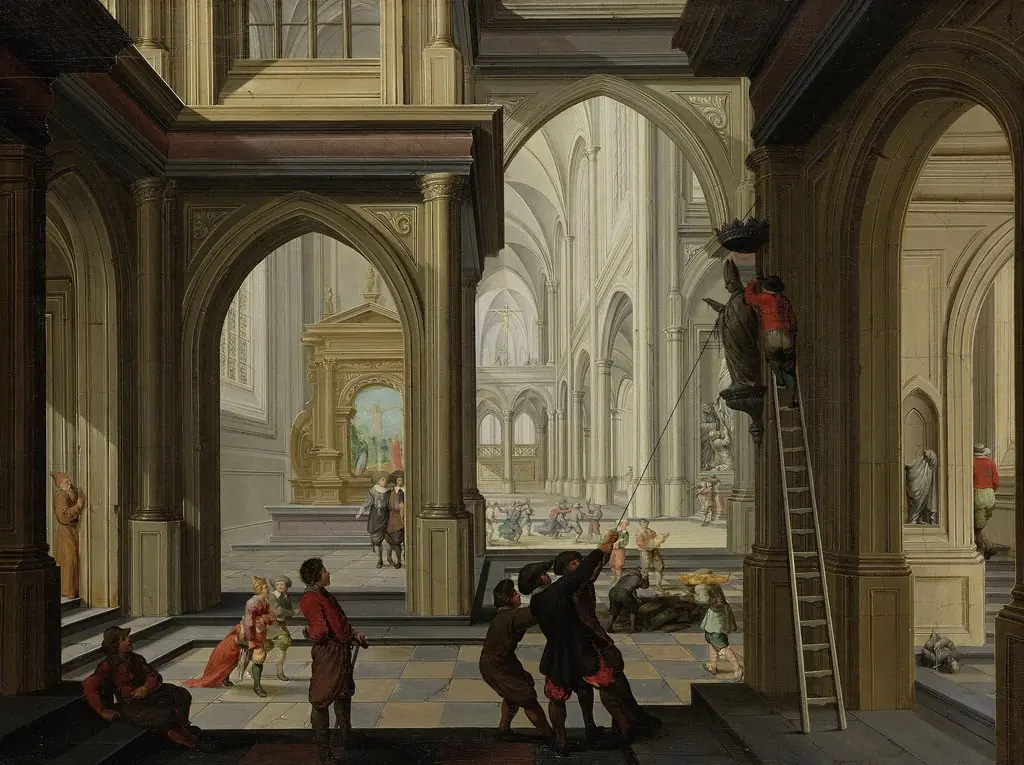 Iconoclasm in a Church
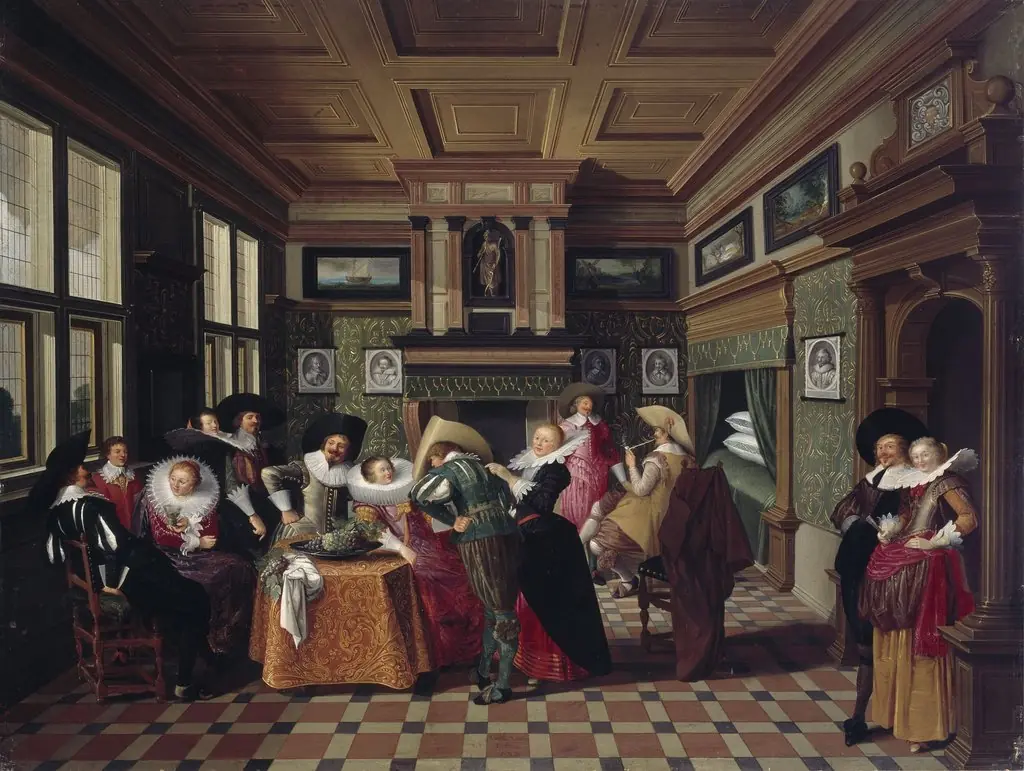 An Interior with Ladies and Cavaliers
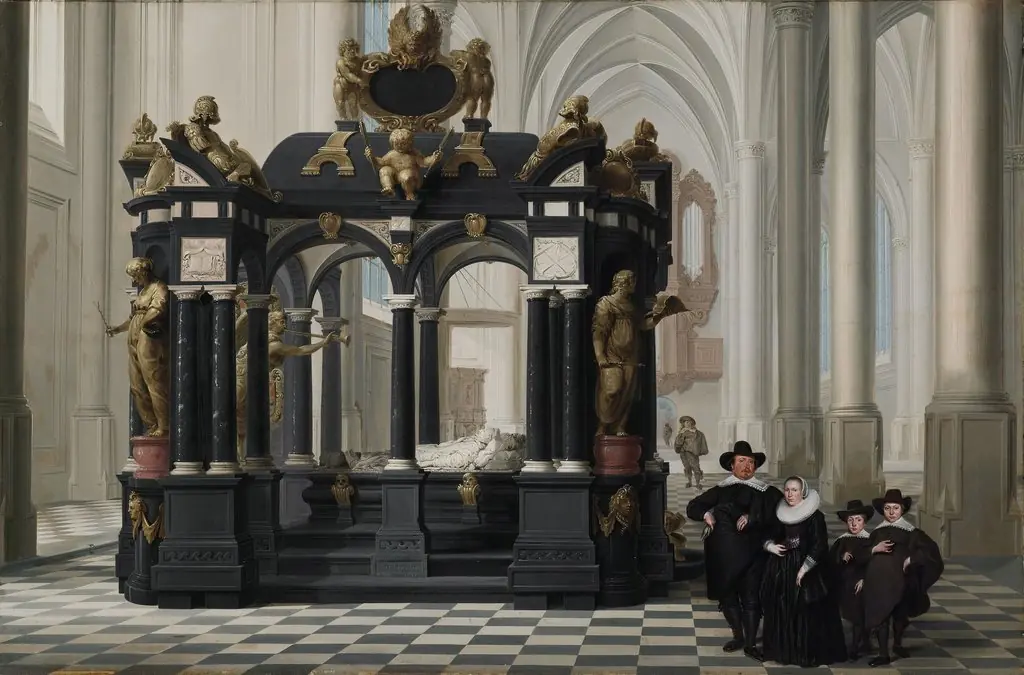 A Family beside the Tomb of Prince William I in the Nieuwe Kerk, Delft
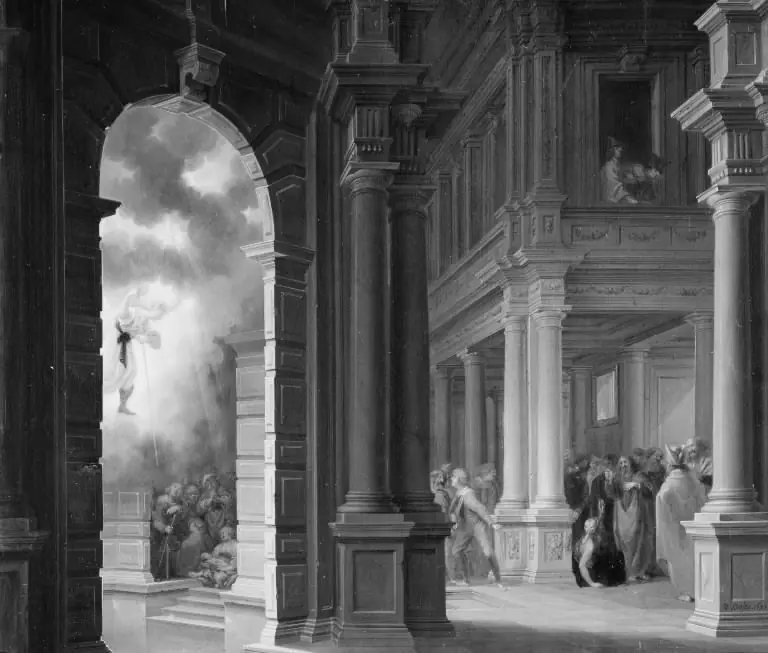 Christ Healing at the Pool of Bethesda
 A Family beside the Tomb of Prince William i in the Nieuwe Kerk, Delft
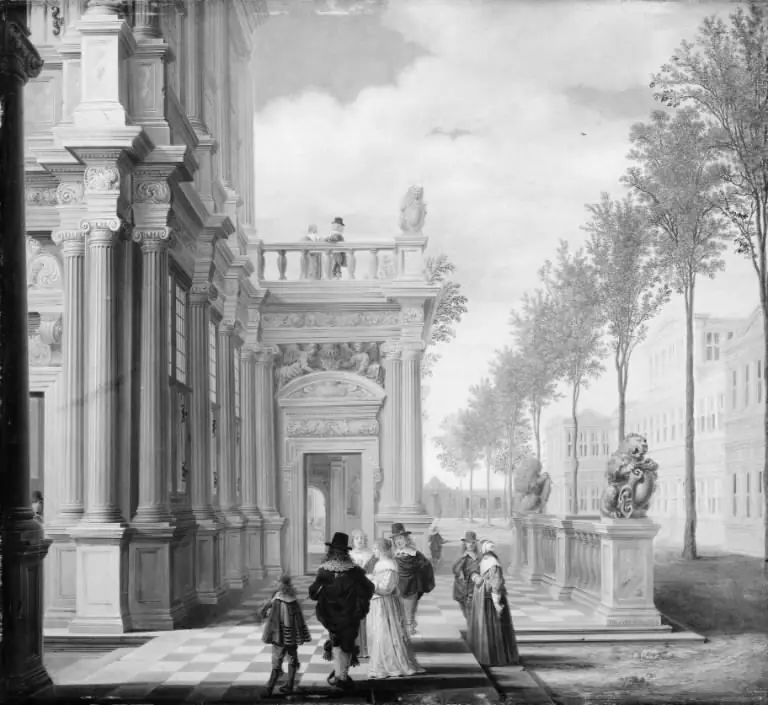 Elegant Company in Front of a Palace
 Interior of Church