Artwork
Untitled
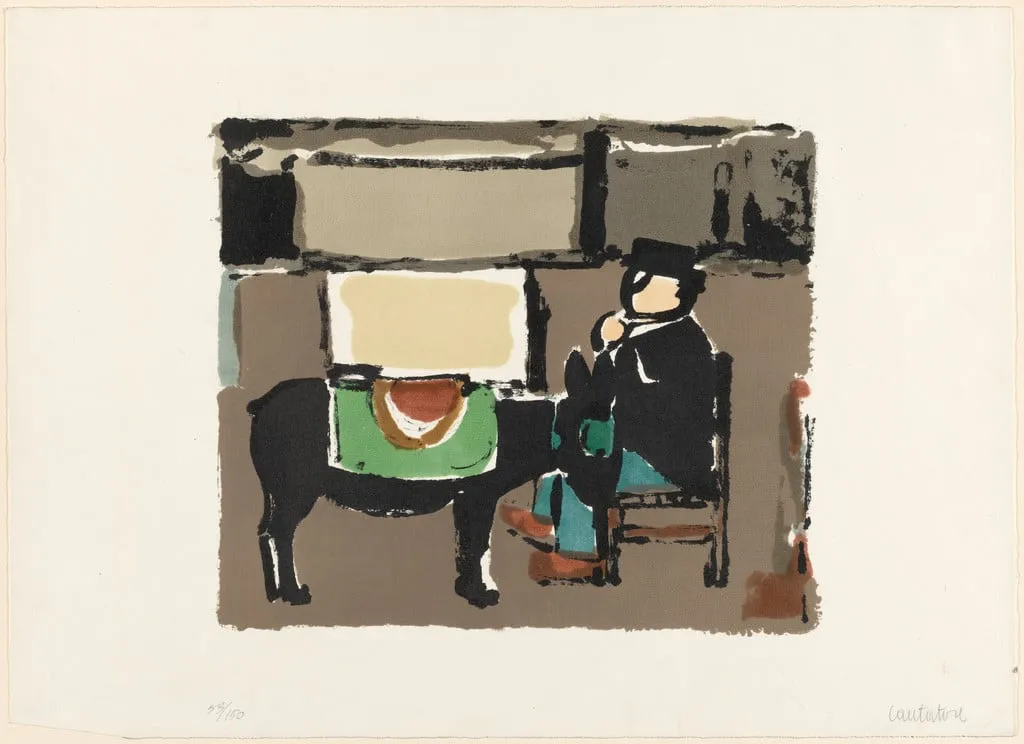
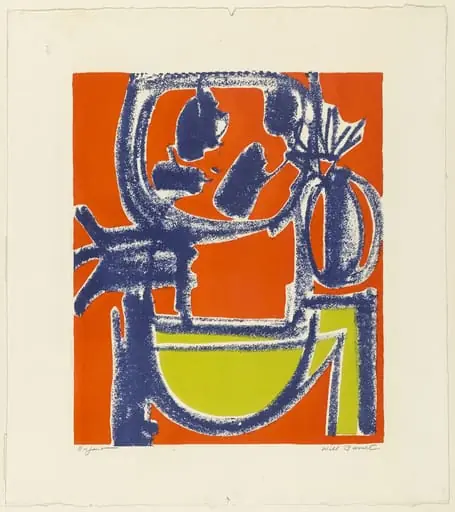
Untitled is an ink print by Domenico Cantatore. It dates from 1956 and is held in the collection of the Museum of Modern Art.
About this work
Overview
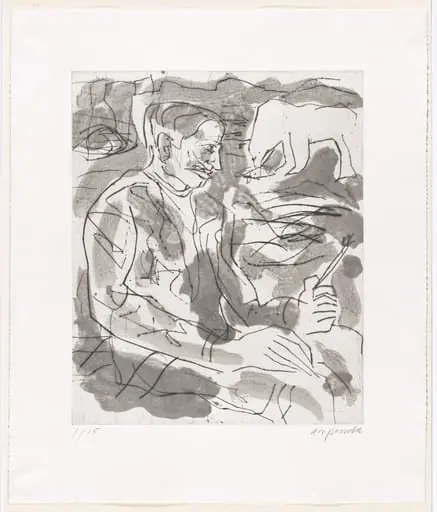
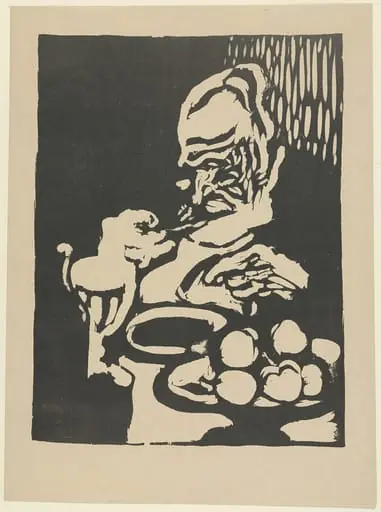
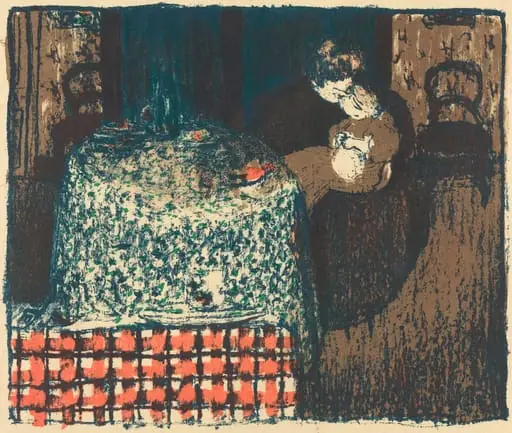
Created around 1956, this lithograph by Italian artist Domenico Cantatore is part of the collection at the Museum of Modern Art. The work presents a modest interior scene rendered in a limited palette of earthy tones, punctuated by a vivid green tablecloth. Its composition is spare, focusing on the arrangement of a seated figure, a table, and a dog, all captured in a moment of quiet stillness.
Subject & Meaning
The image depicts a solitary man seated in a chair, dressed in a dark coat and hat, holding a pipe. In front of him lies a table covered with a green cloth and a bowl of fruit, while a black dog stands nearby, gazing toward the figure. The lack of facial detail and the muted setting suggest an emphasis on mood and contemplation rather than narrative specificity.
Technique & Style
The figure’s face is reduced to a solid dark silhouette, and the surrounding objects are rendered with flat areas of color.
Cantatore employed the lithographic process, using bold, simplified shapes instead of intricate line work. The figure’s face is reduced to a solid dark silhouette, and the surrounding objects are rendered with flat areas of color. This approach creates a graphic quality, emphasizing contrast and form over realistic texture, and aligns with mid‑century modernist tendencies toward abstraction and reduction.
History & Provenance
The print was produced in the mid‑1950s, a period when Cantatore was active in both painting and printmaking. It entered the Museum of Modern Art’s holdings through acquisition in the latter half of the twentieth century, reflecting the institution’s interest in post‑war European graphic art. No further exhibition history is recorded in the available sources.
Artist & collection
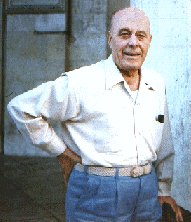
Artist
Domenico Cantatore was an Italian painter, mosaic artist and illustrator. His style, somewhat naive, is influenced by Cezanne, Matisse, and the Expressionists. His main focus was portraiture and the exploration of…