Artwork
The Virgin and Child
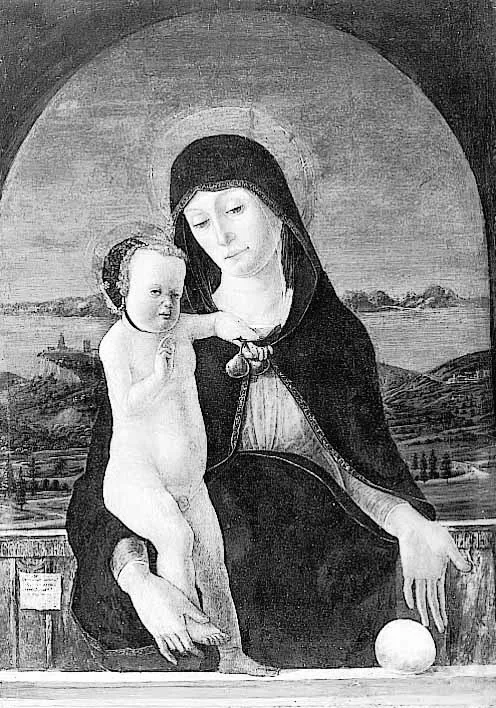
The Virgin and Child is a paint painting by the Early Renaissance artist Domenico Morone. It dates from 1492 and is held in the collection of the Gemäldegalerie Berlin.
About this work
Overview
This panel is Morone's earliest signed and dated work, bearing the date 29 April 1483 according to some sources, though the corpus record specifies 1484.
The Virgin and Child is a painting by Domenico Morone, dated 1484, executed in paint on a poplar panel. The work is held in the Gemäldegalerie, Berlin, and represents a significant early achievement by the artist, who was a pioneer of Renaissance painting in Verona. This panel is Morone's earliest signed and dated work, bearing the date 29 April 1483 according to some sources, though the corpus record specifies 1484. The painting demonstrates Morone's engagement with the artistic ideas of Andrea Mantegna, transmitted through Giovanni Bellini and Francesco Benaglio, marking a decisive moment in the development of Renaissance art in Verona.
Subject & Meaning
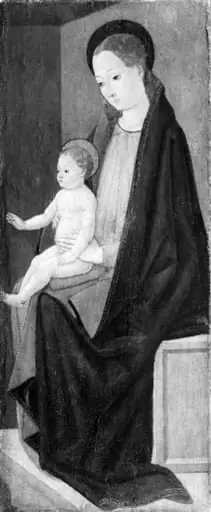
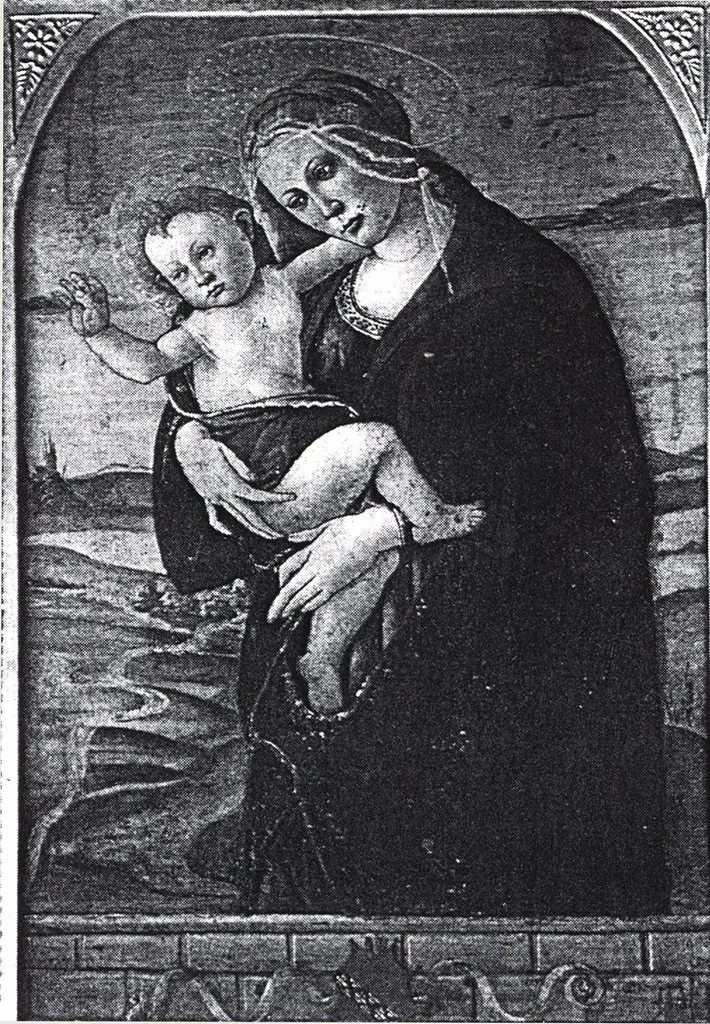
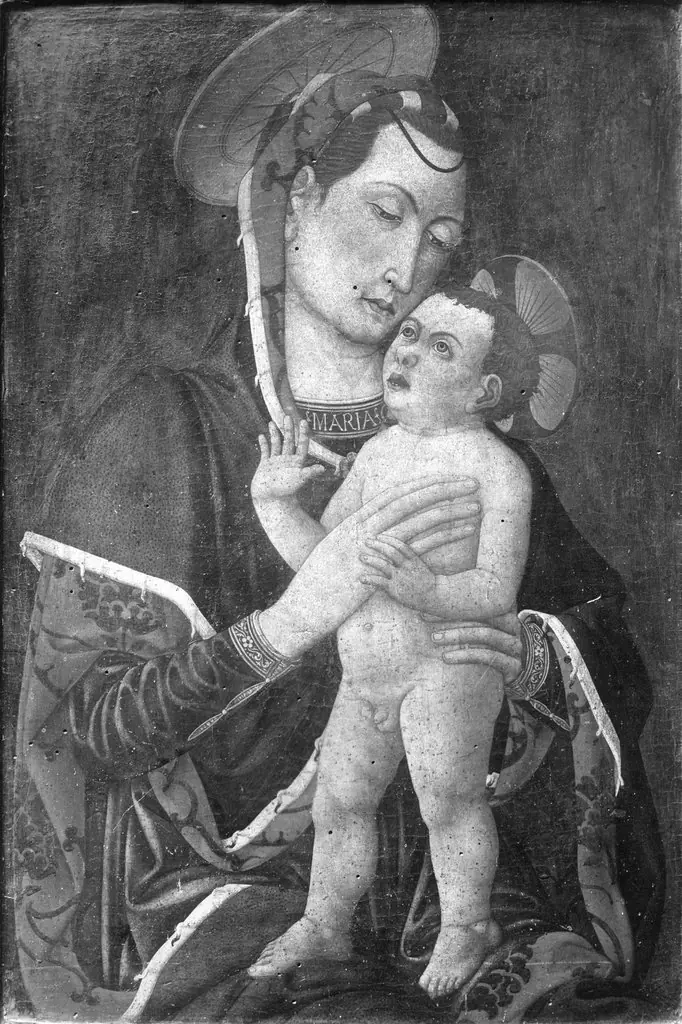
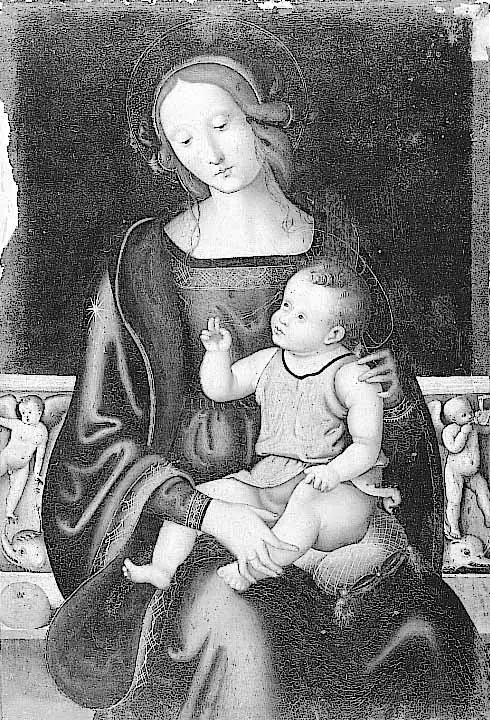
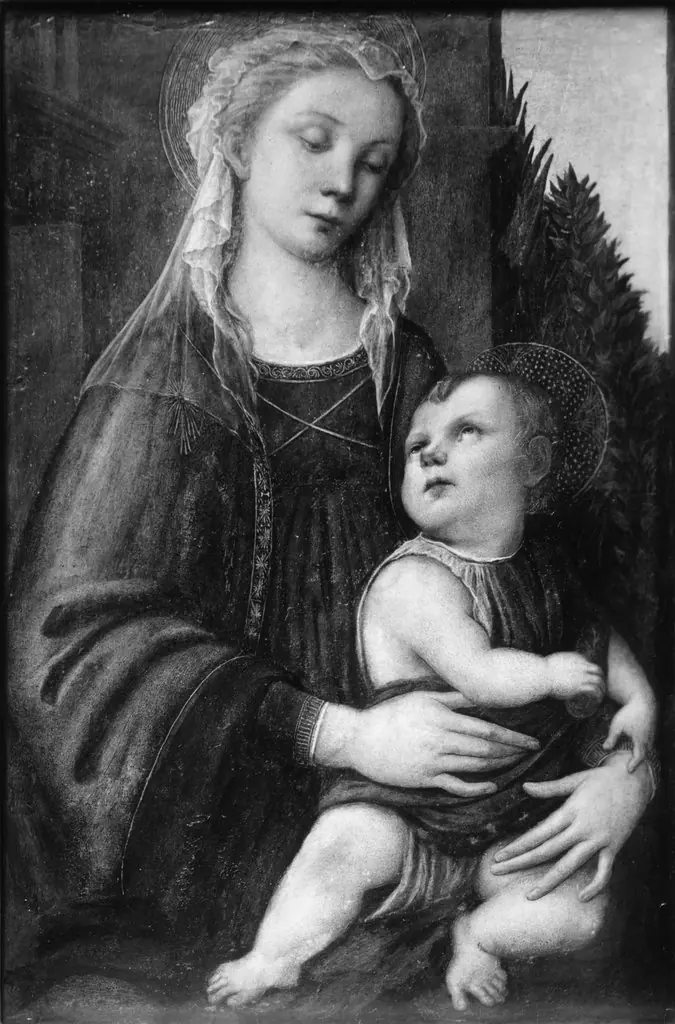
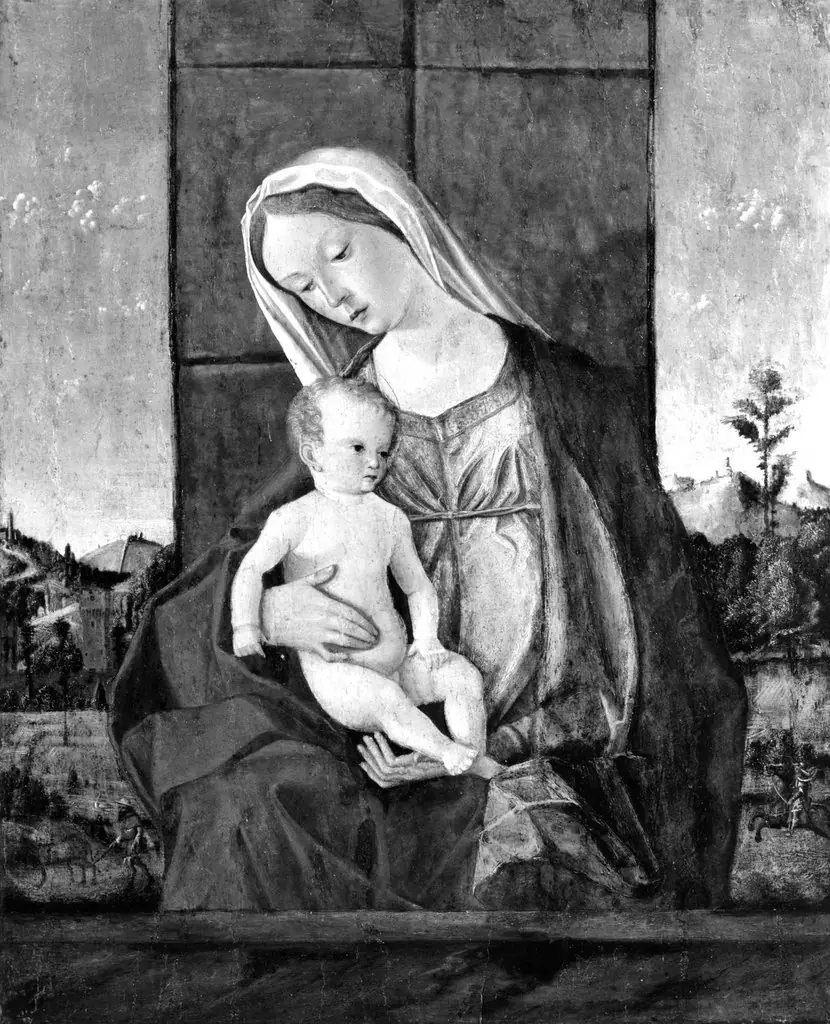
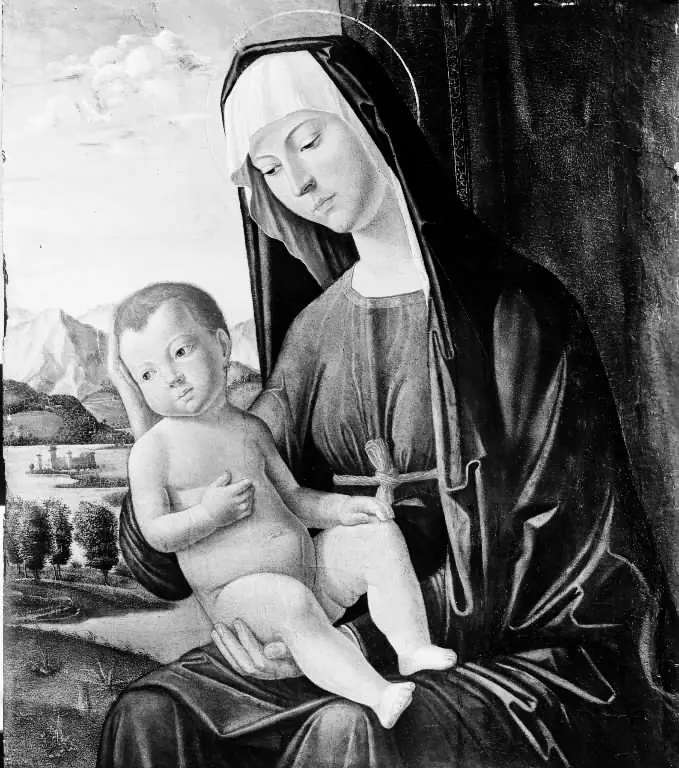
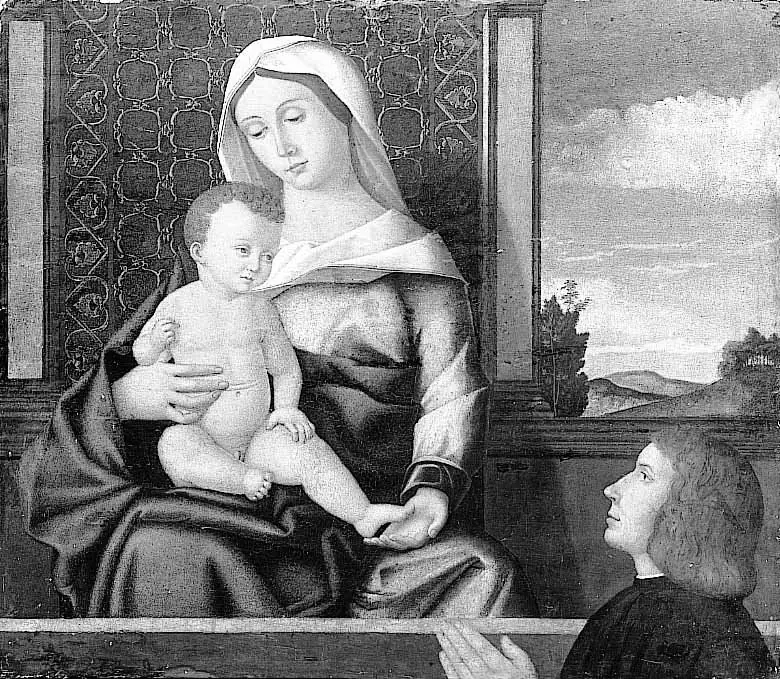
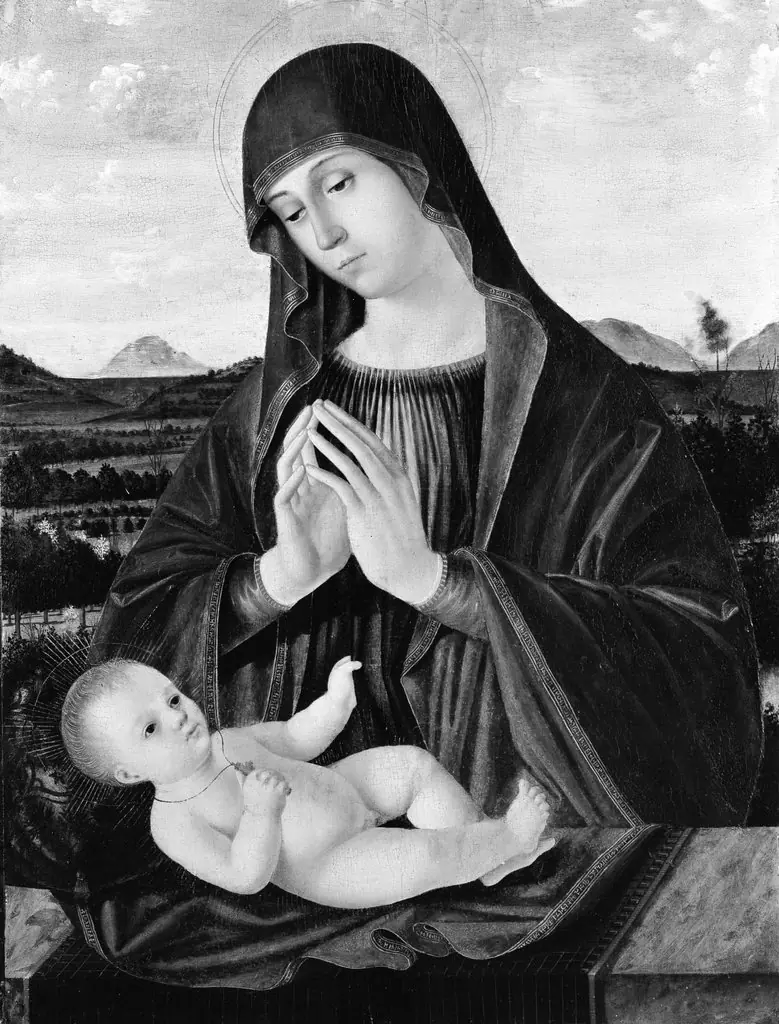
The painting depicts the Madonna and Child in a devotional composition. The Virgin Mary is seated, holding the standing infant Christ on her lap beneath a rounded arch. Both figures bear halos, marking their sacred status. The infant stands unclothed on a ledge, one hand touching his mother's mantle while the other is raised near his chest. The Virgin's left hand rests near a spherical white object on the ledge, an element that has invited various interpretations. The child's nudity may symbolize innocence or vulnerability, while the architectural niche creates a sense of enclosure suggestive of protection and sanctuary. The sphere remains an enigmatic feature, possibly representing wholeness, perfection, or a celestial body. The juxtaposed faces of mother and child create a complementary dynamic: the mother's lowered, contemplative gaze contrasts with the lively, dynamic presence of the son.
Technique & Style
The work is executed in paint on a poplar panel. The technique reveals careful draftsmanship with controlled brushwork and a smooth, even finish on the skin. Fine linear detail characterizes the drapery and landscape elements. The palette is limited and dominated by dark tones for the Virgin's mantle, set against lighter flesh tones and background hues. A vibrant orange undergarment is visible at the sleeves and neckline, and a yellow veil prevails among the bright colors. The composition is frontal and centered, with the arch framing the figures. Light falls gently upon the mother and child, highlighting their features while leaving portions of the background in shadow, creating intimacy and drawing attention to the central figures. The perspective is somewhat flattened, creating a sense of depth but lacking precise spatial accuracy. The overall effect combines Mantegnesque formality with a distinctively earthy realism.
History & Provenance
The painting is dated 1484, though some scholarship refers to it as dated 29 April 1483. It is documented as Morone's earliest signed work, making it a crucial touchstone for understanding the artist's development. The panel is currently located in the Gemäldegalerie, Berlin, where it is held in the collection. Its acquisition history and earlier provenance are not detailed in the available sources, though its presence in a major German museum collection indicates established recognition of its importance by the time of its acquisition.
Context
Domenico Morone was born in Verona around 1442 and died there around 1518. According to Vasari, who was exceptionally well informed on Veronese artists, Morone was taught by students of the Gothic painter Stefano da Verona. This early panel reveals his conversion to Andrea Mantegna's ideas, partly filtered through Giovanni Bellini and Francesco Benaglio. It represents a foundational moment in Morone's career, preceding his more ambitious narrative works such as the Expulsion of the Bonacolsi from Mantua (1494). The painting establishes Morone as a pioneer of Renaissance painting in Verona, infusing a basically Mantegnesque style with a distinctively earthy realism. Scholars have noted the difficulty of appraising Morone's personal contribution precisely because so few documented works survive, most of them seriously damaged or collaborative. This panel, however, remains crucial as one of the few secure benchmarks for his early style.
Legacy
The Virgin and Child established points of departure for the next generation of Veronese painters, including Morone's son Francesco Morone, Michele da Verona, the brothers Caroto, and Girolamo dai Libri. The work's influence lies in its successful synthesis of Mantegnesque formal rigor with a more naturalistic, emotionally accessible treatment of sacred subjects. As Morone's earliest signed and dated painting, it has served as a fixed point for reconstructing his artistic development and for attributing other works to his hand. The panel remains in the Gemäldegalerie, Berlin, where it continues to represent a key document of Quattrocento Veronese painting and of the broader diffusion of Renaissance artistic ideas from Mantua and Venice to provincial centers.
Artist & collection
Artist
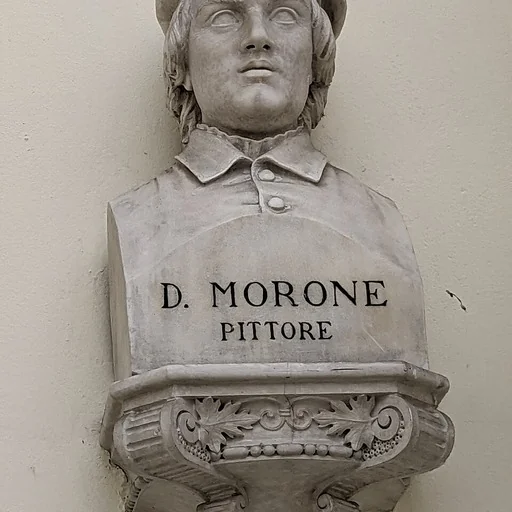
Domenico Morone (c. 1442 – 1518) was an Italian painter from Verona, painting in an early Renaissance style. Much of his work has not survived, notably his fresco cycles. He was considered by Vasari to be second only to…