Artwork
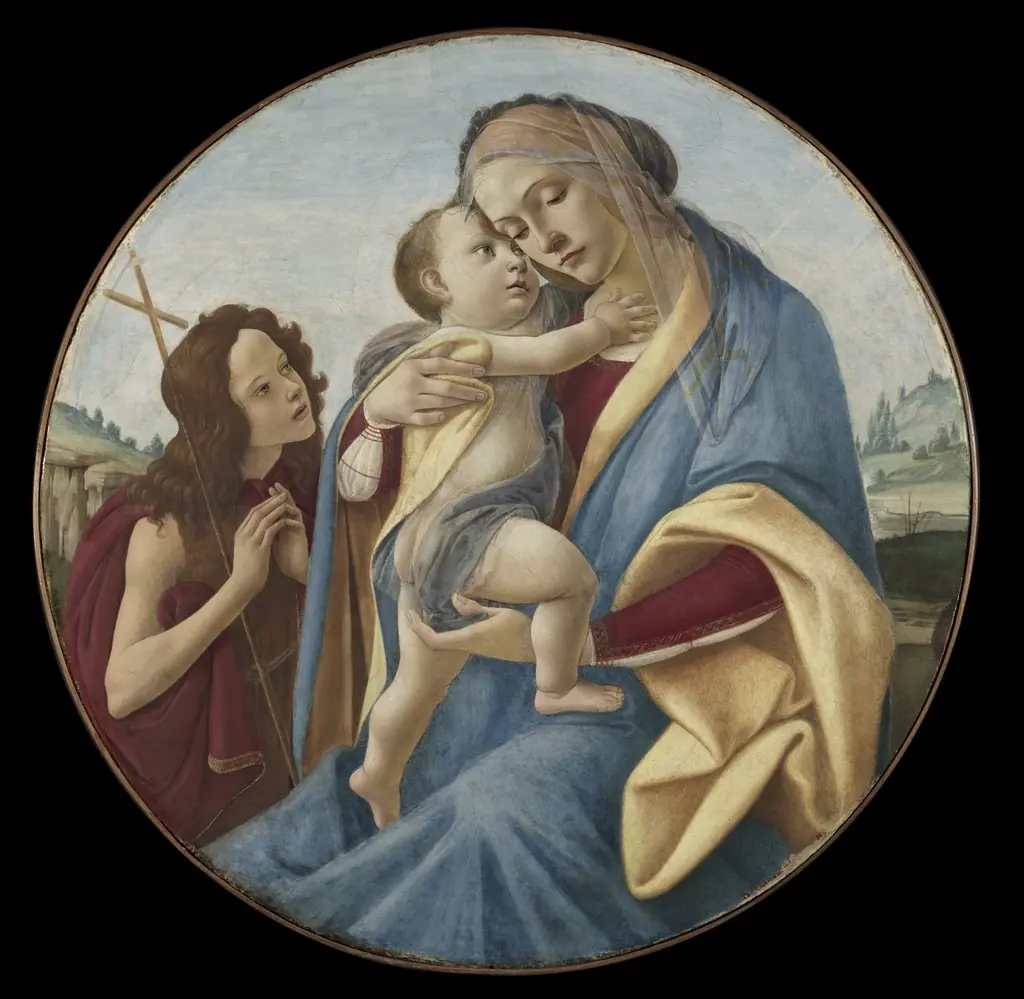
Virgin and Child with young st. John
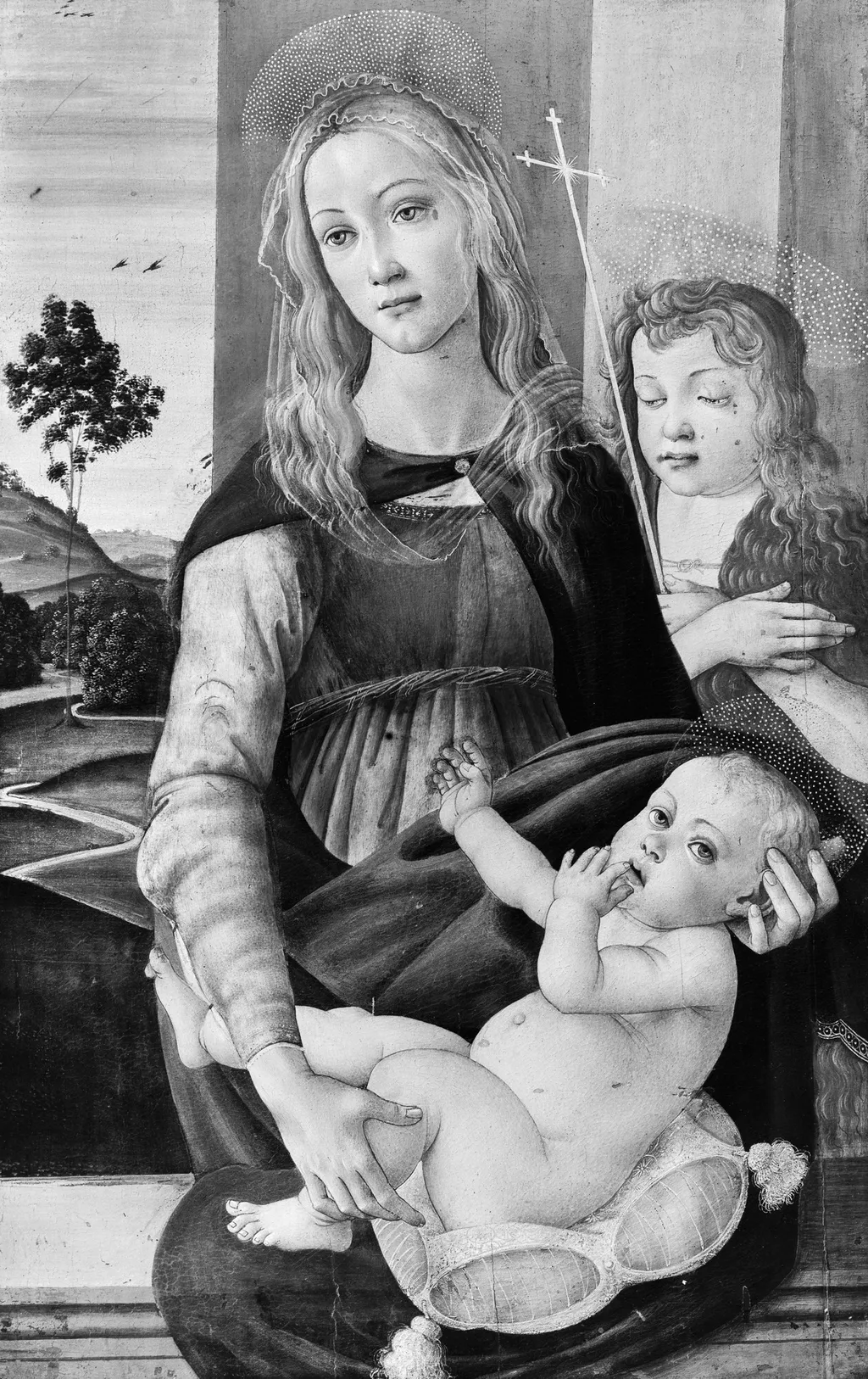
Virgin and Child with young st. John is a paint painting by the Early Renaissance artist Sandro Botticelli. It dates from 1487 and is held in the collection of the Gemäldegalerie Berlin.
About this work
Overview
The painting stands as a significant example of Botticelli's religious output, demonstrating his mastery of line and color in service of spiritual expression.
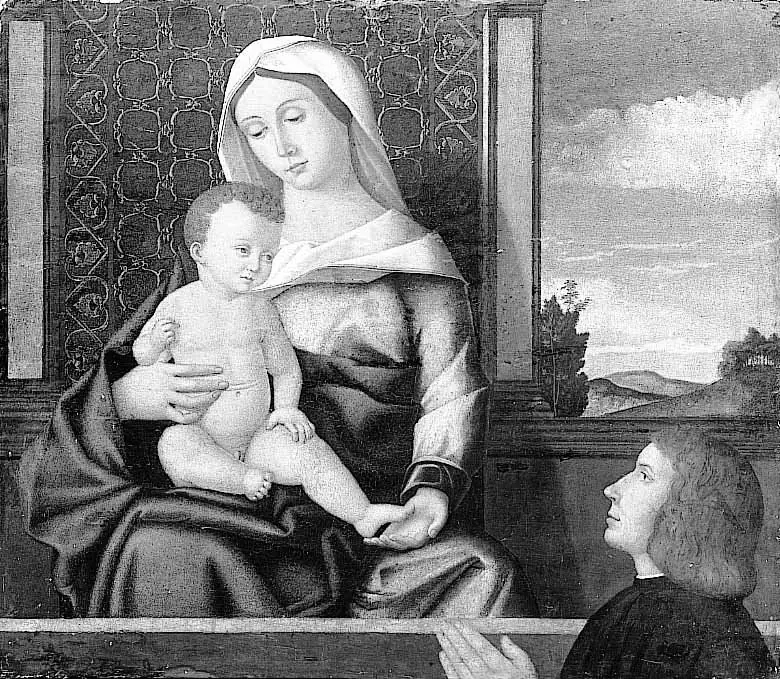
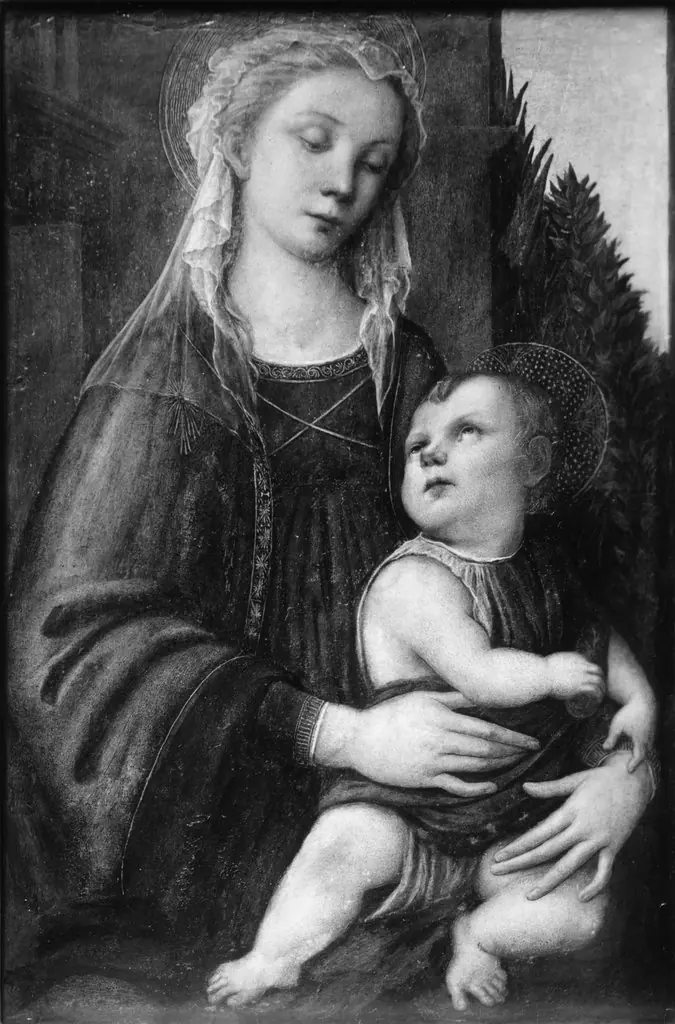
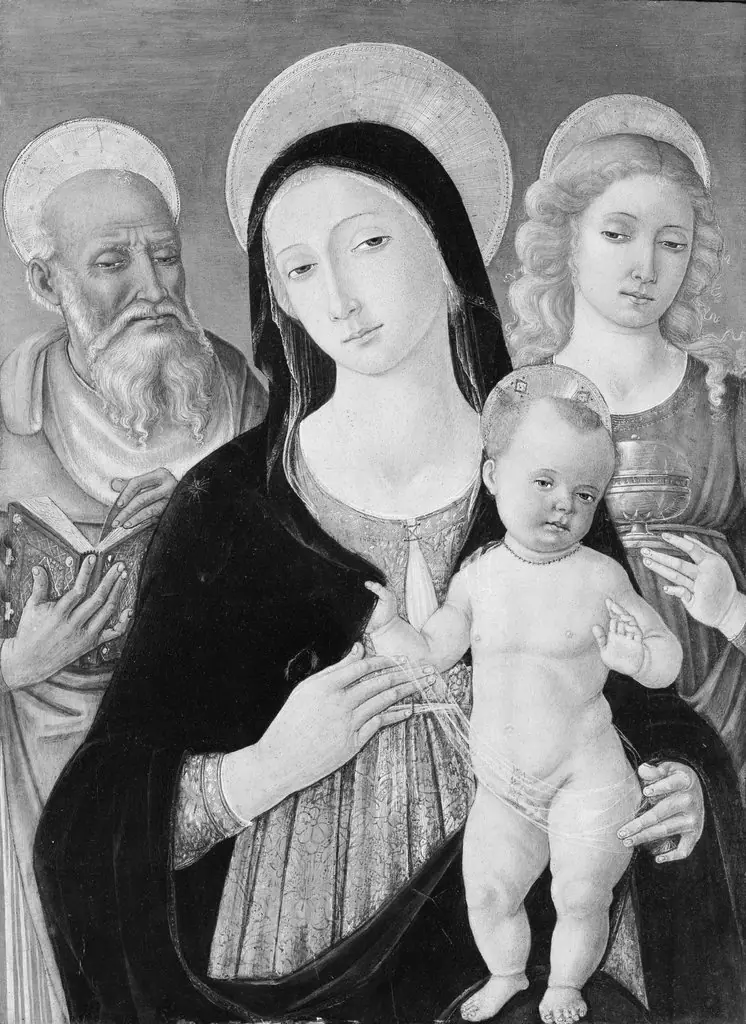
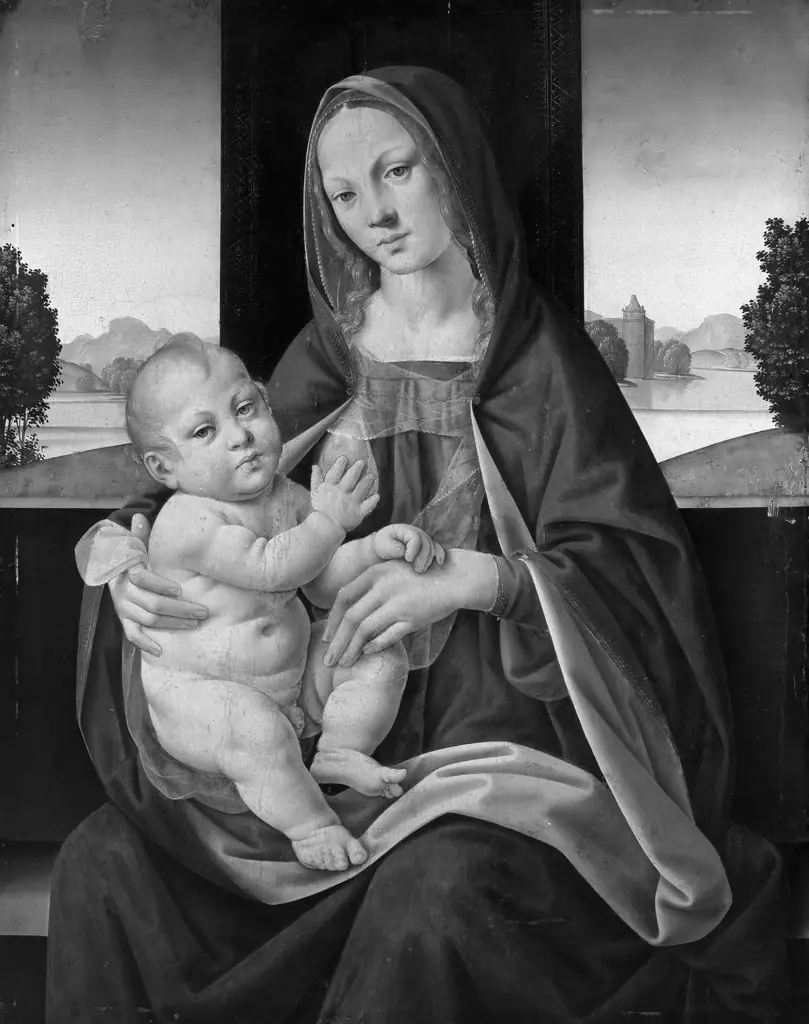
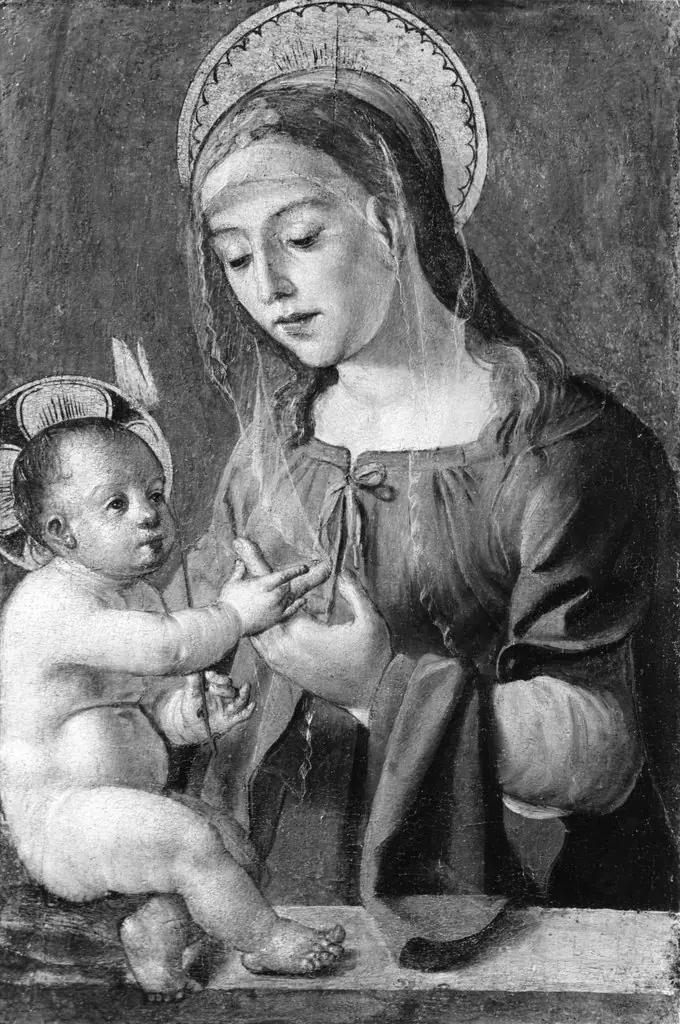
Painted in 1487, Sandro Botticelli's Virgin and Child with young St. John depicts the Madonna seated in a landscape, holding the Christ Child on her lap while the infant John the Baptist reaches toward him. The composition adheres to the High Renaissance ideal of pyramidal stability, yet retains the artist's signature linear grace. The Virgin is portrayed with loose, flowing hair and a dark, draped robe, her gaze directed downward in a contemplative manner.
The Christ Child is shown bare-chested, emphasizing his humanity, while the young St. John, distinguished by his curly hair, acts as an intercessor, bridging the figures through gesture. The background features a serene Tuscan landscape with trees and distant architectural elements that recede into a soft atmospheric haze, a technique characteristic of Botticelli's mature style during the late 1480s. This work exemplifies the artist's transition toward a more classical balance of form and emotion, moving away from the earlier, more mannered elegance of his youth.
It reflects the devotional tastes of Florence at the time, focusing on intimate, humanized religious narratives that invite personal meditation. The painting stands as a significant example of Botticelli's religious output, demonstrating his mastery of line and color in service of spiritual expression.
Subject & Meaning
The composition presents Mary in a serene, contemplative pose, holding the newborn Jesus, while a small John reaches toward her, symbolizing his future role as the forerunner of Christ. The gentle interaction among the three figures underscores themes of familial affection and the theological connection between the infant Savior and his future baptizer.
Technique & Style
Botticelli employs delicate modeling of flesh and subtle chiaroscuro to give the figures a three‑dimensional presence against a muted landscape background. The Virgin’s dark, flowing dress is cinched with a simple belt, and her loose hair frames a calm visage, while the infant’s soft, round face and the boy’s curly hair are rendered with fine brushwork that highlights texture and light.
History & Provenance
The painting entered the Berlin Gemäldegalerie’s holdings in the early 20th century, having previously been part of private collections in Italy. Its attribution to Botticelli has been confirmed through stylistic analysis and documentation linking the work to the artist’s workshop during the late 1480s.
Context
Executed during a period when Botticelli was responding to the devotional demands of Florentine patrons, the work reflects the shift from grand narrative cycles to more intimate, private religious imagery. The inclusion of the young Saint John aligns with contemporary iconography that emphasized his early connection to the Christ child.
Own this work as a print
Artist & collection
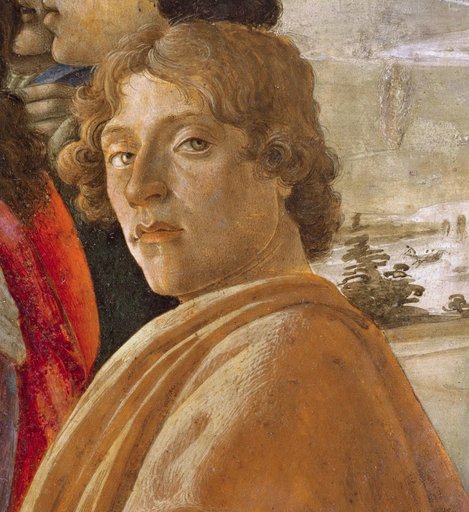
Artist
Alessandro di Mariano di Vanni Filipepi, better known as Sandro Botticelli or simply Botticelli, was an Italian painter of the Early Renaissance.