Artwork
Villa Borghese, Rome
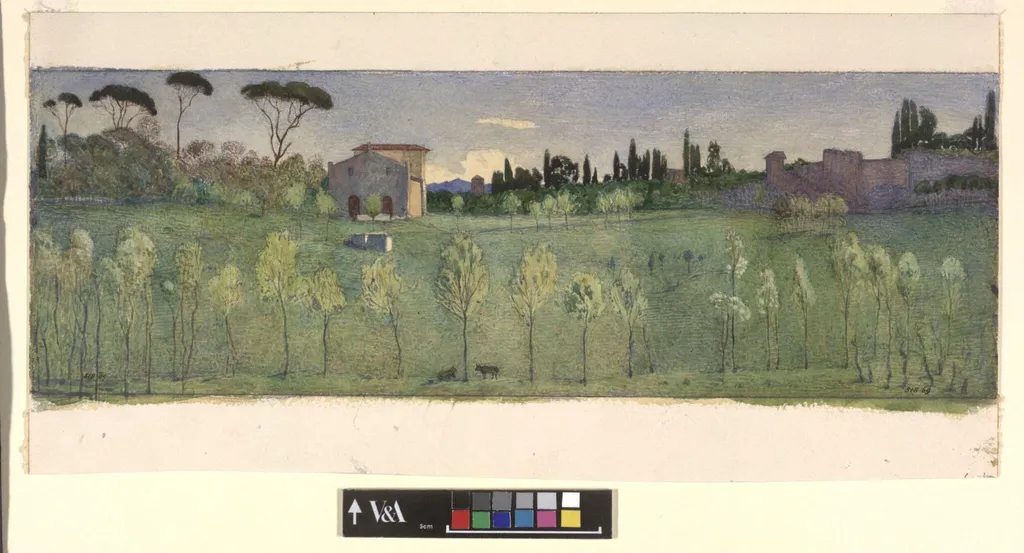
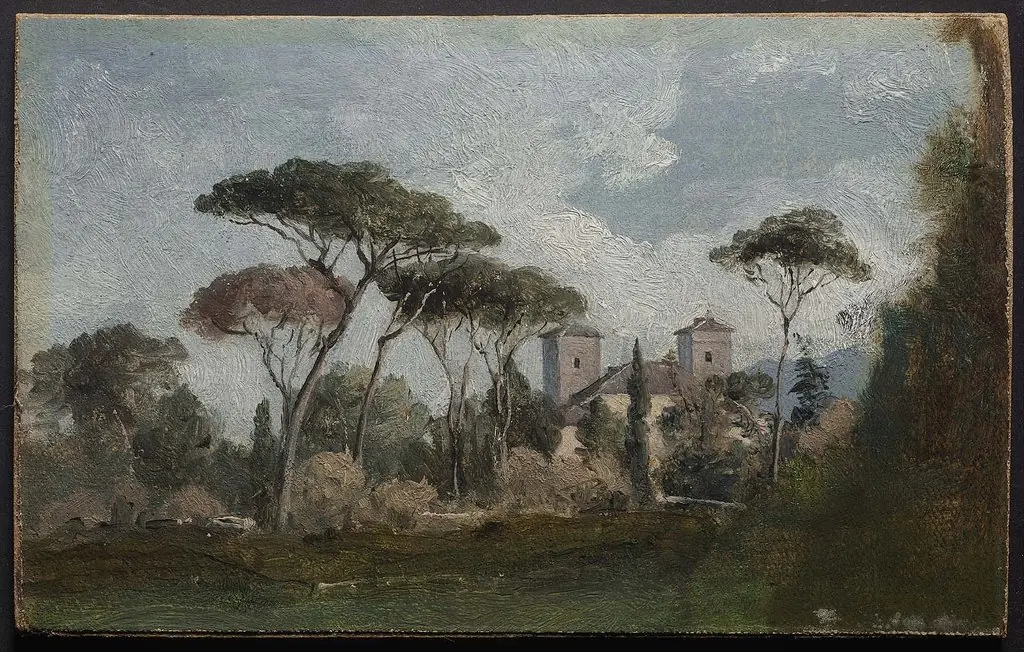
Villa Borghese, Rome is a watercolor work on paper by the British Romanticist artist Andrew Brown Donaldson. It dates from 1860 and is held in the collection of the Victoria and Albert Museum.
About this work
Overview
Its modest scale and delicate handling reflect a focus on observation rather than grandeur, aligning with the era’s interest in intimate landscape studies.
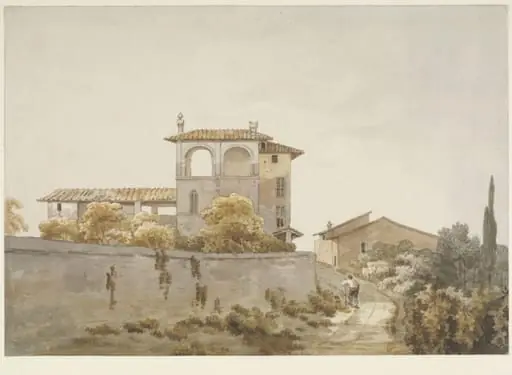
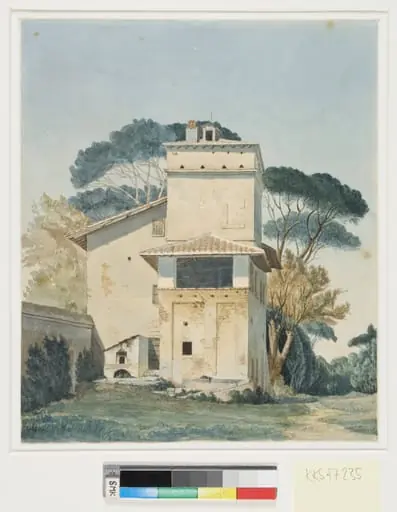
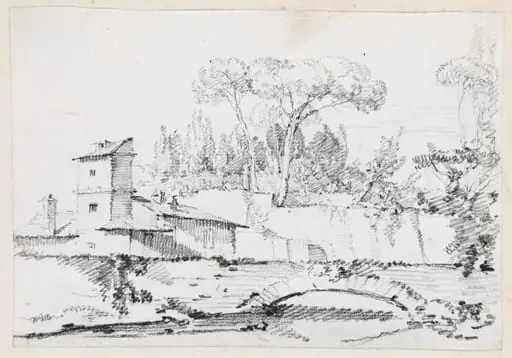
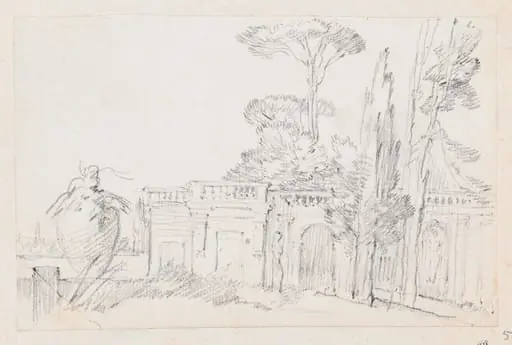
Andrew Brown Donaldson created this watercolour in 1860, capturing a quiet corner of Rome’s Villa Borghese gardens. The work is part of the Victoria and Albert Museum’s collection, representing the 19th-century British tradition of topographical watercolour painting. Its modest scale and delicate handling reflect a focus on observation rather than grandeur, aligning with the era’s interest in intimate landscape studies.
Subject & Meaning
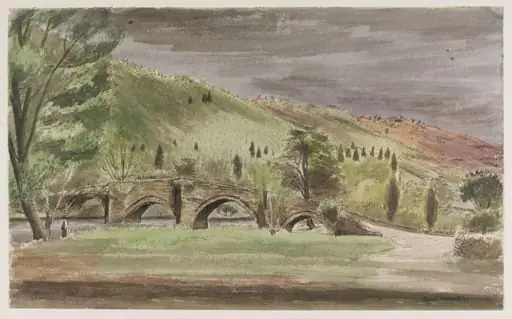
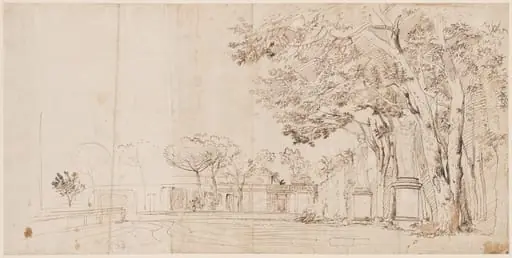
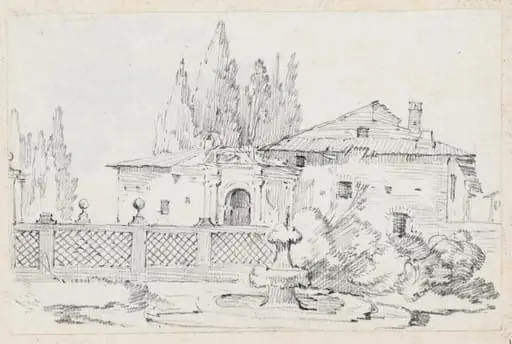
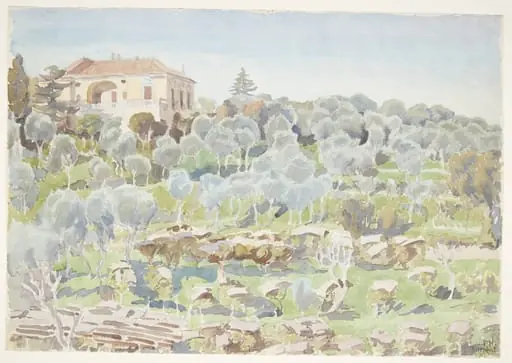
The scene presents a tranquil stretch of the villa’s grounds, with a grassy expanse, scattered trees, and a distant structure suggesting a pavilion or outbuilding. There is no human presence, emphasizing solitude and stillness. The composition invites contemplation, framing the landscape not as a monument but as a private, lived-in space, reflecting a Romantic sensibility toward nature as a refuge from urban life.
Technique & Style
Donaldson employed transparent watercolour washes to build subtle gradations of colour, particularly in the sky’s pale blue and grey tones. Fine brushwork defines the delicate foliage and slender tree trunks, while the paper’s white areas suggest highlights and atmospheric light. The technique avoids heavy detail, instead relying on tonal transitions to suggest depth and air, characteristic of skilled British watercolourists of the period.
History & Provenance
The painting entered the Victoria and Albert Museum’s collection in the 19th century, likely through acquisition or donation linked to the museum’s early focus on decorative and fine arts. Its preservation suggests it was valued for its technical precision and representational clarity. No record of prior ownership or exhibition history beyond the museum’s archives is widely documented.
Context
During the 1860s, British artists frequently traveled to Italy to study classical ruins and landscapes, producing watercolours for private collections or as studies for larger works. Donaldson’s depiction of Villa Borghese fits within this trend, aligning with the period’s fascination with Italy’s cultivated gardens as symbols of refined taste and historical continuity.
Legacy
While not widely reproduced or celebrated in major art historical narratives, the work remains a quiet example of 19th-century British watercolour practice. It contributes to the understanding of how artists engaged with foreign landscapes, not as exotic spectacle, but as serene, observed moments. Its presence in the V&A underscores the institutional value placed on such intimate, technically refined works.
Artist & collection
Artist
Andrew Brown Donaldson painted watercolours of European landmarks in the 19th and early 20th centuries.