Artwork
Pont dol Rhiw Gelen (Bridge over the Goedel designed by Inigo Jones), Merionethshire
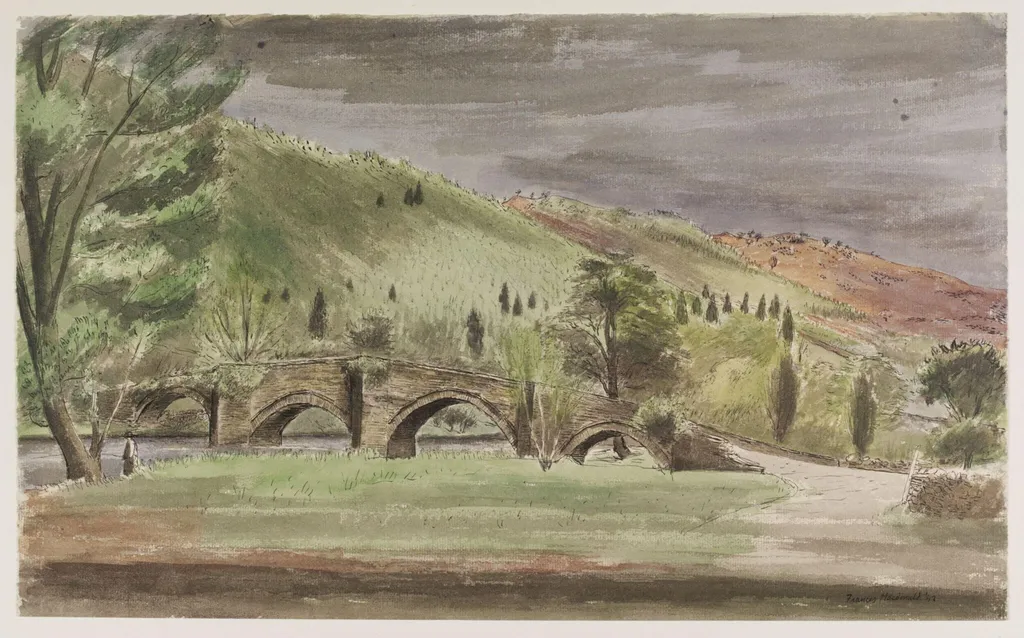
Pont dol Rhiw Gelen (Bridge over the Goedel designed by Inigo Jones), Merionethshire is a watercolor work on paper by the Aestheticist artist Frances Macdonald. It is held in the collection of the Victoria and Albert Museum.
About this work
Overview
Frances Macdonald created this watercolour in 1942 as part of the Recording Britain project, a wartime initiative to document the nation’s rural landscapes.
Frances Macdonald created this watercolour in 1942 as part of the Recording Britain project, a wartime initiative to document the nation’s rural landscapes. The painting captures Pont dol Rhiw Gelen, a stone bridge in Merionethshire, Wales, rendered with restrained brushwork and muted tones. It reflects the project’s mission to preserve visual records of places deemed vulnerable to change or loss during the conflict, offering a quiet testament to enduring vernacular architecture.
Subject & Meaning
The subject is a three-arched stone bridge over the River Goedel, attributed to Inigo Jones, set within a tranquil Welsh countryside. Surrounded by trees and rolling hills, the bridge stands as a quiet anchor in the landscape. Its age and solidity suggest continuity amid wartime uncertainty.
The scene avoids grandeur, instead emphasizing modest, everyday structures that embodied local identity and historical continuity for those involved in the Recording Britain project.
Technique & Style
Macdonald employed a light, fluid watercolour technique with soft washes and minimal detail. Brushstrokes are economical, suggesting form rather than defining it precisely. The palette is subdued, greens, browns, and pale greys, mirroring the natural tones of the Welsh hills and overcast sky.
The absence of figures or dramatic lighting reinforces a sense of stillness, aligning with the project’s documentary intent and preference for understated observation.
History & Provenance
Commissioned by the Pilgrim Trust and directed by Sir Kenneth Clark, the Recording Britain project enlisted 97 artists between 1940 and 1945 to record at-risk landscapes. Macdonald’s work was one of over 1,500 produced, focusing on Welsh sites within the scheme’s limited geographic scope. The painting entered the Victoria and Albert Museum’s collection as part of the project’s archival legacy, where it remains accessible as a historical record of Britain’s rural fabric during wartime.
Context
Created during the Second World War, the painting emerged from a national effort to safeguard cultural memory against the threat of destruction and rapid modernization. While urban bombing dominated headlines, Recording Britain turned attention to the countryside, bridges, cottages, and lanes seen as symbols of enduring English and Welsh identity. Macdonald’s focus on a Welsh structure reflects the project’s inclusive regional approach, even within constrained funding and scope.
Legacy
The Recording Britain collection endures as a vital archive of mid-20th-century British topography. Macdonald’s watercolour contributes to a broader understanding of how artists responded to wartime anxiety through quiet observation. Its presence in the Victoria and Albert Museum ensures continued access for scholars and the public, preserving not only the bridge’s form but also the ethos of a project that valued the ordinary as historically significant.
Artist & collection
Artist
Frances Macdonald MacNair (24 August 1873 – 12 December 1921) was a Scottish artist whose design work was a prominent feature of the Modern Style (British Art Nouveau style) during the 1890s.

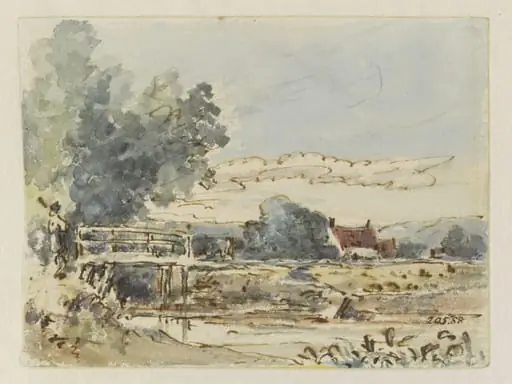 A bridge over a stream, with a cottage behind
 Landscape with river and mountains
 View of the bend of a river
 Fisherton Bridge, Salisbury
 View over Fingest
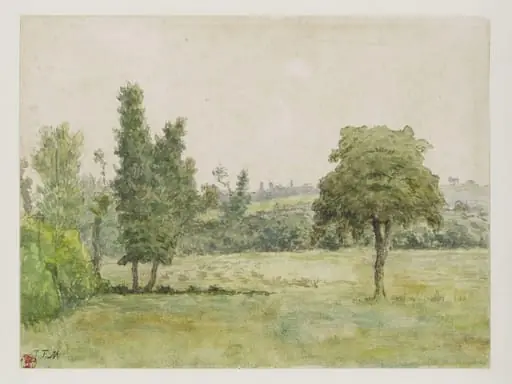 Meadow with trees
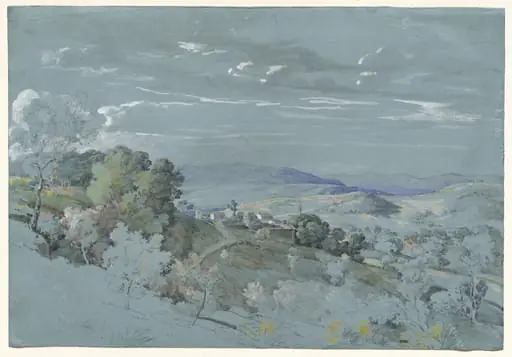 The Hills of Umbria near Perugia
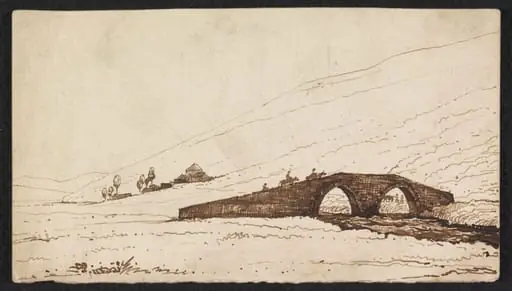 Uch Kleesa Convent (3 Churches) near the source of the Euphrates in Armenia
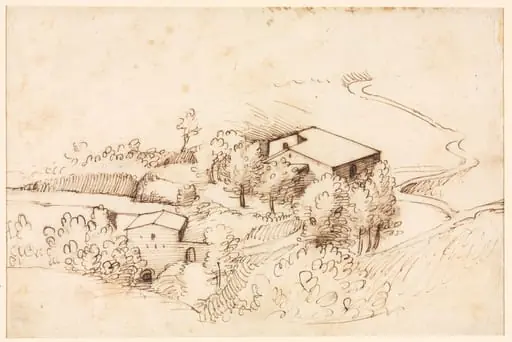 Farm with Trees in a Hilly Landscape (verso)