Artwork
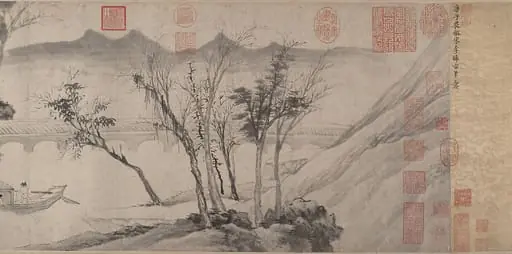
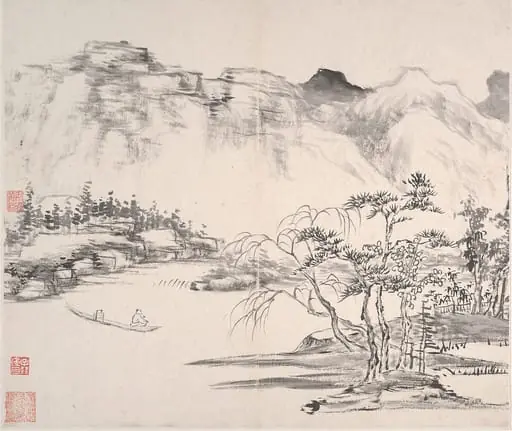
明 董其昌 荊谿招隱圖 卷|Invitation to Reclusion at Jingxi
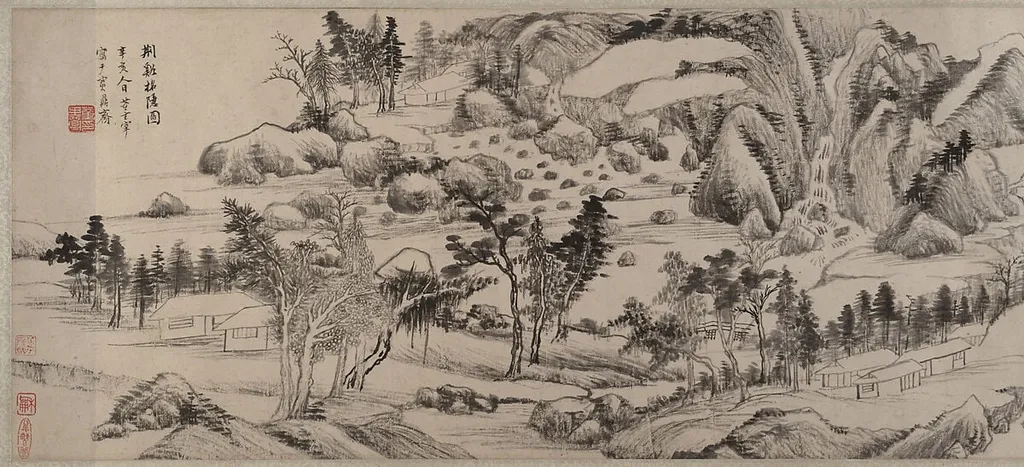
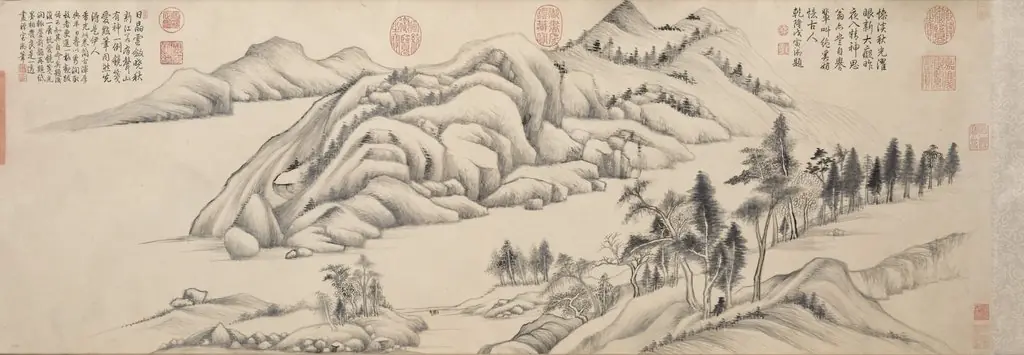
明 董其昌 荊谿招隱圖 卷|Invitation to Reclusion at Jingxi is an ink painting by the Baroque artist Dong Qichang. It dates from 1611 and is held in the collection of the Metropolitan Museum of Art.
- Accession no.
- 1990.318
- Credit line
- Gift of Mr. and Mrs. Wan-go H. C. Weng, 1990
About this work
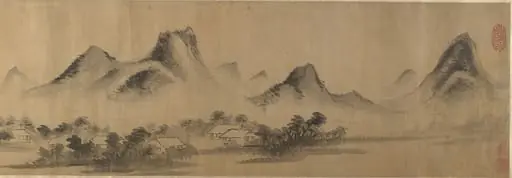
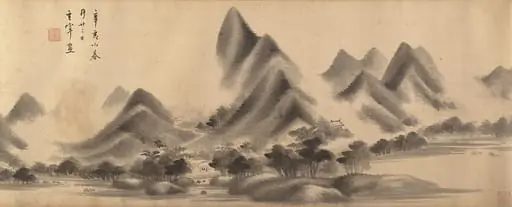
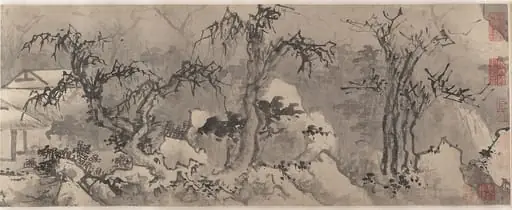
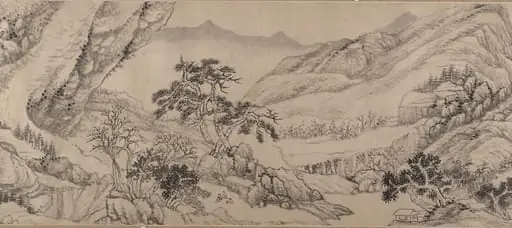
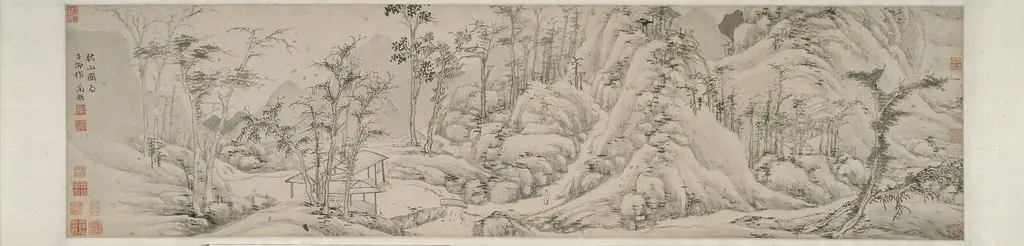
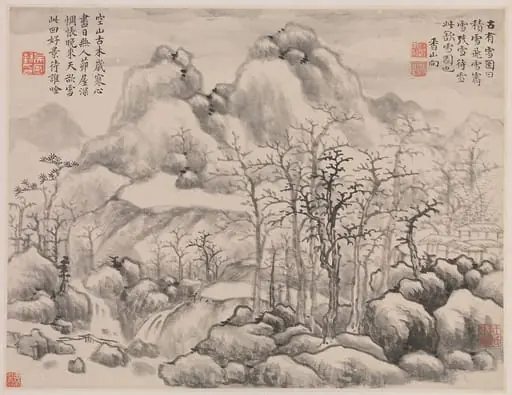
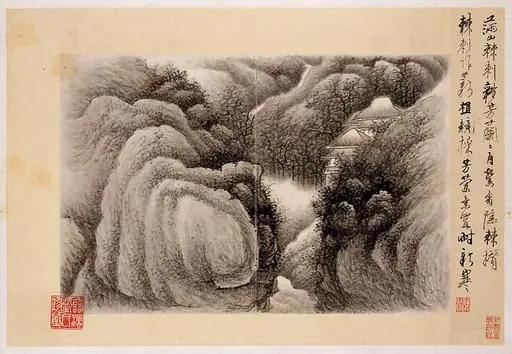
A long, narrow scroll in ink on paper: misty mountains, a few bare trees, a tiny hut folded into the hills. Dong Qichang painted it in 1611 as a gift for a friend who wanted to leave city life behind. The dry, light brushwork reads more like a poem than a picture.
Technique & Style
As a paper-support handscroll, the format is designed to be viewed in sections rather than all at once, requiring the specific handling typical of such works.
Created in 1611, Invitation to Reclusion at Jingxi is executed as a handscroll using ink on paper. The work falls within the landscape genre, depicting mountainous terrain characteristic of Dong Qichang's artistic practice. As a paper-support handscroll, the format is designed to be viewed in sections rather than all at once, requiring the specific handling typical of such works.
The formal qualities focus on the rendering of mountains and landscape elements through ink application, adhering to the stylistic conventions of the period. The piece is currently held in the collection of the Metropolitan Museum of Art.
History & Provenance
Created in 1611 by the Ming dynasty artist Dong Qichang, the handscroll Invitation to Reclusion at Jingxi was executed in ink on paper in China. The work depicts a mountainous landscape consistent with the theme of reclusive scenery. Specific details regarding its original commission or early ownership are not recorded, though the painting's creation is firmly dated to the early seventeenth century.
It eventually entered the collection of the Metropolitan Museum of Art in New York, where it is held as part of the paintings department. The available documentation does not supply a specific accession number or exhibition history for the work.
Legacy
Created in 1611 by Dong Qichang, the handscroll Invitation to Reclusion at Jingxi exemplifies Ming-dynasty landscape painting through its ink-on-paper depiction of a secluded mountain scene. Its classification as a landscape and its depiction of mountain terrain are documented in the museum record. Its presence in the Metropolitan Museum of Art's collection affirms its enduring reputation and scholarly relevance, marking it as a lasting example of late Ming artistic expression.
Overview
Dong Qichang, a prominent Ming dynasty official, art theorist, and calligrapher, created Invitation to Reclusion at Jingxi in 1611. This handscroll, executed in ink on paper, exemplifies the refined artistic traditions of Ming painting. It presents a serene mountainous landscape, a theme central to Dong's artistic and theoretical contributions to literati art. The work reflects the period's scholarly engagement with nature and the pursuit of spiritual solace.
Subject & Meaning
The scroll depicts a secluded mountainous terrain, featuring misty peaks, sparse trees, and a small, unassuming hut nestled within the hills. This imagery directly addresses the theme of reclusion, a significant aspiration for scholars during the Ming dynasty. Dong Qichang painted this work as a personal gift for a friend, intending to evoke the tranquility and spiritual detachment associated with withdrawing from urban life.
Context
As a leading art theorist of his era, Dong Qichang significantly influenced literati painting, an art form valued for its scholarly and expressive qualities. Invitation to Reclusion at Jingxi aligns with Ming painting traditions, which emphasized intellectual engagement and personal expression over mere representation. The act of gifting such a landscape to a friend seeking retreat underscores the cultural importance of nature and philosophical contemplation among the educated elite.
Artist & collection

Artist
Dong Qichang (Chinese: 董其昌; pinyin: Dǒng Qíchāng; Wade–Giles: Tung Ch'i-ch'ang; courtesy name Xuanzai (玄宰); 1555–1636) was a Chinese art theorist, calligrapher, painter, and politician of the later period of the Ming dynasty.