Artwork
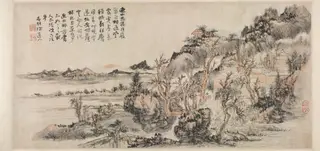
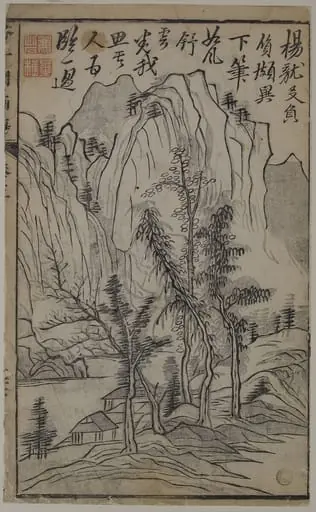
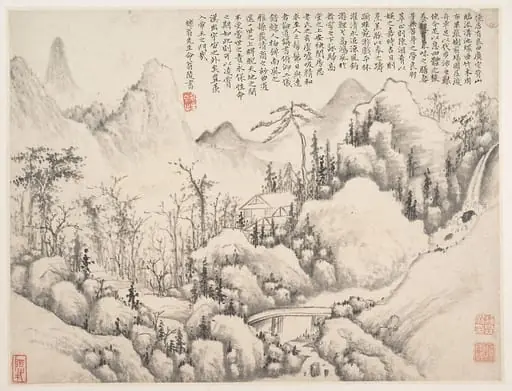
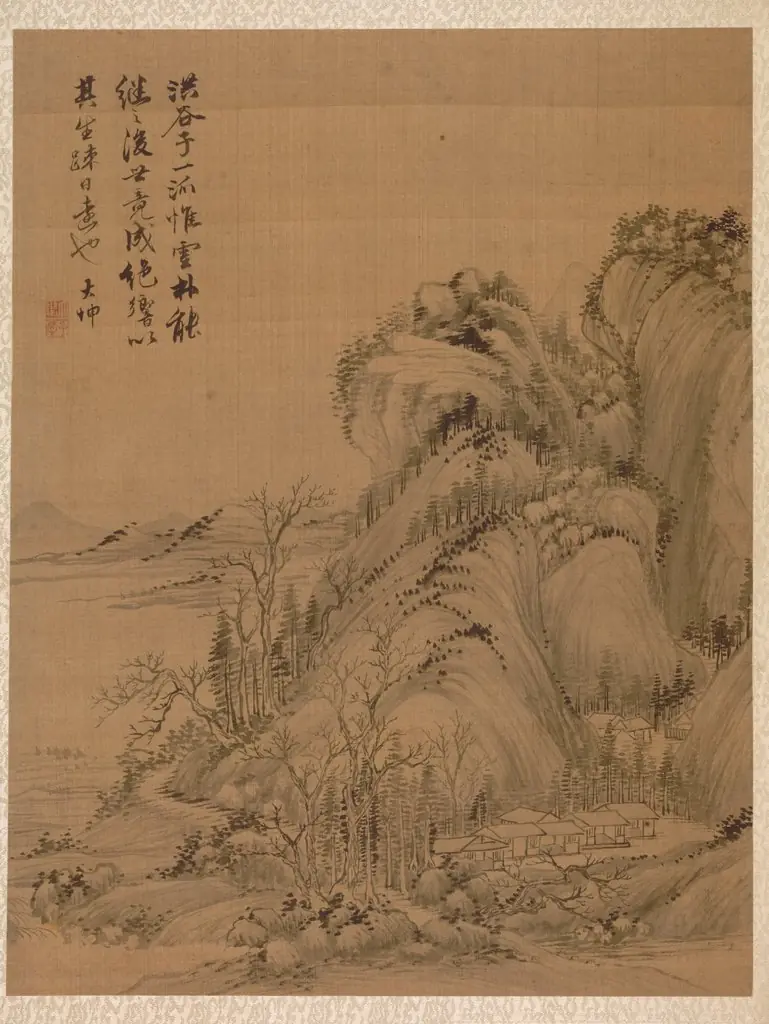
明 董其昌 山水圖 冊|Landscapes after old masters
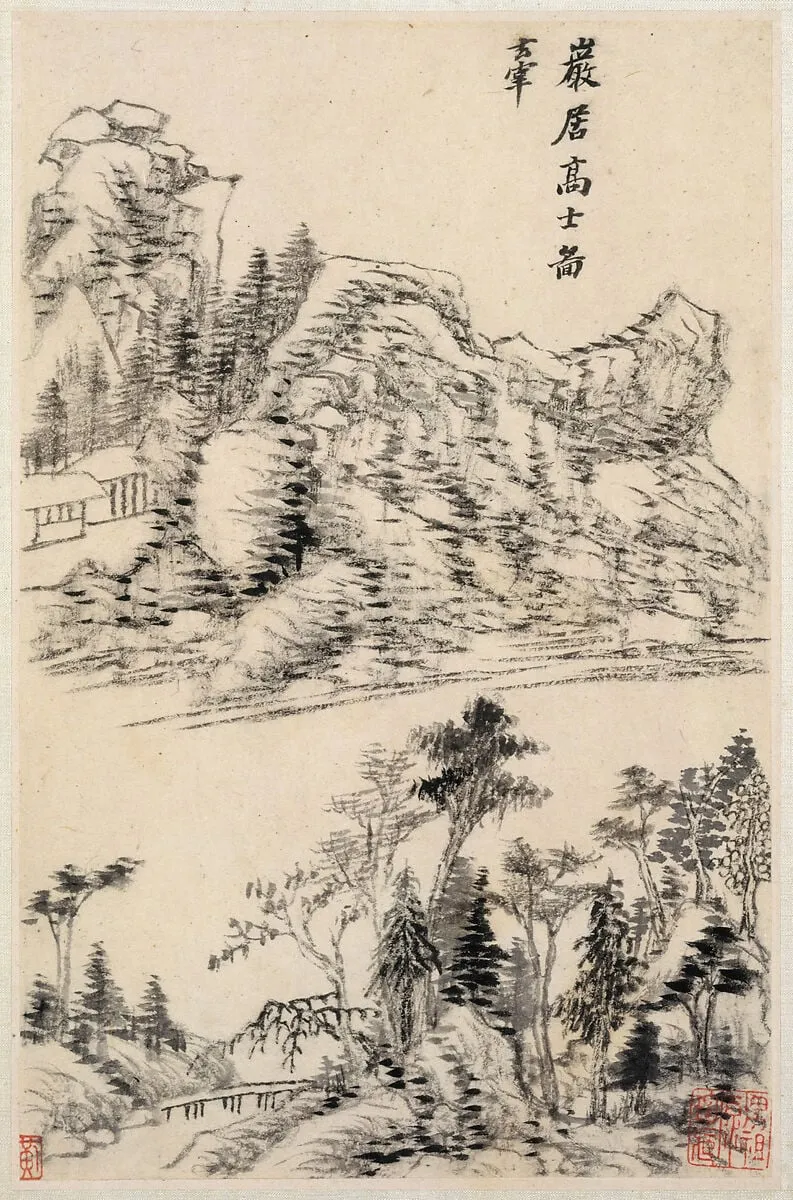
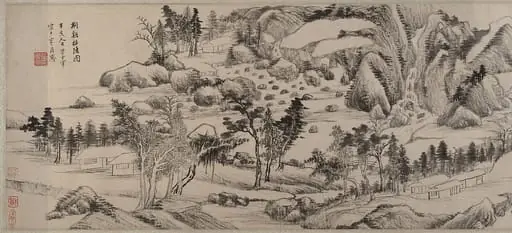
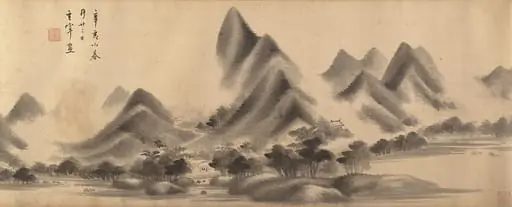
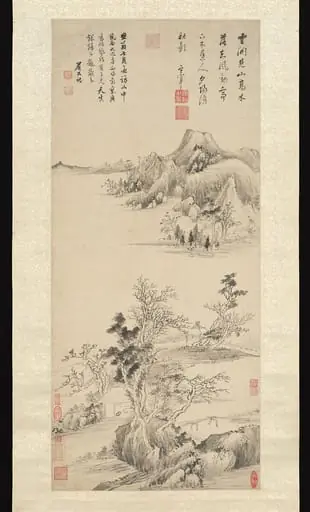
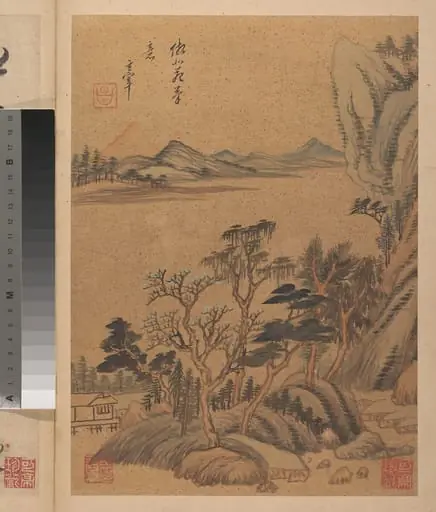
明 董其昌 山水圖 冊|Landscapes after old masters is an ink painting by the Baroque artist Dong Qichang. It dates from 1630 and is held in the collection of the Metropolitan Museum of Art.
- Accession no.
- 1986.266.5a–k
- Credit line
- Edward Elliott Family Collection, Gift of Douglas Dillon, 1986
About this work
Subject & Meaning
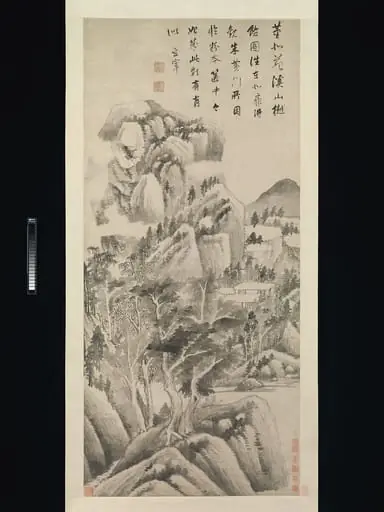
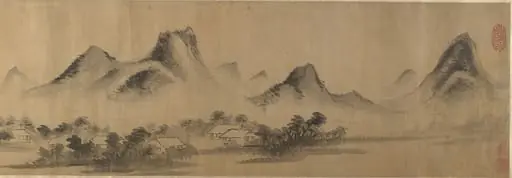
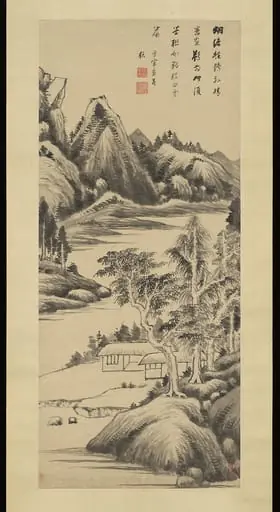
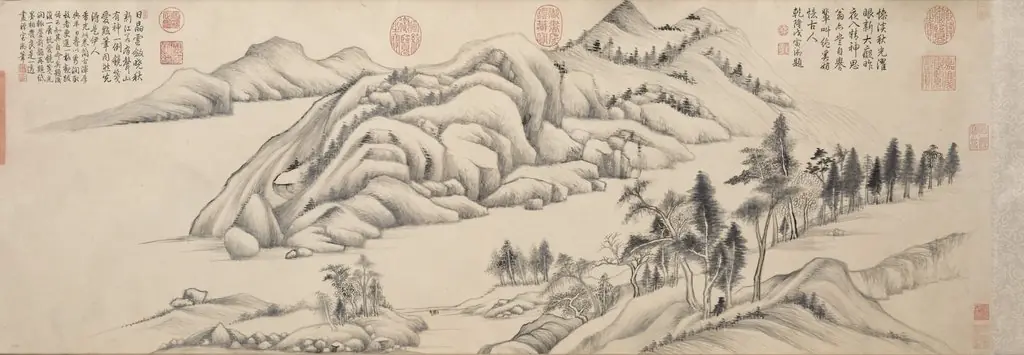
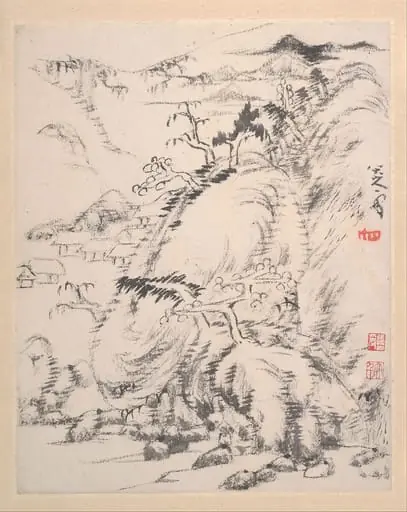
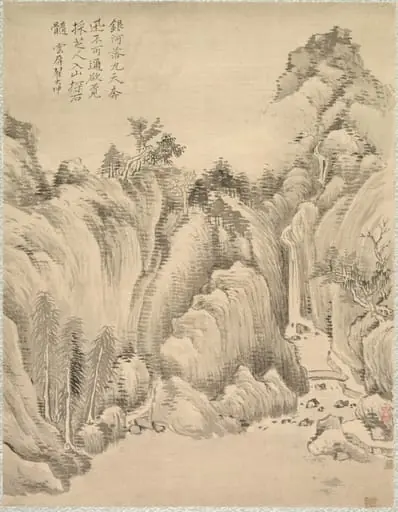
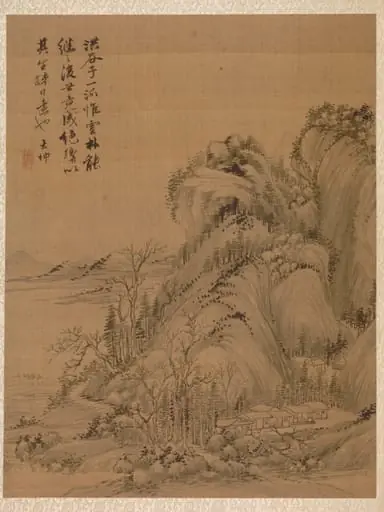
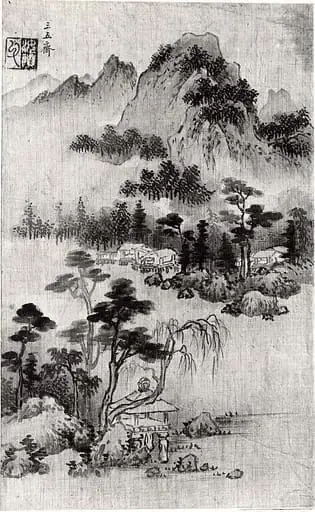
The album of eight leaves, ink on paper, created by Dong Qichang in 1630, presents a traditional Chinese mountain landscape that exemplifies the shan shui genre. The depicted peak, rendered with delicate brushwork, functions as a symbolic representation of permanence, scholarly retreat, and the moral ideal of steadfastness associated with the literati tradition. As a landscape painting after old masters, the work engages with earlier models while asserting Dong's own artistic lineage, linking the subject to concepts of natural order and cultivated aspiration within Ming-era visual culture.
Technique & Style
Created in 1630, this work is an album of eight leaves executed in ink on paper.
Created in 1630, this work is an album of eight leaves executed in ink on paper. The support consists of individual sheets measuring approximately 24.4 cm in height and 16 cm in width. As a landscape painting, the artist employed traditional ink techniques to depict mountainous forms, characteristic of Dong Qichang's engagement with old masters.
The medium of ink allows for the modulation of tone and brushwork essential to the genre, while the paper support provides the necessary texture for expressive strokes. The physical format as an album of eight distinct leaves suggests a modular approach to the landscape subject, allowing for varied compositions within a unified collection. The work is part of the Metropolitan Museum of Art's collection.
History & Provenance
The album of eight leaves, ink on paper, titled Landscapes after old masters was produced in 1630 in China by the Ming-dynasty scholar-official Dong Qichang. The work depicts a mountain and follows the tradition of earlier masters. It has been part of the Metropolitan Museum of Art's collection since its acquisition, remaining on display in New York. The dating, medium, and creation context are documented in the artwork's internal catalogue.
Overview
This album, titled Landscapes after old masters, was created by Dong Qichang around 1630 during the Ming dynasty. Comprising eight individual leaves rendered in ink on paper, the collection presents various mountainous vistas. These compositions exemplify the enduring tradition of Chinese landscape painting, a genre Dong Qichang significantly influenced through his artistic practice and theoretical writings.
Context
Dong Qichang was a prominent figure in late Ming dynasty China, known not only as a painter but also as an influential art theorist, calligrapher, and government official. His artistic output, including this album, was deeply intertwined with his critical writings, which articulated a sophisticated theoretical framework for painting. He became a leading voice, shaping the discourse and practice of art during his era.
Artist & collection

Artist
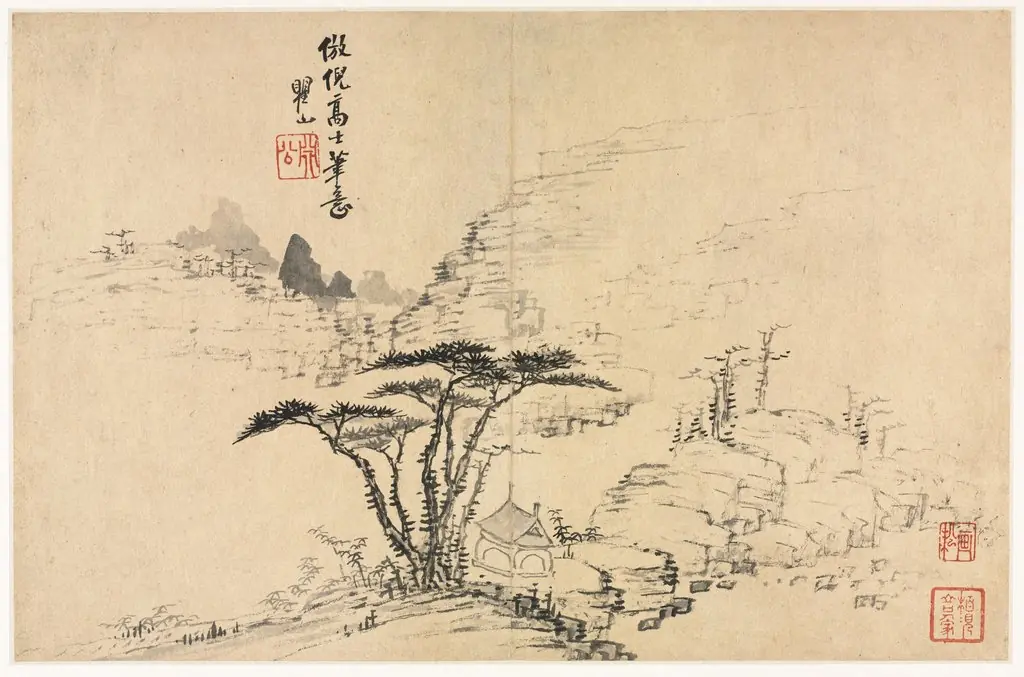
Dong Qichang (Chinese: 董其昌; pinyin: Dǒng Qíchāng; Wade–Giles: Tung Ch'i-ch'ang; courtesy name Xuanzai (玄宰); 1555–1636) was a Chinese art theorist, calligrapher, painter, and politician of the later period of the Ming dynasty.