Artwork
Self-Portrait with Waroquy
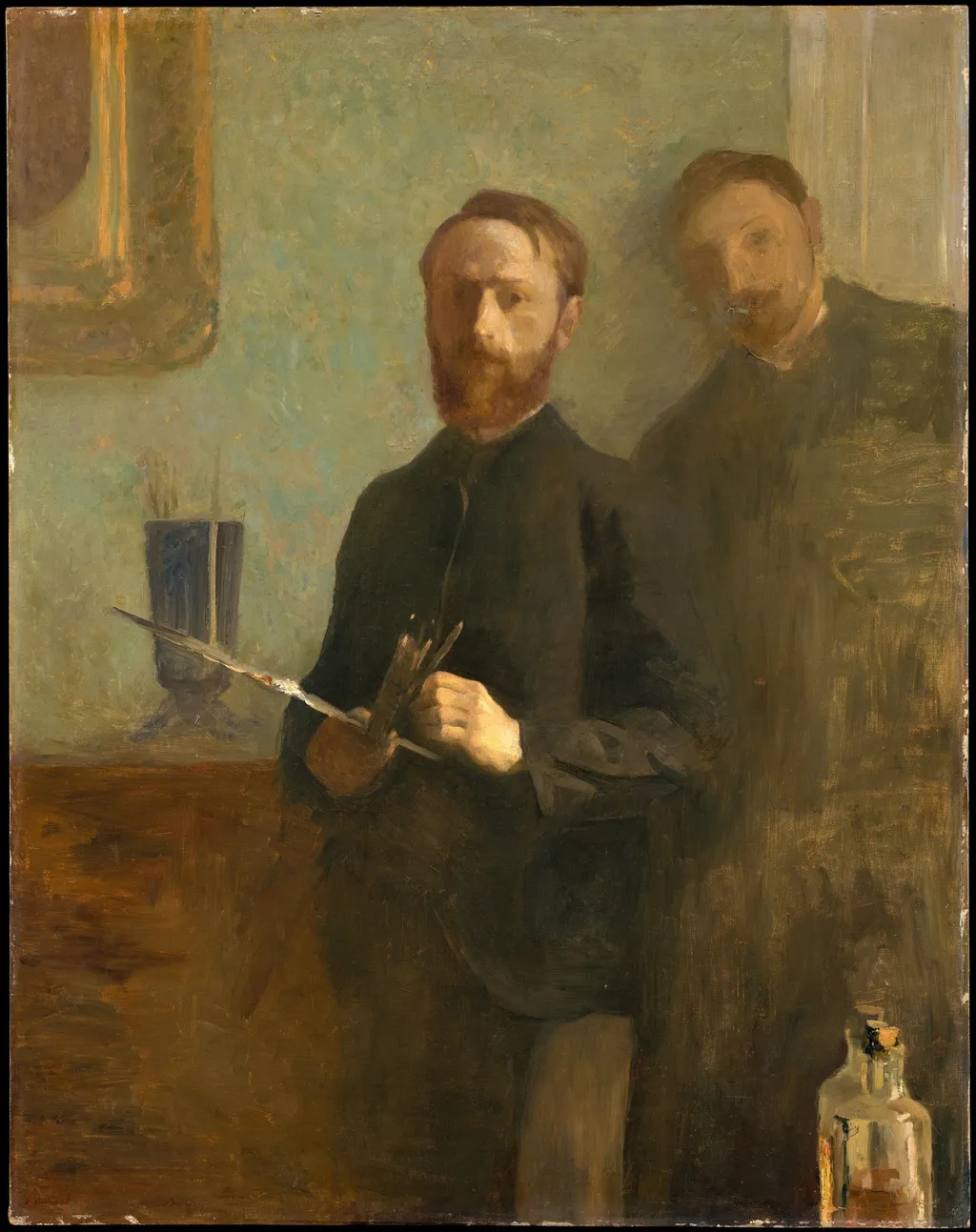
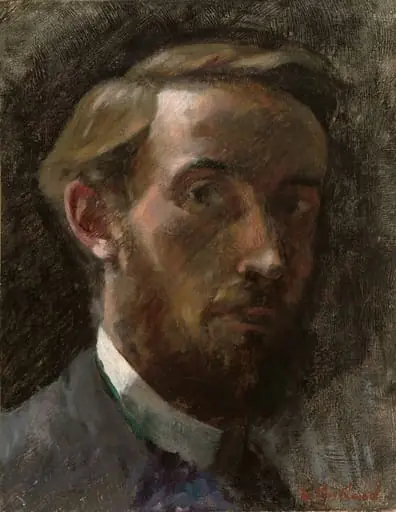
Self-Portrait with Waroquy is an oil painting by the Post-Impressionist artist Édouard Vuillard. It dates from 1895 and is held in the collection of the Metropolitan Museum of Art.
About this work
Subject & Meaning
Iconographically, the composition includes a palette, a traditional symbol of the painter's profession, which reinforces the artist's identity and vocation.
Édouard Vuillard's 1889 oil painting, Self-Portrait with Waroquy, centers on the artist himself as the primary subject. The work functions as a self-portrait, depicting Vuillard alongside a man identified as Waroquy. Iconographically, the composition includes a palette, a traditional symbol of the painter's profession, which reinforces the artist's identity and vocation.
By presenting himself with a companion and his tools, the piece represents a dual assertion of personal presence and artistic practice. The inclusion of Waroquy suggests a social or collaborative dimension to the artist's self-definition, moving beyond a solitary study to a shared moment within the studio environment.
Technique & Style
Self-Portrait with Waroquy is an oil‑on‑canvas painting measuring approximately 92.7 × 72.4 cm, completed in 1889. The work is executed on a stretched canvas support and belongs to the portrait genre, depicting the artist himself alongside a painter’s palette, a device that signals the self‑referential nature of the image. As a self‑portrait, it functions as both likeness and symbolic reference to the act of painting, and it is classified as a portrait in contemporary catalogues. The painting is part of the Metropolitan Museum of Art’s collection and is displayed to the public.
History & Provenance
The work was painted by Édouard Vuillard in 1889, as indicated by both internal records and Wikidata. It entered the collection of the Metropolitan Museum of Art after passing through two documented owners: Ker-Xavier Roussel and Sam Salz. Roussel, a close associate of Vuillard, likely held the painting during the artist’s lifetime, while art dealer Sam Salz later acquired and subsequently transferred it to the museum.
The painting’s early provenance thus reflects the Parisian artistic milieu of the late 19th century and the subsequent circulation of Vuillard’s work through private dealers and collectors before its institutional acquisition.
Self-Portrait with Waroquy is held in the collection of the Metropolitan Museum of Art in New York. The painting, executed in oil on canvas, was begun in 1889 and measures 92.7 by 72.4 centimeters. Its documented provenance traces ownership to the painter Ker-Xavier Roussel and later to the dealer Sam Salz before entering the Metropolitan Museum's holdings. No specific accession number or exhibition history is recorded in the available sources.
Overview
Édouard Vuillard, a French painter associated with the avant-garde group Les Nabis, created Self-Portrait with Waroquy in 1895. This oil painting captures the artist himself, palette in hand, alongside another figure, Waroquy, within a dimly lit interior. The work exemplifies Vuillard's characteristic approach to portraiture and domestic scenes, employing a distinctive visual language that reflects his artistic explorations during this period. It is now part of The Metropolitan Museum of Art's collection.
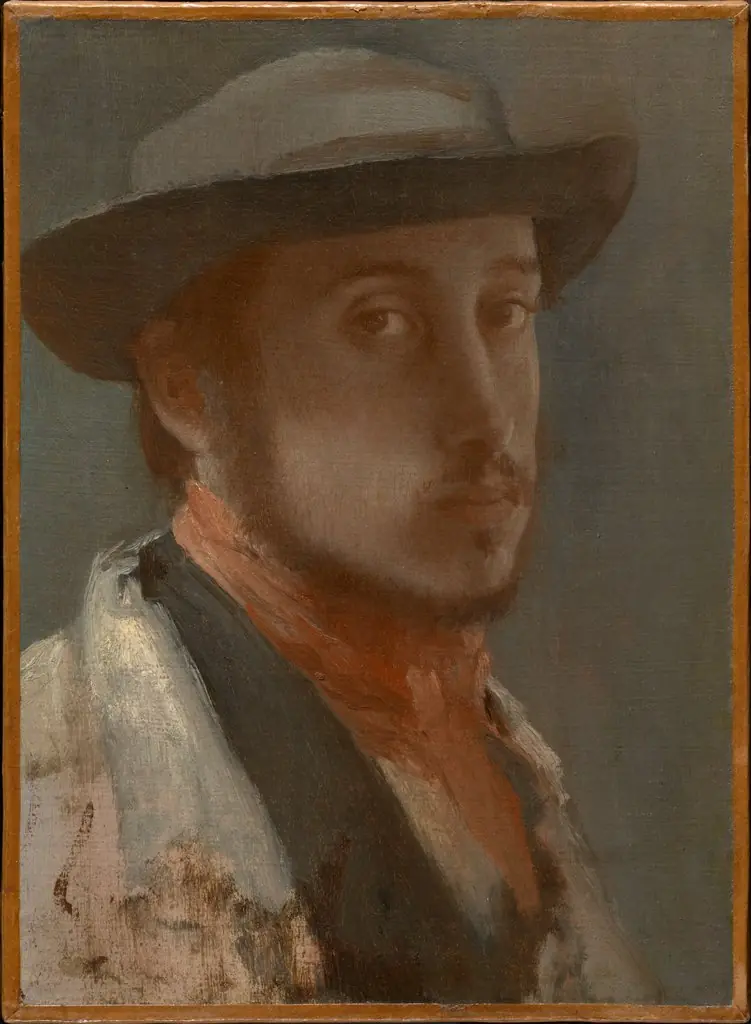
Own this work as a print
Artist & collection
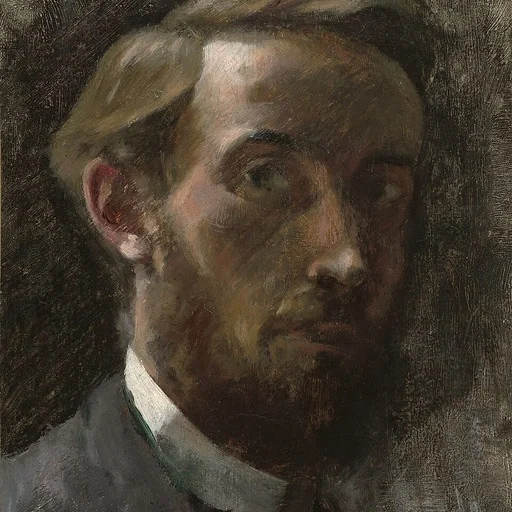
Artist
Jean-Édouard Vuillard (French:; 11 November 1868 – 21 June 1940) was a French painter, decorative artist, and printmaker.

- Self-Portrait
 Self-Portrait
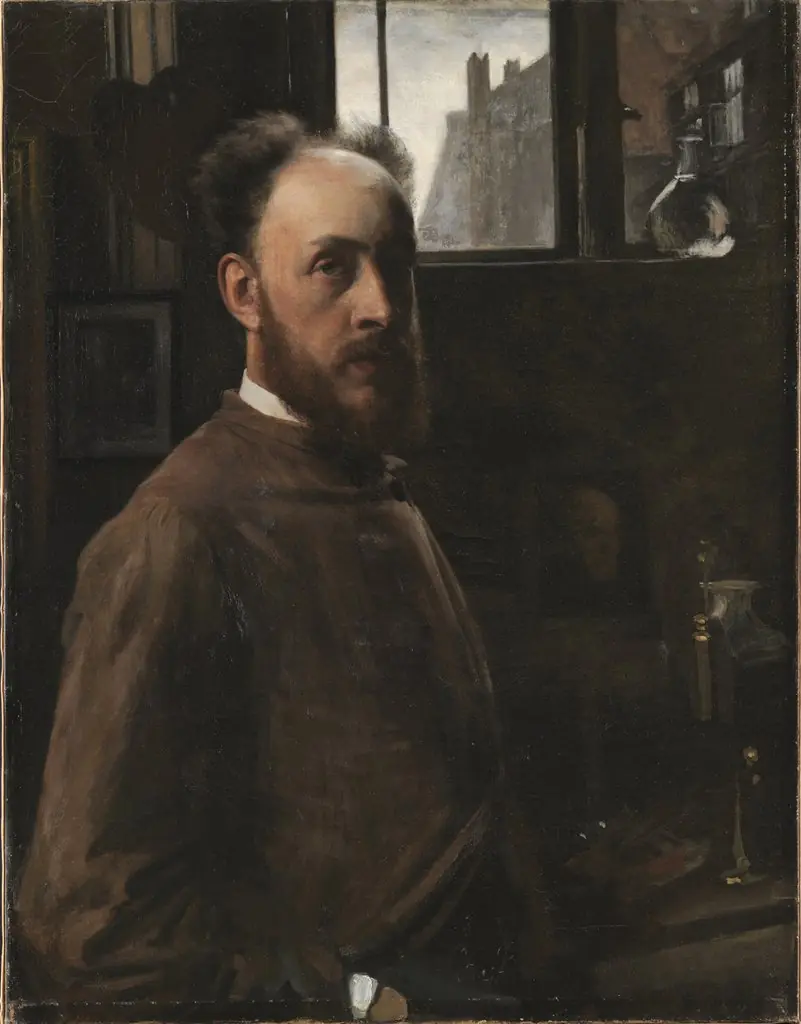 Self-Portrait
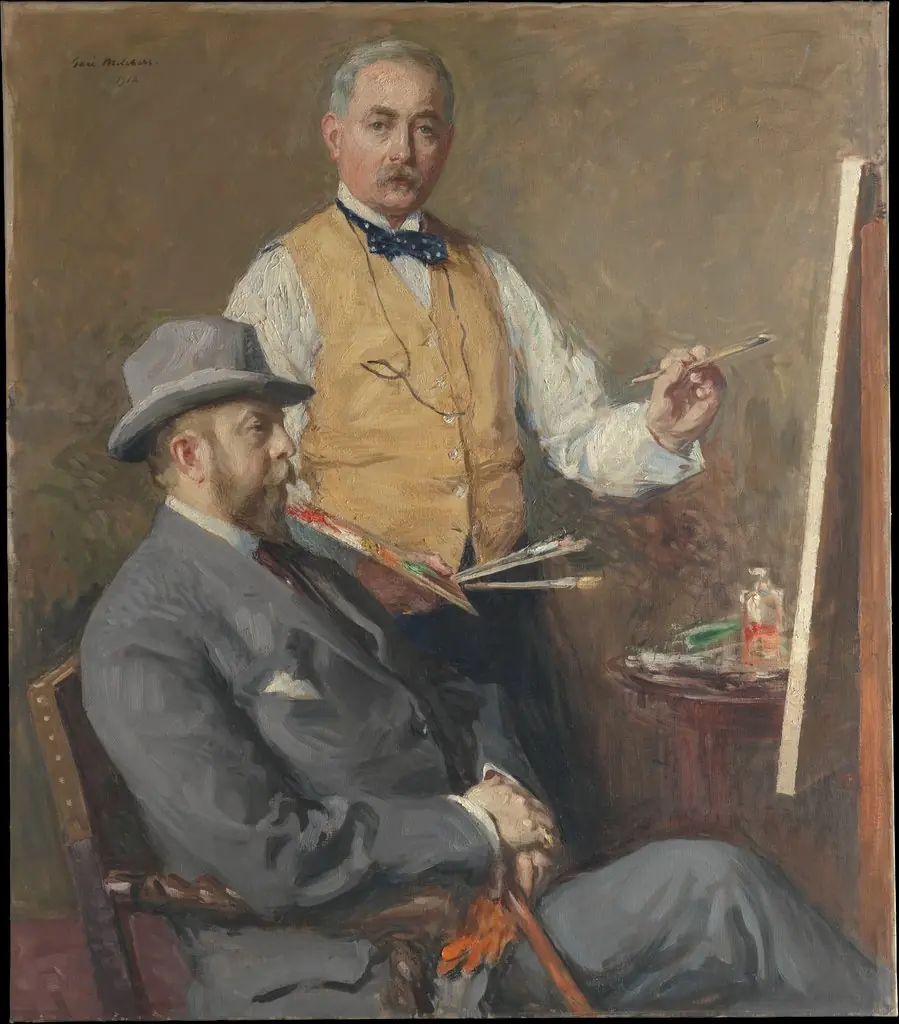 In the Studio (Gari Melchers and Hugo Reisinger)
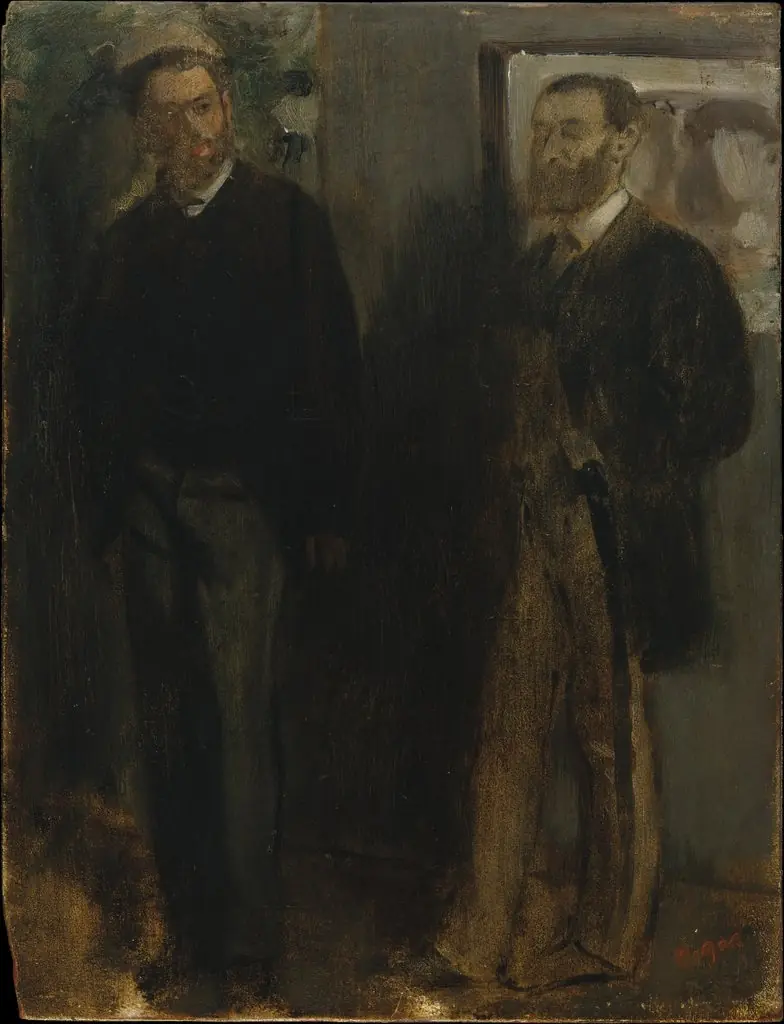 Two Men
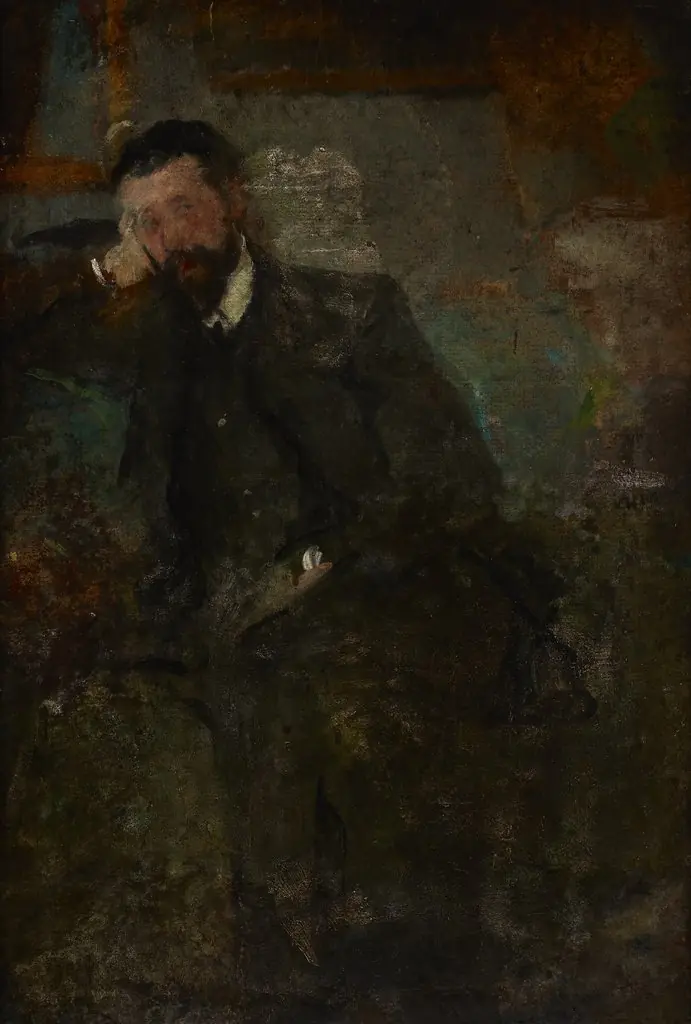 Portrait of a Man – two-sided painting
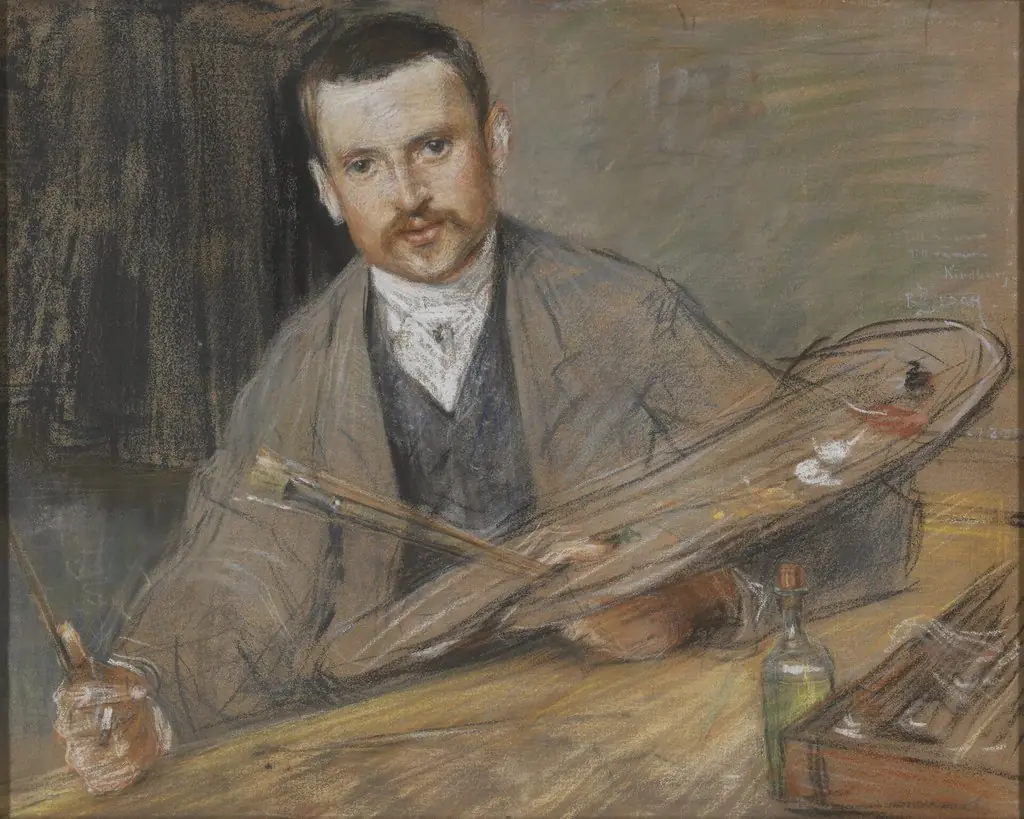 Johan Kindborg, 1861-1907, konstnär, gift med trägravören Emy Edman
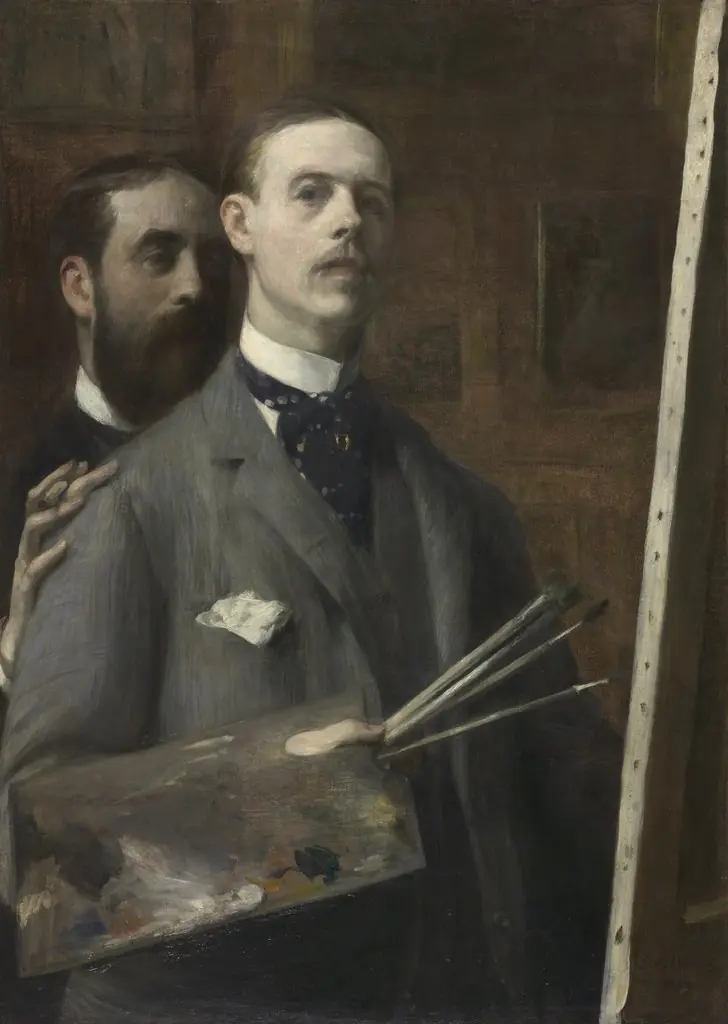 Self-Portrait with Raphael de Ochoa
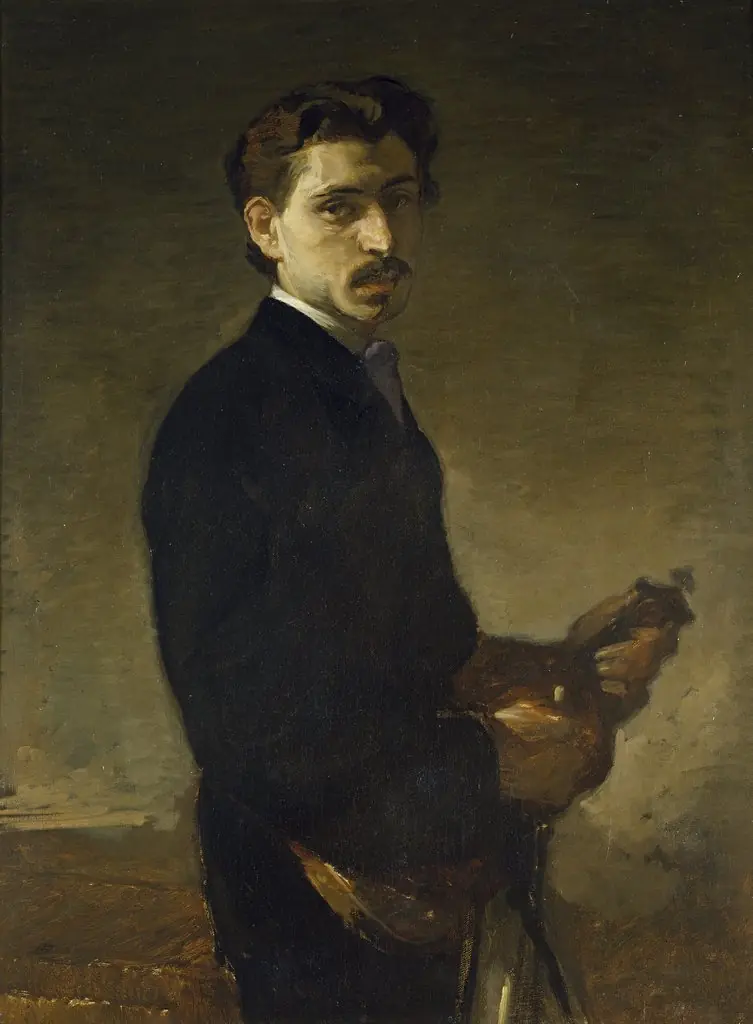 Ettore Pinelli, the Violinist
 Self-Portrait with Raphael de Ochoa
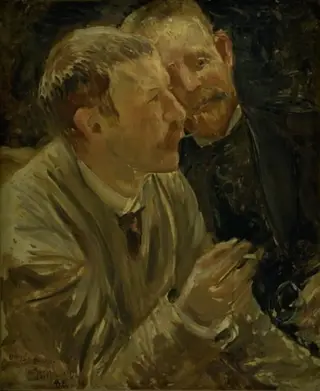 Portrait of the Painters Bruno Liljefors and Alf Wallander
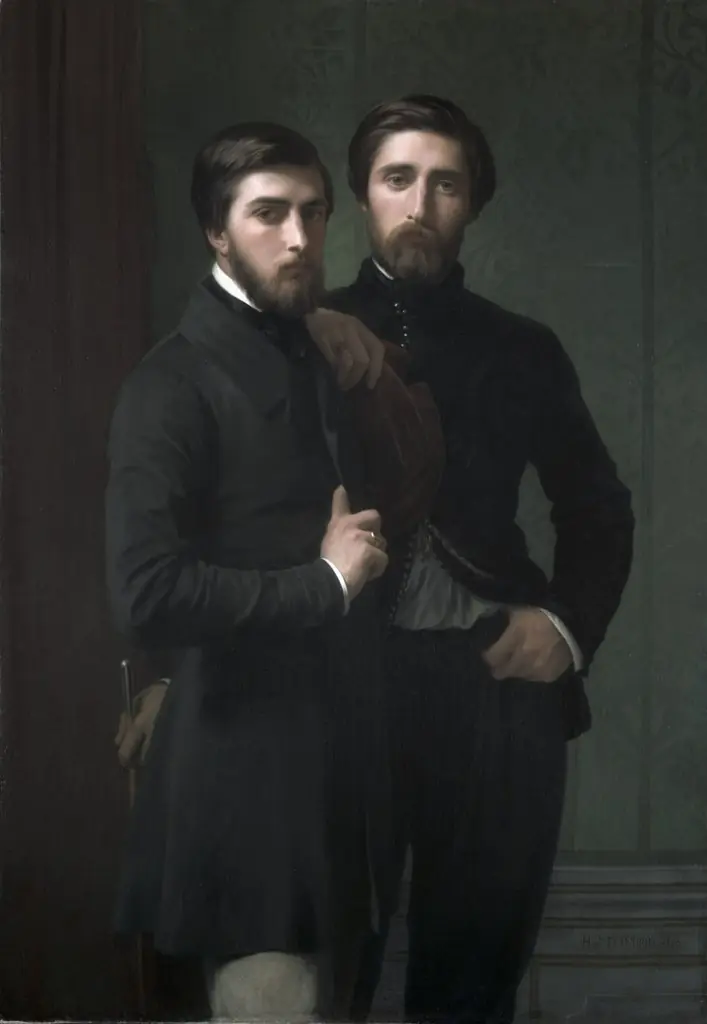 René-Charles Dassy and His Brother Jean-Baptiste-Claude-Amédé Dassy