Artwork
Druksland Physical & Social, 15 January 1974, 11.30am
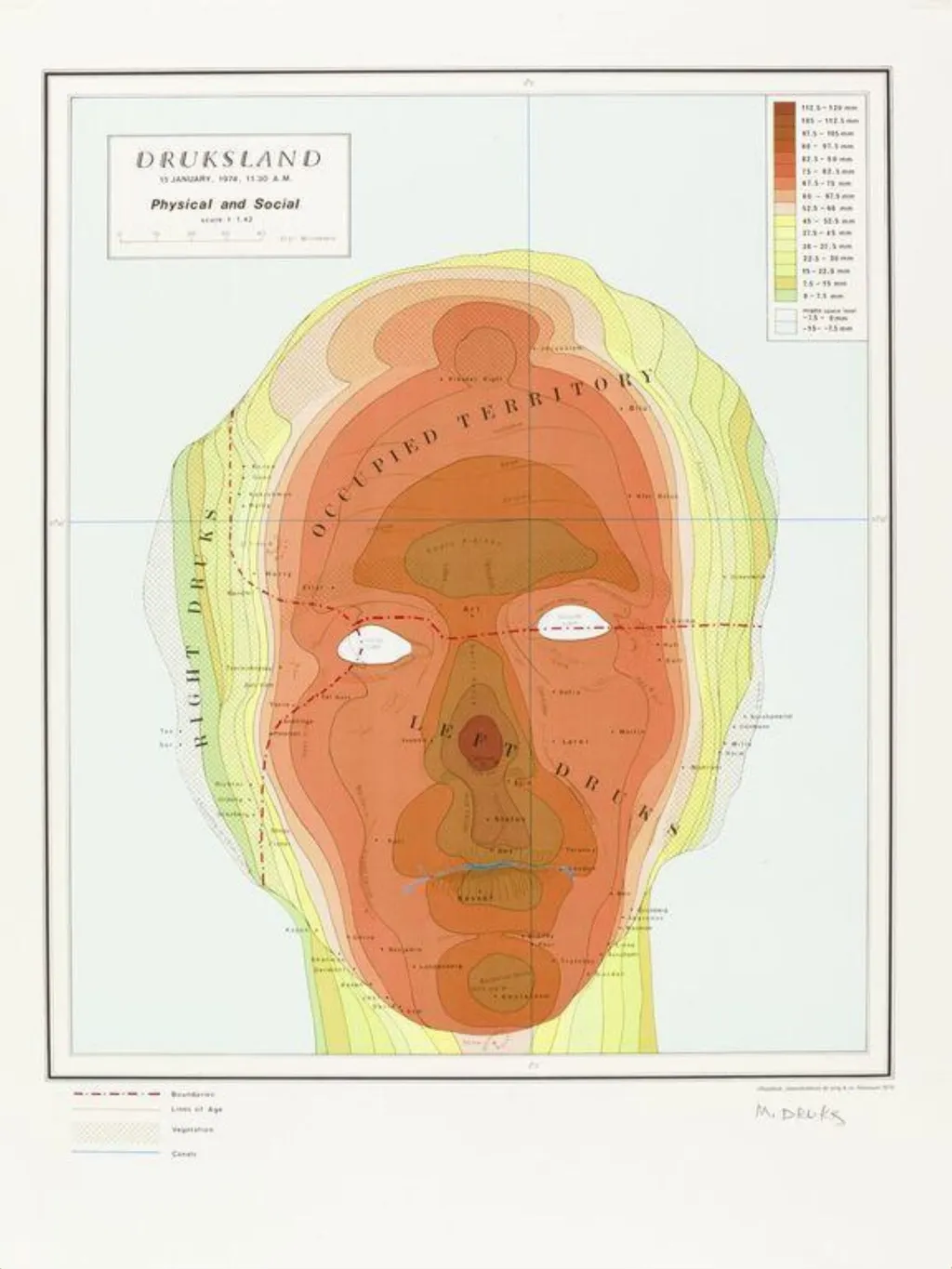
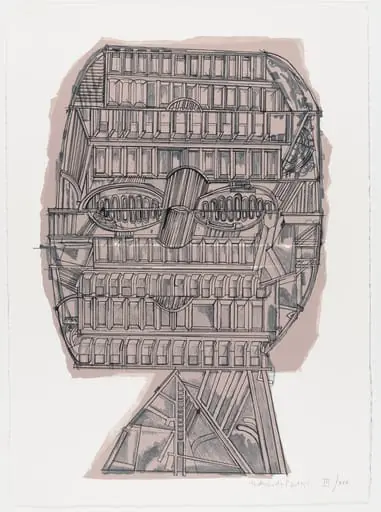
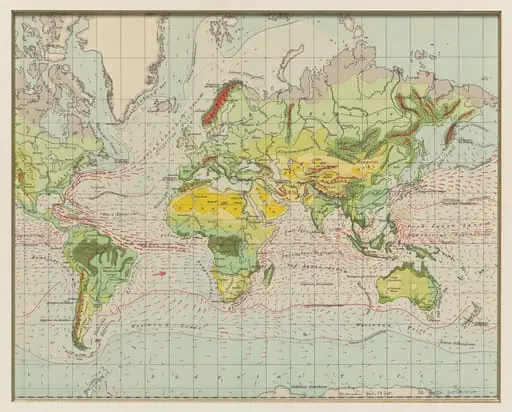
Druksland Physical & Social, 15 January 1974, 11.30am is a print by Michael Druks. It dates from 1974 and is held in the collection of the Victoria and Albert Museum.
About this work
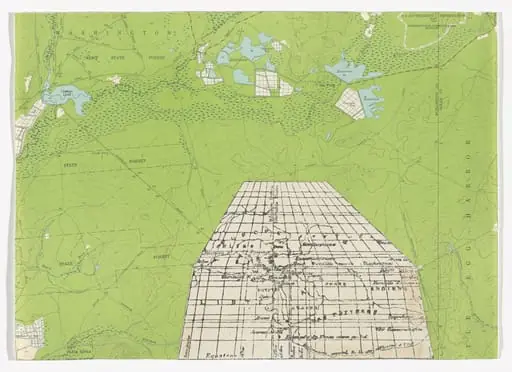
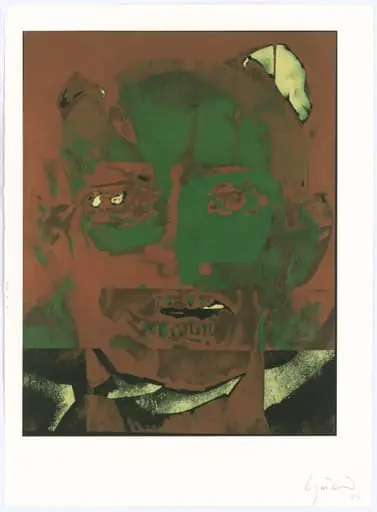
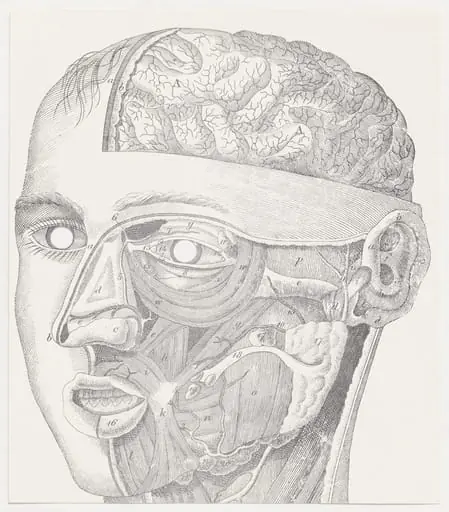
Michael Druks made a print in 1974 using mapping as his language. It’s a self-portrait turned into a map, blending personal identity with shared symbols anyone can read.
The print came from a big European printer inviting an artist to create a holiday gift for clients. It shows how art and industry mixed in the 1970s.
Check out the Victoria and Albert Museum.
Overview
Created on 15 January 1974, Druksland Physical & Social is a conceptual print by Israeli-born artist Michael Druks, made during his early years in Britain.
Created on 15 January 1974, Druksland Physical & Social is a conceptual print by Israeli-born artist Michael Druks, made during his early years in Britain. Commissioned by Steendrukkerij de Jong & Co., a leading European printing house, the work was produced as an annual promotional gift for clients. It reflects Druks’ interest in translating personal experience into visual systems accessible across cultural boundaries, using cartographic forms as a neutral, universal language.
Subject & Meaning
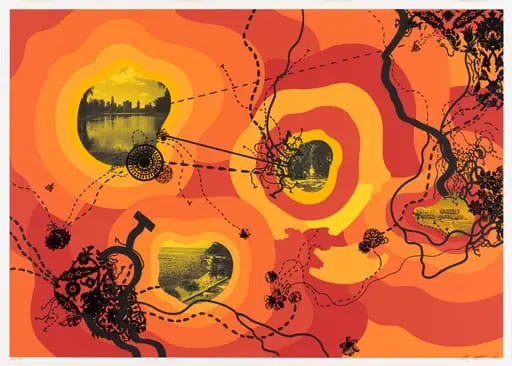
The print functions as a self-portrait rendered through cartographic symbols, merging geographic representation with personal biography. Locations, routes, and markers correspond to moments in Druks’ life, yet are encoded in a style that mimics official maps. This fusion challenges the objectivity of cartography, suggesting identity is not fixed but constructed through layered, interpretable signals, both private and publicly legible.
Technique & Style
Druks employed precise, diagrammatic line work and standardized cartographic icons, contour lines, symbols for landmarks, and grid structures, to construct his personal geography. The print’s clarity and restraint reflect the influence of industrial printing technologies then emerging in Europe. Its aesthetic aligns with conceptual art’s preference for systems over expression, prioritizing legibility and structure over emotional tone or ornamentation.
History & Provenance
Commissioned by Steendrukkerij de Jong & Co. in 1974, the print was produced using advanced photo-mechanical methods then transitioning toward digital processes. Distributed as a corporate gift to clients, it was not initially intended for museum collections. The Victoria and Albert Museum later acquired it as part of its documentation of the intersection between art, design, and industrial printing practices in the 1970s.
Context
In the early 1970s, conceptual artists across Europe and North America increasingly turned to systems-based languages, maps, charts, lists, to explore identity and perception. Druks’ work emerged within this trend, responding to both the rise of global communication networks and the growing skepticism toward authoritative narratives. The print also reflects the era’s blurring boundaries between fine art and commercial design.
Legacy
Druksland Physical & Social remains a significant example of how personal narrative can be structured through impersonal visual codes. It anticipates later developments in data visualization and digital mapping, where individual experience is encoded in standardized formats. The work continues to be referenced in discussions about the politics of representation and the role of institutional frameworks in shaping meaning.
Artist & collection