Artwork
La Majesté Royale
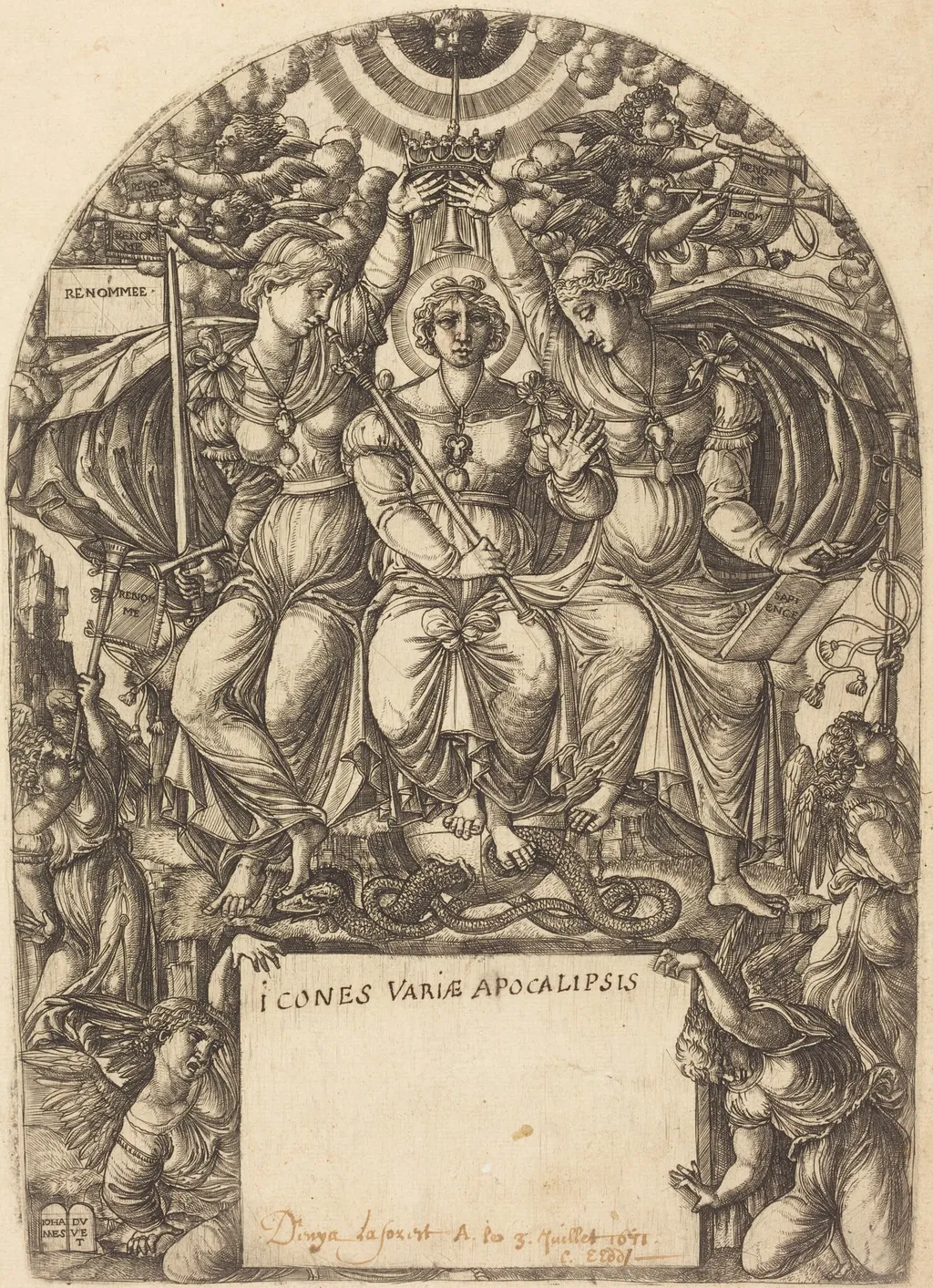
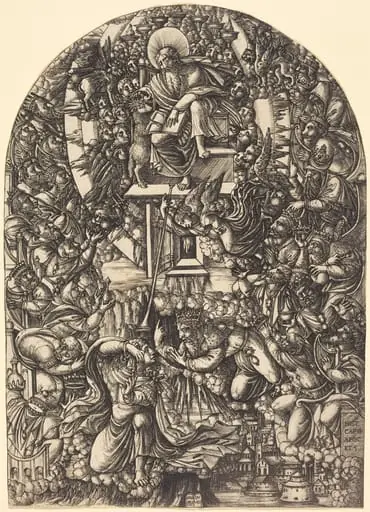
La Majesté Royale is an ink print by the Renaissance artist Jean Duvet. It dates from 1548 and is held in the collection of the National Gallery of Art.
- Inscription
- Inscribed:"IOHA / NNES / DV / VE / T" recto, on plate, on double-tablet, lower left. "RENOMMEE" recto, on plate, on plaquet at upper left, and on five banners of trumpets in upper left, upper right, and center left. "SAPI / ENCE" recto, on plate, on book at center right. "ICONES VARIAE APOCALIPSIS" recto, on plate, lower center, black ink, unknown hand. "Dinya La Foret A. le 3 juillet 1641 / C. E. Edd 1" recto, on plate, bottom center, brown ink, unknown hand. "N. 60" recto, lower right margin, graphite, unknown hand. "No. 99" verso, lower left margin, graphite, unknown hand.
- Markings
- Marked:Collection d'Arenberg (Lugt 567) verso, lower left margin, blue stamped ink. "National Gallery of Art, LRJ" verso, lower left, black stamped ink.
About this work
Overview
La Majesté Royale is an engraving created around 1548 by Jean Duvet, a French goldsmith and printmaker.
La Majesté Royale is an engraving created around 1548 by Jean Duvet, a French goldsmith and printmaker. Executed on laid paper, it belongs to a small corpus of approximately 73 known plates by the artist. The work exemplifies Duvet’s singular approach to printmaking, marked by dense imagery and a deeply personal interpretation of religious subjects, distinguishing him from his contemporaries in Renaissance Europe.
Subject & Meaning
The image depicts a crowned female figure holding a globe, surrounded by winged beings and figures clad in robes, each holding unusual implements. The composition, annotated with the Latin phrase 'Icones Variae Apocalipsis,' suggests a vision drawn from the Book of Revelation. The crowded arrangement and symbolic objects imply a complex theological narrative, likely reflecting Duvet’s contemplation of divine judgment and cosmic order.
Technique & Style
Duvet employed fine, sharp lines and meticulous cross-hatching to build dense, shadowed forms across the entire surface. The engraving’s surface is saturated with detail, tiny faces, intricate crowns, and tangled lines fill every available space. This method creates a sense of visual overload, emphasizing spiritual intensity over spatial clarity. His technique prioritizes symbolic density over naturalistic representation, resulting in a highly idiosyncratic aesthetic.
History & Provenance
Jean Duvet, active from the late 15th century until after 1562, was among the earliest French artists to achieve distinction in printmaking. While few of his works were widely circulated during his lifetime, La Majesté Royale survives as a key example of his output. Its survival in private and institutional collections attests to its enduring interest among scholars of Northern Renaissance graphic art, though its original commission remains undocumented.
Context
In mid-16th-century France, printmaking was still developing as a distinct art form, dominated by Northern European models. Duvet worked outside mainstream trends, avoiding classical harmony in favor of visionary intensity. His imagery, rooted in apocalyptic texts and personal devotion, diverged from the humanist ideals prevalent in Italian and even some French art of the period, making his work an outlier in the era’s visual culture.
Legacy
Though largely overlooked during his lifetime, Duvet’s prints gained recognition in later centuries for their emotional force and unconventional composition. La Majesté Royale, with its dense symbolism and raw expressiveness, is now seen as a precursor to later visionary artists. His work is studied not for technical perfection but for its unmediated spiritual urgency, offering a rare glimpse into individual mysticism within Renaissance printmaking.
Own this work as a print
Artist & collection
Artist
Jean Duvet (1485 – after 1562) was a French Renaissance goldsmith and engraver, now best known for his engravings.

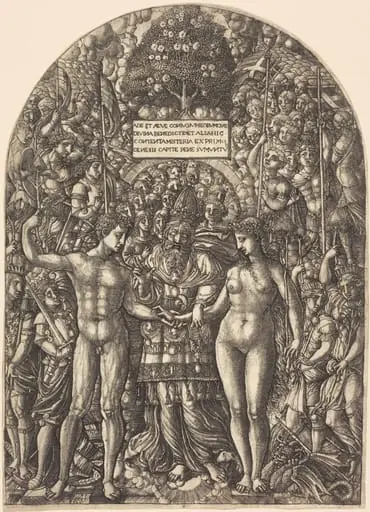
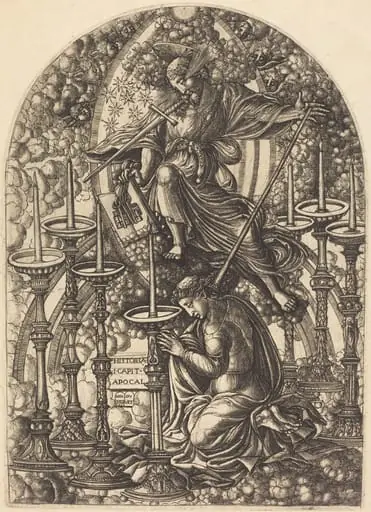
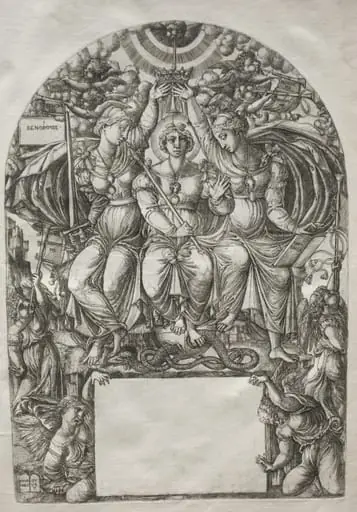 The Royal Majesty
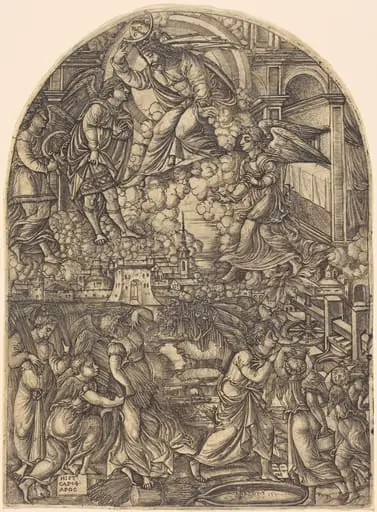
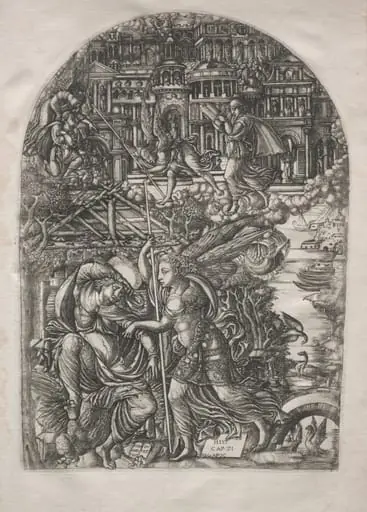 The Apocalypse: The Angel Shows St. John the New Jerusalem
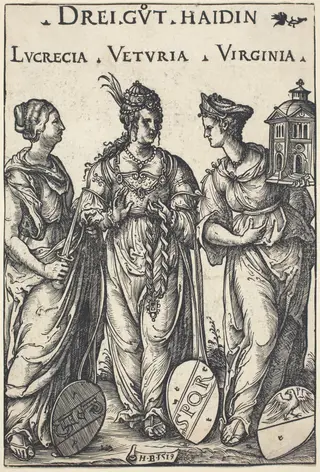 Lucretia, Veturia and Virginia
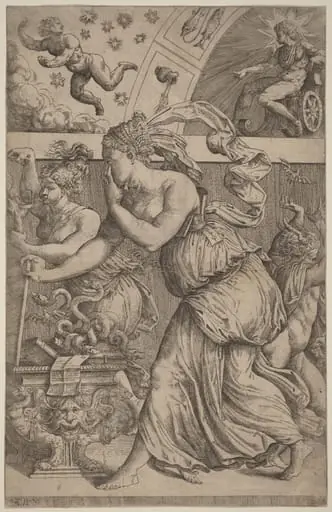 Pandora Opening Her Box
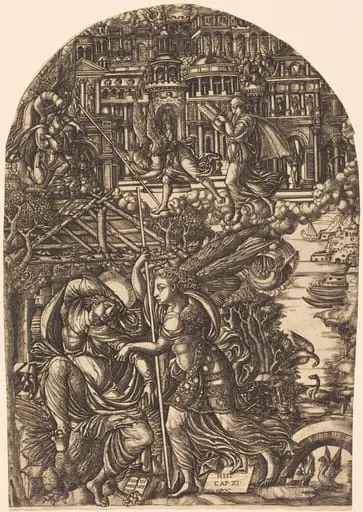 The Angel Shows Saint John the New Jerusalem
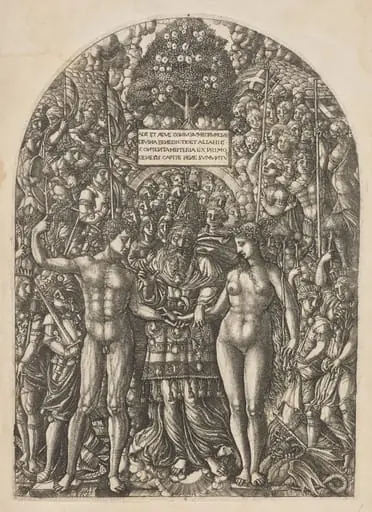 Marriage of Adam and Eve
 The Assumption of the Virgin
 Combats and Triumphs No. 3
 Dialectica (Dialectics)
 The Assumption of the Virgin
 Pandora Opening Her Box
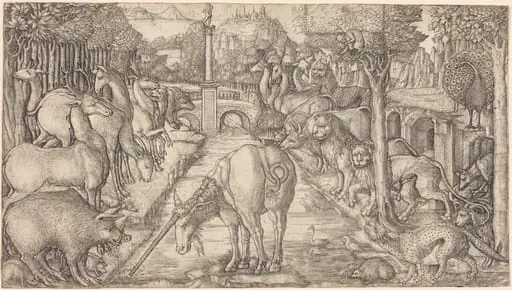
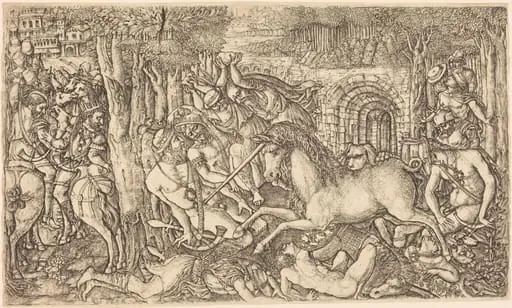
- The Triumph of the Unicorn