Artwork
The Savoyard Boy
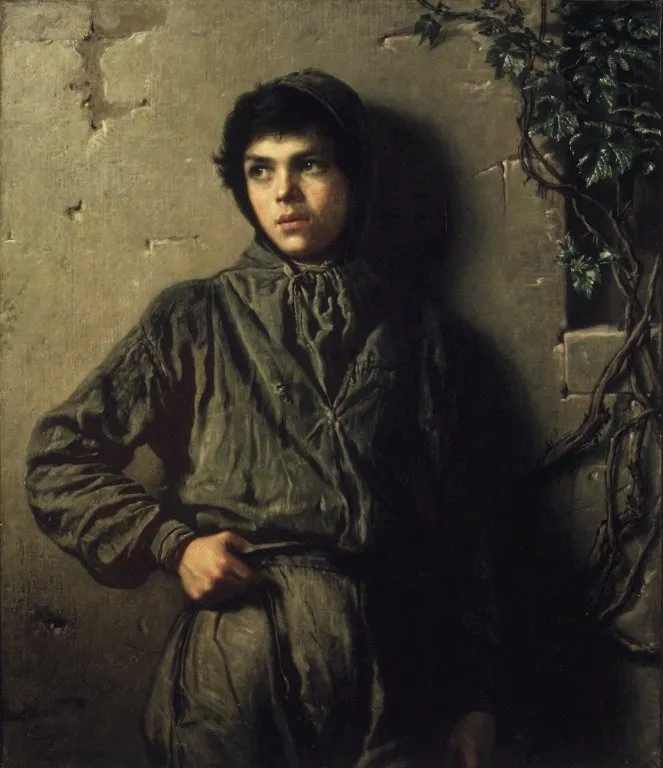
The Savoyard Boy is an oil painting by the Realist artist Eastman Johnson. It dates from 1853 and is held in the collection of the Brooklyn Museum.
About this work
Overview
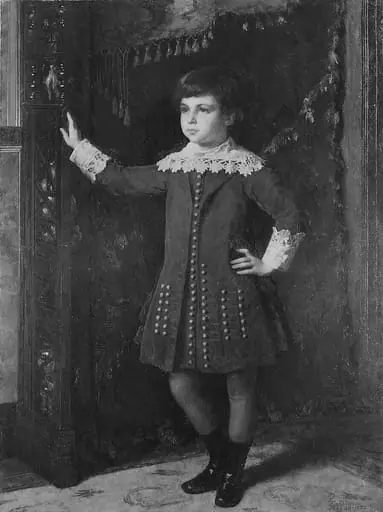
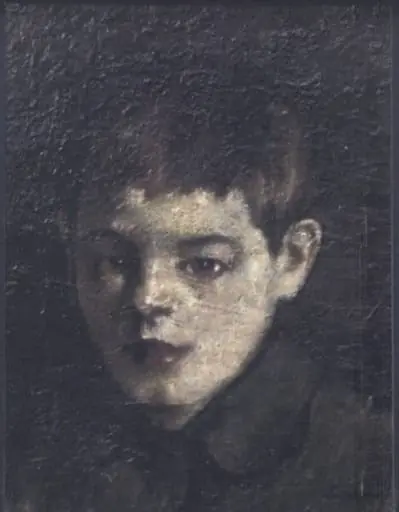
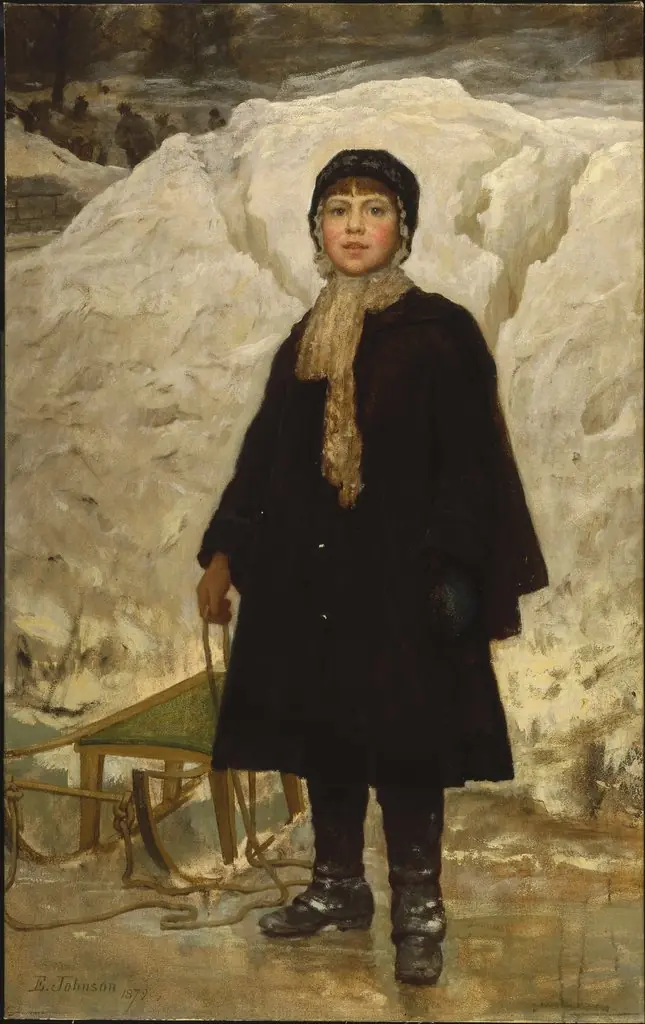
Painted in 1853 by American artist Eastman Johnson, The Savoyard Boy is an oil portrait depicting a young boy from the Savoy region of the Alps. Johnson, then early in his career, captured the boy with quiet dignity, avoiding theatricality. The work reflects his growing interest in observational realism, shaped by his exposure to European painting traditions during his time in The Hague.
Subject & Meaning
The subject is a boy, likely a traveling peddler or migrant worker from the Savoy region, dressed in simple, worn clothing.
The subject is a boy, likely a traveling peddler or migrant worker from the Savoy region, dressed in simple, worn clothing. His posture, hand on hip, gaze lowered, suggests introspection rather than performance. The faint, indistinct object in his left hand hints at his trade without specifying it, preserving an air of mystery. The setting, a plain stone wall with a single vine, grounds him in a quiet, unadorned reality.
Technique & Style
Johnson employed muted earth tones, browns, grays, and soft ochres, to unify the boy and his background. Brushwork is restrained, favoring subtle tonal transitions over bold outlines. The lighting is even and diffuse, avoiding dramatic contrasts.
This approach aligns with Northern European realism, particularly the quiet intensity found in Dutch genre paintings Johnson studied during his time in the Netherlands.
History & Provenance
Created during Johnson’s formative years abroad, the painting entered the Brooklyn Museum’s collection in the 20th century. It was likely brought back to the United States after his return from Europe in the mid-1850s. While not widely exhibited in its early years, it has since been recognized as an early example of Johnson’s commitment to portraying ordinary individuals with psychological depth.
Context
In the 1850s, American art was shifting from idealized portraiture toward scenes of everyday life. Johnson’s focus on a foreign laborer reflects broader cultural interest in migration and class, even as the U.S. grappled with its own social divisions. The Savoyard boy, though foreign, was part of a transnational movement of itinerant workers whose presence in cities was increasingly visible.
Legacy
Though less known than Johnson’s later works, The Savoyard Boy anticipates his mature style and thematic concerns. It demonstrates his early ability to convey dignity in marginal figures, a tendency that would define his career. The painting remains a quiet but significant step in the development of American realism, bridging European influences with domestic subject matter.
Artist & collection
Artist
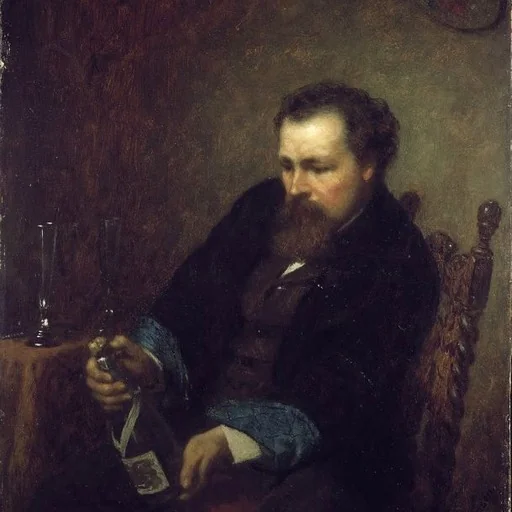
Jonathan Eastman Johnson (July 29, 1824 – April 5, 1906) was an American painter and co-founder of the Metropolitan Museum of Art, New York City, with his name inscribed at its entrance.