Artwork
Portrait of Lizzy Ansingh
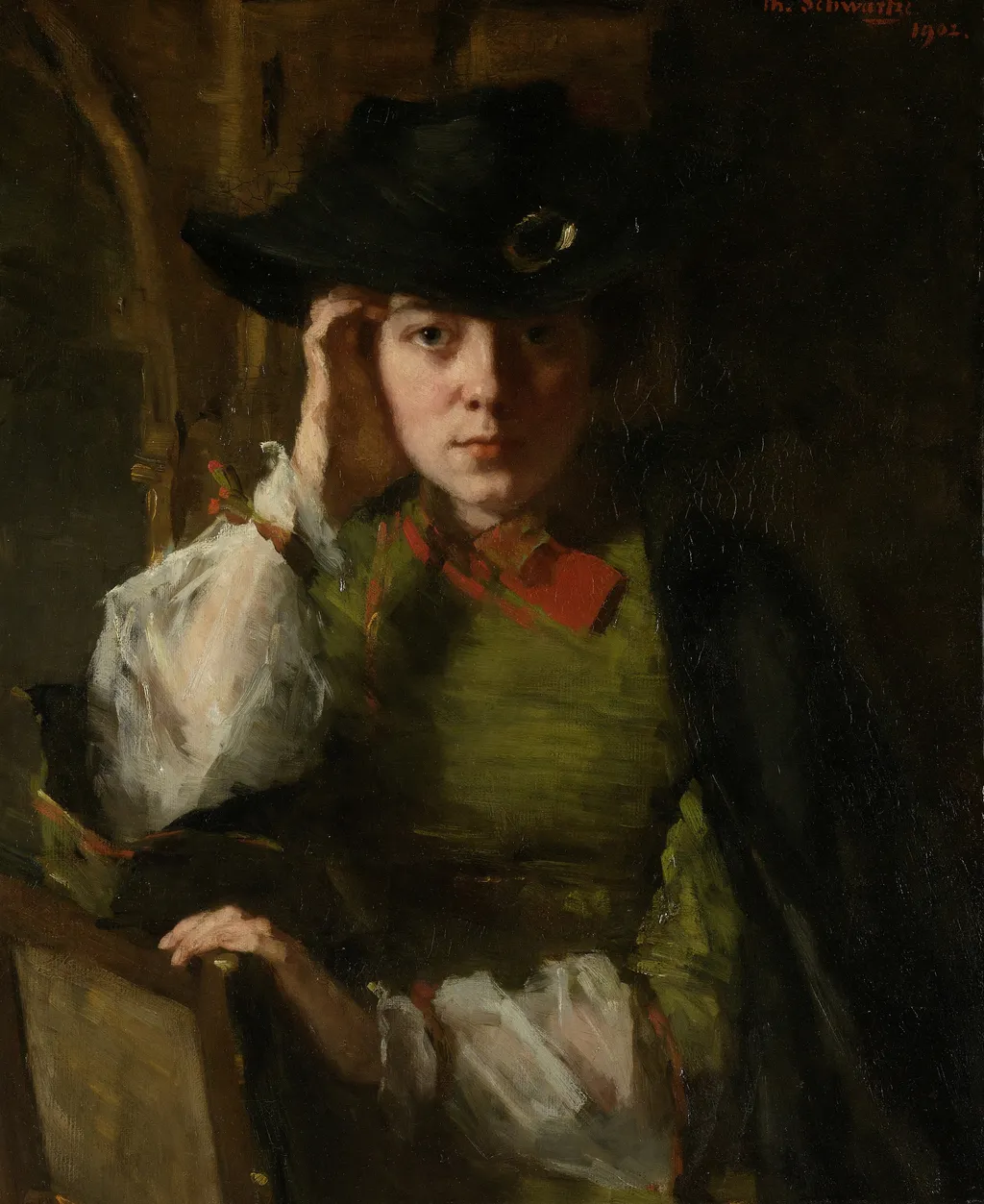
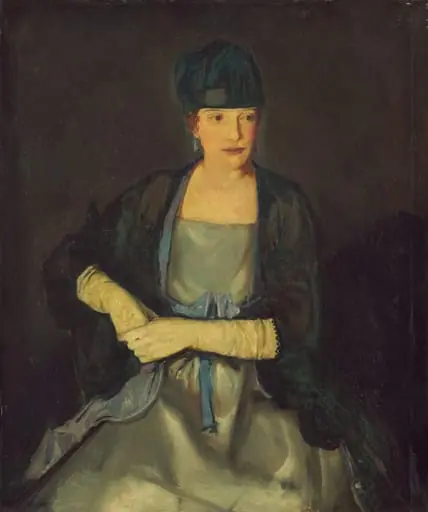
Portrait of Lizzy Ansingh is an oil painting by the Impressionist artist Thérèse Schwartze. It dates from 1902 and is held in the collection of the Rijksmuseum.
About this work
Subject & Meaning
Schwartze portrayed her niece on multiple occasions, and this 1902 work is the most celebrated of those portraits.
The painting depicts Lizzy Ansingh, a Dutch painter and Thérèse Schwartze's niece, who moved in with her aunt in 1891 to study in Amsterdam and remained there until 1908. Schwartze portrayed her niece on multiple occasions, and this 1902 work is the most celebrated of those portraits.
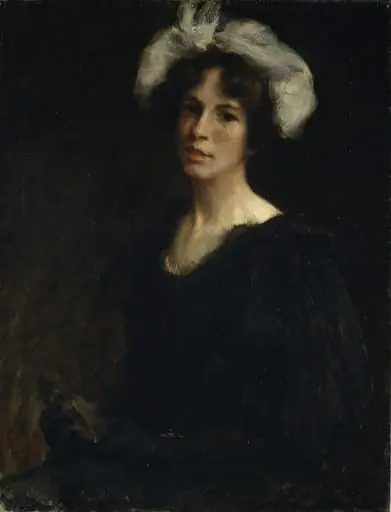
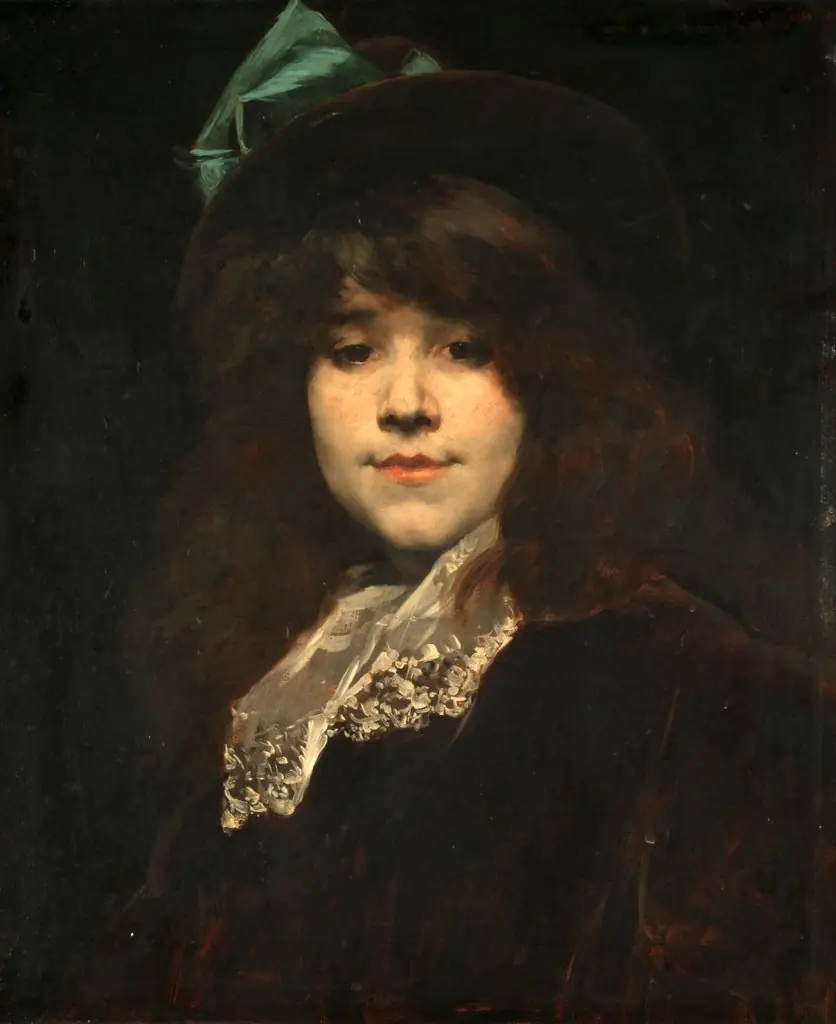
Ansingh is shown half-length, wearing a black hat and resting her right elbow on the back of a chair. Schwartze paid close attention to the colors and textures of the clothing, with accents on the collar and cuffs, and rendered the transparent blouse at the forearms with particular skill. The execution in broad brushstrokes is accentuated by striking red details set against green.
Within Schwartze's largely formal oeuvre as a society portraitist, known for depictions of the Dutch royal family, these portraits of her niece stand out for their verve and apparent ease. This work is more informal and personal than her commissioned pieces. The contrasts between light and shadow produce an intimate portrait, and Ansingh's direct gaze conveys a romantic temperament combined with self-assured emancipation, a psychological depth that distinguishes the painting within Schwartze's body of work.
Technique & Style
The work is an oil painting on canvas measuring 78 by 62 centimeters, created in 1902 by Thérèse Schwartze. It depicts Lizzy Ansingh, who was Schwartze’s niece and lived with her at the time, as recorded in the Rijksmuseum collection and described in contemporary accounts. Schwartze employed broad, swift brushstrokes and a limited palette, working without a palette knife and often reading to her model to avoid conversation; sessions frequently extended from morning until night with only brief interruptions, as recounted by Ansingh in 1952.
The composition shows Ansingh seated decisively, wearing a black hat and resting her right elbow on a chair back, while Schwartze emphasized color and texture in the clothing and accessories, notably the red details against green and the rendering of a transparent blouse on the forearms. Influences from Schwartze’s Parisian teachers, Franz von Lenbach, Jean-Jacques Henner and Léon Bonnat, appear in the loose handling, and the contrast of light and shadow gives the portrait an intimate, psychologically nuanced quality that distinguishes it within Schwartze’s typically more formal society portraits.
History & Provenance
Thérèse Schwartze painted Portrait of Lizzy Ansingh in 1902 as an oil on canvas work measuring 78 by 62 centimeters, depicting her niece Lizzy Ansingh, who lived with her for several years and received early art instruction from her. The painting entered the collection of the Rijksmuseum in the Netherlands and has remained there since its creation, forming part of the museum's holdings of Dutch portraiture from the late nineteenth and early twentieth centuries. Schwartze worked quickly and energetically, often reading aloud during long sessions that could last from morning until night, using broad brushes and avoiding palette knives to achieve a vivid, fresh surface; this method contributed to the psychological immediacy and informal intimacy of the portrait, distinguishing it from her more formal society commissions.
The work reflects influences from her Parisian teachers such as Franz von Lenbach, Jean-Jacques Henner, and Léon Bonnat, and is noted for its striking red accents against a green background and the delicate rendering of a transparent blouse on the forearms.
The Portrait of Lizzy Ansingh is held in the collection of the Rijksmuseum under inventory number SK-A-1865. It was created in 1902 by Thérèse Schwartze and measures 78 by 62 centimeters. The work has been exhibited at least twice: it appeared in a commemorative exhibition of Schwartze's oeuvre in 1952 and was included in the 2000 publication Poëzie der werkelijkheid; Nederlandse schilders van de negentiende eeuw presented by the Rijksmuseum.
Context
Within Thérèse Schwartze’s broader oeuvre as a formal society portraitist, which included commissions from the Dutch Royal family, her portraits of her niece Lizzy Ansingh stand out for their brio and apparent naturalness. Ansingh, who lived with her aunt from 1891 to 1908, was an emancipated artist belonging to the Amsterdamse Joffers, a group of female painters who graduated from the Rijksakademie. Schwartze portrayed her niece numerous times, but this 1902 painting is the most famous of the series.
Unlike her typical commissioned works, which prioritized distinguished grace over psychological depth, this portrait is distinctly more informal and personal. The contrasts between light and dark create an intimate atmosphere, while the sitter’s direct gaze reveals a romantic nature coupled with a self-assured emancipation. This psychological depth intrigues viewers in a way few other Schwartze works manage.
Stylistically, the painting reflects the influence of her Parisian mentors Franz von Lenbach, Jean-Jacques Henner, and Léon Bonnat, particularly in its powerful, broad brushwork and striking red accents on green.
Overview
Thérèse Schwartze’s 1902 oil painting, titled Portrait of Lizzy Ansingh, presents a seated young woman against a darkened interior. The composition centers on the sitter, whose face is illuminated while the surrounding space recedes into shadow. The work is part of the Rijksmuseum’s collection, where it remains on display as an example of early‑twentieth‑century portraiture.
Own this work as a print
Artist & collection